GEPA pictures
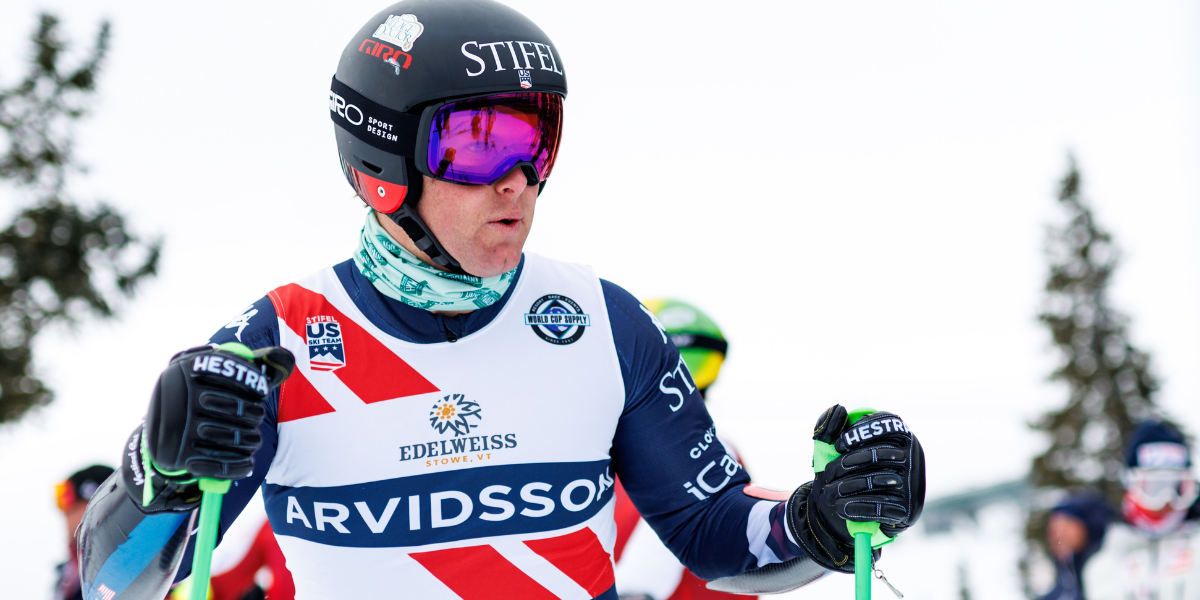
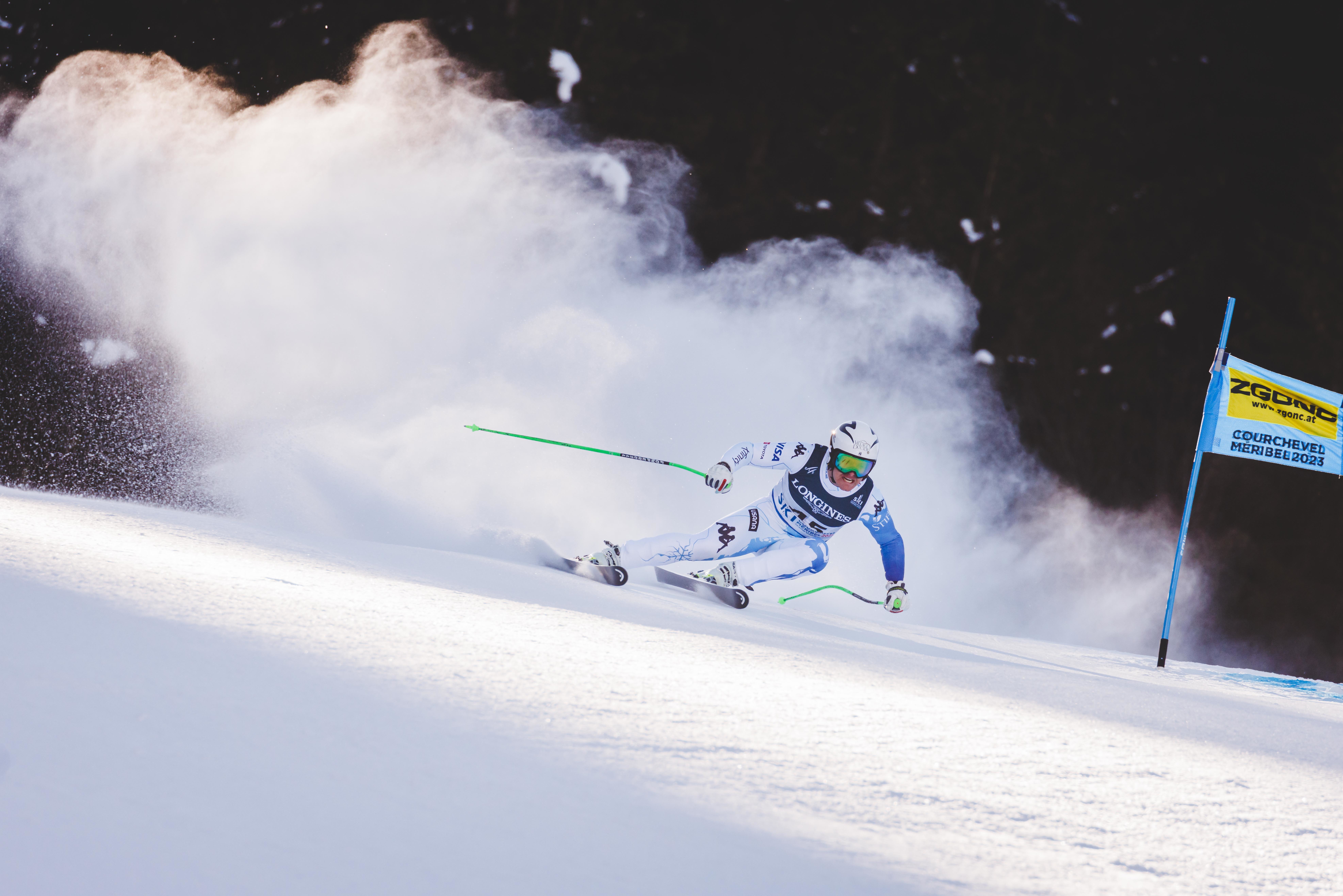
Erik Arvidsson has lived through more reinventions than most athletes experience in their entire careers. The 2016 Junior World Downhill champion—once a very promising young member of the U.S. men’s speed program—has ridden the peaks of early success, the lows of prolonged injury, the stabilizing balance of NCAA skiing, and the emotional weight of starting over again and again.
His latest setback, the injury that sidelined him after Val Gardena last season, hit harder than anything that came before it.
“It started slow,” Arvidsson said, reflecting on the early days of his recovery. “The mental shock of being out again was harder than anything I’ve ever experienced before. I was showing up to rehab every day because I knew I had to, but it took weeks—maybe months—before I felt the fire again.”
The physical work was straightforward. The emotional work was not. He split his time between his home in San Francisco and the U.S. Ski Team’s Center of Excellence in Park City, doing the daily grind of rehab while trying to find his way back to loving the sport that had shaped his life.
“I think I was honestly pretty depressed for a month or two,” he admitted. “I didn’t feel excited about the sport at all.”
For someone who had built his identity around ski racing, even watching his teammates compete was too painful.
“I’d check their results, maybe watch one run,” he said. “But sitting down to watch a race was too hard. I wanted to be there too badly.”
Finding His Way Back
Arvidsson’s return-to-snow progression began on August 28 in Valle Nevado, Chile. The plan was deliberate: freeskiing every other day, some brush work, and eventually one day of easy gates.
“I wasn’t ready for full training,” he said, “but it was the right way to build back into it.”
Unlike some athletes who return through individualized programs, Arvidsson rejoined the World Cup speed group almost immediately. Ian Garner assisted with planning, but Arvidsson felt strongly that being part of the team again mattered.
“We decided it made more sense for me to reintegrate with the group,” he explained. “The staff had enough people to support me, and it felt important to be with the team.”
For his first sessions, he waited until the downhill group finished their primary training. Then he stepped onto the hill later in the day, when the snow was softer and less demanding. It was controlled, safe, and perfectly suited to his physical stage of recovery.
By mid-October he was training in gates in Sölden and Pitztal—weeks ahead of schedule.
“Physically, I feel great,” he said. “No pain. The skiing has progressed faster than expected. I just need more reps to execute that first-run intensity.”
With his single scoring World Cup result in Val Gardena last winter, he created a nation spot in downhill for this season. His first race back after recovery will be the Beaver Creek downhill.
“I’ll be racing the downhill in Beaver Creek,” he said. “I’m excited to get back in the start.”
The Decision That Refocused His Career
Years before this recovery, Arvidsson faced a crossroads few young champions do: Stay on the U.S. Ski Team, or step away to rediscover joy. After several seasons marked by frustration, he made the bold choice in 2017 to attend Middlebury College.
“The season before wasn’t working,” he said. “I wasn’t happy. The sport felt like a slog. I needed something to change.”
He had been taking classes at the University of Utah, testing the idea of balancing academics and skiing. Then clarity arrived unexpectedly.
“I woke up in the middle of the night and just knew—it was now or never. I needed to go to college.”
At first, he feared the move would close the door on elite skiing. But his parents and former coach Bernd Brunner insisted that wasn’t how the sport worked.
“Bernd was adamant I was thinking about it wrong,” Arvidsson said. “Missing a year or two doesn’t end a career. Ski fast, and you make up the ground.”
He rebuilt himself at Middlebury.
“The biggest thing it gave me was balance,” he said. “It reminded me I’m a person outside of skiing. When I keep the skier and the person separate, that’s when I love the sport most.”
That sense of balance is a tool he draws on now—especially through this long recovery.

Where He Belongs
If you want to see Arvidsson at his most passionate, ask him about Kitzbühel.
“Kitzbühel,” he said immediately when asked for his favorite downhill. “It suits me, and I love the energy. The bigger the show, the more excited I get.”
His 21st-place finish on the Streif as a young racer remains one of the most meaningful moments of his career.
“I was just thankful,” he said. “Thankful I followed my own path. Thankful for the people who helped me get there. It was emotional.”
The start gate at Kitzbühel is another story entirely.
“The first time was incredibly stressful,” he said. “That Red Bull start house is intense. You watch racer after racer fly off the Mausefalle, and from behind it looks like they’re going a hundred meters. Then the coaches tell you it’s only 25. Right. You have to trust your training and just go.”
He doesn’t hesitate when describing the most intimidating section:
“The left-footer at the bottom of the Steilhang. If you want to win, that’s the place. It’s scary, and it takes reps.”
And then, almost as an aside, he adds:
“Kitzbühel is more intimidating. Bormio is harder.”
Returning to Racing on Home Snow
Arvidsson’s return to competition will happen on home soil. The Beaver Creek downhill will mark his first World Cup start since his injury, and the setting brings comfort and confidence.
“It’s super exciting,” he said. “Racing in Colorado gives you a level of comfort you just don’t have in Europe. You know the country, the people, the routines, how everything works. That familiarity helps a lot—especially after a long rehab.”
His family will be there. His fiancée will be watching remotely, with a nonprofit event keeping her in New York.
He smiles when he talks about her. It says everything.
Why He Always Returns
There is one question Arvidsson doesn’t hesitate to answer: Why keep going after so many setbacks, so much heartbreak, and so many resets?
“I love it,” he said, “even when it’s hard, even when I lose the joy for a little while. I always find it again. I’ve done too much to get here, and I want to see how good I can be.”
After everything he has faced, Erik Arvidsson is still here—still fighting, still skiing, still believing.
The fire is back.
The snow is waiting.
And he is just getting started.
About the Author: Peter Lange