Editor’s note: This is the first in a series of articles featuring interviews with candidates for FIS president ahead of the June 4 election to replace Gian-Franco Kasper. In these articles, our goal is to provide an outlet for the candidates to state their platforms while we review the history and credentials of each. Ski Racing Media has not endorsed a candidate at this time.
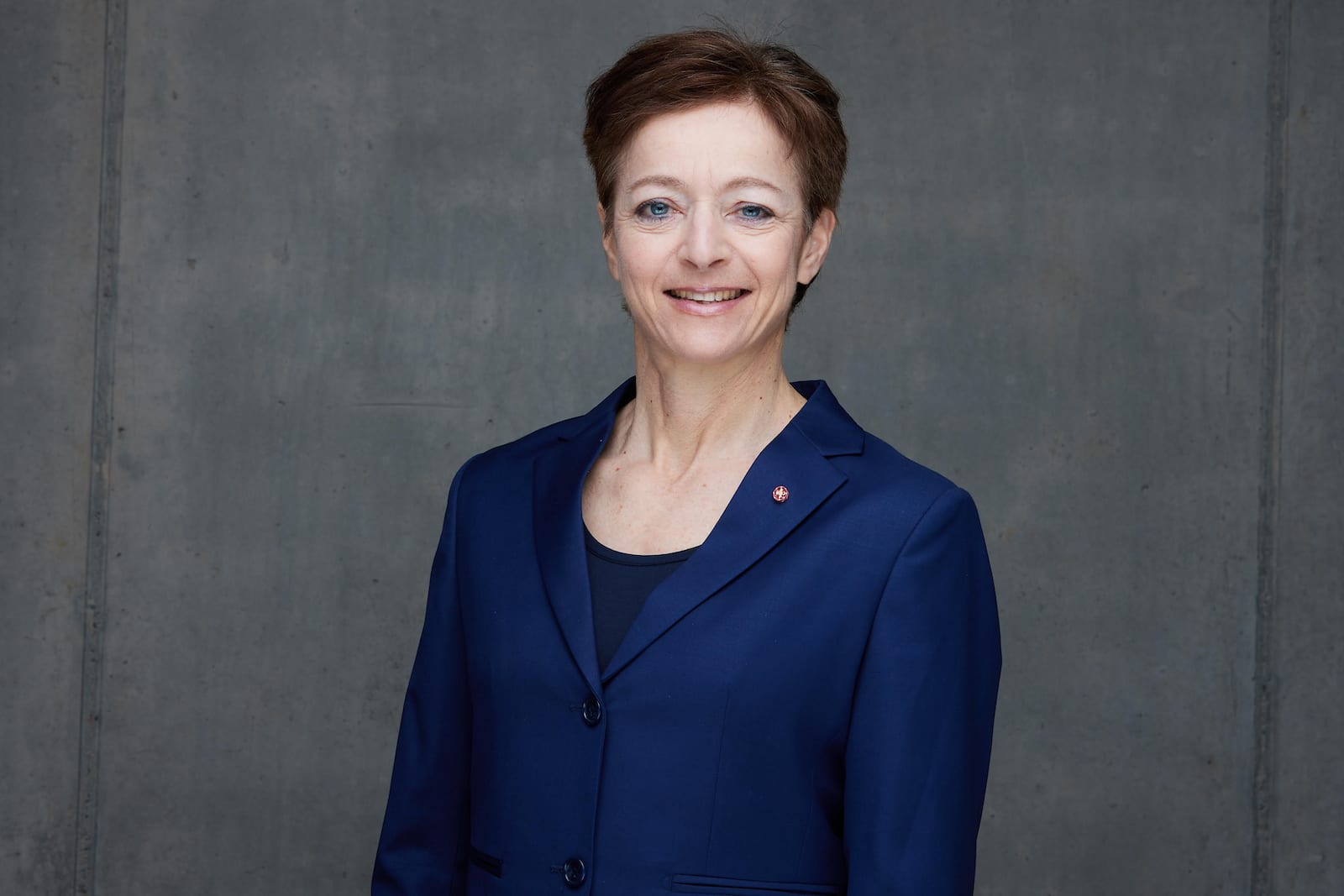
Having officially declared her candidacy for the FIS president on April 6, Sarah Lewis, the federation’s former secretary general, has presented her FIS “Piste Map” to numerous NSAs, outlining a strategic vision and plan for skiing’s future.
Lewis, who had worked at FIS for 26 years prior to her removal from that role in October, is currently on the outside looking in. But with more than a quarter-century of history from within the organization, she’s presumed by sources associated with FIS to be a status-quo candidate — at least compared to the other three candidates running.
Her stated platform, however, suggests there is enormous untapped potential for the international federation and the sports that it governs to further expand worldwide.
“My vision is for us to transform FIS, of course, while celebrating and respecting its rich history and traditions, to become a global movement for world skiing and snowboarding,” Lewis tells Ski Racing Media.
Three pillars
The British sport-leader outlines three main pillars of her campaign that she says must be addressed immediately:
- Operations involving the recovery from COVID-19 and the road to Beijing 2022
- Improved governance and proposed reforms
- And implementation of her Piste Map blueprint concerning the future health and development of the sport.
Lewis informs of her proposed COVID Recovery Fund to assist the National Ski Associations and their ecosystems during what has been a difficult financial period for many amid the pandemic.
“On June the 4th or 5th, we will not be in a different place to where we are today,” Lewis said. “We do need to put in place a COVID 2.0. We don’t know how next season will look and it will certainly be different in different parts of the world.
“Managing the effects of the pandemic, it requires proactive measures. This is important. We got to reach out to the nations associations — it devastated parts of the industry — the resorts, the ski companies,” she said.
Regarding the ongoing preparations for Beijing 2022, now just 10 months away, Lewis is confident that despite the cancellation of all international test events due to COVID-19, the Games will be a success.
“I have no doubt whatsoever that these are going to be outstanding Games,” Lewis said. “The facilities look excellent. Yes, they weren’t able to do international test events this past World Cup season, but they did training events continually and with the education for officials, so they really have been using the facilities.”
FIS ‘Piste Map’
In her detailed ‘Piste Map’ manifesto, Lewis names and elaborates on four primary objectives and themes.
- Revitalizing revenues
- Member-centered governance
- Snowsport 2021 and beyond
- Working together with the national ski associations
“This is the foundation of the FIS Piste Map — to effect progressive, forward-looking change for FIS as a modern, versatile, and diverse organization working together with the national ski associations and all the stakeholders as an integral part of the governance and the decision-making,” Lewis said.
Lewis emphasizes that revitalizing revenues is fundamental to the organization, and she says the sport’s athletes are the greatest resource.
“We have to create wider visibility and promotion of our sport and our athletes,” Lewis says. “Growing and interacting with our global fanbase is an absolute priority through partner activation, high-profile athlete ambassadors and influence-engagement.
“Generating revenue for the FIS world championships and World Cups through an investment from private equity represents an opportunity to bring new resources to help finance our sport, the national associations and their organizers working with a proven commercial partner ready to invest in the sports and grow its overall value,” she added.
Lewis also envisions new digital developments, more exciting viewing experiences, promotion of the sport through fan engagement, e-sports activities, data-driven innovation and virtual reality.
“Wouldn’t you love to be in the eyes of that skier as she’s dropping into Cortina,” Lewis asks.
Lewis also points out the tremendous opportunity and growth potential of emerging winter-sport economies, particularly in China.
“This presents another opportunity to broaden the sports profile and the revenue base,” she said.
Member-centered governance is “absolutely crucial,” said Lewis, and FIS decision-makers must lead with integrity, inclusiveness and transparency throughout the organization.
If elected president, Lewis says “sport will always be at the center” and fostering strong relations with the IOC and other international federations is paramount, while noting that she has served as a member of numerous IOC coordination commissions.
In terms of working together with the 135 national ski associations, Lewis says that the FIS development program needs to evolve and be personalized for “each of the national associations — elite, emerging and the embryonic ones as well.”
She believes that the elite and evolving NSAs can benefit from one another as the elite nations take on a leadership role promoting and capitalizing from major events, such as the Hahnenkamm races in Kitzbuehel and Holmenkollen in Oslo, benefiting from wider globalisation.
Lewis reveals that since launching her manifesto she has conducted virtual meetings and presentations with numerous nations, including Austria, Italy, Canada, and Slovenia over recent days with more to follow in the lead-up to the June 4 election.
October dismissal by FIS Council
Lewis says the “snow has melted” when questioned about her sudden dismissal from her role as secretary general in October 2020.
Six months after her ousting — the details of which were never fully made public — and in her current bid to become the next FIS president, Lewis insists that she has the support of numerous national ski associations (NSAs).
Addressing her dismissal, in which FIS only issued a terse statement noting that it was due to “a complete loss of confidence” and “by a great majority vote,” Lewis insists that all parties have moved forward.
“There is absolutely no issue whatsoever, as far as I’m concerned, and I know as far as they’re concerned. Everybody has said this to me that we have no issues whatsoever,” Lewis tells Ski Racing Media.
“We’ve collaborated extremely well in the past, they’re also listening to what I’ve done in the meantime,” she says, noting ongoing communication with all council members.
“Everybody will be welcome with open arms — whether or not they were in that meeting or not in that meeting, it’s irrelevant. The snow has melted, it happened. For whatever reason, the reasons are the reasons.”
Lewis says she understands there could have been a perception that an active secretary general might possess an advantage over other candidates in terms of accessibility to members and how there could also have been concerns over how FIS resources were used during these meetings, where discussions about the upcoming FIS election might arise.
“Of course, I looked introspectively at myself, as well,” Lewis adds, about her time away from responsibilities across two decades as secretary general. “I lived, I slept and I ate (FIS). Every waking and sleeping moment was about FIS and the sport … I was really single-minded. I’m very much what you call a pace-setting leader.”
Four candidates to succeed GFK
Lewis is one of four candidates vying to succeed Gian-Franco Kasper, who’s served as FIS president since 1998. Other challengers include HEAD chief executive officer Johan Eliasch, Swedish NOC president and FIS vice-president Mats Arjes, and Swiss Ski Federation president and world champion Urs Lehmann.
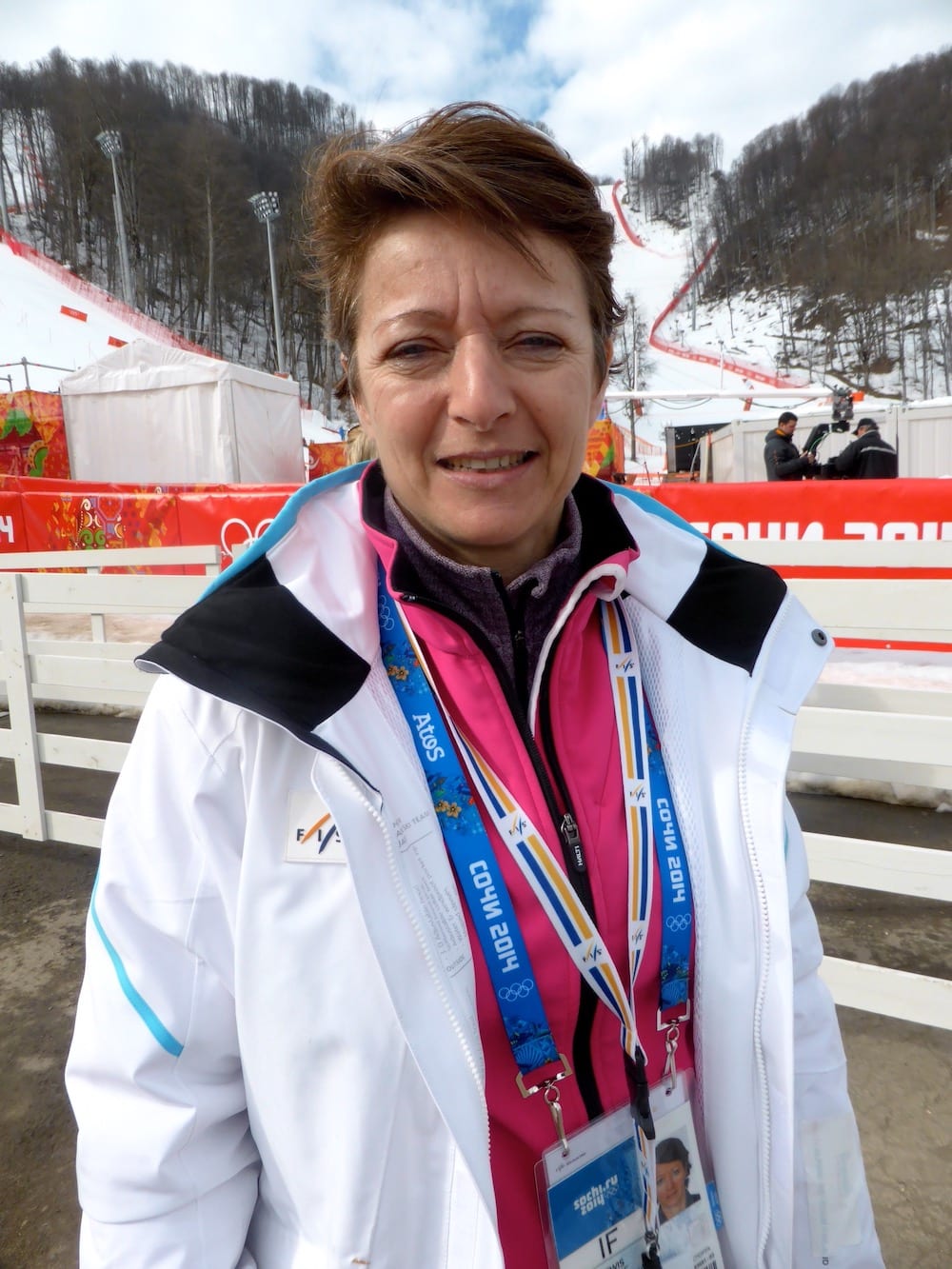
Lewis’ official candidacy nomination was submitted to the FIS by the Royal Belgian Ski Federation, of which she is a member. Lewis represented Great Britain at the 1988 Calgary Olympics.
The twice-postponed election — which was initially scheduled for the 52nd International Ski Congress in Portoroz, Slovenia — will now be conducted virtually on June 4. The newly elected president and FIS Council are expected to convene the following day.
FIS has been run by just four presidents since its inception in Chamonix, France, in 1924. Swiss presidents Marc Hodler and Gian-Franco Kasper have combined to lead the organization for the past 70 years.
Lewis, asked if she believes the time is right for the first female president of the organization, responds confidently while pointing out her vast support:
“I think anytime is right for a female president, but of course there is a very great track record. Not only do I believe it’s right, I know it’s right because with the encouragement that I’ve had to run, with the support that I’ve had, not only since the launch of my candidacy — which has just been totally overwhelming — it’s been incredible the number of persons who have reached out from all across not only the sports world, not only from our voting members, but from the sports world, business community and the media.
“It’s been very significant,” she adds.
Lewis began her career at FIS in 1994 and served four years as the Continental Cups coordinator. She advanced to the position of FIS director in 1998, prior to her appointment to secretary general by the FIS Council in Melbourne in 2000.
About the Author: Geoff Mintz & Brian Pinelli