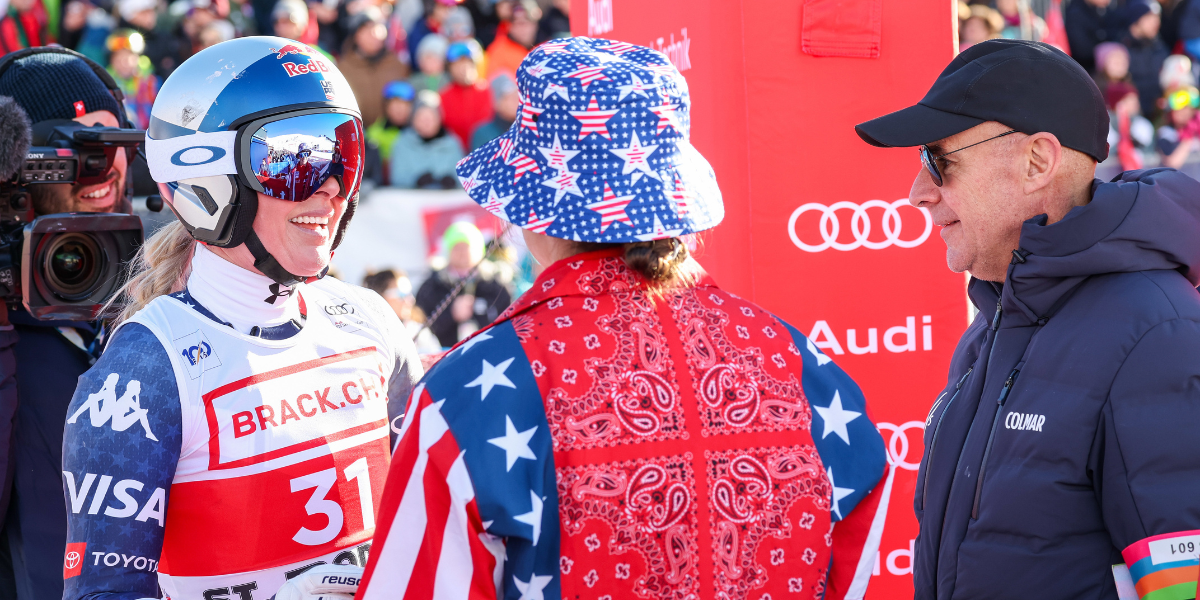
Vonn, Macuga, Eliasch: GEPA pictures
FIS Doubles Down on Financial Support for NGBs and Athletes
FIS President Johan Eliasch, now in his fifth season leading the International Ski and Snowboard Federation, says real progress is being made on two of his most important goals: increasing prize money for athletes and delivering direct financial support to all National Governing Bodies (NGBs).
First-Ever Shared Distributions from Broadcast Revenue
For the first time, FIS is distributing €10 million a year for three years to all NGB members funded through its centralized broadcast deal with Infront. Eliasch, who personally negotiated the agreement, called it a transformational shift in how FIS supports its global membership.
“That is new,” Eliasch said. “We started in 2024, distributing €30 million over three years. Everyone gets the same amount—€400,000—and that’s a lot of money, especially for smaller nations.”
He highlighted the impact for countries like New Zealand and Greece, which traditionally have not received commercial revenue due to their limited hosting opportunities.
“Before, if you didn’t host events, you didn’t get anything. Now, everyone benefits just by being a member. That’s a big change.”
FIS Triples Its Overall Distributions
Along with the Infront revenue, FIS has increased two more distribution streams:
- A direct €5 million annual FIS payout, scaled by event volume and athlete numbers
- A €7.5 million fund to promote global growth in skiing and snowboarding
- €7 million in prize money support
“It’s almost triple what we were distributing before,” Eliasch said. “The centralized system has worked even in a very tough market. Over the next eight years, we’ve secured more than 20% increases in World Cup media rights revenues across all World Cup organizing federations.”
These consistent payouts, he said, give all NGBs the stability to plan, invest and grow.

Prize Money Increases—and Pressure on Organizers
Athletes are also seeing the financial impact. FIS has increased its share of World Cup prize money by 10% and asked Local Organizing Committees (LOCs)—the groups responsible for hosting races—to match it voluntarily.
“We’ve now raised prize money by up to 40% from when I came on,” Eliasch said. “It used to be entirely the LOC’s responsibility. Now FIS is contributing—and we expect organizers to follow our lead.”
Centralized Rights Bring More Revenue, Even for the U.S.
The United States, which has previously managed its own broadcast rights, will officially join the centralized Infront system in 2026–27. Eliasch said that inclusion will help maximize revenue and consistency across all World Cup events.
“They are part of the centralized system,” he said. “That’s going to help everyone, including the U.S. I hope we can bring Austria in as well.”
He added that in a fragmented media landscape, unified rights are essential to protecting long-term value for everyone in the sport.
Looking Ahead: A Mission Not Yet Complete
Eliasch said the federation’s financial health has improved, with increasing income and new sponsors—like Azerbaijan’s tourism office—joining the global portfolio.
“We’ve signed new partners. We’re building something stronger. But I’m not finished. I’ll keep going until I’ve completed the mission.”
While some opposition remains, Eliasch said many national federations now recognize the benefits of his agenda.
“There are always people who complain,” he said. “But less so than before. They’re beginning to see the benefits of the hard work we’re doing.”
About the Author: Peter Lange