Freddy Carrick-Smith’s Historic Finish: Just €2,500 in Prize Money

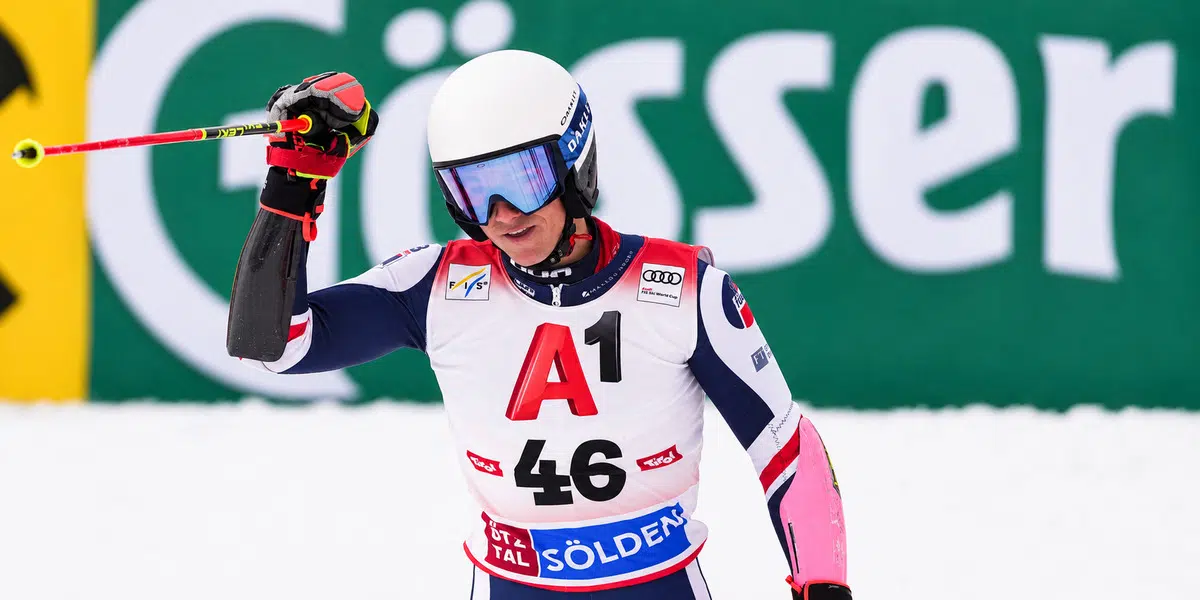
Freddy Carrick-Smith / Sölden 2026 / GEPA pictures
On the opening weekend of the 2026/27 World Cup season in Sölden, British skier Freddy Carrick-Smith produced one of the most celebrated results in recent British alpine history. Starting with bib 46, he tied for 21st after the first run of the men’s giant slalom. He then posted the fifth-fastest second run to climb to 12th overall. It was Britain’s best men’s World Cup GS result since Jeremy Palmer-Tomkinson finished ninth in Méribel in 1968. Carrick-Smith’s family had worked nearly 20 years for that moment.
That day, Carrick-Smith earned €2,500 in prize money.
That was the 12th-place payout under the 2026/27 FIS Alpine World Cup rules. Yet many ski-racing families, even those who follow the sport closely and write the checks each season, have never seen the prize-money structure explained with primary-source precision. The rules reveal a system worth understanding.
How Much Does a World Cup Race Pay?
The FIS World Cup Rules require organizers to make at least €168,000 available in prize money for a standard race, excluding VAT. In individual events, organizers divide that purse among the top 30 finishers. First place receives €55,000; 30th place receives €750. The same minimum purse and payout schedule apply to men’s and women’s standard events. Carrick-Smith’s 12th-place finish paid €2,500. Athletes outside the top 30 receive no standard prize money, even in a field of 80 or more.
Excluding the World Championships in Crans-Montana, the 2026/27 World Cup calendar lists 43 men’s races and 40 women’s races. At the €168,000 standard minimum, those 83 race purses total €13.944 million before premium events are factored in.
As of Nov. 4, the FIS prize-money database listed one confirmed premium purse for 2026/27: Kitzbühel’s three men’s races, each offering €350,000. That is more than double the standard minimum. The winner earns €101,000, while 30th place earns €2,500. Kitzbühel’s three races add €546,000 above the standard baseline, bringing the known season minimum to €14.49 million. Flachau has offered premium purses in past seasons, but FIS had not posted amounts for its 2026/27 women’s races. Several other future races also lacked published amounts, so Kitzbühel is the only premium purse confirmed in the listings so far.
How Concentrated Is the Prize Money Distribution?
The winner of a standard World Cup race takes 32.7% of the total purse. The top three finishers combined take 56.5%. The table shows how organizers divide the purse among finishers.
Standard World Cup purse distribution
| Finishing places | Athletes | Combined payout | Average per athlete | Share of purse |
| 1st | 1 | €55,000 | €55,000 | 32.7% |
| 2nd-3rd | 2 | €40,000 | €20,000 | 23.8% |
| 4th-10th | 7 | €43,500 | €6,214 | 25.9% |
| 11th-30th | 20 | €29,500 | €1,475 | 17.6% |
| Total | 30 | €168,000 | — | 100% |
Note: Payouts are before tax. The 8% time rule can leave fewer than 30 athletes paid.
The Dallas Open, an ATP 500 tennis event, offers a useful point of comparison, with the caveat that tennis and ski racing operate at very different commercial scales. The Dallas main draw has 32 singles players, close to the 30 athletes who can receive prize money in a World Cup ski race. Every player in the Dallas singles draw receives at least $22,096, or about 4.2% of the winner’s $529,945. In a standard World Cup race, 30th place earns €750, just 1.4% of the winner’s €55,000. A ski racer must finish 12th or better to earn a comparable share of the winner’s purse. That is where Carrick-Smith finished in Sölden.
Is There a Meaningful Second Tier of Prize Money?
The Europa Cup is where World Cup hopefuls earn the results and rankings needed to qualify for the top circuit. The FIS Continental Cup Rules set a minimum purse of €2,500 per race. Organizers divide it among the top five eligible finishers; the top 20 athletes on the valid World Cup Starting List (WCSL) are excluded. Parallel races pay the top four. Athletes outside the paid places receive nothing, and replacement races carry a reduced minimum of €1,250.
The standard World Cup purse of €168,000 is 67 times larger than the Europa Cup minimum. The entire Europa Cup minimum is shared among five eligible finishers, while a World Cup race pays the top 30. There is no gradual descent in prize money between the World Cup and Europa Cup circuits. The gap is structural. An athlete moving from one circuit to the other does not experience a modest reduction in earning potential. The opportunity to earn prize money narrows sharply.
Is Prize Money Equal for Men and Women?
At the per-race level, the answer is yes for standard events. FIS’s 2026/27 prize-money listings show the same €168,000 minimum and identical payouts by place for men and women. That is per-race prize-money parity for standard events.
Season totals differ for two reasons. Men have three more races on the 2026/27 calendar: 43 compared with 40 for women. At the standard minimum, those three races account for €504,000. Kitzbühel’s three €350,000 purses add another €546,000 above the standard baseline, with no equivalent premium listed for women as of Nov. 4. Other unpublished purses could change the final comparison.
What Else Can Affect a Prize-Money Payout?
Article 10.2 of the FIS World Cup Rules states that a competitor earns no points or prize money if their overall time is more than 8% slower than the winner’s, regardless of finishing position. The rule can matter in technical events. In slalom and giant slalom, only the top 30 finishers from the first run advance to the second. An athlete who makes a significant mistake in the second run might still finish in the top 30 overall. But if the combined time exceeds the winner’s by more than 8%, the rules deny both points and prize money. As a result, fewer than 30 athletes may receive money in a given race.
When athletes tie for a position, organizers combine the prize money for the affected places and divide it equally. If two athletes tie for fifth, for example, the fifth- and sixth-place payouts are added together and split between them.
Organizers must pay prize money by bank transfer within seven working days of the last competition or after they receive an athlete’s bank information. Local tax laws may require withholding. The athlete’s bank sets the daily currency-conversion rate, and FIS rules provide no compensation for an unfavorable exchange rate.
Why Has Prize Money Become a Policy Debate?
Prize money has been an active subject of FIS governance. At the 56th International Ski Congress in Geneva in June 2025, five ski nations — Austria, Germany, Norway, Switzerland and the United States — brought forward two proposals. Delegates approved a switch from Swiss francs to euros to reduce exchange-rate uncertainty for athletes and organizers. The nations withdrew a proposal for a 30% prize-money increase after seeking more information about how to fund it without adding costs for organizers or national ski associations.
The FIS Council continued its review of prize-money support, led by Michael Huber, president of the Hahnenkamm race organizing committee and chair of the FIS Alpine Rules Sub-Committee. In October 2025, the Council decided that FIS would maintain 20% support for individual World Cup event purses in 2026/27, while local organizers would cover an additional 10%. The published 2026/27 World Cup rules set the minimum purse at €168,000. The support model reflects the tension between sustaining prize money and the costs placed on local organizers.
The debate remains unsettled. The nations sought a higher purse, while organizers faced greater responsibility for funding it. For 2026/27, the rules keep the €168,000 minimum in place. FIS has said it will develop a longer-term strategy that considers sustainability, market value by discipline and gender equality.
What Do Athletes Owe the Sport in Return?
The FIS World Cup rules spell out athletes’ media obligations. Article 22 covers selected post-inspection interviews, leaderboard presence until bib 15 in technical events and bib 30 in speed events, broadcast availability in specified situations, team radio and a winning-run interview for the race winner. Team-radio participation is mandatory for national teams where the system operates. The rules require podium athletes to provide on-site interviews if requested; other athletes must remain available based on editorial interest and broadcaster requests. Failure to comply brings a jury sanction, and repeated noncompliance may bring a financial penalty. The rules do not set a CHF 999 fine for each infraction; that amount is a late-payment charge against organizers. The media obligations span eight subsections. The main prize-money provision appears in one section, while the 8% time rule is addressed separately.
Where Does That Leave the Athlete?
Carrick-Smith made British skiing history in Sölden. He finished 12th in a World Cup giant slalom and earned €2,500. The rules set a clear minimum and payout ladder, but they do not settle whether those amounts reflect the value athletes bring to the sport or who should fund an increase. Those questions remain open among FIS, national federations and organizers. The result was historic. The payout followed the rulebook. The debate over what athletes should earn — and who should pay them — remains unsettled.
About the Author: Paul Rechberger
Related Post