When Paul Epstein started Global Racing nearly ten years ago, he never envisioned the heights the team would reach.
However, the practice of aiming higher and higher has been a benchmark of his coaching philosophy.
It appears to be working.
Guiding his squad of athletes from all around the world, Epstein never imagined that many would become World Cup qualifiers. It never crossed his mind that most of the team would make it to the World Championships one day. This being the current reality, what’s clear now is that there’s more to come.
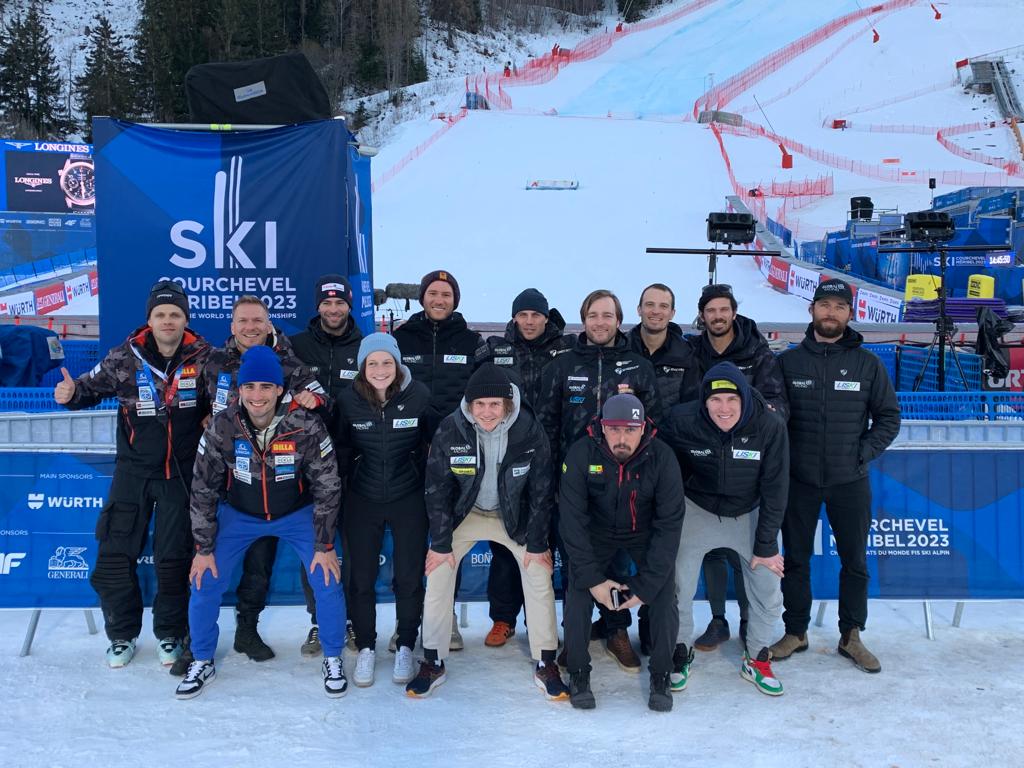
They are former U.S. Team athlete Brian McLaughlin, Sam Maes and Dries Van den Broecke from Belgium, Harry Laidlaw from Australia, Maarten Meiners from the Netherlands, Slovakia’s Adam Žampa, Denmark’s Christian Borgnaes and Estonia’s Tormis Laine.
Team Global Racing
With four coaches, three course servicemen and two physios, Global Racing is bigger and better than ever. Comprised of 14 racers, eight are heading to Courchevel-Méribel, France, this week for the 2023 FIS Alpine World Ski Championships.
“This is the most guys we’ve had go to World Champs,” Epstein says. “To be honest, though, I don’t think too much about World Champs or the Olympics being a goal. It’s the easiest World Cup you’ll race because there are less guys. It’s an easy place to get points. We just see it as a normal race.”
The backstory
There’s nothing ordinary about Global Racing, the only international private team of its kind, holding its own amid powerhouse nations at the sport’s highest level.
After skiing for the University of Vermont and competing in Continental Cups, Epstein coached privately for a few years before a three-year stint coaching at Green Mountain Valley School. Witnessing firsthand the void in the echelon between academy racing, college and national team qualification, he moved to Austria and launched Global Racing in 2013.
“When I was racing, there wasn’t anything like Global around. I felt there were guys stopping too early. I wanted to create a team where [athletes] had that opportunity to continue racing. Or, if they were kicked off their [national] team, they had an avenue back,” Epstein says. “My time at the academy was good. I learned a lot. But I thought things should be done differently to develop racers.”
Fresh starts
Especially in the case of athletes who have been axed from their national teams, Epstein’s work is cut out for him in terms of developing – or re-developing – an approach to the sport.
“You pick up habits when you’re young. When you get kicked off the team, that’s an eye-opener,” Epstein says. “We’re putting one foot in front of the other. We watch race coverage to see how it can improve. We do a lot of self-reflection.”
As Global Racing’s Brian McLaughlin can attest, Epstein has a knack for bringing out each athlete’s potential and customizing improvements, whether they fall under the umbrella of equipment, technique, tactics, or outlook.
A case study
“Changing things in your skiing might sound easy on paper, but getting everything to work on the highest-level courses, in the most difficult conditions, isn’t easy,” McLaughlin says. “Ingraining those habits, getting the skiing to be as powerful as it can be – it’s a work in progress. I’m showing more speed than I ever have and eliminating bad habits. I think now my skiing is better than it’s ever been. As a coach, Paul sets high standards and really pushes us. He sees the potential in our skiing, the little individual things we each need to do. He’s always pushing us not to take any training day for granted.”
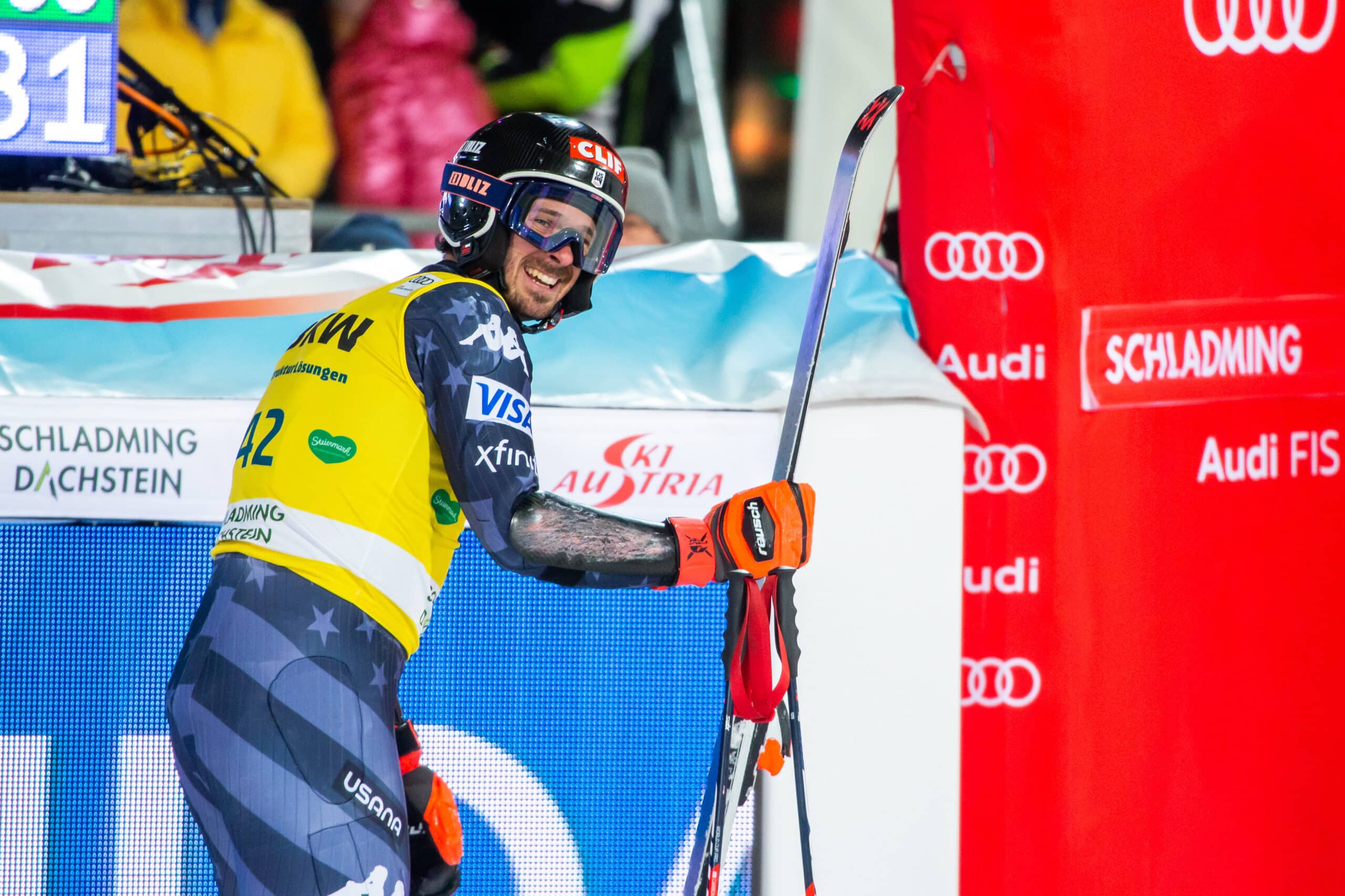
A member of the U.S. Development Team, McLaughlin graduated from GMVS in 2012. He went on to ski for Dartmouth for four years. Winning the NorAm giant slalom title, McLaughlin began racing on the World Cup for Team America, nabbing an 18th place in the Beaver Creek GS in 2018 and 27th in Alta Badia. He re-joined the U.S. Team in 2019-’20, but his trajectory took a downturn, culminating with injury (tweaking his knee and breaking his collarbone) and removal from the U.S. Team.
“When I was cut, I was looking for options. The clearest was joining Paul. His guys were performing well. I reached out and it seemed like a great fit,” McLaughlin says.
The turnaround
The Massachusetts native joined Epstein in the summer of 2020 and clawed his way back up the FIS points ladder the following season. In December 2021, he won a Europa Cup GS and re-started on the World Cup GS circuit. At 29 years old, he launched into the current season strong, notching 19th place in the Val d’Isère GS. In January, he landed a 23rd in Schladming.
“For someone like Brian, he’s getting older, but he’s also getting faster,” Epstein says. “That can be motivating for him and other guys his age. Coming to Global, we had to do a lot to change his technique to be someone who could consistently score World Cup points. It was also changing equipment and ideas on what a proper GS turn is. We’ve come to a point where it’s clear what needs to happen in order for him to ski as fast as he can.”
Coaching milestones
Since the inception of Global Racing, Epstein says a pivotal point came when Austrian Marcel Mathis joined the team in 2016-’17.
“That was the first year we got World Cup points on the team. That was a big step for me as a coach,” Epstein says, mentioning Mathis’ breakthrough after an exhaustive, multi-season streak of failures to qualify in every race. “It was eye-opening to see you could really change an athlete if they believed in themselves and in you. That was a big turning point.”
Success stories
The rewarding moments since then have been bountiful. Coaching Maes since 2018, the Belgium-born racer who grew up in Austria notched a career-best 11th place in the Alta Badia GS this December and, in January, earned his first World Cup slalom points in back-to-back races.
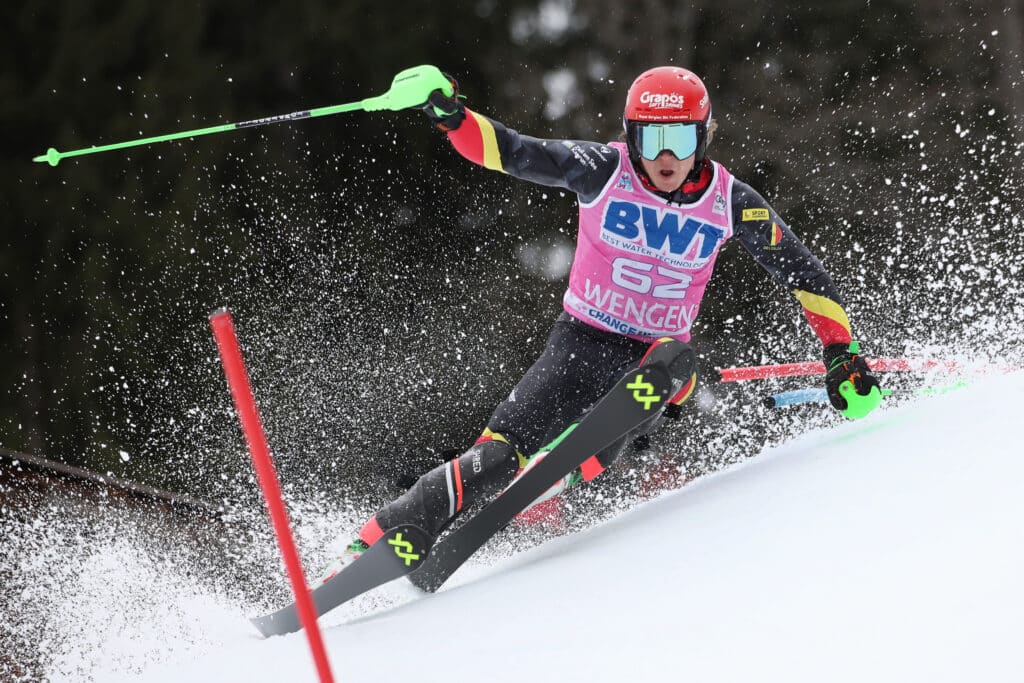
After getting kicked off the Italian team, Hannes Zingerle joined Global Racing this season. Starting the recent Schladming GS wearing bib No. 58, the 27-year-old got a sweet taste of the leader’s box for several minutes, ending up with a career-best 14th place and throwing down the third fastest second run.
“You look at some of these guys where at one point, someone said, ‘this guy isn’t good enough.’ Then you’re able to do something with the athletes to show they’ve got more than anyone ever thought,” Epstein says.
The sky’s the limit
One key point Epstein constantly hammers home with his athletes is that no matter what milestone they reach, there’s another beyond.
“Communicating with athletes and putting a different reality in front of them – that’s important,” Epstein says. “I need to have athletes that aren’t satisfied with a mediocre result. They can’t start getting complacent. I spoke with Hannes after Schladming. I said, ‘look, this result – top 15 – is great. We’re close to the top five.’”
Painting that picture has been a significant point of gratification for Epstein.
“It’s like, what are you saying and doing that’s pulling a little more out of each athlete? I find that really satisfying and rewarding, actually.”
The power of trust
That sense of reward permeates the entire team. It makes for a continued trend of great results from one athlete to another and a solid team morale and overall dynamic.
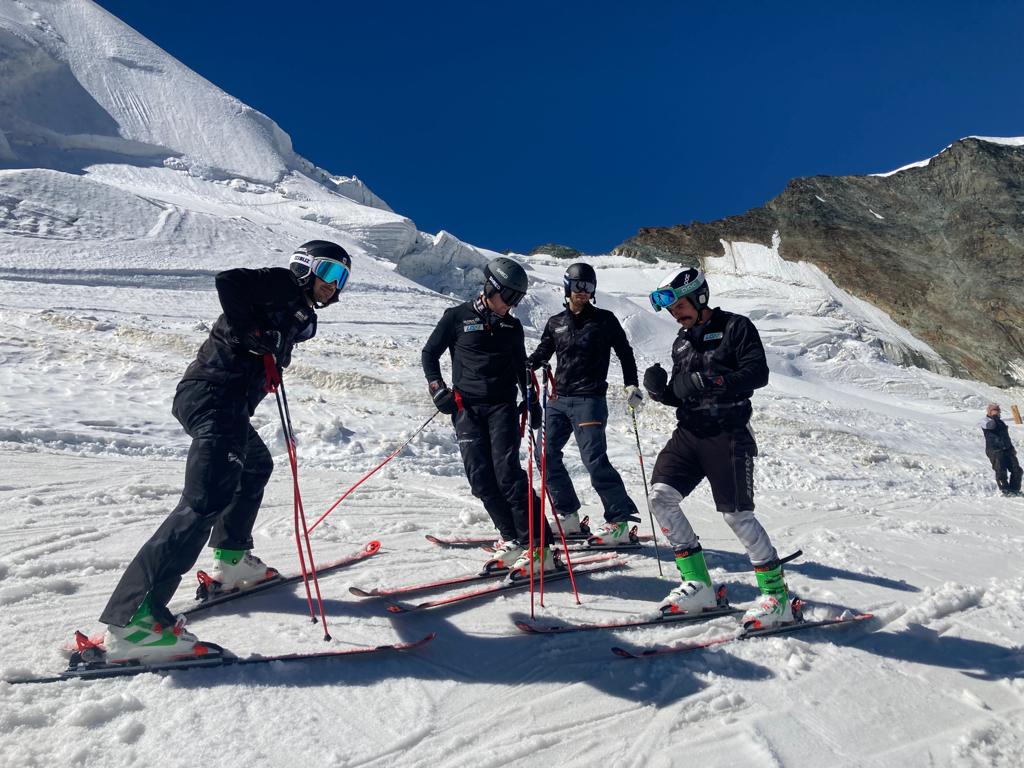
“We have a great group of guys, all from different countries, at a similar level, pushing hard together,” McLaughlin says. “Paul is always pushing that everyone has the speed to be in the top 15. That’s something he imparts almost daily, trying to remind us that good skiing is good. We need to trust that good skiing can happen in all conditions.”
Trust, Epstein says, is the core of the team’s success. As far as he sees it, the momentum has only just begun.
Upward trajectory
“It’s been ten years, but we really haven’t started to do anything until recently,” he says. “When I started Global, I didn’t have specific goals in mind. It was like, let’s see where we can go with this. It’s been snowballing in a good way. In the last couple of years, I’ve realized we can do even more, moving in this direction. Our goal is to be on the podium at the World Cup level. That’s 100 percent achievable with the guys we have.”
About the Author: Shauna Farnell