Good Skiing vs. Fast Skiing
If you spend time around a training hill, you’ll hear coaches say, “Ski well,” “Clean it up,” or “Make good turns.” For young racers, this can create a misunderstanding that lasts for years, sometimes an entire career:
Good skiing and fast skiing are not the same thing.
You can ski beautifully, in balance, and with technically flawless turns—and still be slow. Conversely, the fastest run of the day rarely looks perfect. The world’s best ski right on the edge of control, accept mistakes, and tolerate discomfort because they know perfection is rarely fast.
Understanding the difference between “good skiing” and “fast skiing” is a turning point in an athlete’s development.
What Is Good Skiing?
Good skiing is built on solid technical and tactical fundamentals. It’s defined by:
- Strong technique and sound mechanics
- Stable balance and alignment over the outside ski
- Control of pressure, edge angles, and line
- Smooth, clean arcs with few visible errors
- A comfortable rhythm and flow
- Safety, predictability, and consistency
Good skiing looks like something you’d film for a technique clinic. It’s polished, aesthetically pleasing, and often comfortable for the skier.
However, good skiing is not automatically fast skiing.
In fact, good skiing can become a comfort zone. Many racers stay there because it feels safe, controlled, and familiar. They execute clean turns but avoid the risk and intensity required to generate true speed.
What Is Fast Skiing?
Fast skiing includes good skiing—technique and tactics still matter—but it demands more. It means:
- Skiing at the edge of control, not within it
- Accepting small mistakes because the net speed gained outweighs them
- Processing gates, terrain, and rhythm faster than feels comfortable
- Thinking less; relying on instincts and preparation
- Absorbing risk for the sake of speed
- Bringing a level of physical and mental intensity that feels uncomfortable
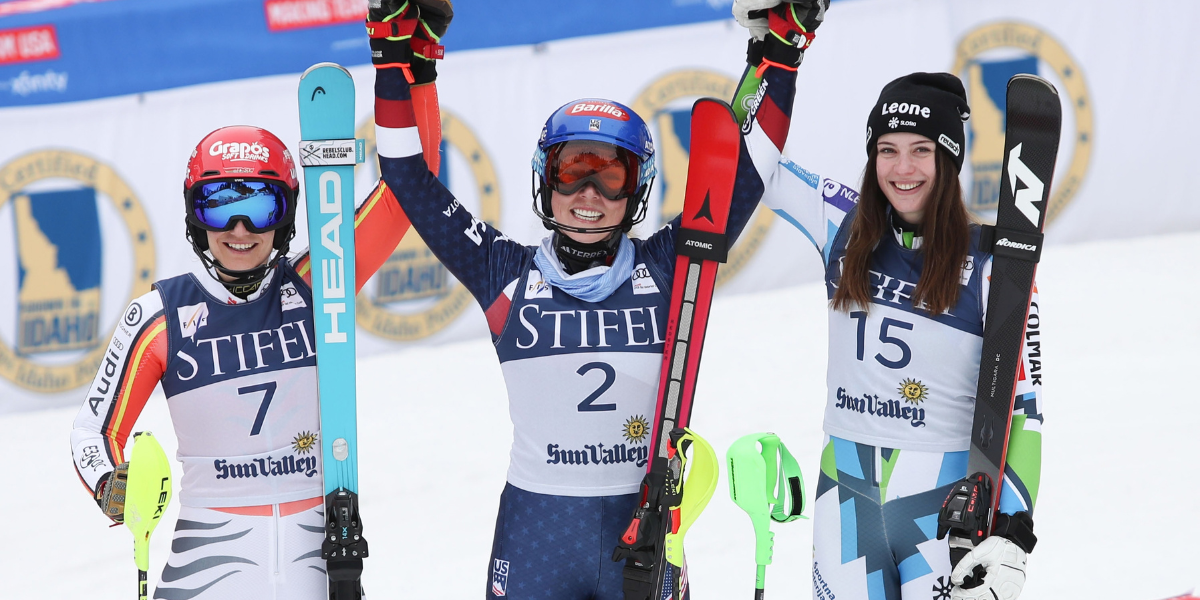
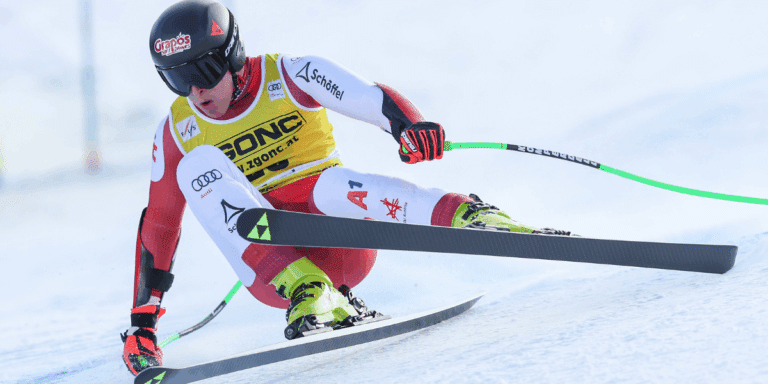
Fast skiing looks chaotic. Even World Cup winners make visible errors in their quickest runs. Watch Mikaela Shiffrin’s dominant GS victories, Marco Odermatt in Adelboden, or Henrik Kristoffersen in a wild second slalom run—the skiing is brilliant, but never perfect. They are riding the edge.
Fast skiing isn’t reckless. It’s calculated intensity that pushes a skier beyond “clean” and into “competitive.”
Why Racers Get Stuck in Good Skiing
Many athletes plateau because they spend seasons perfecting good skiing without learning how to make it fast. The main barriers include:
Need for control.
Good skiing feels orderly. Fast skiing feels unpredictable. Letting go of complete control is hard, especially for detail-oriented or perfection-driven athletes.
Preference for comfort.
Fast skiing is physically and mentally uncomfortable. Many racers stay where they feel competent.
Overthinking.
You can’t think your way to fast. Thinking slows reaction time. Racing fast requires trust and instinct—built through repetition and preparation.
How to Shift from Good to Fast Skiing
Create training environments that demand speed.
Use timing, head-to-head runs, “fastest line wins” sections, and courses that reward risk-taking. If training never demands fast skiing, athletes won’t learn it.
Commit to “full send.”
Fast skiing starts with a decision: “Today, I’m pushing it.” Athletes must practice the feeling of committing, not just skiing well.
Use imagery focused on speed, not technique.
Picture the sensations—acceleration, noise, pressure, skis running, quick reactions. This mental shift moves athletes from “controlled” to “attacking.”
Adopt an attacking mindset.
Fast skiing requires intent. The mindset changes from “execute” to “charge.” Racers like Sofia Goggia, Clément Noël, and Aleksander Aamodt Kilde don’t ski to avoid mistakes; they ski to win.
Increase physical intensity.
Fast skiing is not relaxed skiing. It demands strength, power, and energy from start to finish—especially at the bottom, where many athletes fade and revert to “good skiing mode.”

Bringing It Together
The goal in ski racing isn’t to ski the cleanest run—it’s to ski the fastest run. And the fastest run is almost never the prettiest.
Good skiing is the foundation. Fast skiing is a choice.
Athletes who step beyond the comfort of “good” and embrace the controlled chaos of “fast” unlock performance that technique alone can never deliver.
So next time you train or race, ask yourself:
Am I skiing well—or am I skiing fast?
That distinction may be the single most important step in your evolution as a racer.
About the Author: Dr. Jim Taylor