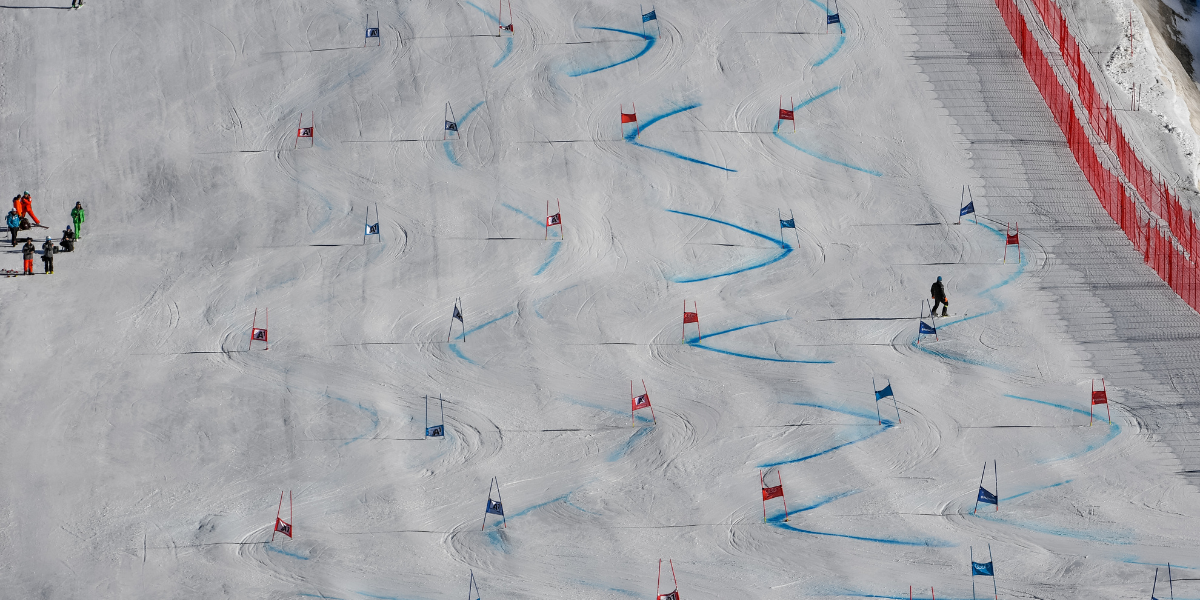
For the last two decades, Levi, Finland has offered an almost mystical start to the World Cup slalom season. At 110 miles north of the Arctic Circle, it’s nearly beyond the reach of humanity and seems more a figment of a wild imagination. It is said to be the actual home of Santa Clause, a plausible claim given the abundance of resident reindeer, some of which are awarded to the race winners. The sun only reaches the race hill for a few hours a day, and, in a few weeks’ time, Levi will enter three weeks of Polar Night. During that time, the brightest light source will likely emanate from the flanks of the Levi Black World Cup trail. Those floodlights were first flipped on in 2004, at least in a World Cup skiing sense, to celebrate one of Finland’s most celebrated athletes at the time, Tanja Poutiainen. Incredibly, she won what was the first World Cup race ever contested in Finland. No Finn has won it since, not even the decorated Kalle Palander after the race was added to the men’s calendar between 2006 and 2019.
These days, the venue has returned to a women’s only affair and kicks off the slalom season with back-to-back races. It is cliché to overemphasize the importance of the opening race as some essential start ramp that will dictate the momentum skiers take into the slalom season. But, with this stop comprising nearly 25% of the nine-race slalom calendar, it’s fair to say, one needs to be ready when the lights come on.
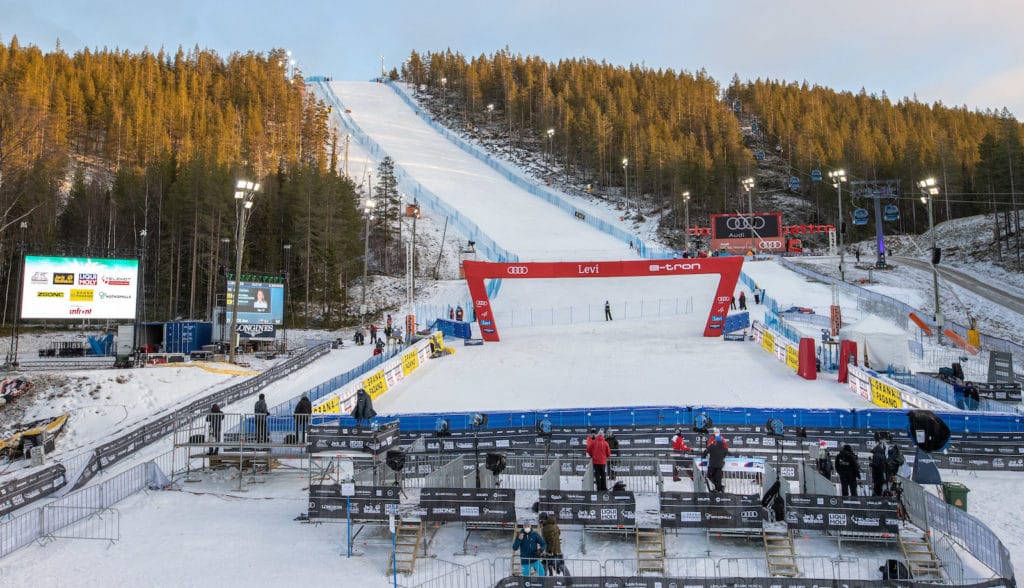
Levi Black is a unique slalom in that the first 25 seconds are entirely flat, the longest such feature on the World Cup, and the conditions are historically ideal. It opens the door to all manner of new names and high numbers willing to risk anything to get a second run. But halfway in, they reach one of the steepest pitches they face all year, and though some fresh faces make it to the line for two runs, only the best of the best have ever won in Levi.
In fact, after Poutiainen the list includes the greatest slalom skier ever (before Shiffrin came along) Austria’s Marlies Schild, and then nothing but winners of the overall title. There is Shiffrin with her record four wins. Slovakia’s Petra Vlhova and Germany’s Maria Hoefl-Riesch have won three. Sweden’s Anja Paerson, Croatia’s Janica Kostelic, Slovenia’s Tina Maze and Lindsey Vonn each have won once. It is one of the most exclusive lists of any enduring venue.
Bottom line: While the slope and conditions offer a wide embrace to talent of various experience levels and start numbers, this season-opening podium leaves little room for non-royalty.
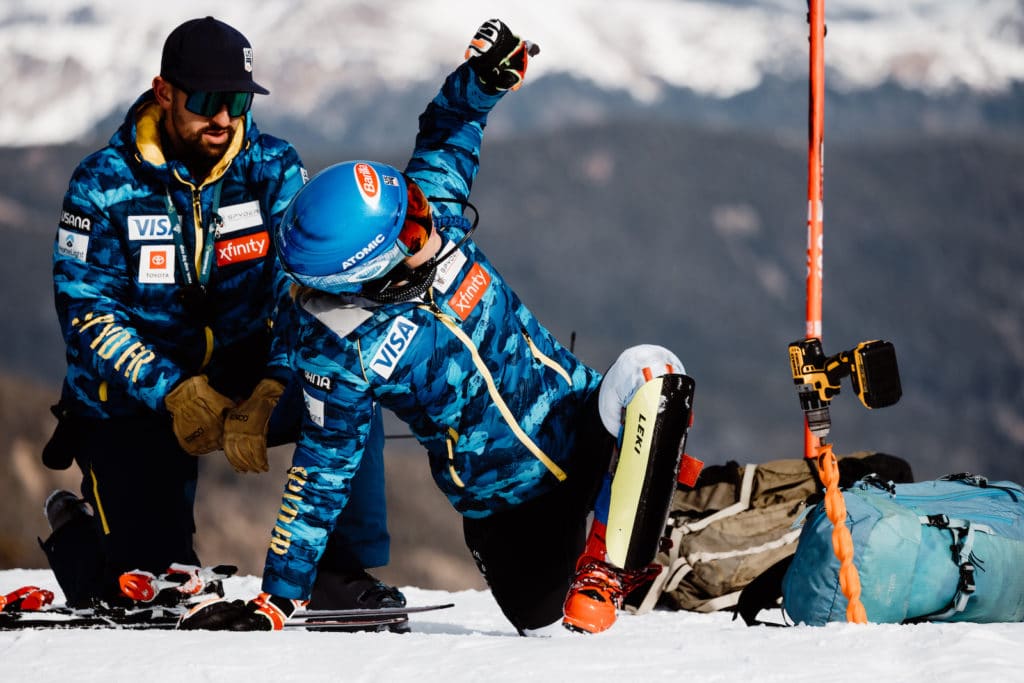
The day after winning the opening giant slalom in Soelden, Mikaela Shiffrin went right back to training, only to strain her back. It was bad enough that her plan to prepare across four disciplines between Oct. 30 and Nov. 14 was curtailed from nine double sessions down to only two, along with a few single sessions. Most of her time was spent trying to loosen her back and focus on slalom.
“The only thing you can expect in this sport is that you have to be flexible,” she said Wednesday during a Zoom press conference from her hotel in Levi. As for her back now, she is “less concerned about it. I’m back to normal ski-racer back stiffness.”
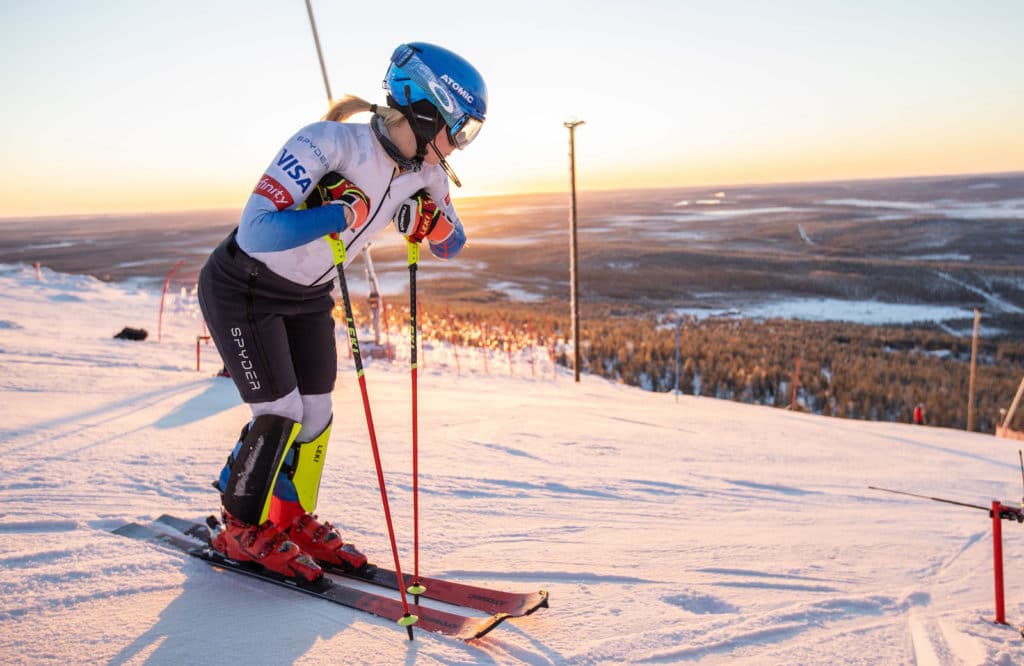
For the first time since Soelden, Shiffrin was able to test her back on a full-length course in Levi. “From what I saw up on the training hill, Mikaela looked the best, but we didn’t see times and I didn’t see everyone ski,” said U.S. women’s coach Magnus Andersson. He overseas Paula Moltzan, Nina O’Brien and AJ Hurt. Their collective performance last year at Levi is one he, and they, would prefer to leave in the past. “You can emphasize the upper flat too much, and end up wanting too much, and in the end it makes you tight,” he said, describing what he saw of his team a year ago. “Right now, they are skiing very well, all of them better than last year, but we are trying to be more relaxed and I think they are.” Given the remote nature of the venue and the four hours of daylight, it pays to be relaxed. “There isn’t much to do here, so after a 90-minute training session, you have 22-and-a-half hours of darkness left.” There is a temptation to overcook yourself in the final week before the slalom, he explained. “We try to stay calm and rested.”
As for the early-season nerves, not even Shiffrin has learned to completely control them noting everyone is so “awake” and “hungry” for the opening slalom. Though many see her as the face of intensity, she acknowledged, all she sees on opening day is the intensity of her adversaries. “It’s scary,” she said. What’s more, their confidence has grown.
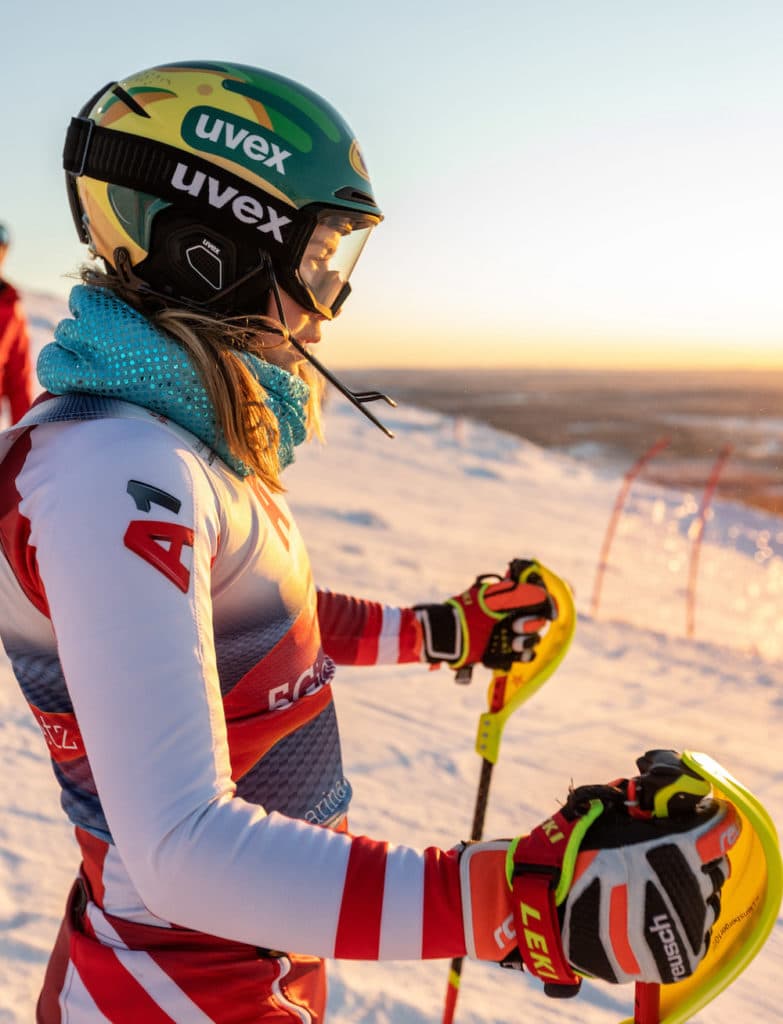
Last year, at this time, there was a familiar refrain: No Swiss woman had won a slalom since 2002; no Austrian woman had won since 2014; no Slovak had ever won an overall title. In large part, Shiffrin and her 45 slalom wins are to blame, but 2021 was the year of the drought reset. Switzerland’s Michele Gisin snapped her country’s near two-decade drought with a slalom win. Katharina Liensberger not only won a World Cup slalom for Austria, she piled on a world championship win and World Cup slalom title. And Vlhova, skiing in every race of the season, not only won the overall title but swept the opening slalom weekend last year.
That fails to include what looked like an emerging Anna Swenn Larsson. Her Swedish compatriot Pernilla Wiberg, who won the overall and slalom title in 1997 and now works for Swedish television, told me about some of Swenn Larsson’s training she witnessed on video leading into last season. “I have never, including Shiffrin, seen anyone skiing slalom as fast as Anna, not in the last 20 years.” It was speed the rest of the world never saw as she and her teammates were excluded from Levi last year because of single case of Covid on their team. A month later, she broke her ankle and was out for the season.
Both she and Gisin, who has struggled with mononucleosis since late last year, are likely to be easing their way back into form. The same has be said about Switzerland’s Wendy Holdener, who holds the record for the most slalom podium finishes without a win. She fractured both wrists in a dryland training incident in October and was just recently cleared to train in gates. Pain is nothing new to athletes, particularly skiers. While it is one thing to compete with an ailment, it is altogether more difficult to win with one. That is truer today in women’s slalom than it has been in a decade.
About the Author: Steve Porino