GEPA pictures
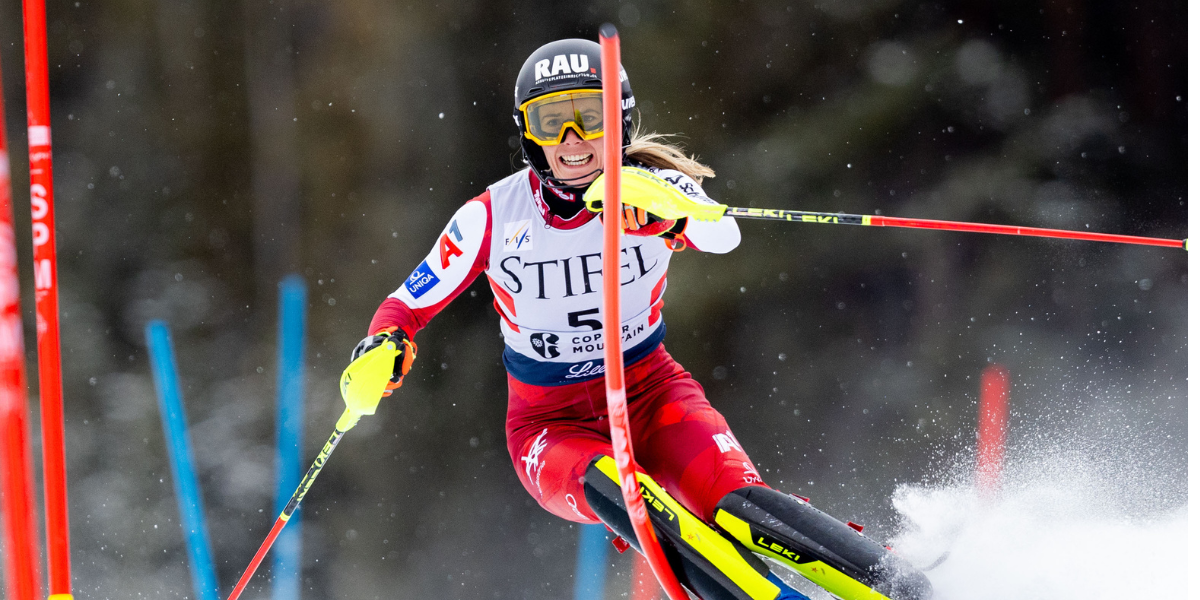
Katharina Liensberger should have raced in her third Olympics in Cortina 2026.
She shouldn’t have just been there; she should have been a medal contender.
For many athletes, competing in the Olympics just once is a dream. Reaching third place with a genuine chance of winning another medal would be extraordinary.
That dream vanished early in the new year when Liensberger injured her right knee during giant slalom training near her home in St. Michael.
The Austrian fractured her tibial plateau, tore her meniscus and injured the medial collateral ligament in her right knee. In an instant, the injury ended both her hopes of racing in Cortina and her 2025-26 season.

Building momentum
Days earlier, Liensberger had scored her best result of the 2025-26 season, finishing fourth in the Semmering slalom in her home country of Austria.
Liensberger had already turned her attention to the next World Cup technical races in Kranjska Gora, Slovenia. Less than a week later, instead of continuing her Olympic buildup, she was in the hospital undergoing knee surgery.
For Liensberger, everything had changed.
A change in mindset
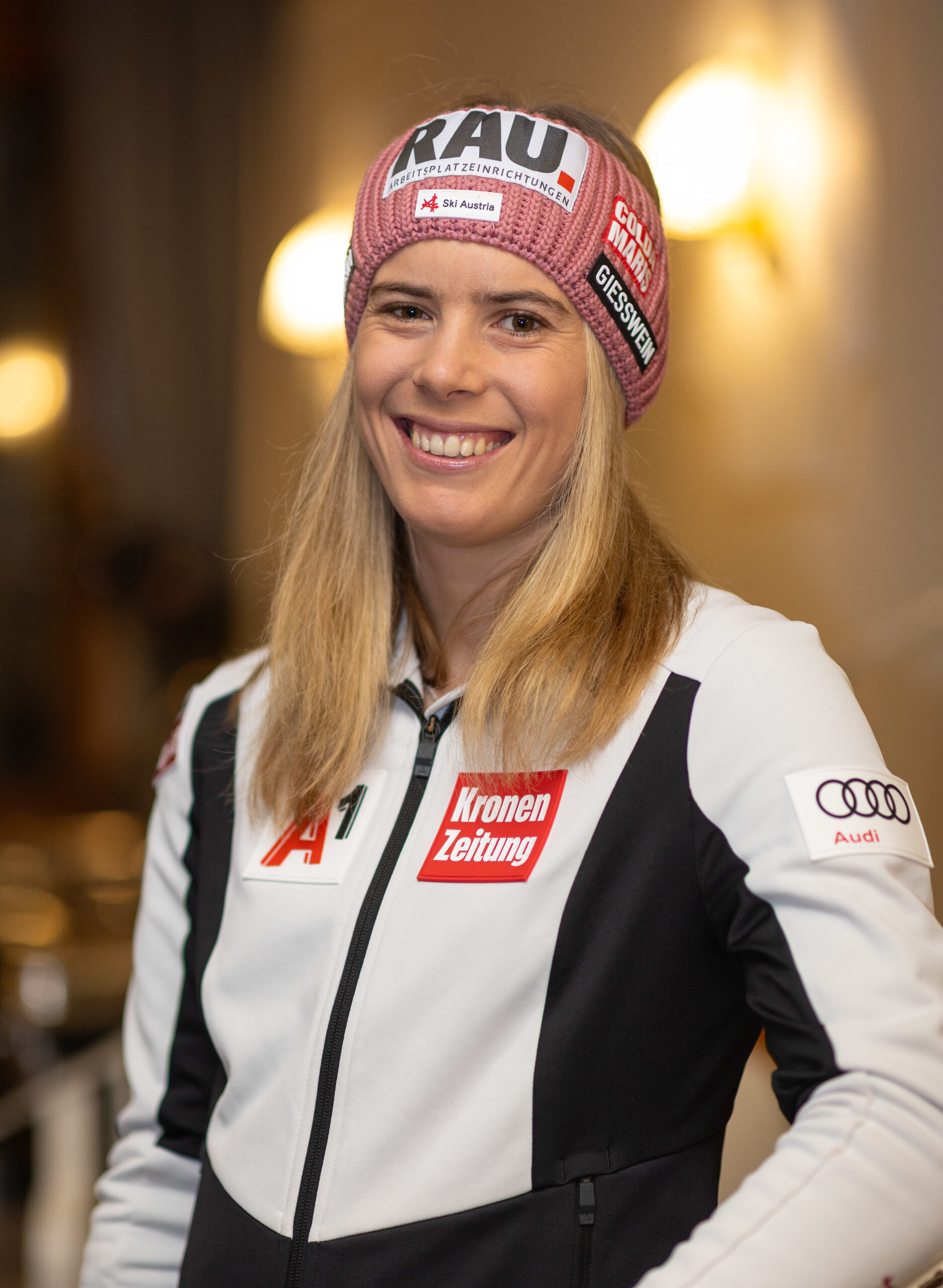
Throughout the process, Liensberger has been determined to remain positive.
Despite spending a decade on the World Cup tour, this was her first major injury. Suddenly, she had to become comfortable with life moving significantly more slowly.
“I became more conscious of everything moving at a slower pace,” Liensberger said.
Still, the thought of returning to skiing has brought her happiness.
“For me, it’s just the thought of skiing itself,” she said. “It gives me so much love and happiness. It’s the thing I’ve loved the most since I was two and a half years old, where I could trust myself most, where I could feel that I’m with myself.”
For Liensberger, skiing is not only about the feelings within her own body. It is also about being outside and connected to nature.
“Of course, it’s also a great sport where you can be with nature,” she said. “When I got back home after surgery, I had a month where I didn’t really go out. I think I really will appreciate just being out in nature.
“This is just normal, and then when you lose it, you feel like, OK, now there’s something missing.”
When the “Skiing Is Believing” podcast asked whether she had always been this patient, Liensberger responded with a laugh.
“Oh, I’m really not,” she said. “This was for sure one of the most difficult things I had to learn during this rehab because I always wanted to make very big steps and move forward very fast.”
However, the time away from skiing has also given Liensberger a chance to reflect on her career.
“I think this time gives me a chance to rethink everything that happened before and to get more silence for myself,” she said. “I had so many questions running through my head. You can imagine what it’s like: lying at home when all you want to do is ski and be in competition mode. But I think it helped me review what happened earlier in my career.”
The rehabilitation and comeback
Liensberger is looking forward to returning to snow, but she knows that moment will represent only one part of the recovery process.
“I’m really looking forward to going back on snow soon,” she said. “But in the end, I have to say it’s just one small step in the whole process.”
More than anything, Liensberger hopes to rediscover the feeling that made her fall in love with skiing.
“When I get to snow, I really hope I can feel this feeling of just being myself and how much I love this sport again,” she said.
Mentally, she believes she will be skiing long before her body is ready.
“I think in my head, I will be skiing much before I’ll be on snow physically,” she said. “I’m sure there will be the right time when my body, my heart and my knee will be ready for it.”
Missing the Olympics
The Olympics were tough to watch, but Liensberger did.
“My heart was there,” she said. “I had so many good memories from the 2021 Cortina World Championships.”
She also enjoyed watching her Austrian teammates deliver outstanding performances at the Cortina Olympics.
“It was great to see them making outstanding performances,” Liensberger said. “Seeing my team winning the combined title and really competing at that high level was great.”
Meanwhile, her rehabilitation continued to produce important signs of progress.
“At the same time, I was able to celebrate some little milestones in my recovery,” she said. “That was nice, too.”
They were not Olympic medals, but those small milestones still gave Liensberger reasons to celebrate..
Career highlights
Liensberger made her World Cup debut at home in Flachau in January 2016. Within five years, she was regularly competing for World Cup podiums, victories and major championship medals.
Her results explained why she should have arrived in Cortina as a genuine Olympic contender.
World champion
At the 2021 World Championships in Cortina d’Ampezzo, the venue for the women’s Alpine competitions at the 2026 Olympics, Liensberger became a dominant force.
First, she shared the parallel gold medal with home hero Marta Bassino. She also earned bronze in giant slalom before defeating Petra Vlhová and Mikaela Shiffrin to win the slalom title.
Cortina became the place where Liensberger established herself as one of the world’s best technical skiers.
World Cup champion
The then-23-year-old carried that momentum back to the World Cup tour, earning her first two victories in Åre, Sweden, and at the World Cup Finals in Lenzerheide, Switzerland.
Lenzerheide was not simply about proving she could win again. The victory secured the 2020-21 World Cup slalom title.
COVID-19 restrictions meant Liensberger celebrated behind a mask, but the joy among the Austrian team was clear.
One year later, she added two Olympic medals in Beijing. Liensberger earned silver in the women’s slalom and helped Austria win gold in the mixed team parallel.
She had proved that she could perform under the highest pressure.
The Austrian team
Liensberger’s rise also helped strengthen an Austrian women’s technical team attempting to establish a new era.
Following several key retirements, the future had started to look uncertain. Austrian skiing was also living in the shadow of eight-time overall World Cup champion Marcel Hirscher’s extraordinary dominance on the men’s tour.
Something changed
When Liensberger reached the top in 2021, the Austrian women were back among the major title contenders.
Since then, Liensberger and teammate Katharina Truppe have added more Austrian slalom victories in Åre. Katharina Gallhuber, the 2018 Olympic slalom bronze medalist, and Katharina Huber have also produced top-level performances.
“I think it’s the strongest position for sports in Austria,” Liensberger said. “We have the possibilities, we have the mountains, we have the snow and the surroundings.
“I think it’s really important for all people in Austria to have access to this beautiful sport, to learn to ski and, of course, go on ski holidays.”
The future of Austrian skiing
Now there’s a new generation in Austria.
Natalie Falch, Leonie Raich and Lisa Hörhager achieved career-best World Cup slalom results during the 2025-26 season.
Meanwhile, Julia Scheib won five World Cup giant slalom races on her way to her first discipline title. Nina Astner also established herself on the giant slalom circuit, finishing the season 24th in the standings.
Liensberger remains a crucial part of that group. Her experience connects Austria’s established champions with the athletes attempting to follow them.

Changes at the top
Austria will enter the 2026-27 World Championship season with significant coaching changes.
Johannes Zöchling replaced Roland Assinger as the women’s head coach after spending two seasons with Norway’s women’s technical team.
Assinger moved to the men’s Europa Cup program, where he leads the speed group. Three-time Olympic champion Matthias Mayer will lead a separate Europa Cup group covering giant slalom, super-G and downhill.
Liensberger will therefore return to a team that has also entered a period of change.
Key takeaways
When asked what the injury layoff had taught her, Liensberger focused on the unpredictability of life.
“Not everything in life happens like you imagined it or wished,” she said. “I heard a quote that said, ‘Life is completely uncontrollable, but it always has a meaning.’ That is what I learned.”
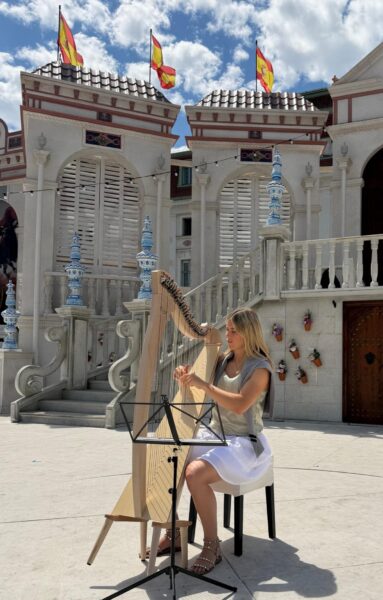
Playing her harp has also helped Liensberger remain calm and grounded. The instrument has often accompanied her on the World Cup tour, and this time she took it to rehabilitation.
“It’s always great to play,” Liensberger said. “It was funny because I took my harp with me to rehab, and some people told me, ‘Can I just listen to this music?’ It’s nice to share it with other people.”
“Everything I’m now becoming aware of is just as much a part of a ‘successful’ life as a so-called career. Basically, I feel even more fulfilled now than I did before. I’m getting to know life from such a wide variety of perspectives — something I often didn’t have the time to do in the past. Peace of mind is crucial in this regard.”
The 2025-26 season brought some of the most difficult moments of Liensberger’s decade on the World Cup tour. Yet she has been able to transform those challenges into a new wealth of experience.
The 29-year-old still has the determination and mindset to come back and compete at the top of the sport, just as she has throughout the past seven seasons.
Her mind may reach the snow first. Her body, heart and knee will decide when the rest of her can follow.
About the Author: Matt Garcka