Kilde wins in weather-challenged Wengen

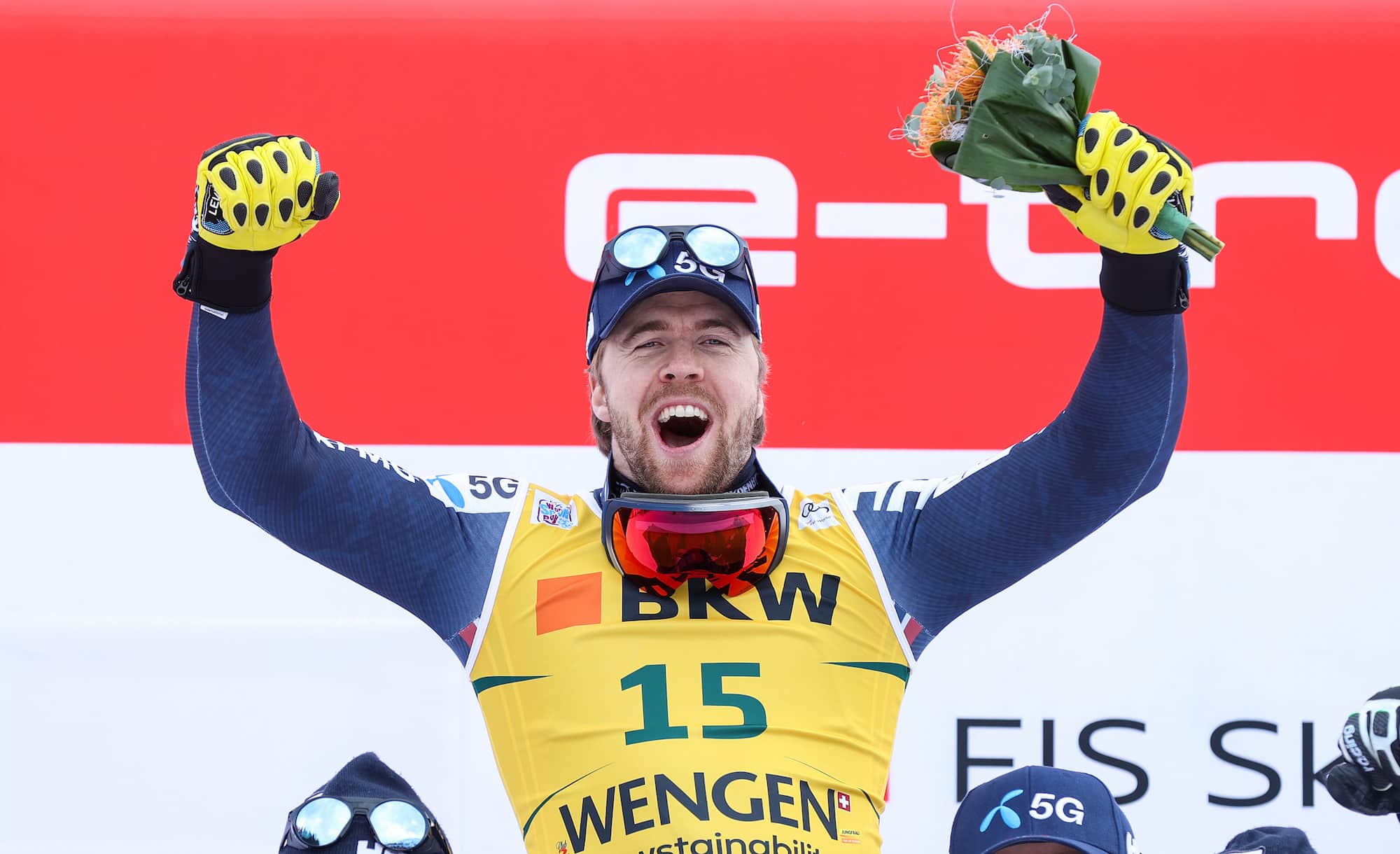
Aleksander Aamodt Kilde. Photo: GEPA pictures.
WENGEN, Switzerland — Aleksander Aamodt Kilde spoiled a Swiss party Friday by winning a World Cup super-G on the country’s storied Lauberhorn mountain.
The Norwegian blew kisses to the noisy local fans in the finish area after edging home racers Stefan Rogentin and Marco Odermatt. Kilde, the 2022 Olympic bronze medalist in super-G, also held his arms out wide as if asking for the crowd to forgive him.
“I felt for sure a little bit of mixed feelings when I crossed the line because I knew it was double Swiss in the lead,” Kilde said. “Also, it’s a good feeling beating them.”

Rogentin, who got a career-best result in second place with his first podium finish at age 28, was 0.27 seconds behind Kilde. Odermatt trailed Kilde by 0.66 seconds to extend his streak of top-three finishes in super-G to four races this season.
“Couldn’t be better, that’s maybe the best day of my life yet,” said Rogentin, whose previous best result was fifth in a super-G last season. “Today was a perfect day.”
The weather changed dramatically
The Wengen weather was beautiful for the early start numbers, but then the wind and clouds arrived to change the situation completely. The race had to be interrupted at one point because the wind had become dangerous. The FIS and course crew produced another snow surface miracle.
Ryan Cochran-Siegle wore bib 14 today, starting just in front of Kilde. He had a very positive outlook on the conditions, saying “I think they [course crew] did a pretty impressive job with the challenging weather that it’s been.”
For American fans, Olympic silver medalist Ryan Cochran-Siegle has his first top ten super-G of the season, finishing sixth. The time difference among the fastest ten was a significant 1.67 seconds.
RCS also spoke highly of Kilde’s ability to win from bib 15 with the conditions.
“I think it’s awesome to see that Alex [Kilde] was able to overcome 15 and still come down with a victory,” said RCS, “It is just impressive.”

The race provided few lead changes, and it was decided once bib 15, Aleksander Aamodt Kilde skied. When Kilde arrived at the finish, this season’s overall and super-G leader Marco Odermatt moved to third and another Swiss skier, Stefan Rogentin, would be displaced to second. The time separation of the best three was 0.66 of a second. It was undoubtedly fitting that the Wengen super-G saw two Swiss athletes on the podium.
“It was really on the limits but I made it,” said Kilde, whose winning time of almost 1 minute, 48 seconds was unusually long for a super-G.
Kilde and Odermatt are the class of the field
At this point in the season, it is clear that Kilde and Odermatt are superior; whichever racer is most on his game wins. Additionally, the other one rarely has to settle for less than a podium. We are fortunate to witness greatness and to have two stars simultaneously provide the drama. Others will win, but it will take a particular day.
Kilde’s 18 career wins in the World Cup now include nine in each of the speed events, super-G and downhill. He won the Lauberhorn downhill last year ahead of Odermatt and Feuz and will go for a repeat on Saturday in arguably Switzerland’s most prized sports event.
While the skiing from the top men was inspirational, and it was obvious that they were at their limits, the bottom 2/3rds of the classic downhill provides a unique downhill-like super-G. It is fast and dangerous and for the later racers, the wind blew, and the clouds moved in, causing the light to go flat.

Dominik Paris earned his first top-five of the season, undoubtedly a confidence boost going into tomorrow’s downhill. Wengen has also provided Swiss fans with two racers on the podium and five in the top 10.
It was a difficult day to attack from the back
The time differential from the first to the 30th was 3.17 seconds. A clear indicator of the challenge that existed for the later racers is that three of the first 30 starters didn’t finish and only four from outside the first 30 starters ended the day in the points. France’s Cyprien Sarrazin, bib 35, was the fastest of the group in 24th.
The Lauberhorn super-G race hill is narrow and only offers a few opportunities to diverge from the downhill. Therefore the course favors downhill skills. Historically the Haneggschuss sector of the Wengen course is the fastest in World Cup and was again today. In a super-G, the racers achieved speeds as high as 87 mph. Early in the race, it looked like the bottom of the Haneggschuss sector would cause issues. Bib three, German Romed Baumann and bib six, James Crawford of Canada, did not meet the challenge and did not finish. However, teams made adaptations that ended the issue.

Nothing would have been more poetic than a Kugleblitz, Beat Feuz’s victory. The Swiss star, Feuz has declared that Wengen and Kitzbühel will be his final World Cup races. Feuz started the race with bib four and used his downhill skills to arrive at the finish in the first place. The home country crowd met their champion with a reception fit for a king. Feuz experienced the moment with a big smile. Feuz finished the day in seventh, but number one in the hearts of the fans.
At the end of the race, four North American men finished in the top 30 and earned World Cup points. Two Stifel US Alpine Team members, Ryan Cochran-Siegle and Travis Ganong, as well as two members of Alpine Canada Alpin Brodie Seger and Broderick Thompson. All of the scoring North Americans started among the first 30.
Canceled super-Gs rescheduled In Cortina d’Ampezzo
Two super-G races canceled from Lake Louise, Canada, and Val Gardena, Italy, have been rescheduled for Jan. 28-29 in Cortina d’Ampezzo, Italy. That weekend became free when a lack of snow in Garmisch-Partenkirchen, Germany, forced a downhill and a giant slalom to be canceled.
Analysis of the fastest three racers, North Americans in the top 30 and top 32 results


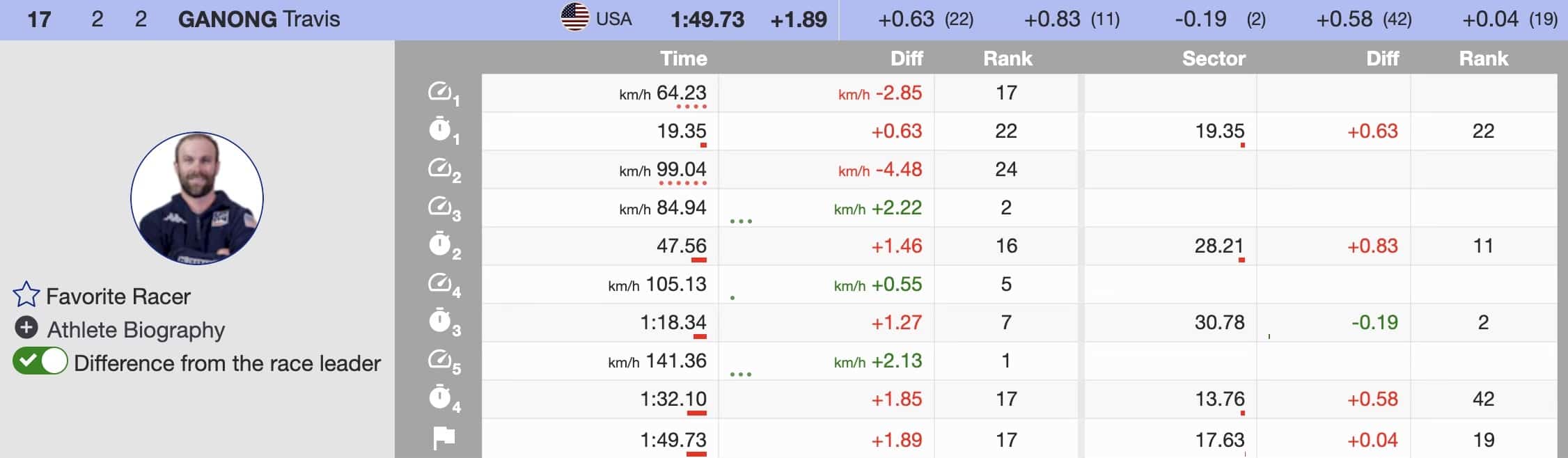


Top 32 results from Wengen super-G January 13th

The Associated Press contributed to this report.
This is a developing story, stay tuned for updates.
About the Author: SR Staff Report

Related Post