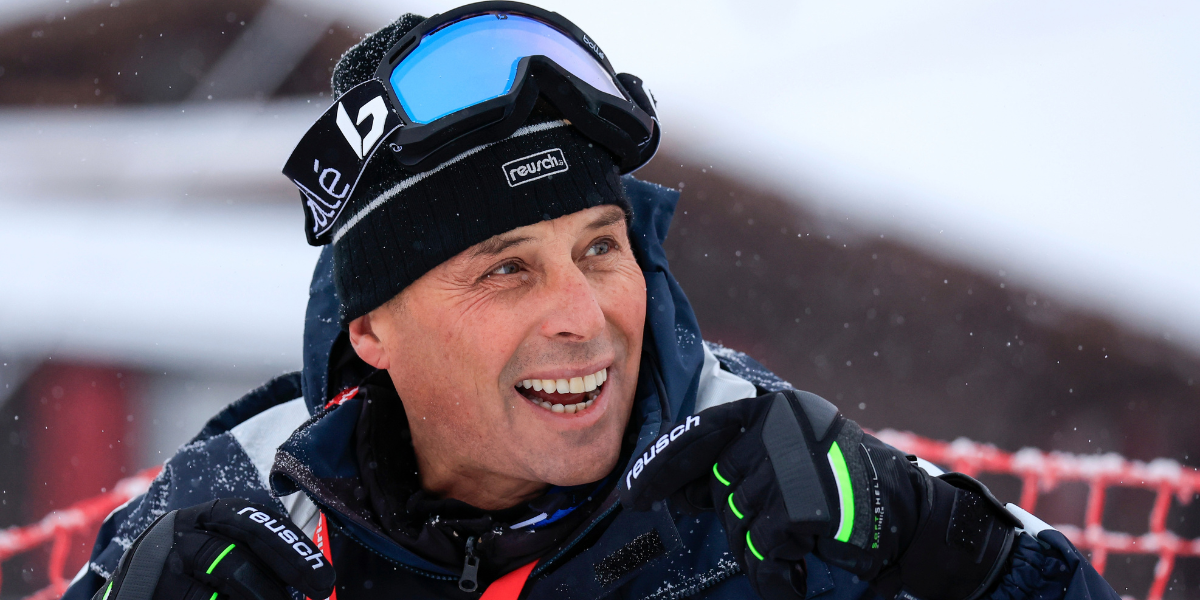
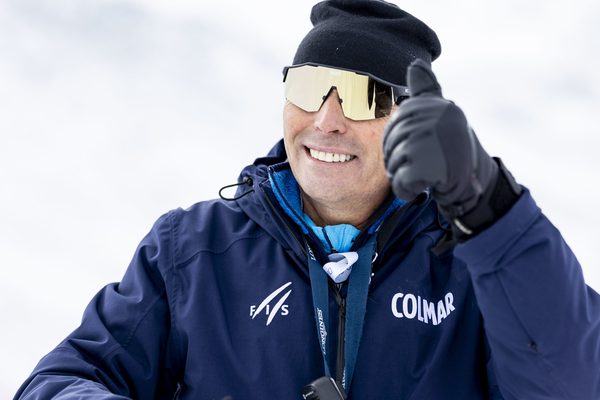
Markus Waldner, a familiar figure to anyone who has watched men’s World Cup ski racing over the past decade, is stepping down after 12 years as FIS chief race director for the men’s circuit.
FIS announced his decision Oct. 8. Waldner cited accumulating pressure and said he no longer had the energy and mindset to approach another full season as he wanted.
Viewers have seen him on television checking the course or communicating a race hold, a restart or a cancellation. They might not have known his name, but they knew his presence. His job placed him at the center of decisions about whether racing could proceed.
For those of us who watched him work long before he reached the World Cup, the news carries the weight of decades.
I knew Markus personally and watched him work at South American Cup races in Chile, across the men’s Europa Cup and throughout the World Cup. Over those years, his presence became part of the rhythm of international ski racing.
The Italian spoke many languages. Above all, he was fluent in the language of alpine ski racing.
Now, the sport faces the challenge of replacing someone whose experience reached well beyond the position he held.
The pressure behind Markus Waldner’s decision
“This is not a decision that I take lightly,” Waldner said in the FIS announcement.
He described leading alpine skiing at its highest level as a privilege. However, he also acknowledged the toll of a job that carries constant pressure.
“Through the years, as FIS and the sport have changed and grown, this pressure has been accumulating,” he said.
His explanation deserves respect. Recognizing that he could no longer bring the energy he expected of himself to another full season was itself a difficult decision.
Meanwhile, FIS has begun recruiting his replacement. Peter Gerdol, chief race director for the women’s circuit, will oversee both circuits during the opening part of the season. Waldner will support the transition throughout 2026-27 while discussing possible new responsibilities within FIS.
Experience built long before the World Cup
Waldner grew up in Brixen, also known as Bressanone, in Italy’s South Tyrol region. He raced as a young skier, earned a master’s degree in sports science at the University of Innsbruck and coached in Italy.
In 1997, he joined FIS as Europa Cup coordinator. He later coordinated the Continental Cups across five continents before succeeding Günter Hujara as men’s chief race director in 2014. skiracing.com
That background matters. The World Cup was the most visible chapter of a career that also encompassed the circuits where athletes and organizers prepare for the sport’s highest level.
From my perspective, those years gave Markus an extraordinary store of experience. By the time he reached the World Cup, he had already spent years confronting the practical challenges of making international races happen.
After another 12 seasons in the top job, few situations could have been entirely unfamiliar to him.
The hero, the villain and the decision
Across decades of watching Markus work, I saw how differently people could judge the same official.
He could be the hero when a decision delivered the outcome people wanted. At other times, he became the villain when it disrupted their plans or challenged their expectations.
Yet he always had a reason for his actions.
That does not mean every decision escaped criticism or that everyone had to agree. It means there was judgment behind the call, informed by experience that spectators could not always see.
A race decision can affect athletes, coaches, organizers and everyone waiting for the competition. Their interests do not always align. Consequently, even a carefully considered decision can leave people frustrated.
Over time, experience helps an official recognize familiar problems while understanding what makes the present situation different. That judgment takes years to develop.
FIS can appoint a successor. Building that depth of experience will take much longer.
He understood the challenges ahead
Waldner had already spoken openly about the pressures facing the circuit.
In a 2024 interview with Ski Racing Media, he discussed an overloaded calendar, athlete fatigue and the need for better long-term planning. His view on the race schedule was direct: “Less would be more.”
He also described increasingly abrupt weather changes and the investment organizers needed to deliver reliable racing.
Those comments offer context for the demands of his job. However, they do not establish that any particular dispute or policy prompted his departure. His announcement identifies accumulating pressure and his readiness for another season as the reasons for stepping down.
For now, his continued involvement gives FIS valuable help during the handover.
A presence the sport will miss
FIS Alpine Director Janne Leskinen called Waldner a “true reference point” for Alpine skiing and emphasized the value of his presence at races.
For those who knew him on the hill, that description resonates.
My reaction to the announcement is shock, followed by an appreciation of how much experience the sport stands to lose from this role. Markus had seen ski racing from its development circuits to its biggest stages. He understood its people, its demands and the difficult decisions that kept it moving.
His successor will inherit a demanding position. Markus brought decades of preparation to it.
That is what makes filling his shoes so difficult.

About the Author: Peter Lange