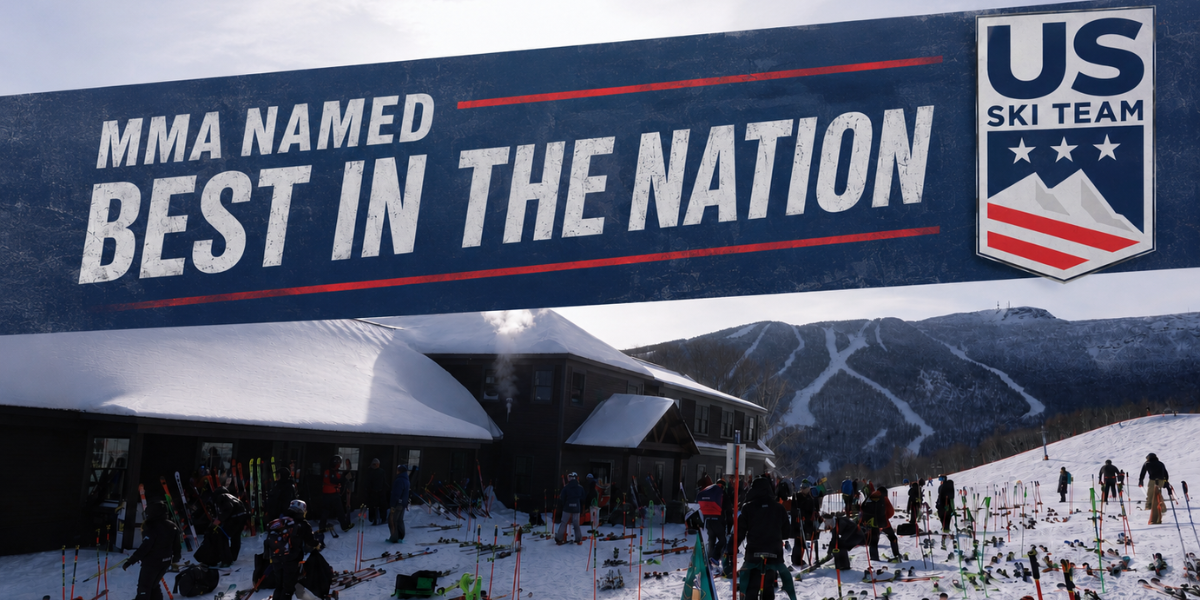
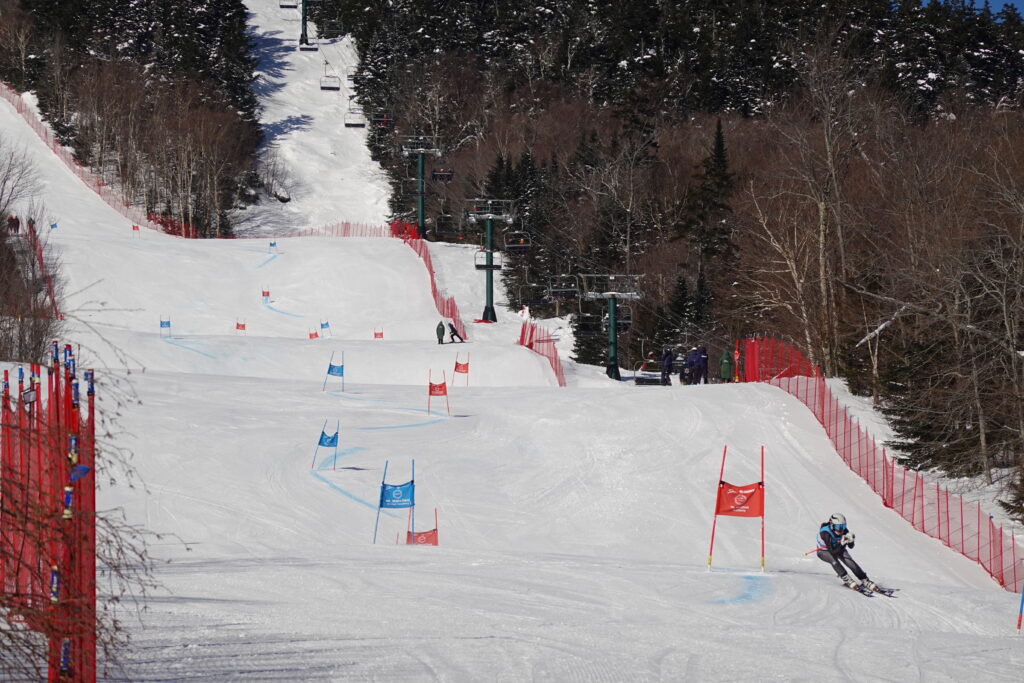
Mt. Mansfield at Stowe, VT. Provided by MMA.
Mt. Mansfield Academy (MMA)’s impact on American ski racing reached another milestone this season after the Stowe, Vermont-based program was named U.S. Ski & Snowboard’s Club of the Year in both Alpine and Overall. MMA also once again earned Gold Certified Club status, one of the highest honors in the organization’s club development system.
The recognition reflects not only elite results, but decades of athlete development, coaching consistency, academic excellence, and a community-driven culture that has made MMA one of North America’s most respected programs.
For a program developing athletes since 1934, the awards validate a philosophy rooted in patience, passion, and long-term growth.
“Recognition like this is really a byproduct of doing the daily work the right way over a long period of time,” Executive Director Igor Vanovac said.
That success has been shaped by generations of leadership, including Vanovac, Junior Program Director Micheline Lemay, Athletic Director Andrew Gannon, U16 Head Coach Lorant Gudasz, Head of School Lori Furrer, and the academy’s coaches and faculty.
“We have continued to believe in a long-term approach to athlete development rather than chasing short-term success,” Vanovac said. “The program has grown, expectations have grown, and results have grown, but we have stayed committed to development.”
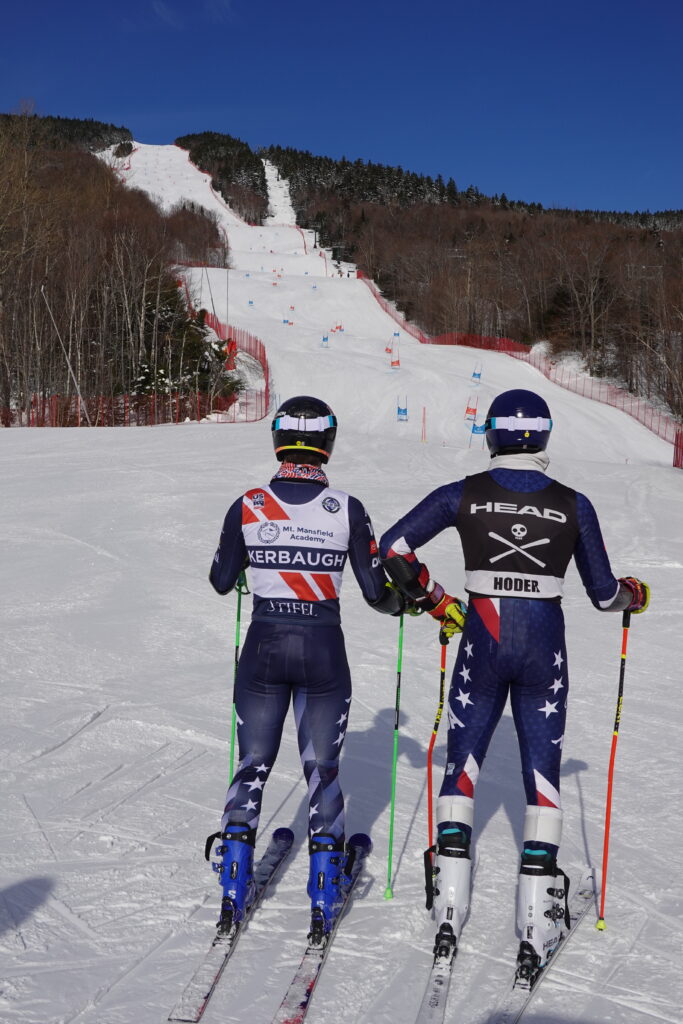
That philosophy is reflected throughout the program. Olympian Ryan Cochran-Siegle remains one of MMA’s most recognizable alumni, while athletes like Maxi Hoder continue to showcase the academy’s development pipeline. Hoder earned a World Cup slalom start after finishing second in the NorAm slalom standings.
MMA alumnus John Kerbaugh also continued that trajectory this season, earning a place on the U.S. Ski Team. At the younger levels, U16 standouts Hugo Vanovac and Vivi Hermsdorf represented the United States at AlpeCimbra, widely regarded as the premier international U16 race series in the world.
For Gannon, who joined MMA this season after founding and leading Plymouth State’s NCAA Division I ski program, the recognition reinforces why he came to the academy.
“There are very few places that remain truly community-oriented, and for me, I’m a total community person,” Gannon said.
What separates MMA, however, is the balance between athletic achievement and academic growth. The same individualized approach that supports athletes on the hill extends into the classroom, where students receive the flexibility and support needed to pursue elite competition while being challenged academically.
“Our model has been a bit different than other programs through the years,” Furrer said. “Although we believe strongly in what we have built, it is rewarding to have that recognized from outside.”
A Program Built on Patience
In an era increasingly driven by early specialization and immediate results, MMA has deliberately taken a different approach.
“The strength of the program is not really focusing on the quick result,” Gudasz explained. “It’s developing the athletes fully and being patient with the process.”
That patience is perhaps best illustrated through the rise of Maxi Hoder. While Hoder was always known as a talented skier, he was never considered one of the standout prodigies within the U.S. development pipeline. Yet years later, after sticking with the sport and continuing to build, he emerged onto the international scene.
“His story is such a cool story,” Lemay said. “He stuck with it and he kept working hard and he believed.”
For MMA’s coaches and educators alike, Hoder’s trajectory validates the academy’s long term vision: creating athletes who stay connected to the sport through a genuine love of skiing while continuing to grow as students and people along the way.
“Ski racing teaches athletes so much through every experience,” Lemay said. “The athletes who continue to grow in the sport are the ones who truly love skiing.”
Balancing Academics and Athletics
At MMA, communication between teachers and coaches is a central part of daily life. The school’s small size allows staff to closely coordinate academic schedules, travel demands, and individualized support for each student-athlete.
“Teachers and coaches can easily connect on individuals,” Furrer said. “We coordinate race schedules with teachers planning around the times students are in the building.”
That collaboration becomes especially important when students face challenges.
“When a student-athlete is struggling it typically shows both on the hill and in the classroom,” Furrer said. “Those conversations turn into a plan for the support they need to succeed in both areas.”
As ski racing has evolved, MMA has expanded its focus on holistic athlete support, with areas like mental health and sport psychology becoming increasingly important.
For Furrer, one of MMA’s defining strengths is the consistency of its academic expectations and the relationships students build with faculty over time.
“Academic commitment and rigor have always been central to the program,” she said. “Many of our students choose AP-level coursework.”
The academy also prepares younger athletes early for balancing travel and academics at the FIS level by teaching time management and independent learning skills before they begin competing internationally.
“We prepare students early for the demands of continuing coursework while traveling,” Furrer said.
Because of MMA’s small class sizes, students often form lasting relationships with teachers that influence their future beyond ski racing.
“We frequently see students choose college paths based on experiences they’ve had here with specific teachers,” she added.
The Foundation Starts Young
Much of MMA’s developmental philosophy begins long before athletes enter the academy full time.
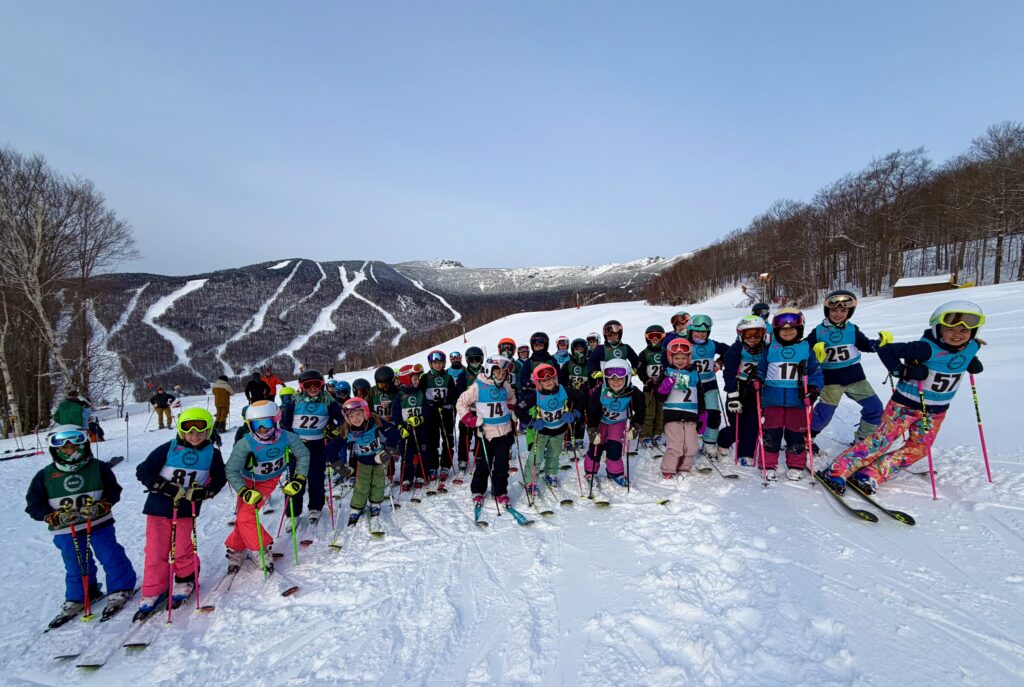
Lemay, who has directed MMA’s junior programs for more than two decades, oversees athletes from ages seven through 11, developmental years she believes are critical in shaping future racers and lifelong skiers alike.
“My tagline is safety, fun, and fundamentals,” Lemay said. “First, kids need to feel safe and know how to navigate the mountain. Then they can start to have fun.”
At MMA, development extends far beyond gates and race results. Coaches emphasize sportsmanship, emotional growth, teamwork, and resilience alongside technical skiing skills.
“I’m a huge component of whole child development,” Lemay said. “I put a lot of energy into the social emotional side of children, sportsmanship, respect, preparedness.”
That approach is embedded into the daily culture of the program. Younger athletes are encouraged to ski bumps, woods, variable terrain, and free ski extensively before becoming heavily focused on racing.
The mountain itself plays a central role in that process.
“Stowe in and of itself is such an incredible playground,” Lemay said. “The terrain does a lot of the teaching.”
“We always say the best coach on the hill is actually the hill,” Gudasz said. “It’s the playground where kids develop their skillset.”
A True Ski Racing Community
One of MMA’s defining strengths is the continuity within its coaching staff and the depth of ski racing knowledge surrounding the program.
Gudasz and Vanovac have spent nearly two decades building the academy’s systems and athlete pathways, while Gannon’s arrival brought additional experience from the collegiate and elite development levels.
“The goal is to keep the program high quality while maintaining that small community focus,” Gannon said. “That’s what makes this place special.”
The coaching environment also includes former World Cup athletes, elite coaches, and local ski racing legends. Olympians and former national team athletes regularly stay involved, giving younger racers direct access to generations of experience.
“When I say community, that’s what I mean,” Gudasz said. “There’s a lot of knowledge in town and everyone supports athlete development.”
For Lemay, that community is often what keeps athletes in the sport through its toughest moments.
“Sometimes it can be a really challenging sport,” she said. “But the friendships and team dynamics are such a huge part of it.”
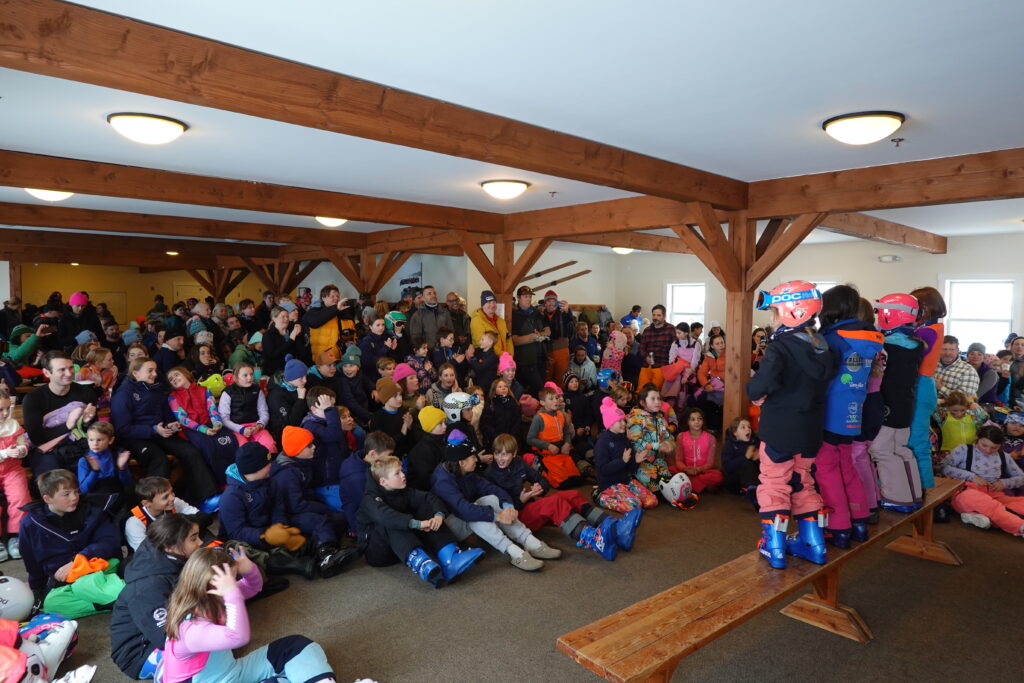
That support system now spans generations. Many former athletes return to coach, while others are enrolling their own children into MMA.
“I had Maxi since he was six years old,” Lemay said. “Now I’m seeing athletes who grew up in the program bringing their own kids here.”
Gannon believes that continuity is what continues to separate MMA from many modern development programs.
“It’s not just about the kids who make the U.S. Ski Team,” Gannon said. “Every athlete who comes through this organization has a meaningful connection to the program.”
“Whether athletes go to college, the U.S. Ski Team, or somewhere else, they always come back here,” he added.
Evolving with Modern Ski Racing
While MMA’s developmental philosophy remains rooted in patience and passion, the academy has also evolved significantly to meet the demands of modern ski racing.
Over the last two decades, MMA expanded from a winter term program into a full time academy complete with dedicated strength and conditioning facilities, year round programming, and integrated athlete monitoring systems.
“We evolved from a winter term program to a full time program,” Gudasz said. “Strength and conditioning is now a must.”
Today, athletes participate in structured offseason training programs, movement screening, remote conditioning platforms, and year round athletic development designed not only to improve performance, but also reduce injury risk and build long term durability.
Academically, the school has evolved alongside those athletic demands.
“There has been quite the development in academics at MMA through the years,” Furrer said. “From a small winter term school to a program that offers a variety of options to meet the needs of many we are definitely not stagnant.”
Each year, faculty members review course offerings and build individualized plans that best support student-athletes balancing increasing race schedules with academic rigor.
“Time-management has to be the focus for both staff and students,” Furrer explained. “We have to mesh the academic expectations with the ever increasing race schedules of our students.”
Even as training has become more sophisticated, MMA continues to emphasize balance, perspective, and mental wellness.
“What I’m seeing now is kids truly enjoying skiing again,” Gannon said. “They want to be here all the time. It’s not just putting boots on and running gates — they genuinely love being on snow.”
Looking Ahead
For MMA, the Club of the Year recognition is less a finish line than a reflection of the environment the program has spent decades building.
“The goal is to continue building a program that develops great student athletes, but also great people who stay connected to skiing and the sport for life,” Vanovac said.
Gannon echoed that same vision for the future.
“In a small organization, we can still do big things,” he said. “We want athletes to flourish not only because of success, but because of the joy of skiing.”
For Furrer, the recognition also creates an opportunity to share the academy’s broader story beyond race results.
“I think the value comes in the opportunity for us to tell our story — nothing fancy or philosophical, just who we are, what we do and what our student athletes have accomplished,” she said.
And perhaps most importantly, MMA hopes students leave understanding that ski racing is only one chapter of who they are becoming.
“I always hope our students become independent learners, self advocates, have an awareness of the world around them and are good human beings,” Furrer said. “Critical is to ensure they know that ski racing does not define them — they have much to contribute beyond their results.”
As the next generation of athletes emerges from Stowe’s slopes, the foundation remains unchanged: patient development, passionate coaching, academic commitment, and a community united by a love for skiing.
And after more than 90 years, that formula continues to work.
About the Author: Katie Twible