Author’s note: Originally intended to be an investigative journalism story but eventually moving toward commentary and analysis, this article intends to help unpack the Canadian longterm athlete development model, why it’s not more effective and how we can better understand and put into action the world-leading developmental pathway, which is right in front of us.
In the mid 1970s, CBC journalist David Ritchie penned a book, “Ski the Canadian Way,” along with chapter contributions from notable athletes his brother, John, was coaching at the time: Ken Read, Steve Podborski, Dave Irwin and Dave Murray. You read that correctly — the Crazy Canucks.
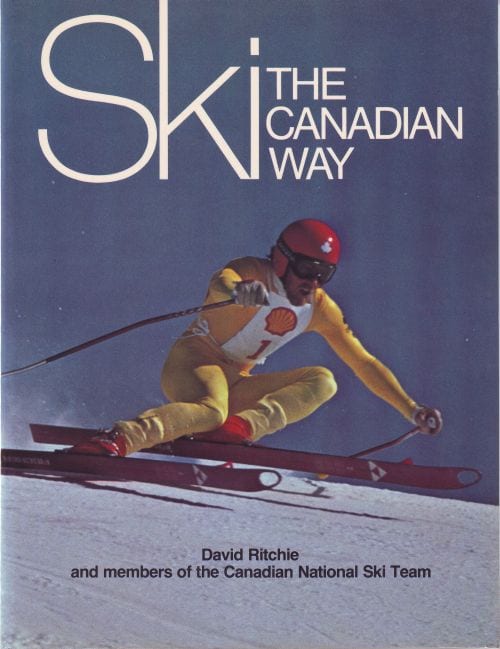
The 113-page paperback published by Prentice-Hall of Canada on Jan. 1, 1979, was massively influential on the next generation of skiers, myself included. It was easily accessible in our family room, often thumbed through before and after ski race training. That cover photo of Dave Murray, carving the perfect right footer burrowed deep in my psyche, even today it get’s me fired up to attempt to make a meaningful turn like that. Imagine that position on today’s skis!
But why has it taken so long to replicate, refine and perfect Canadian technique and how this message is delivered to young ski racers and coaches from coast to coast?
I ponder if the method of delivery employed by Murray, Read, Pod, Irwin and coach Ritchie was perhaps more effective than our current more technical documents. The contents of the book include: The White Circus, by David Irwin; Techniques, by David Murray; Equipment, by Steve Podborski; The Training Process, by Ken Read and John Ritchie; The Threat of Injury, by David Irwin and Steve Podborski; The Downhill by John Ritchie; and, Famous Downhills by David Ritchie.
That, to me, sounds like an athlete development structure, covering most of the essential bases of preparation, equipment, technique and approach.
Read explained that the book served two purposes: to share what the Crazy Canucks learned as they blazed a trail for future North American ski racers in a European dominated sport — and, to tell a story. And there were many stories to tell.
“‘Ski the Canadian Way’ was intended to reach a broad audience – I think I recall this correctly – that its purpose was to share what we learned,” Read explained. “We wanted to share the story, but as our progress was by trial and error, we hoped it could share what we learned so the next generations of ski racers would have a resource available to them [and] be inspired to take on the Europeans.”
But by Read’s account, making a direct comparison between this book and today’s development model manual is an apples-to-oranges comparison as “the LTAD is a technical document and not intended to be a best seller, but as a valued, credible resource for athletes, coaches and parents.”
Since then, a number of updates and versions have been produced and implemented as the sports official long term athlete development model. If you’re reading this article, you’ve likely heard this term – or its often-used acronym LTAD – dozens (or hundreds) of times. It’s also likely that you attempted to read the darned thing after coaches and administrators harped of its validity and importance. And you may have got through a few of its many chapters. No disrespect to all involved but let’s just say, it’s cumbersome. Like reading an annual report.
But the problem is less on its contents, which are world leading – just ask all the ski nations who freely ‘borrow’ its philosophies and concepts – and more on the complexity of the countries makeup and, I argue, the marketing of the sport and the LTAD document.
Before we peel the layers back on that one, I encourage everyone to take a gander at Alpine Canada’s impressive long term athlete development microsite. It’s well structured, designed and easy to follow. An all-star roster of sport leaders and the brightest minds across sport came together to provide the most efficient pathway for Canadian ski racing.
The first version – called AIM (Alpine Integrated Model) was produced in the late 1990s, led by Canadian team alumni Dee Dee Haight-Arn where she brought together the best people in sport; from sport medicine experts, ski coaches, practitioners, former athletes, etc. This technical document set the stage and the foundation for future development models to build upon. AIM 2 WIN was released in the 2000s with a more refined objective; essentially to build winners and a winning culture.
The opening letter from former World Cup coach Mark Sharp, the quarterback of the AIM 2 WIN project and the then national development director, stated “Our concept of striving to be the ‘best in the world, at every level’ implies the need for a professional approach from the grassroots level to the top, from all facets of the ski racing community … we must build and underlying philosophy of winning and be confident that we are always doing the best job possible to make ski racing fun.”
Read, one of the brighter minds in ski racing in Canada (although he’d like to simply be known as a ski Dad) was involved in the two later iterations; when AIM 2 WIN was released in the early 2000s he was the CEO of Alpine Canada and championed the cause, along with the overarching tagline “the relentless pursuit of excellence” during his time in leadership. He also had a minor contribution to the most recent “LTAD 3.0”; the aforementioned online version which was finalized in 2018.
All LTAD volumes focus on the complete athlete, outlining specific steps and the right stages to become a refined ski racer. The theory runs deep; outlining the scientific rationale behind successful athletes and how to develop the technique, tactics, conditioning and other ancillary elements to chase the aspirational goal of becoming a world contender. And if you do not reach this goal, (98% + of ski racers) then the pathway rightfully veers towards the “Skier for Life” stage, the place where many ski racers reach, a master level where you will no doubt be in the top one percent of the best skier on any given mountain for the rest of your skiing days. It’s the ultimate reward for hard time put in to this lifelong family sport.
Flawed delivery system or unwilling participants?
Armed with this rock-solid developmental pathway, which essentially took decades to refine will result in tremendous success, a golden years of ski racing in Canada. Right?
We know this not to be true. And the reason why is not easy to answer. I may need a few thousand more words and a dozen more interviews to pull off that explanation.
Is this dilemma the largest flaw in the ski racing system in Canada? We have a development model that is the envy of many (just ask the Norwegian’s, who have openly ‘borrowed’ sections of its contents, simplified it, and put it to work masterfully) but it simply doesn’t work to its fullest extent, or the message is not getting across within these borders. Why?
The problem may be that it’s not fully integrated into the system; or poorly marketed. Or perhaps a combination of a number of factors.
One common theme at the heart of the problem, is the division of responsibility in the development system between the provincial and national organizations. Who is responsible for managing and implementing the age 3 to age 17 skier pathway? Alpine Canada, provincial organizations or the ski clubs? Who sets the standard, to ensure the bar is high enough to reach the lofty technical and other goals outlined in the pathway? Perhaps most importantly, who manages the coaching education and training which is the primary delivery mechanism to put all this theory into real-life action?
Over the past 40+ years, Alpine Canada has waffled between running the entire system from bottom to top and delegating or sharing the responsibility to the provinces. It’s an age old tug o’ war that is so entrenched in the alpine system that those inside may not recognize it. I have played my part of this, in case it is perceived that I’m unnecessarily pointing fingers and/or undermining those who have worked tirelessly to increase efficiencies over the years. During my time as Program Director of BC Alpine for over 10 years, contributing to a stronger national system and better delivery of the LTAD was the underlying principle for everything we did as a provincial organization. And still is.
Developing future champions
That headline is the 3-word tagline at the top of the current LTAD. A nice clear objective, perfect. The mission is equally well stated: ‘Whether it’s their first trip on the slopes or their first start at a competition, our 7-step program is designed to develop and encourage skiers of all levels.’
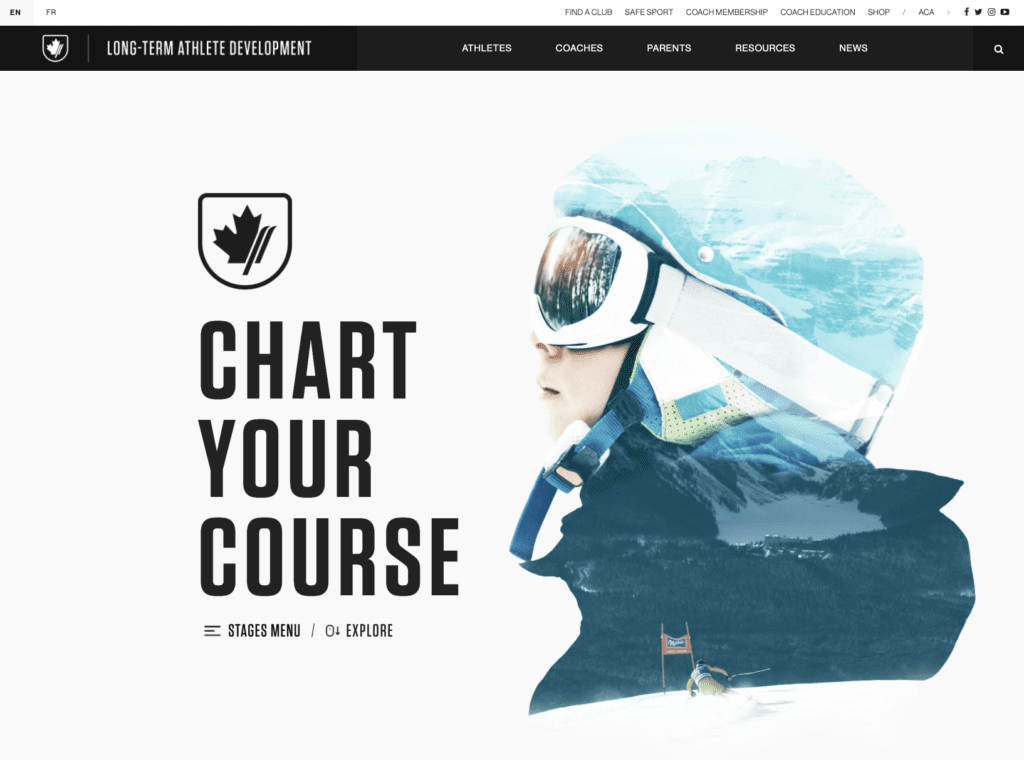
The messaging to parents focusses on “unique pathways” simply affirming that “no two individuals will follow the same development pathway to ski racing excellence.”
In the critical section on coaching, it is explained that the coach pathway and education delivery is a partnership between Alpine Canada and the provincial associations, as part of the national coaching certification program (NCCP). Coaches are required to meet minimum standards to be recognized as trained or certified (and covered for liability). To be eligible to coach at any level of ski racing in Canada coaches need to be licensed ACA-CSC members in good standing.
The athlete path starts as soon as youngsters first put on a pair of skis with the first level ‘Gliding Start’ where children are encouraged to ski with their parents as much as possible, while learning some fundamental movement skills. They quickly progress through ‘Skier Essentials’ and ‘Learn to Train’ from age 6 to roughly age 12 before moving on to more ski racing specific goals and targets outlined in ‘Train to Train’. This is typically the age with the highest dropout rate, due to many reasons ranging from school pressures, other sports and of course the increasing cost of training and racing. In the mid-to-later teen years, the skiers have individualized training programs and specialization (i.e. speed or tech) as they enter the ‘Race to Win’ stage, which is the top end of the sport.
Understanding roles and how to make forward progress
The headline to this story promised advice on how to overcome our current challenges and to help the system to make strides forward.
First we must start with will. Unbiased, bipartisan, impartial, geographically unprejudiced will to work alongside each other with an unrelenting focus to strengthen the national system. Maple Leaf on the wall and on the brain.
Our country is vast – larger than all of Europe – and complicated, but it can be done under effective and collaborative leadership. The LTAD cannot simply stand alone. It must be seen as a dynamic framework within the overall vision, mission, goals and culture of a sport.
If those attributes are crystal clear, and agreed by all, that’s when the LTAD can thrive and guide us on a golden journey.
About the Author: Gordie Bowles