Editor’s note: This is the first in a two-part story. The second part focuses on our friends to the north and can be found here.
What exactly happened to the development of U.S. athletes over the last 22 months while NorAms were canceled?
NorAms have been a critical stepping stone in the development of North America’s highest-ranking and best-performing racers. The cancellation of NorAms during the 2020-21 season resulted in missed opportunity and lack of head-to-head competition. As a consequence, many racers have struggled to crack into the top-100 world rankings without NorAm-level point minimums. For those unable to travel to Europe, many racers also missed out on high-level competition against their peers.
NorAms are set to return this week with a series of tech races at Copper Mountain after a nearly two-year hiatus caused by the pandemic and travel restrictions between the U.S. and Canada. Both men’s and women’s GS and slalom will be contested over the course of six days beginning Thursday.
The 2021-22 season will feature a few new upgrades, proponents say, including a more optimized schedule devoted to athletic success, new opportunities for 2003 and 2004 YOB athletes, and refreshed goals.
Optimizing the athletic calendar
When representatives from the U.S. and Canada met to determine the NorAm schedule for the 2021-22 season, they planned for an optimal calendar in hopes that COVID restrictions would be a thing of the past. There was a period in October when planning was more uncertain and problematic as the ground border between the U.S. and Canada was still closed. This would have caused a bevy of complications for athletes and teams who drive across the border, but with its recent re-opening, it’s now full steam ahead for an unfettered NorAm schedule (assuming nothing changes).
U.S. Alpine Development Director Chip Knight says this year’s schedule comes with a few tweaks and is “athletically optimized” to support both high-level and developing athletes.
The beginning of the season will kick off in traditional pursuit with Copper hosting two GS races. Copper then takes on two additional slalom races due to lack of snow in Vail. Athletes will then head north to Lake Louise and Panorama before a two-month break in the schedule.
“We have not scheduled any races in January, so a lot of our high-level athletes can get over to Europe,” said Knight. “It’s typically a time when a lot of athletes at the regional- and development-team level are getting critical exposure in Europe. Both Canada and the U.S. have trips that go over to Europe in January, so it works pretty well.”
Without January NorAms, athletes will have a bigger block of racing in February split between a week in Canada and a week in the U.S. February NorAms will overlap with the Olympics, another advantage for the schedule that will support upper-level athletes who don’t make the Olympic team but are looking for a good, domestic racing option.
With world junior championships scheduled for early March, Knight says having NorAm races in February will aid in the selection process for the world juniors team, allowing those who are “hitting their stride” to be selected for that prestigious event.
Many U.S. college teams look to NorAms to develop athletes, improve point profiles, and build upon world rankings. For Andy LeRoy, University of Colorado’s head coach, the NorAm schedule aligns with his team’s goals. They plan to attend the upcoming races at Copper, followed by the Panorama tech series in December, all before the college invitational races kick off later in the season.
“Hopefully we can make some more headroom with some development in athletes and points and rankings that we didn’t do last year,” said LeRoy. “It sounds like everyone is on board for this to happen, and the only reason it didn’t last year is because we just didn’t know as much. Hopefully we can forge forward.”
NorAms are back, what’s the big deal?
The significance of NorAms returning cannot be fully stated without discussing the development loss that occurred over the 600-plus days NorAms were on hiatus. From a regional and development sense, NorAms are an essential component of head-to-head competition that was missed in North America last year. Many U.S. 2003 birth-year athletes and all 2004 athletes have not been to a NorAm race. Many have not competed against their peers at a national level.
At the U.S. Ski Team development level, no athletes were moved from the D Team to the C Team for the 2021-22 season because the layer of NorAm racing didn’t exist. NorAm results are also used in the nomination of new D Team athletes, and without NorAms last year, all 2021-22 nominees were selected on discretion.
With a full Europa Cup schedule and lower point penalties, a handful of the very best went to Europe for the season and didn’t necessarily come back. For those looking to move up, the only way to do so was scoring at Europa Cups — a very high level of competition generally intended for U.S. B team athletes.
“There has been a big gap at a few different layers of our development pipeline,” said Knight. “Whether it’s D to C Team, or second- to third-year FIS athletes that have not had NorAm exposure or head-to-head national exposure — it’s going to be hugely impactful to have that level of competition back again.”
For high-level FIS athletes and collegiate athletes, the loss of NorAms also meant the loss of lower minimum penalties in North America that could only be replicated at the Europa Cup level. The “system-wide” impacts were seen from younger athletes looking for upper-level exposure, to FIS-level athletes looking for sub-20-point penalties and development team athletes who were trying to crack top-100 world rankings.
“The FIS point issue is a little more where athletes couldn’t mathematically crack below 20 points, which left a bit of a gap in our point profiles domestically,” said Knight. “There are impacts all throughout the system, but the really critical ones we see are that layer from D to C Team where you’re really trying to crack 150, 100 [ranking] in the world, and also the younger athletes for the upper-level exposure and head-to-head competition that they didn’t get last year.”
The athlete perspective
From an athlete’s perspective, the return of NorAms signifies an upper-level of racing on “home turf,” especially for younger, regional FIS athletes and national team members looking to make the jump into the top world rankings.
At the FIS level, Knight points out, in many cases, first-year FIS women will race NorAms to get a sample of that level of competition. However, it’s rare for first-year males to race NorAms — which Knight attributes to slower biological development and a denser field — but some will take a stab at it.
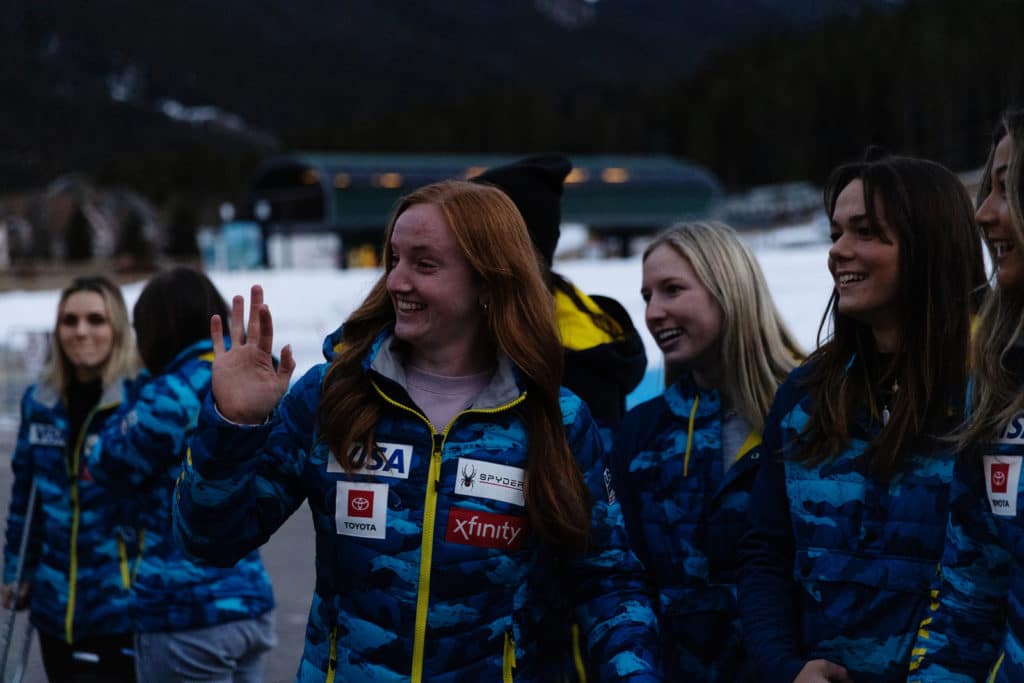
Then, there are the Development Team members, who last year without NorAms, spent almost the entirety of their seasons racing in Europe across world juniors, Europa Cups, and FIS. For returning D Team member Allie Resnick, the high-level exposure she encountered in Europe last year has motivated her to transfer her experience into the race hills and snow conditions she knows in North America on the NorAm circuit.
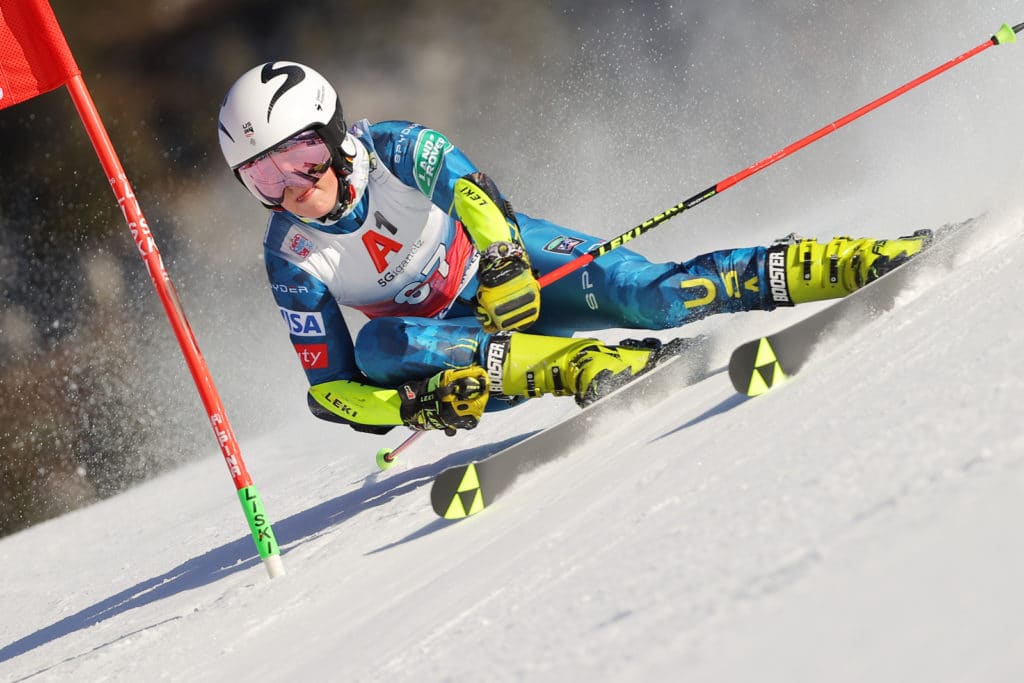
“I am so excited to have NorAms back,” said Resnick. “I really missed them last year, and it’s been a while since I have done NorAms since I was injured for a year. So I’m super excited this year they are back. I can’t wait to see everyone and race in the U.S. again.”
Like many up-and-coming junior athletes, Resnick’s goals echo NorAm podiums and NorAm success, and even a NorAm title that would guarantee her a spot on the World Cup the following year.
Athletes from around the country and around North America are competing head to head again and seeing what competition looks like at a higher level,” said Knight. “It’s just going to be incredibly important to have that layer back in our system this year.”
The women will kick off the 2021-22 NorAm season Thursday, Nov. 18 with two days of back-to-back GS races before the men. Then, onto four days of slalom races through Nov. 23. Lake Louise will be the speed debut Dec. 6 before rounding out tech events in Panorama in mid-December and returning to Mont Edouard in early February.
About the Author: Karina Schwartznau