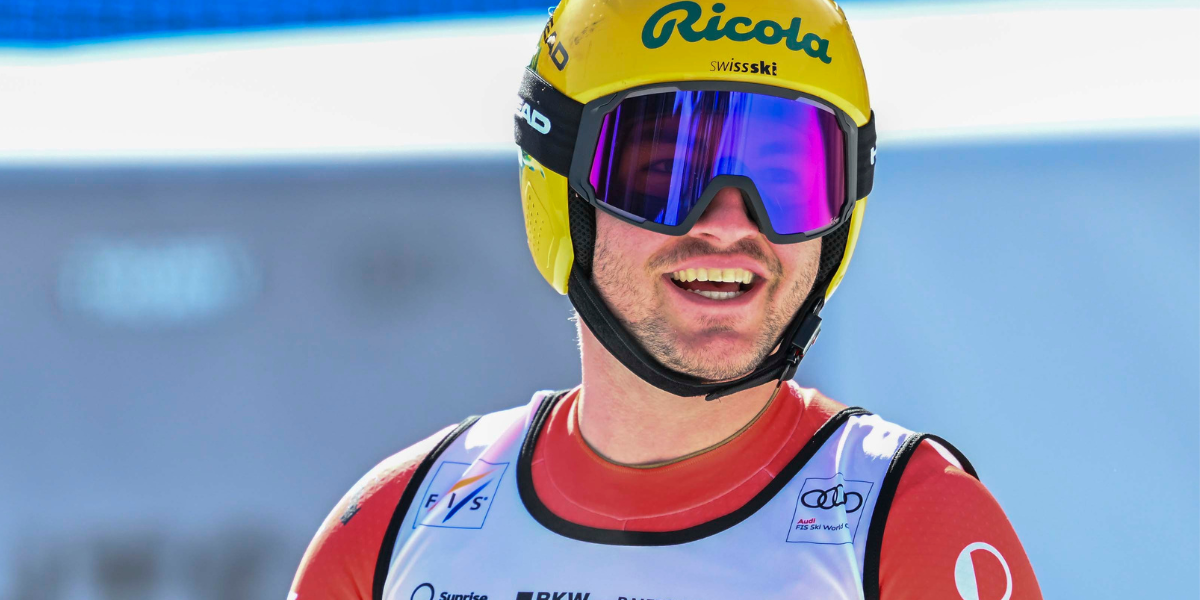
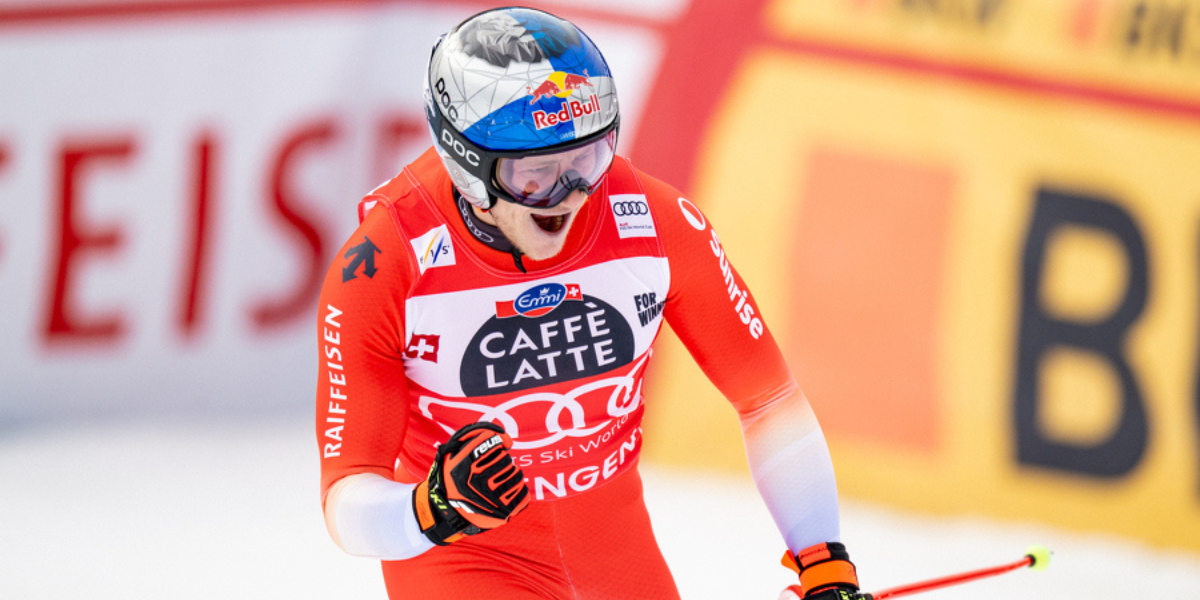
Marco Odermatt / Wengen Lauberhorn Winner / GEPA pictures
Marco Odermatt owns Wengen again as shortened Lauberhorn still crowns a king
It is always a disappointment when the longest downhill on the World Cup tour is shortened. The Lauberhorn is supposed to stretch nearly two and a half minutes, draining legs and concentration in a way no other course can. On Saturday, it became a full-gas sprint of just over 90 seconds.
Yet even in abbreviated form, it was still unmistakably the Lauberhorn.
The start moved to the top of the Hundschopf—below the traditional launch and lower than Friday’s super-G—fundamentally changing the race. Skiers no longer had to manage energy or survive the familiar late-run burn. They could attack from top to bottom. What didn’t change was the noise.
An enormous Swiss crowd packed the hillside, delivering maximum volume for every home skier and reserving its loudest “Odi, Odi, Odi” chants for Marco Odermatt. He answered with another historic performance.
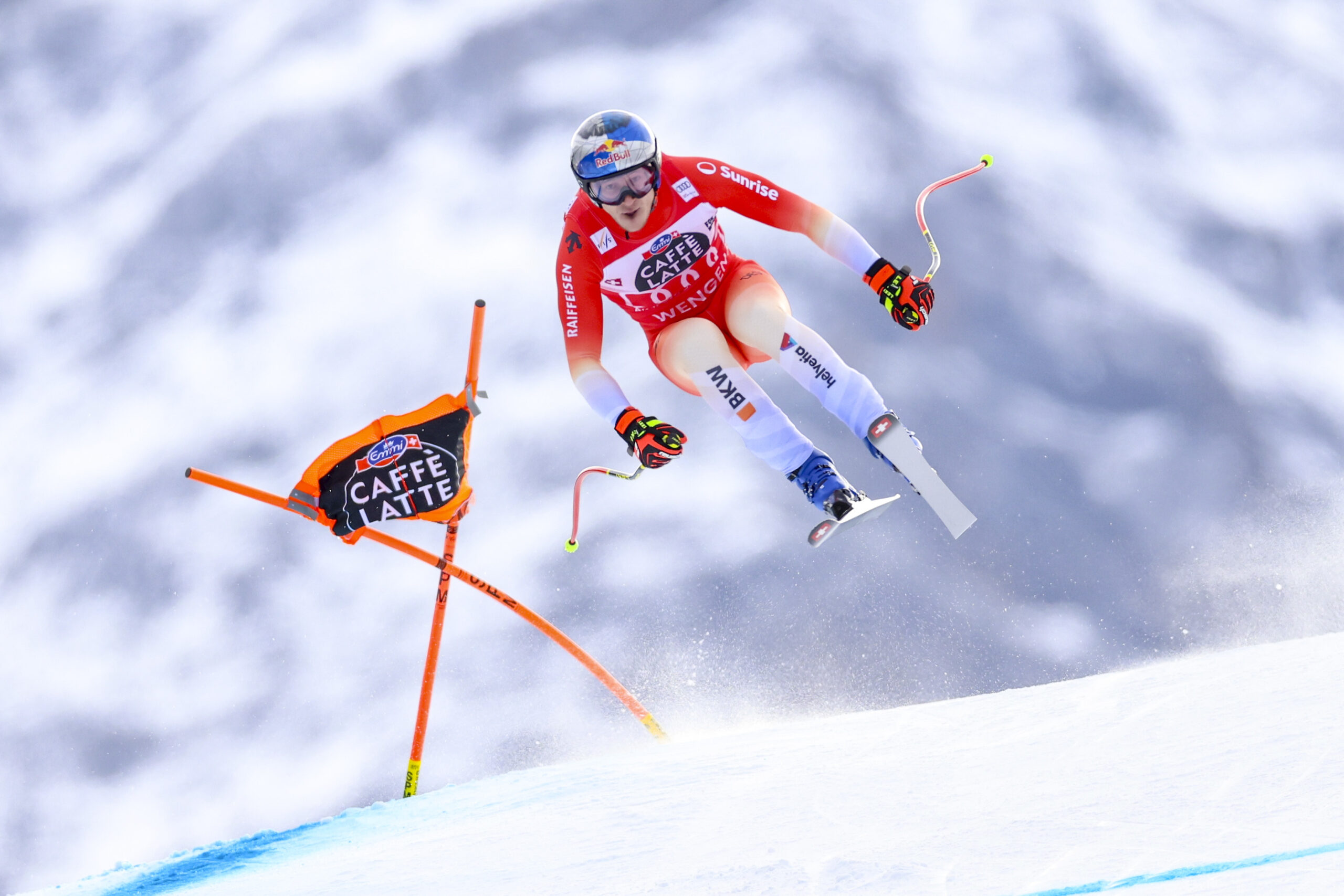
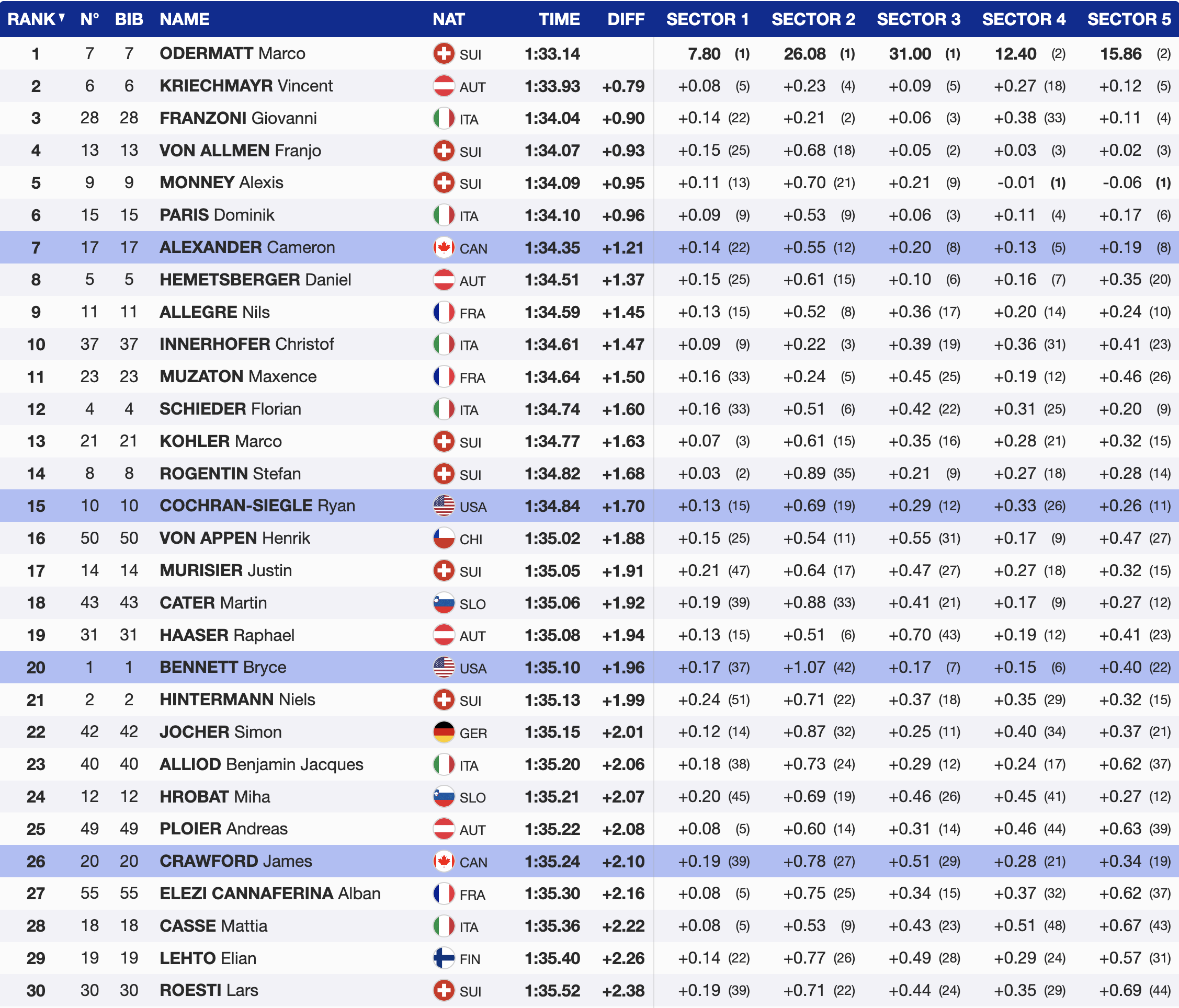
Odermatt stopped the clock in 1:33.14, winning by 0.79 seconds over Vincent Kriechmayr—a dominant margin on a shortened course where time gaps usually compress. The victory marked Odermatt’s fourth consecutive Lauberhorn downhill win, the most ever on this slope.
It was also his seventh World Cup victory of the season, extending his control of the winter. Odermatt now leads the overall World Cup standings, as well as the downhill, super-G, and giant slalom discipline standings, and remains the only skier this season to win across all three events.
Wengen Lauberhorn Downhill — Top 5 Finishers
- 1st — 🇨🇭 Marco Odermatt (SUI) — 1997 — 1:33.14 — Stöckli
- 2nd — 🇦🇹 Vincent Kriechmayr (AUT) — 1991 — +0.79 — HEAD
- 3rd — 🇮🇹 Giovanni Franzoni (ITA) — 2001 — +0.90
- 4th — 🇨🇭 Franjo von Allmen (SUI) — 2001 — +0.93 — HEAD
- 5th — 🇨🇭 Alexis Monney (SUI) — 2000 — +0.95 — Stöckli
A record he didn’t expect
“I honestly didn’t even know I could break this record today,” Odermatt said. “I knew that Adelboden was a chance for a fifth win there, but today I didn’t expect it. To have my name on top of both home races is pretty special.”
He brushed aside the word “legend,” but not the atmosphere.
“I don’t feel like that, but the atmosphere here in Wengen is incredible,” he said. “The start was cool today because we were so close to the Hundschopf. You could really hear the crowd. That makes this place special.”
Even on a shortened, sprint-style Lauberhorn, the margin told the story.
Even with the altered course, his focus never drifted.
“I went into the start gate early to analyze it because we couldn’t really train it like usual,” he said. “Then I saw all the fans. There are so many people on that hill. But once I was in the gate, I was fully focused. I really pushed myself today to get into race mode.”
Podium pressure on a sprint course
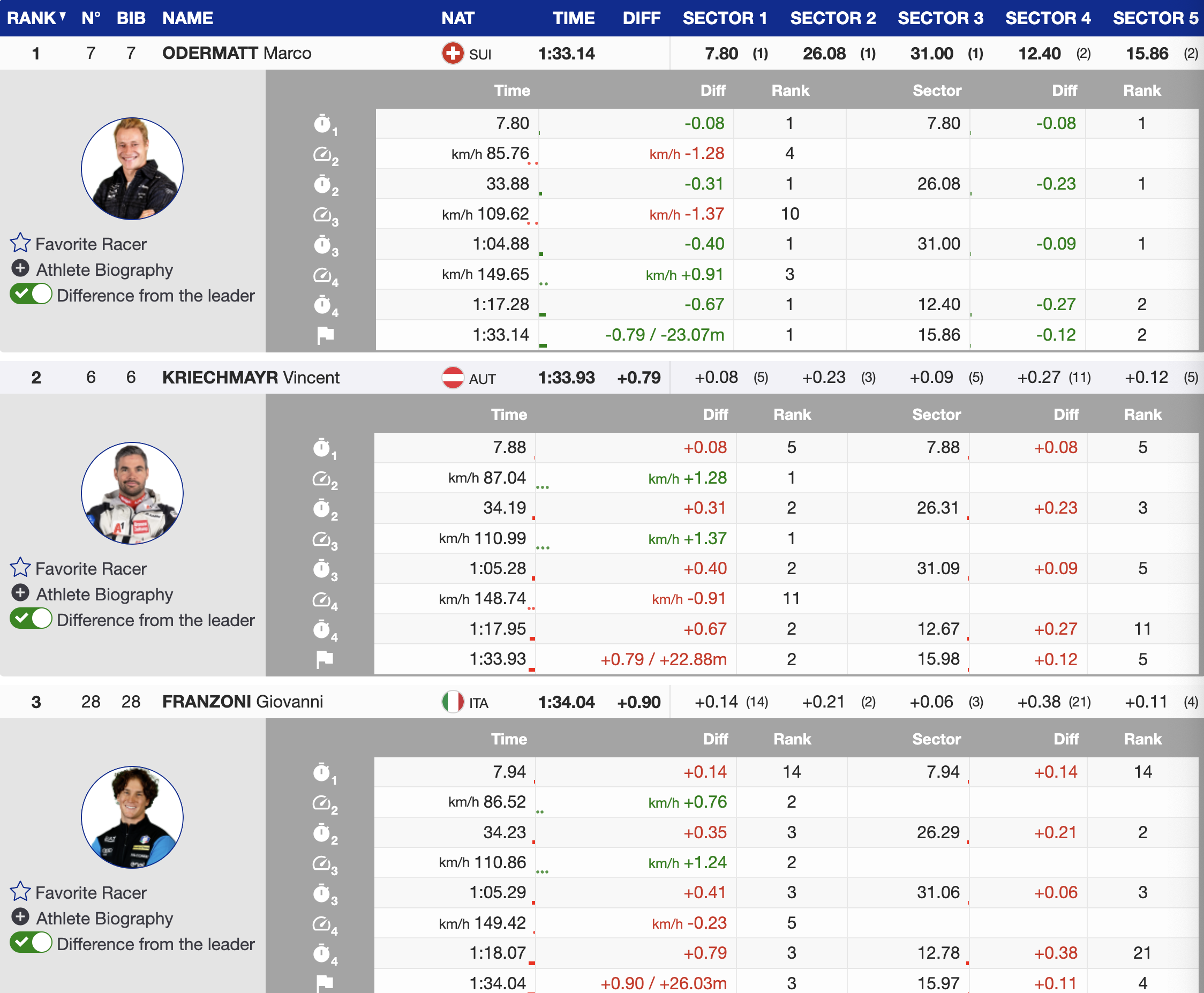
Kriechmayr skied one position ahead of Odermatt and set the pace to beat. Odermatt answered by building time through all five sectors and taking control of the race.
Italy’s Giovanni Franzoni, bib 28, capped a spectacular week in Wengen by finishing third, 0.90 seconds back, edging a Swiss favorite Franjo von Allmen by 0.03. Franzoni stayed close near the top, then bled time lower down, but still delivered a podium on the same slope where he was evacuated by helicopter after a violent crash two seasons ago.
Swiss depth was evident throughout the race. Von Allmen finished fourth and Monney fifth, with Switzerland stacking the top of the board in front of a relentless home crowd. With 10 Swiss starters in the field, every Swiss skier drew thunderous applause.
Podium reactions
Vincent Kriechmayr said his second-place run stood up well, even against an extraordinary performance from the Swiss favorite.
“My run was really good — maybe I could find two or three tenths,” Kriechmayr said. “But his run was impressive. Fantastic to watch him. Sometimes you wish he could be a little bit slower.”
The shortened course only underscored the margin.
“He beat us almost eight-tenths without starting from the very top,” Kriechmayr said. “So maybe it was good we didn’t start higher. We don’t know how far behind we would have been.”
Despite finishing runner-up, the Austrian called it his best downhill of the season and turned his attention forward.
“For sure this was my best downhill run so far,” he said. “Kitzbühel is coming — a big race for us Austrians. I’ll try my best.”
—
Giovanni Franzoni capped an unforgettable weekend with a third-place finish, one day after earning his first World Cup victory in super-G.
“Yesterday after the win, I woke up at 3 a.m. and couldn’t sleep,” Franzoni said with a laugh. “Today I was happy the downhill was shorter — better for my legs. But there was a lot of pressure after the training runs and yesterday.”
That pressure melted away at the start.
“When I was at the gate and saw all the crowd on the mountain, I was really excited,” he said. “I just wanted to have fun and push.”
Franzoni called Wengen a turning point.
“Having a weekend like this here is unbelievable,” he said. “This is the home of legends.”
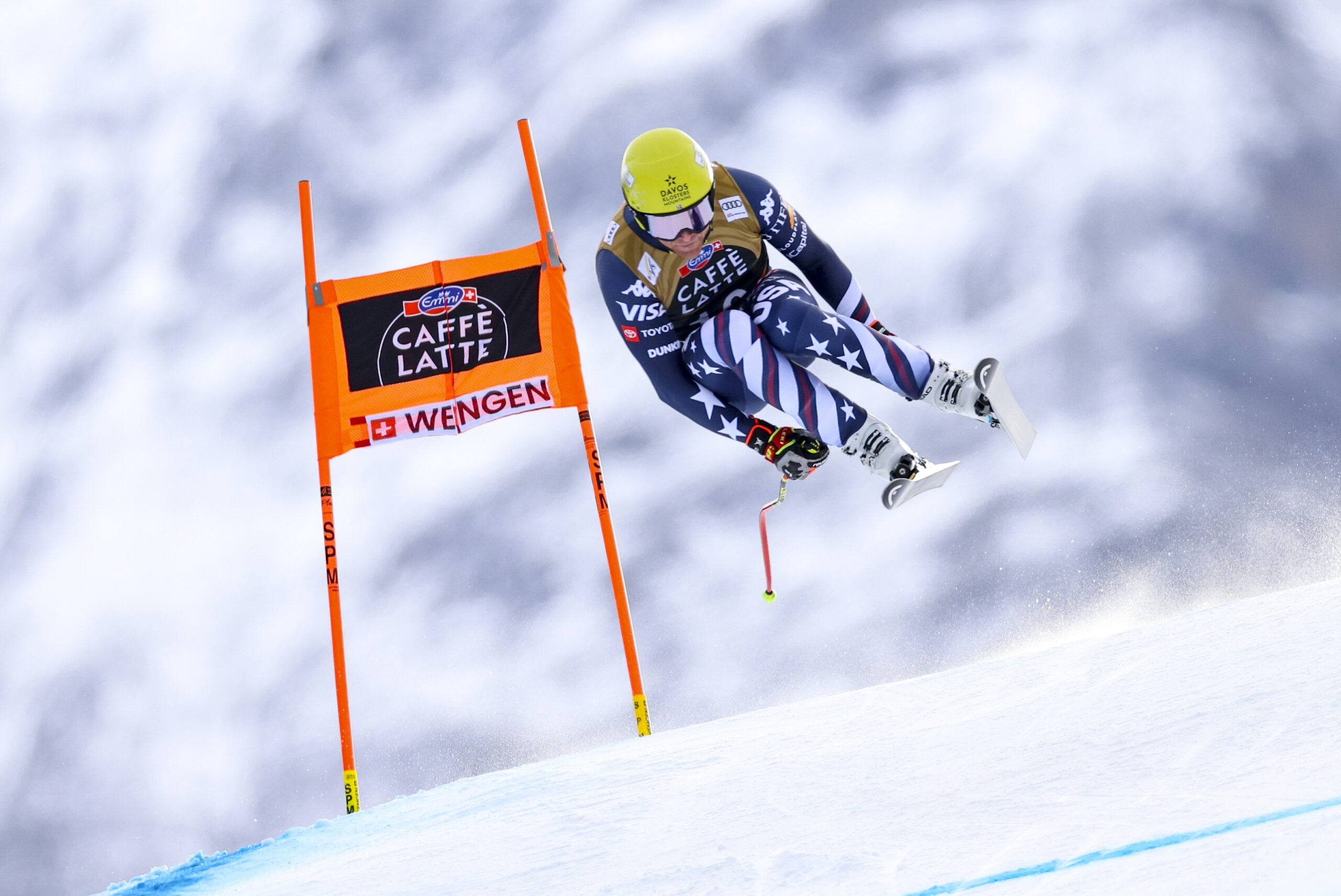
North Americans — Top Finishers
🇺🇸 United States
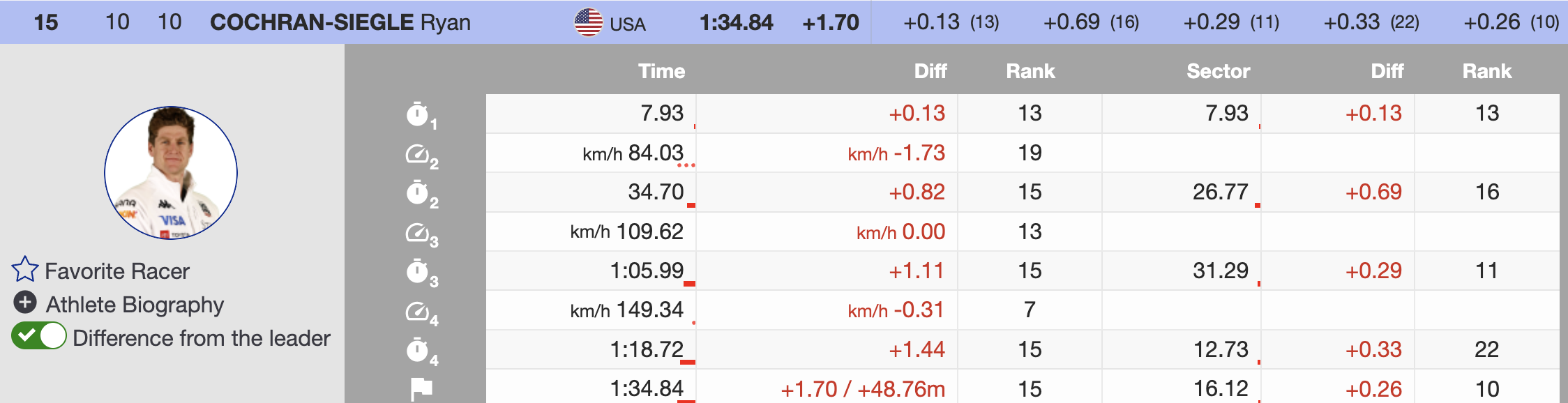
- 15th — 🇺🇸 Ryan Cochran-Siegle — 1992 — +1.70 — HEAD, Oakley
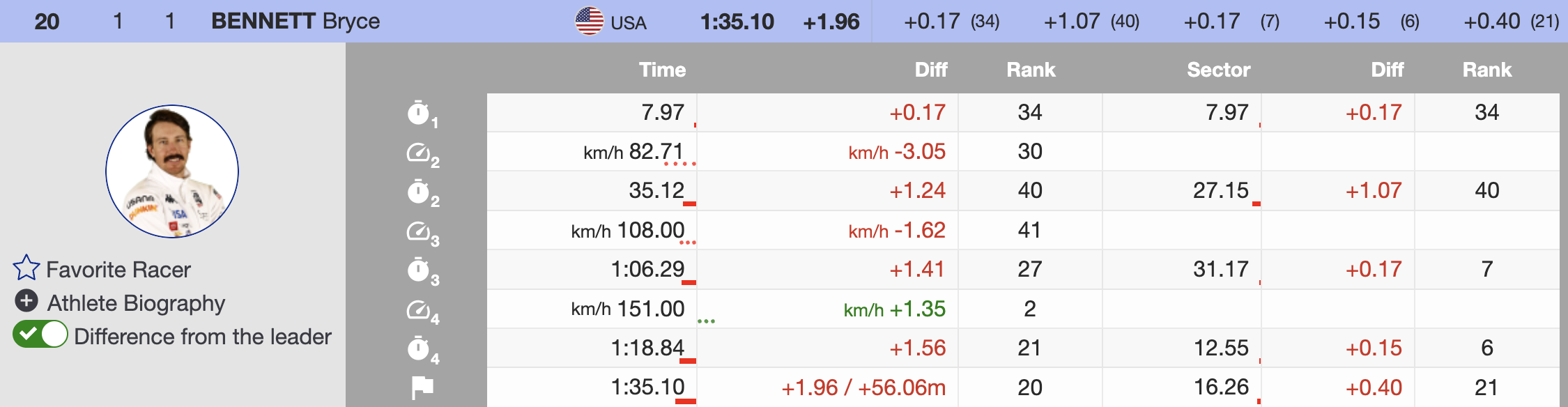
Cochran-Siegle led the Stifel U.S. Ski Team finishers. Already qualified for the Olympic team, selection pressure was not part of his equation on a shortened course. - 20th — 🇺🇸 Bryce Bennett — 1992 — +1.96 — Oakley
Bennett skied first and set an early reference that briefly held. With his best downhill result this season, previously a 26th place, the shortened Lauberhorn offered a timely chance to shine as he continues to push for Olympic selection.
Stifel U.S. Ski Team reaction
Both U.S. scoring racers pointed to the shortened start and the unique atmosphere as defining elements of the day.
Bryce Bennett said the lower start delivered a rare moment to absorb the Lauberhorn crowd, even as he continues to rebuild confidence.
“It was a cool start with the crowd right there at Canadian Corner,” Bennett said. “It’s loud, it’s special, and it’s a good memory. My confidence is getting better, and this was a step in the right direction.”
Ryan Cochran-Siegle agreed the start changed the rhythm of the race but said the intensity never faded.
“They did everything they could to make it as long as possible,” Cochran-Siegle said. “Kicking out of the gate and seeing that huge crowd was pretty special. Once you’re in the course, you’re locked in, but hearing that roar at the start was cool.”
🇨🇦 Canada
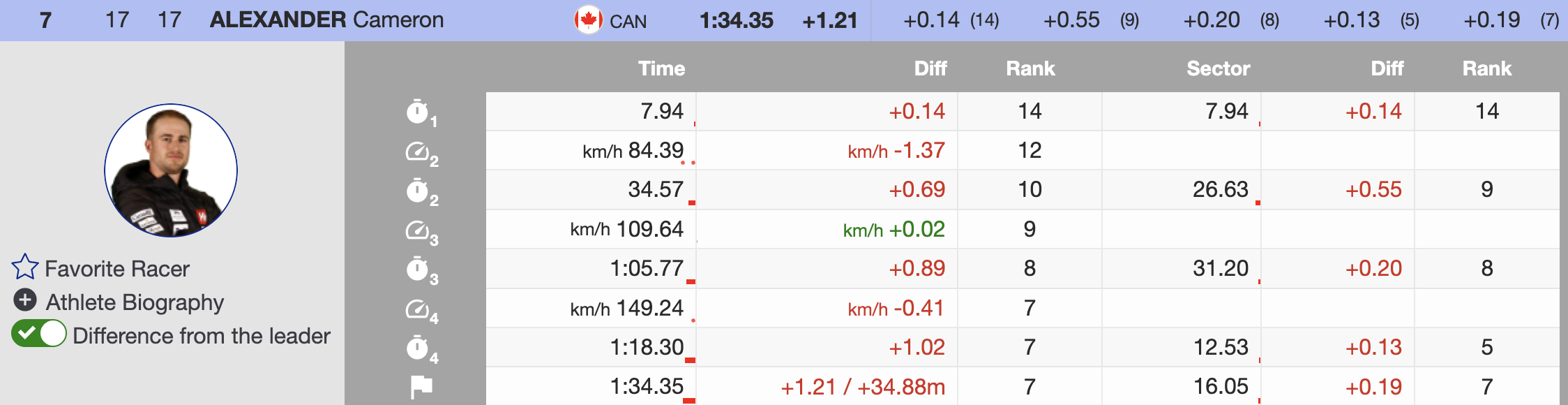
- 7th — 🇨🇦 Cameron Alexander — 1997 — +1.21 — Atomic
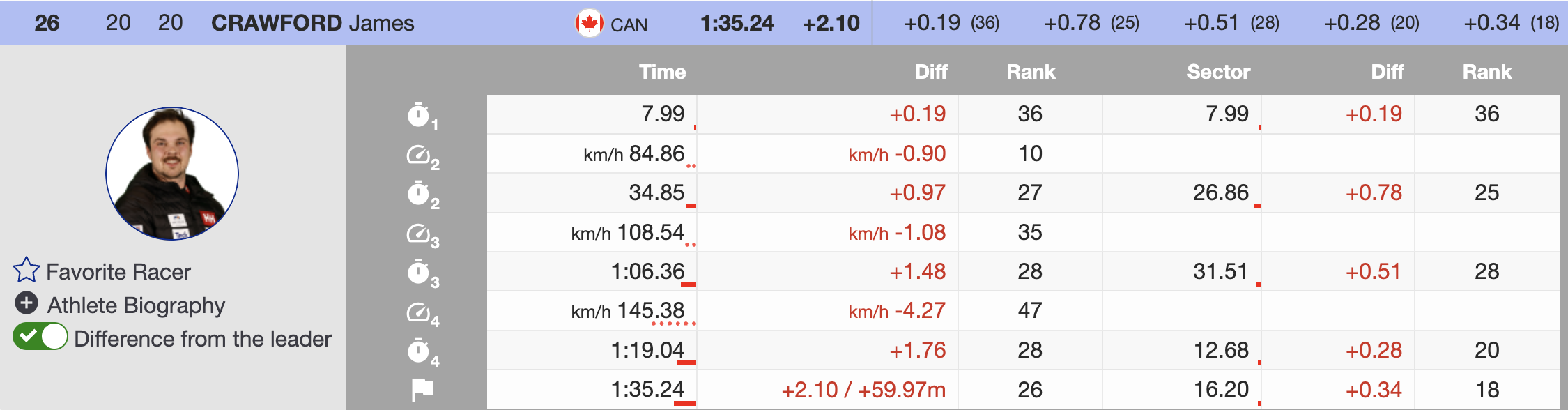
Alexander delivered his best downhill result of the season, continuing his return from last year’s season-ending injury. He backed up his only other top-10 this winter—a 10th place at Beaver Creek—with a confident run that held up well on a sprint-style Lauberhorn. - 26th — 🇨🇦 James Crawford — 1997 — +2.10 — HEAD
Last season’s Kitzbühel downhill champion skied a solid run but finished well off the pace and showed clear frustration in the finish area.
High-Bib Impact — Bib 31+ Finishers Inside the Top 30
- Bib 50 — 🇨🇱 Henrik von Appen (CHI) — 1994 — 16th — +1.88
- Bib 43 — 🇸🇮 Martin Cater (SLO) — 1992 — 18th — +1.92
- Bib 31 — 🇦🇹 Raphael Haaser (AUT) — 1997 — 19th — +1.94
- Bib 42 — 🇩🇪 Simon Jocher (GER) — 1996 — 22nd — +2.01
- Bib 40 — 🇮🇹 Benjamin Alliod (ITA) — 2000 — 23rd — +2.06
- Bib 49 — 🇦🇹 Andreas Ploier (AUT) — 1994 — 25th — +2.08
- Bib 55 — 🇫🇷 Alban Elezi Cannaferina (FRA) — 2003 — 27th — +2.16
Highest bib to score points: 55 — Elezi Cannaferina
Best finisher among bibs 31+: 50 — von Appen (16th)
Still the Lauberhorn
The start was lower. The course was shorter. The suffering was reduced.
But the crowd was enormous, the pressure unrelenting, and the result familiar.
Even in sprint form, the Lauberhorn still crowned the same king—and Marco Odermatt once again wrote his name into alpine history.

Top 30 results
Click images to enlarge
Analysis of the top three and North Americans among the top 30
About the Author: Peter Lange