Olympic Rings GEPA pictures/ Patrick Steiner
An International Olympic Committee (IOC) dual award appears likely with France potentially securing 2030 and Utah bringing home 2034. In a surprising turn, they left Sweden’s favored bid out in the cold. Switzerland’s latest bid, now named 2030x, has been set aside until 2038.
Early celebrations are already underway in the Utah capital as the Salt Lake City, Utah bid for a future Olympic Winter Games remains on course, most likely for 2034. In contrast, a surprising French Alps bid unexpectedly seized the lead, turning the race for 2030 upside-down.
On Wednesday, the International Olympic Committee’s Executive Board met in Paris to make crucial decisions on advancing candidacies to the targeted dialogue phase for 2030 and 2034. They eliminated others. France and the United States came out on top, while Sweden and Switzerland were the unfortunate losers.
France and USA bids move forward
“The Executive Board today follows the recommendation from the Future Host Commission to invite the French Alps and Salt Lake City, Utah into respective targeted dialogues to host the 2030 and 2034 Olympic Winter and Paralympic Games,” said IOC Future Games Host Commission Chair and Austrian Olympic Committee President Karl Stoss.
“We recommend a double allocation for the next winter editions,” Stoss added about the two preferred candidates.
Salt Lake City and neighboring Park City are on track to host the 2034 Olympic Winter Games. The Utah bid was declared the “preferred host” for the XXVII edition of the Winter Olympics. An Olympic return to the Wasatch Mountains would come 32 years after the region last welcomed the world in 2002. While candidates must still submit final guarantees to the IOC by the end of March, the strongly supported Utah bid charges down the mountain in a leading position.
On Friday night, December 1st, 2022, they illuminated the Olympic cauldron at Rice-Eccles Stadium..
Stoss outlined what the IOC sees as the U.S bid’s overwhelming strengths.

“There is a vision to build on the legacy of 2002 and create a future for values and sports programs, a very compact master plan with no capital investments required, experience hosting major international events in most Olympic winter sports and exceptional public support,” Stoss said.
“We already have very strong support from the municipality, the state of Utah, and also from the national government, including President Biden. He would guarantee all of the expenses, and they stand in a very strong status behind this bid and these Games,” the Austrian IOC member said.
Next Steps
The IOC is implementing its revised candidacy and selection process, where a full member vote no longer determines a winner. They now make key decisions behind closed doors. It is a revamped process as part of IOC President Thomas Bach’s Olympic Agenda 2020+5 reforms.
If the American and French bids can provide the necessary guarantees by the end of March, the IOC’s Future Host Commission will make site visits in April. If everything goes smoothly, the IOC Executive Board will recommend approving the two proposals in June. That would essentially be a formality.
Final awarding of the 2030 and 2034 Winter Games would come in July at the 142nd IOC session, just before the Paris Olympic Games.

Salt Lake City’s Bullock and IOC’s Dubi underline commitments
After advancing the bid to the targeted dialogue for 2034, Fraser Bullock, President and CEO of the Salt Lake City, Utah Committee for the Games, emphasized the state’s unconditional support for the project.
“The decision of the IOC is a credit to our communities working together to create a welcoming region for sport across our state,” Bullock said. “For more than a decade, our state and community leaders have united towards this goal.
“The IOC has recognized our high level of preparedness. All venues are in place and active, as well as overwhelming support from our political and business leaders as well as the public.”
IOC Olympic Games Executive Director Christophe Dubi highlighted cooperation between the IOC and U.S. bid. He deemed Utah’s bid as “exceptionally strong.”
“There has been deep engagement between the parties with the very knowledgeable team in Salt Lake City. Our counterparts have already visited in 2020,” Dubi said. “That assures the quality of the proposal from a technical standpoint. And now they have the legislative power to enact the guarantees.”
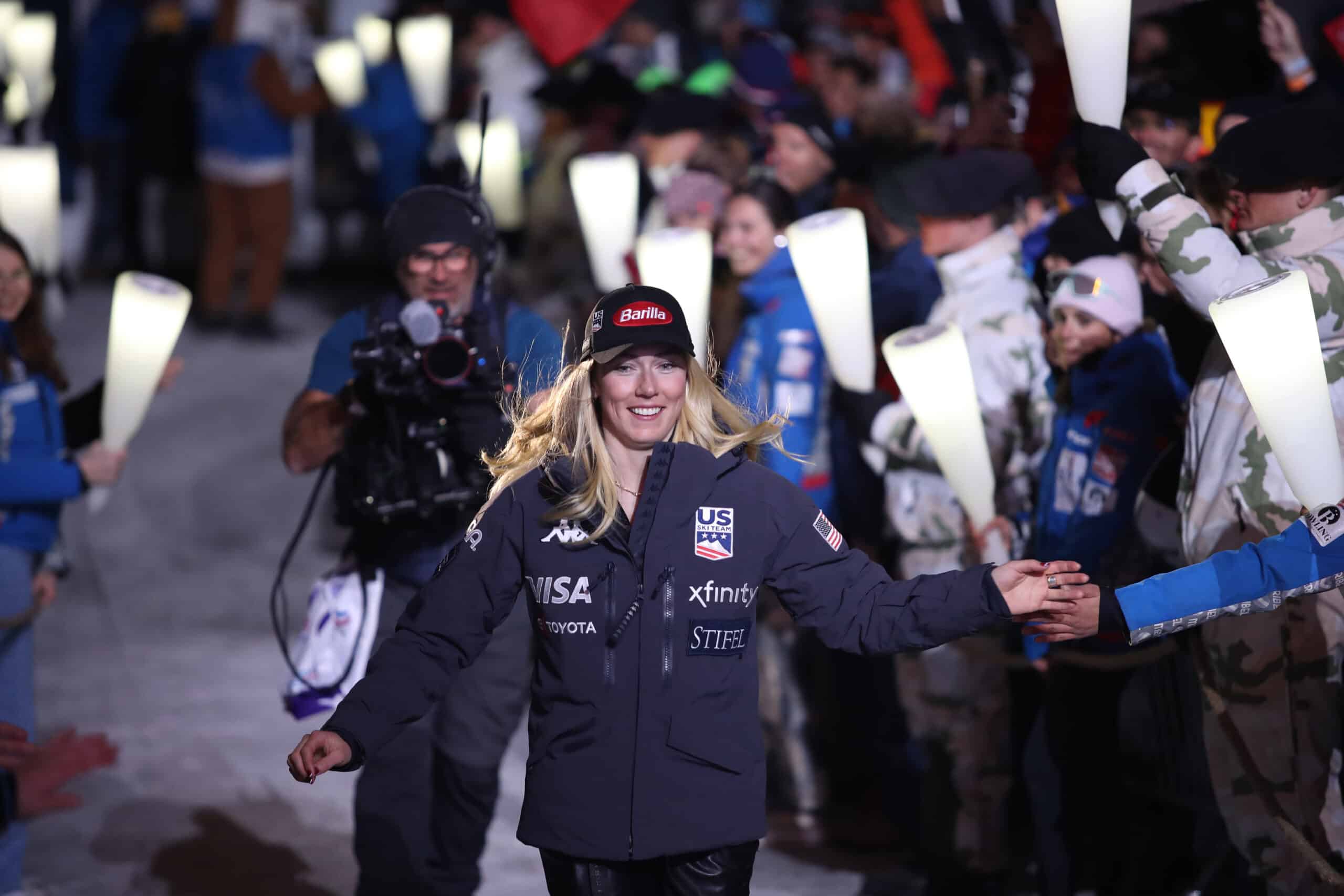
World Class skiing legacy in Méribel, Courchevel and Val d’Isere on track for 2030
Late to the party (or at least to the initial IOC dialogue phase), a French Alps bid shared between two regions and spread out across four or five venue clusters, has slid into the frontrunner position for 2030. Athletes would contest alpine events in Méribel, Courchevel and Val d’Isere.
Stoss referenced the successful 2023 World Alpine Ski Championships in the neighboring French Alps ski resorts as a contributing factor.
“The strong points for the French bid are very clear — you have a very long tradition for winter sport and also hosting winter sports competition,” Stoss said. “That means last year’s World Championships in Courchevel Méribel, for example, and three Winter Olympics.
“Also, there is a clear top-down approach, which means we have the support of the president down to the provinces and municipalities,” Stoss emphasized. “Also, the support of all the French winter federations and the Paralympic organization. They are backing this approach and looking forward to organizing the Olympic Winter Games.”
A fourth French Alps Winter Olympics, as Chamonix hosted the first edition in 1924, Grenoble in 1968, and Albertville and the Savoie region in 1992, seems likely. It would come nearly six years following this summer’s Paris Olympics.
“One of the strengths of the French value proposition is that we have a lot of building blocks from Paris,” Dubi said. “That can be re-used and is an advantage for sure when you have five-and-a-half years to organize the Games.”
Ceremonies, hockey and skating events are bound for Nice on the Côte d’Azur, where a new ice arena will need to be built.
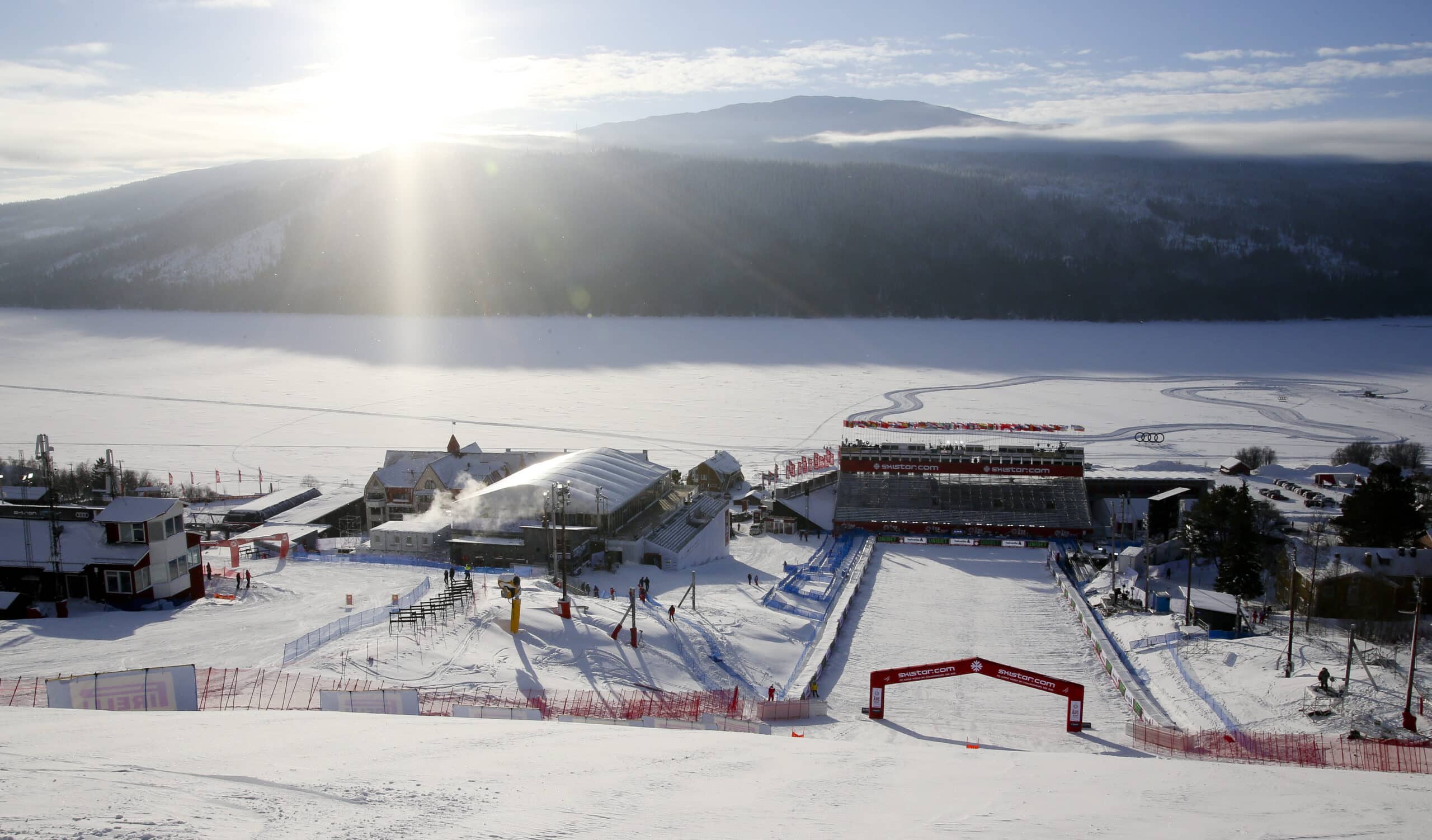
No Olympic downhill racing in Åre for 2030
The Olympic committee rejected Stockholm and Åre, Sweden, despite considering them as top contenders for the 2030 bid. Åre, which hosted the World Alpine Ski Championships twice, was scheduled to host the Olympic alpine and freestyle skiing events.They were in 2007 and 2019.
“The Swedish project was technically excellent. The quality of world-class venues and strong tradition in winter sport is clear for all of us,” Stoss said. “However, the commission felt further work needs to be done at all levels, including the necessary government entities and also from the business sector.”
It is bewildering that Sweden, the most successful winter sports country in terms of Olympic medals that has never hosted the Winter Games, falls short yet again. Stockholm and Åre previously lost to Milan-Cortina for 2026. It came by a vote of 47-34 at the IOC election in Lausanne in the summer of 2019.
“The commission concludes that Sweden is encouraged to continue to strengthen their concept,” Stoss added.
The latest Stockholm and Åre bid becomes Sweden’s ninth unsuccessful attempt to host the Winter Games. It is shocking considering the nation’s rich alpine and Nordic skiing tradition and immense passion for winter sports.
Switzerland 2030x
Switzerland’s regional bid has now been termed 2030x. While IOC leaders say it is the preferred status for 2038, it appears to be a slap in the face to bid proponents in the IOC’s home country. It has been over 70 years since Switzerland last hosted the Winter Games — St. Moritz in 1948.
Stoss addressed the Swiss and Swedish bids. He said they “would benefit from more time to optimize the athletes’ experience for future Games and need to continue to build on the burgeoning foundations of public and political support.”
The Tokyo 2020 bid scandal led to excluding Sapporo, Japan, from the next three Winter Games, despite it being a previous top choice for the 2030 Olympics. The Japanese city had hosted the 1972 Winter Games.
The 2010 Olympic host city of Vancouver, Canada, which failed to obtain regional government backing, is no longer a viable candidate.
Advantages of a Salt Lake City Winter Games encore
Athletes contested alpine speed events north of Salt Lake City at Snowbasin Resort during the 2002 Olympics. The GS took place at Park City Mountain Resort.They hosted the slalom event at Deer Valley.
It’s likely that ski venues will undergo changes for 2034. They might consider using new training slopes at Utah Olympic Park for tech events. Running the forgotten ‘Grizzly’ downhill track at Snowbasin would be a thrilling test for racers.
An Olympic return to Utah will also provide a golden opportunity to build upon the region’s winter sports legacy. It will also solidify the area as a possible permanent Winter Games host in a climate-capable region. It is a vision involving multiple capable hosts that the IOC continues to explore.
Up to 80 percent of people and political support have shown high levels of approval. As a result, the U.S. bid on one of the most sought-after projects by a Western nation in the history of the Winter Olympics.
SLC-UT envisions privately funding 100 percent of the future Games.
There is also a huge possible economic windfall for the IOC, an essential reason the Swiss-based body prefers 2034 for Salt Lake. Naturally, this hasn’t been disclosed publicly.
The IOC’s existing broadcast contract with NBC expires after Brisbane 2032. It leaves a 2034 agreement open to negotiation. A U.S. Winter Games would elicit higher viewing ratings domestically. That would drive up the potential value of the broadcast deal and command additional revenue from the IOC’s historically most lucrative partnership. It is a win-win for Salt Lake and the IOC.
Follow Brian on Instagram – brian.pinelli
About the Author: Brian Pinelli