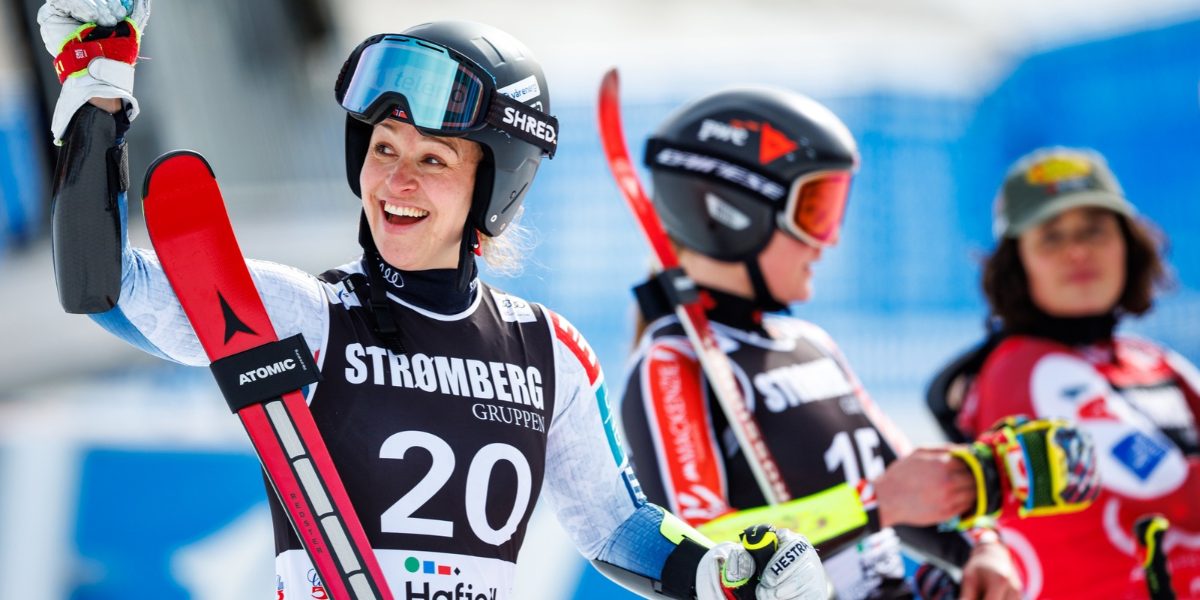
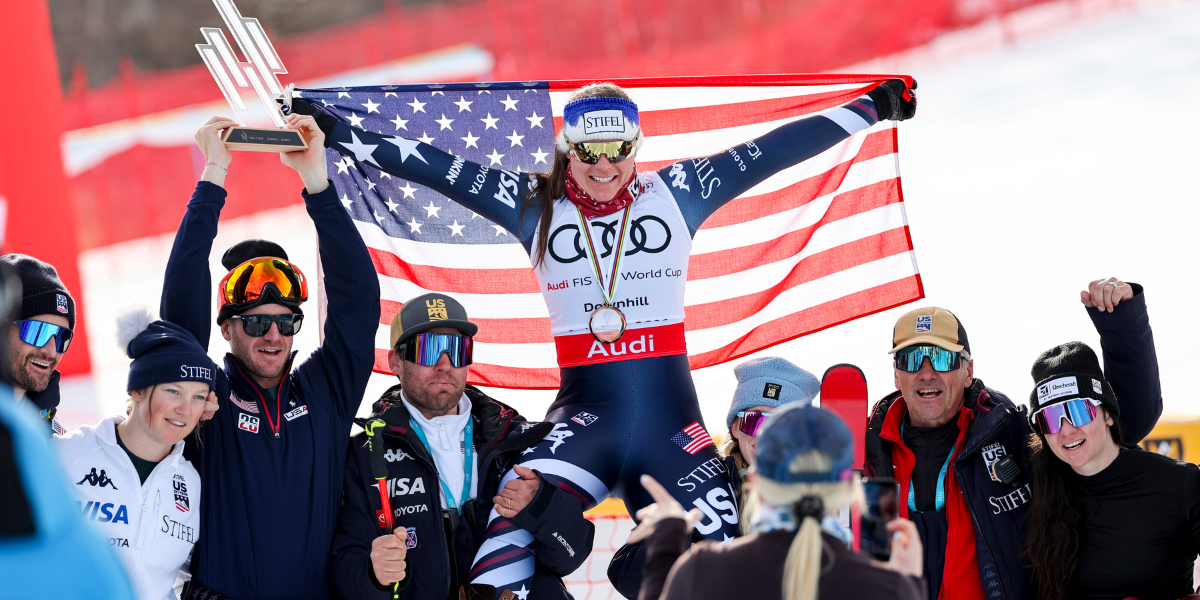
Allison Mollin, Breezy Johnson and Jacqueline Wiles Celebrate with staff, Kvitfjell / GEPA pictures
From Olympic gold to long-awaited consistency, their paths reveal what it takes to succeed at the highest level of downhill racing.
Breezy Johnson: Why She Won’t Change a Winning Formula
Breezy Johnson (30) has established herself among the elite in downhill racing. She won the 2026 Olympic downhill and the 2025 World Championships. She also has 11 career World Cup podiums—10 in downhill and one in super-G—and continues to chase her first World Cup victory.
A second-place finish at the World Cup Finals in Kvitfjell capped her season. That result helped her secure third in the downhill standings.
Adapting to Kvitfjell and trusting her process
SRM: Congratulations on your Olympic gold!
BREEZY: Thanks!
SRM: What works so well for you in the Championships?
BREEZY: I don’t know. People keep asking me that. I just treat them like another race, so I’m not really sure what made the Olympics and World Championships different. You know, I do have 10 other World Cup podiums, so I wouldn’t say I’m bad everywhere else.
SRM: You were third in the Kvitfjell downhill last year. What are your thoughts about this year?
BREEZY: I feel good. I really like this hill. It’s a great slope. It’s fun to be here with the men for Finals.
SRM: Is the course different than last year?
BREEZY: It varies a little bit all the time. It’s a little bit different because the men are here. The set’s a tiny bit different in some places. I think in most places, I like it a bit better, and then, I think, just by chance, by it being later in the season, that some of the terrain is a little bit bigger, so just figuring that out.
Looking ahead without changing what works
SRM: Looking toward the summer and next season, what’s on your mind?
BREEZY: I’ll definitely do a bigger debrief once the season’s over, but [regarding] training, I think in many ways for me the Olympic win was a validation that my process worked and, you know, sometimes you have to wait longer than you think. Things like globes and Olympic gold medals are sometimes harder than just going out there and trying hard. You have to have all the pieces line up together and do everything right, and I don’t think you want to change too much when things are going pretty well, so I feel good.
SRM: Wedding plans?
BREEZY: The plan is I think we’ll do it sometime next year. We’ll figure that out, but I’m very grateful because I think we’re going to do it in Jackson Hole, which is my home mountain. And I think they are very generously giving us a great venue to host it at, so I’m very excited.
(Johnson’s fiancé, Connor Watkins, proposed in the finish area after the 2026 Olympic super-G race, three days after she won the Olympic downhill.)
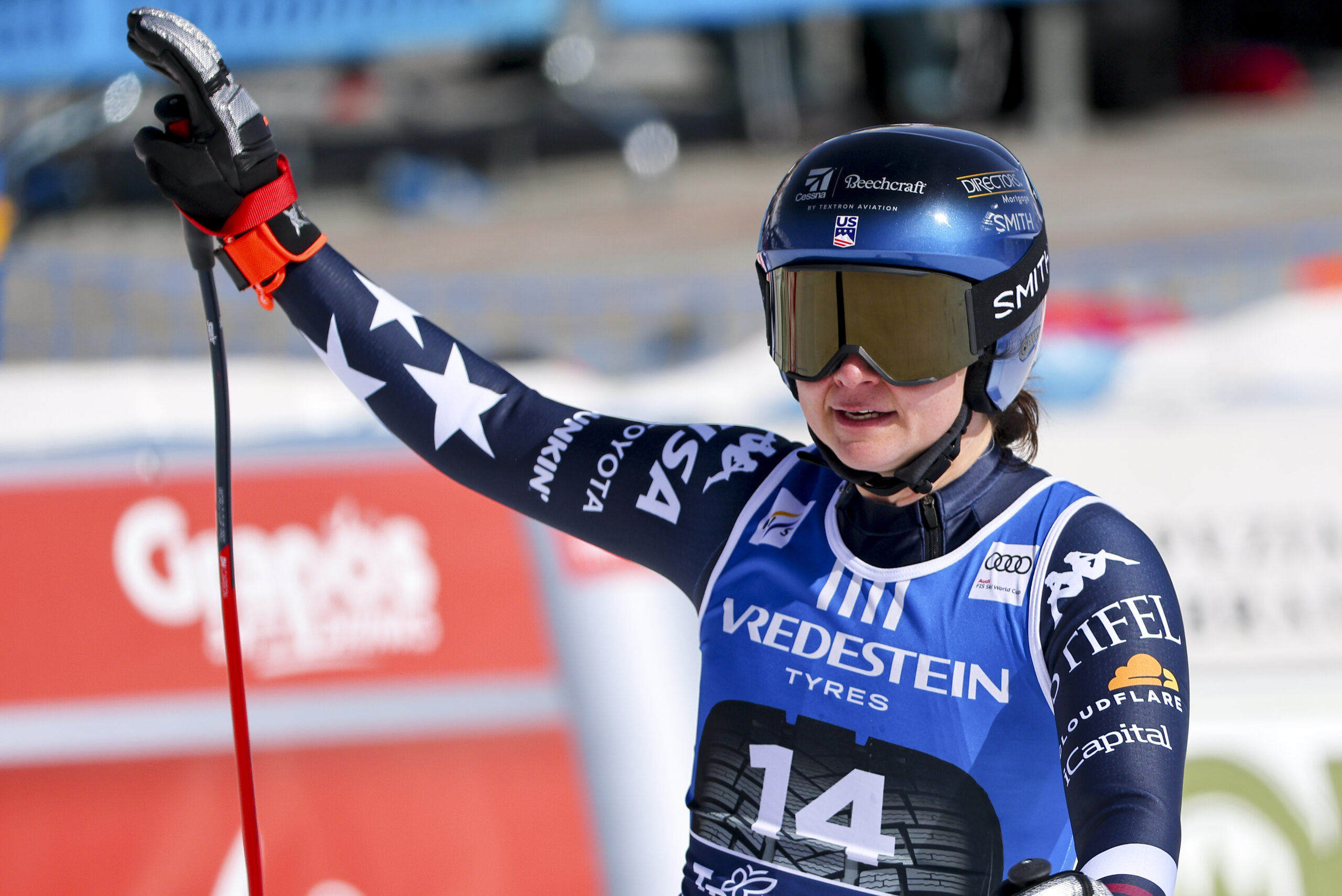
Jacqueline Wiles: Why She Returns to Fundamentals Each Spring
Jacqueline Wiles (33) showed her strength at the 2026 Olympics. She won a bronze medal in the team combined with Paula Moltzan and placed fourth in the downhill.
Her career has been impacted by major injuries sustained in 2018. This season marked a major step forward.
Building confidence and managing fear
SRM: How would you summarize your season?
JACKIE: It felt like a really good step for me this year. I feel like I’ve had these years where I knew I could be at another level, but injuries and lack of confidence because of those injuries kind of held me back. I feel like everything clicked this season. I came in healthy for the first time in a while and had a great prep period skiing fast, and I brought that confidence into the season. I think it showed.
SRM: Earlier, you talked about still feeling fear after your crash in 2018. Is that something you are still dealing with?
JACKIE: I think when you have an injury that you struggle with mentally for years, it’s something that never fully goes away. I would say, at the start, you kind of have this new level of perspective that I think is really helpful. And I think it has helped me use that fear in a positive way and not let it debilitate me now. So, yes, I’d say fear is always there, but learning to harness it has been helpful.
Returning to fundamentals and looking ahead
SRM: Are there other steps you’ve taken to achieve these results?
JACKIE: After the last Olympics, I took a whole year off and really figured out my equipment. I took a step back to focus on drills and freeskiing and I think, just every year since then, that has built up really well and I go back to the same fundamentals in the spring, of taking my skiing just to the ground level again. I think that is what keeps giving me confidence and it kind of spirals from there.
SRM: For next season, what are your priorities?
JACKIE: Any time there’s a World Champs, that is definitely a key part of the season that you really want to do well in. At the same time, I just want to ski solid and confident and have a consistent year. So, just strong, confident skiing is my goal.
SRM: What are you looking forward to this summer?
JACKIE: First, I’m really excited to just go home and sleep in my own bed and eat my own food. It’s been three months now since I’ve been there, so I’m just really excited to go back home, be with people I love and care about and enjoy summer in Oregon. It’s a beautiful time there.
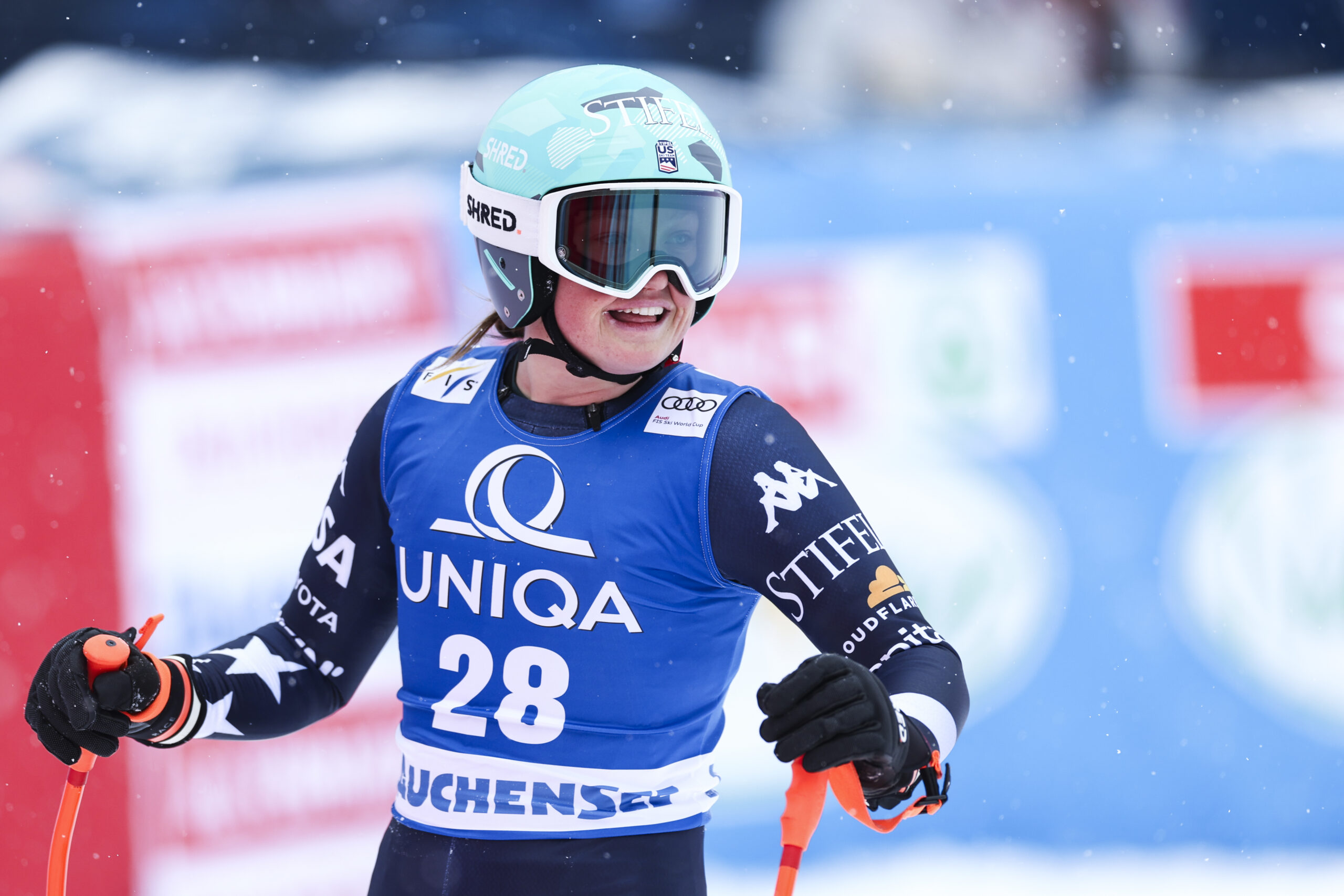
Allison Mollin: How She Built Consistency in Her First Full World Cup Season
Allison Mollin (21), nicknamed Amo, impressed during her first full World Cup season. She scored points in every downhill race until the Finals.
Qualifying for the World Cup Finals requires finishing inside the top 25 in the discipline standings. That’s a significant achievement given her limited number of starts.
From development to consistency
SRM: How did you achieve such rapid progress?
ALLISON: I think it’s been building for a long time, over the last two or three years, since I’ve been on the [Stifel U.S.] Ski Team. It’s just like finally putting all the pieces together, with a little bit of Europa Cup last year, and gaining a little more confidence by spending time in Europe with the Europa Cup. That’s all just coming together nicely for this season.
SRM: What are your strengths?
ALLISON: My strengths are gliding and putting my nose in it when it’s a little bumpy or a little dark. That’s where I feel like I can excel.
Next steps and advice
SRM: What are you going to work on?
ALLISON: Next season, I’m really trying to work more on the technical side. Really tightening the line everywhere is a big focus for me, and a little more on the aggression side. Doing that a lot on GS and super-G will translate into downhill.
SRM: What are you most happy about this year?
ALLISON: I’m most happy about the consistency. I sometimes have the tendency to taper towards the end of the season as I get tired, but this year has been really good. I scored in every downhill this season, so that was beyond my goals at the beginning. I’m really proud of that consistency.
About the Author: Bente Bjørnsen Sherlock