Atle Lie McGrath / GEPA picture
Norwegian leads Milan/Cortina 2026 slalom after chaotic opening run marked by heavy attrition
Stelvio delivered drama from the very first gate.
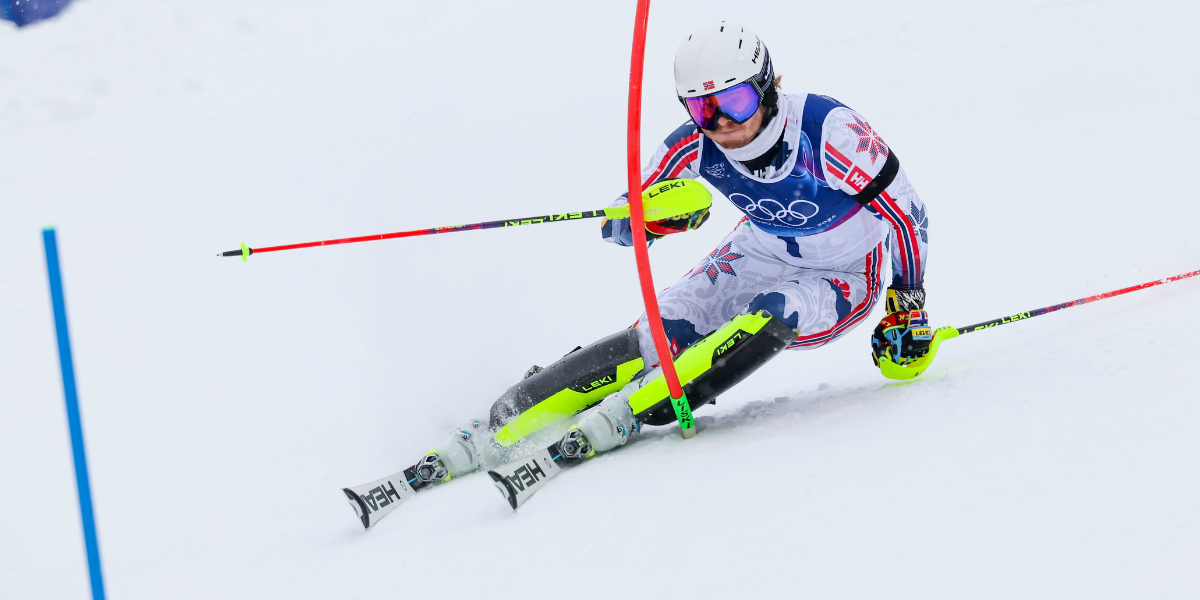
Atle Lie McGrath of Norway, the World Cup slalom leader, set the tone in the final men’s alpine race of the 2026 Milan/Cortina Olympics, attacking the course with authority and posting a commanding 56.14 seconds in Run 1.
By the time bib 43 had started, 20 racers had already failed to finish.
The Olympic men’s slalom began with one of the deepest fields in recent memory. After one run, the medal hunt has narrowed dramatically.
Top Five After Run 1 – Olympic Men’s Slalom (Stelvio)
1st 🇳🇴 Atle Lie McGrath (NOR, 2000) — 56.14
2nd 🇨🇭 Loïc Meillard (SUI, 1996) — +0.59
3rd 🇦🇹 Fabio Gstrein (AUT, 1997) — +0.94
4th 🇳🇴 Timon Haugan (NOR, 1996) — +0.96
5th 🇧🇪 Armand Marchant (BEL, 1997) — +1.20
Lie McGrath Builds His Lead Where It Matters
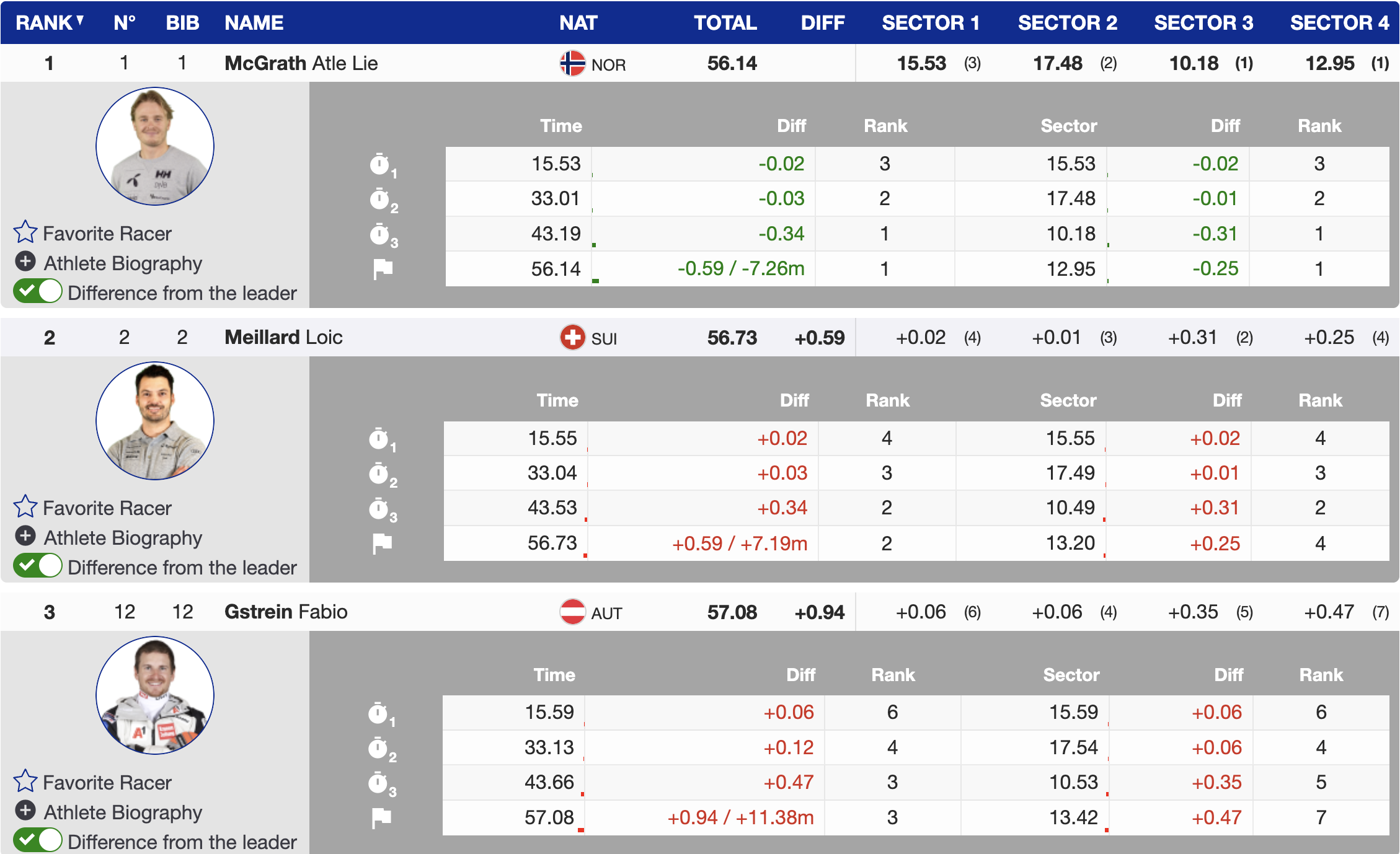
The first racer out of the gate, Lie McGrath, did not win the run in the opening splits. Instead, he built his advantage in the decisive lower sections.
He was fastest in both Sector 3 and Sector 4, accelerating through the flush and carrying superior speed to the finish. While others attacked early and faded, McGrath grew stronger as the course progressed.
Loïc Meillard, Switzerland’s giant slalom bronze medalist at these Games, stayed close through the first two sectors but lost ground late, finishing 0.59 seconds behind. The gap is manageable — but it leaves little margin for error in Run 2.
Behind them, Austria’s Fabio Gstrein and Norway’s Timon Haugan remain within striking distance of the podium, while Belgium’s Armand Marchant delivered one of the most impressive performances of the morning to stay firmly in the medal fight.
Chaos Defines the Opening Run
The defining storyline of Run 1 was not only Lie McGrath’s authority — it was survival.
Light snow fell throughout the run, subtly affecting visibility and surface grip. However, more decisive than the weather was the Olympic pressure. Skiers attacked aggressively, knowing hesitation costs medals.
The result was relentless attrition.
Among those failing to finish were pre-race favorite Lucas Pinheiro Braathen of Brazil, who was fastest through the first two sectors before sliding out in the third. For a moment, the splits suggested a head-to-head duel between Pinheiro Braathen and his close friend Lie McGrath. That showdown ended abruptly.
France’s Paco Rassat also skied out. Austria’s Manuel Feller did not finish. Italy’s best technical hope, Alex Vinatzer, exited early, continuing a difficult stretch for the host nation in the technical events.
By bib 43, 20 racers were already out.
You cannot win Olympic gold in the first run — but you can lose it. Many already have.
Great Britain: Three Starters, One Inside the Top 15
Great Britain started three skiers in the Olympic men’s slalom:
- 🇬🇧 Billy Major (GBR, 1991) — +2.52
- 🇬🇧 Dave Ryding (GBR, 1986) — +3.74
- DNF — 🇬🇧 Laurie Taylor (GBR, 1996)
The strongest British performance came from Billy Major, who delivered a composed run to sit 13th after the opening leg. If he maintains a top-15 position after Run 2, he will earn valuable World Cup Start List points — an important boost for his future start number on the circuit.
Laurie Taylor, widely viewed as the emerging leader of the British slalom program, lacked early speed and skied out in the second sector.
For Dave Ryding, this marks his fifth and final Olympic Games. The 39-year-old, who will retire at season’s end, attacked but crossed 3.74 seconds behind the leader. There was no late-career surge into contention, only another determined finish from the most successful British alpine skier in history.
United States: Radamus DNF in Olympic Slalom Run 1
The United States had one starter in the Olympic men’s slalom:
- DNF — 🇺🇸 River Radamus (USA, 1998), bib 55
Radamus, the top U.S. giant slalom skier, attacked the Stelvio course but was unable to find the finish, adding his name to the growing list of non-finishers in a chaotic opening run.
Despite the result, Radamus completed a full Olympic program in Milan/Cortina — racing Team Combined, super-G, giant slalom and slalom. It was the schedule of an athlete who simply loves to ski race, embracing every opportunity to compete on the sport’s biggest stage.
With his exit in slalom, the United States was left without a finisher in the final men’s alpine event of the Games.
AJ Ginnis Says Goodbye
Bib 31 marked a ceremonial farewell for AJ Ginnis of Greece.
Managing the knee injury that has forced his retirement, Ginnis did not attack the Stelvio course with his trademark aggression. Instead, he carefully skied down the hill, crossing the finish to applause from the crowd and competitors.
Born in Athens to a Greek father and American mother, Ginnis rebuilt his career under the Greek flag with the support of longtime friend and coach Sandy Vietze. He earned a World Cup podium in Chamonix in 2023 and claimed a historic World Championship silver that same year.
Monday was his first Olympic appearance. It was also his last.
A Narrowed Medal Fight
What began as one of the deepest Olympic slalom fields in recent memory has already condensed.
Heading into Run 2, the battle appears centered on Norway, Switzerland and Austria — with Belgium firmly in the conversation. Lie McGrath controls the race. Meillard remains close enough to apply pressure. Behind them, tenths separate the medal contenders.
Slalom remains unpredictable. However, the time spread suggests the realistic medal candidates are now few.
The gold is within Lie McGrath’s grasp. The final run will decide whether anyone can take it from him.

First Run Results
click image to enlarge
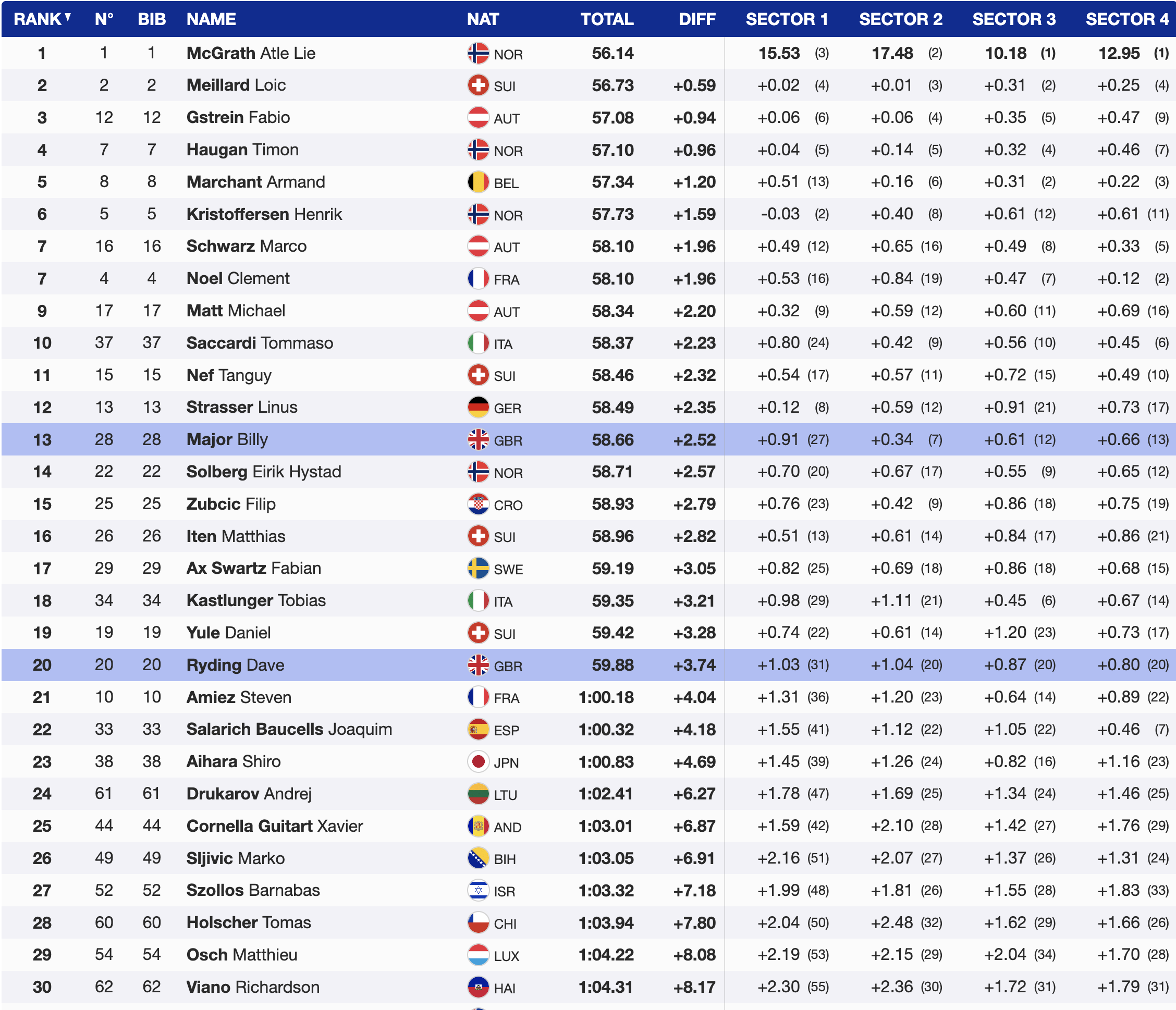
First-Run Analysis: Fastest Three and British Athletes


About the Author: Peter Lange