GEPA pictures
Coming into his first race at Copper, RCS highlights the importance of day-to-day focus
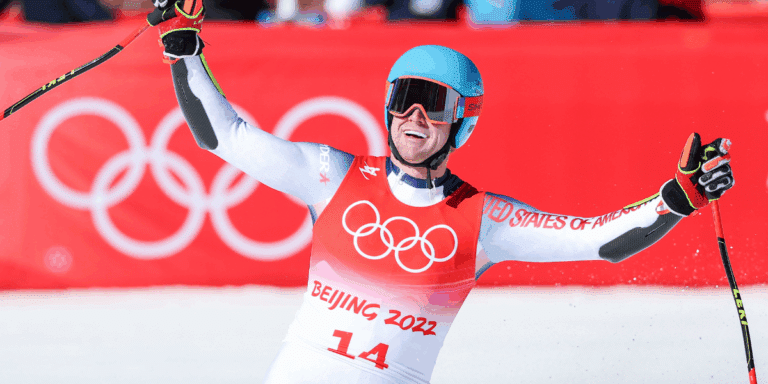
In the Beijing Olympics, Ryan Cochran-Siegle separated himself as a hero amid an otherwise humdrum showing by U.S. skiers. A Junior World Champion in downhill and combined back in 2012, RCS had moved steadily up the rankings, landing the first World Cup podium of his career in the 2020 Val Gardena downhill and following it days later with his first Cup victory in the Bormio super-G.
Later that same season, however, he suffered a nearly career-ending neck fracture when he crashed in the Kitzbühel downhill. Nonetheless, he recovered and entered the 2022 Olympics after several top-10 finishes, including a fourth in the Bormio SG. He then soared on the world’s biggest stage, earning a silver medal in the Olympic super-G, just 0.04 seconds away from gold.
You might expect him to carry that weight into this Olympic season. He doesn’t.
Under (no) pressure
“No. Honestly, I feel the opposite in a way,” RCS said at Copper Mountain, where he has been training for the last couple of weeks and where he’ll make his 2025 World Cup debut in Thursday’s super-G. “After four years to process Beijing, I’ve sort of come down from it.” He adds that humbling results since Beijing have helped him reset and regain perspective.
“I’ve experienced the Olympics two times. I obviously want to be a part of that team going into February, but I feel like there’s not as much pressure this time around.”
Focusing solely on downhill and super-G these last few years has produced mixed results for Cochran-Siegle, but he prefers the clarity that comes with narrowing his goals.

Previous thrills on the Olympic hill
One place RCS has enjoyed memorable success—though not always consistent—is the 2026 Olympic venue. Bormio is the site of his sole World Cup win and three top-fives, including a fourth-place SG finish where he missed the podium by just 0.05 seconds. The Stelvio, hosting men’s speed events for 40 years, remains one of the most demanding tracks on tour with its steep, bumpy, 31-percent average pitch.
“It’s always a huge challenge,” he says. “The way the trail is suits my style. There’s usually time to build the turn, create a strong platform, and ski with power. I always embrace that challenge and have fun playing with the terrain there.”
The familiarity fuels confidence.
“Outside of the craziness of the Olympics, just getting to race there is motivating. If I put myself out there and attack with my best skiing, I feel like I can be really competitive.”
How he handles nerves
In a recent advertisement for mattress sponsor Saatva, RCS jokes about the pressure of following in the footsteps of his mother, Barbara Ann Cochran, the 1972 Olympic slalom champion. But he insists the real pressure comes from within.
“My mom has always been so supportive,” he says. “Her advice has always been more about being a good person and caring for people.”
When asked how he managed his nerves in Beijing, RCS says it came down to reducing everything to simple, actionable focus points.
“My skiing had been building up through those two weeks in China. In inspection, it was a course my style could connect well with. I had trust in that. You dream of medals, but my focus wasn’t on the medal. It was on executing my run with clarity and letting the race unfold.”
The memory of being hundredths away from gold gives him calm rather than pressure.
Season debut at Copper
Now, standing at Copper Mountain ahead of Thursday’s super-G, Cochran-Siegle returns to the same day-to-day approach that shaped his Olympic run.
“Copper is the first qualifier for the Olympics, so it’s becoming very real,” he says. “I want to earn that spot, but what’s most important is focusing on the day to day—getting a feel for the hill, understanding how it flows, and finding where I can build speed.”
With Colorado’s limited natural snow this November, the Copper track is firmer than usual. Every major nation has been training on it, eliminating any sense of home-slope advantage.
“It’s nice to get time on the hill, especially for super-G,” he says. “Understanding tempo plays a big role. It’s better that it’s a fair race. Everyone starts with the same feel, and it comes down to execution.”
About the Author: Shauna Farnell