Breezy Johnson USA1 / Team Combined / GEPA pictures
Under overcast skies on Olimpia delle Tofane in Cortina d’Ampezzo, the most courageous women in ski racing opened the first-ever Olympic women’s Team Combined, launching a historic event contested by 28 teams from 12 nations. The downhill, raced as the first of two runs, set the order, margins, and pressure points that will define the decisive slalom later in the day.
With both runs weighted equally, every hundredth earned on the downhill mattered. Strong performances did more than shape the leaderboard — they handed opportunity and leverage to the slalom specialists who will decide the Olympic medals.
Downhill Sets the Stage for Slalom Showdown
Downhill Top Five — Run 1
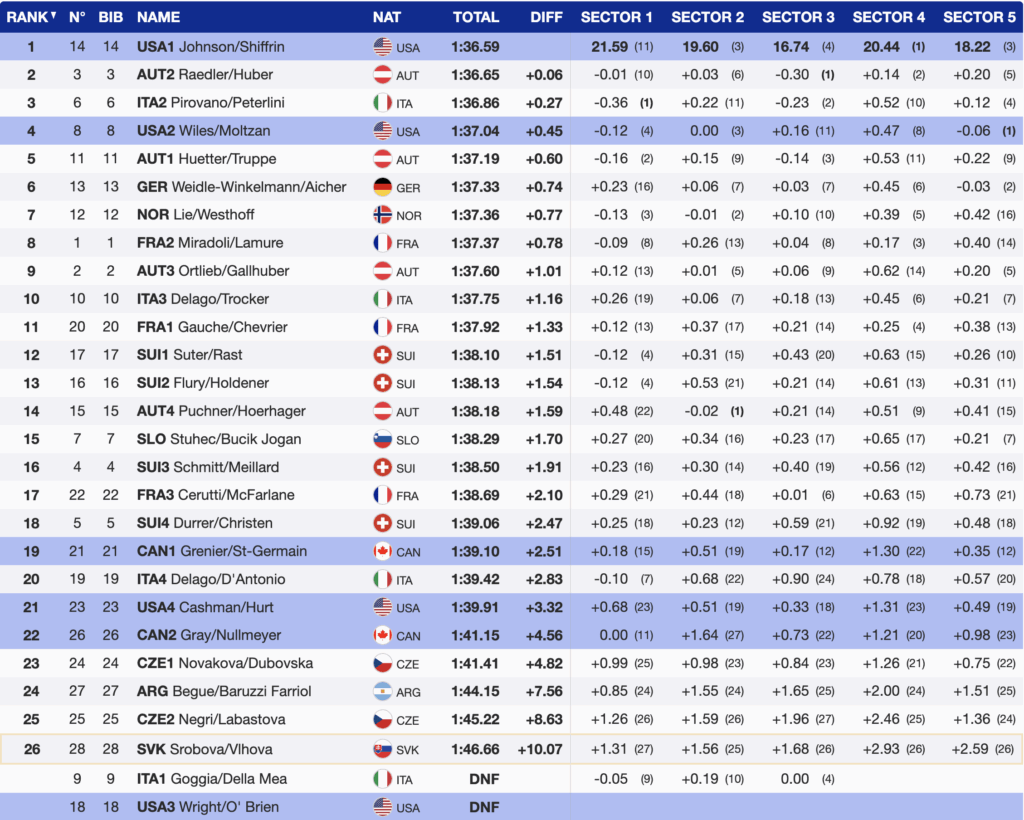
- 1st 🇺🇸 USA 1 — Breezy Johnson (1996) / Mikaela Shiffrin (1995) — 1:36.59
- 2nd 🇦🇹 AUT 2 — Ariane Rädler (1995) / Katharina Huber (1995) — +0.06
- 3rd 🇮🇹 ITA 2 — Laura Pirovano (1997) / Martina Peterlini (1997) — +0.27
- 4th 🇺🇸 USA 2 — Jacqueline Wiles (1992) / Paula Moltzan (1994) — +0.45
- 5th 🇦🇹 AUT 1 — Cornelia Huetter (1992) / Katharina Truppe (1996) — +0.60
Eight teams finished within one second of the lead, setting up a wide-open second run.
Momentum Builds as Favorites Take Their Turns
Austria again showed its Team Combined strength just one day after tying for second in the men’s race. AUT 2, with Ariane Rädler delivering the downhill for slalom partner Katharina Huber, established the first true benchmark of the competition. Rädler’s composed run through the middle of the course held up against much of the field, while Austrian depth followed with multiple teams inside the top nine.
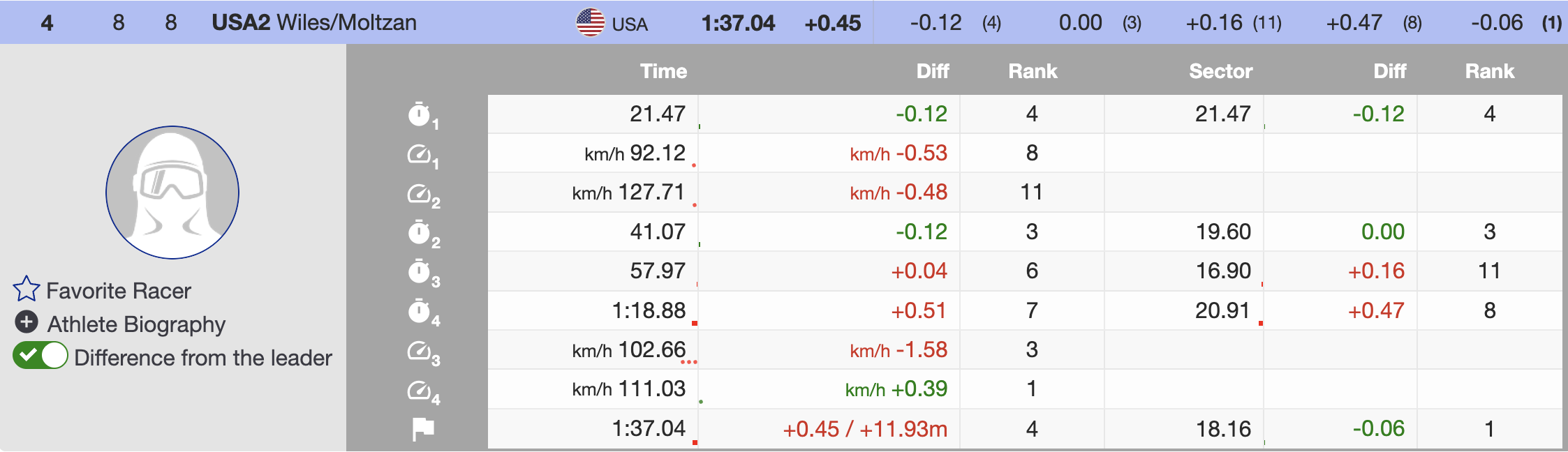
The eighth downhiller to start was Jacqueline Wiles (1992) for USA 2, paired with Paula Moltzan (1994). Wiles attacked aggressively on a course she knows well, delivering another strong Olympic downhill and stopping the clock 0.39 seconds back of the leader at the time. She later settled into fourth, keeping USA 2 firmly in the medal conversation.
Soon after, the race delivered its first major shock. As the host nation looked to seize momentum, Italy sent Sofia Goggia (1992) — the queen of speed and Sunday’s Olympic downhill bronze medalist — out of the gate for ITA 1. However, in sector four, Goggia made a rare mistake, losing her inside ski and sliding down the course. Crucially, she avoided the fencing, and while she was able to stand up and ski to the finish, the damage was done and ITA 1 was out of contention. Even so, when Goggia arrived in the finish area, the Cortina crowd roared in appreciation, recognizing both her courage and her medal-winning performance earlier in the week.
The moment the downhill had been building toward arrived with bib 14.
Johnson Delivers as USA Takes Control
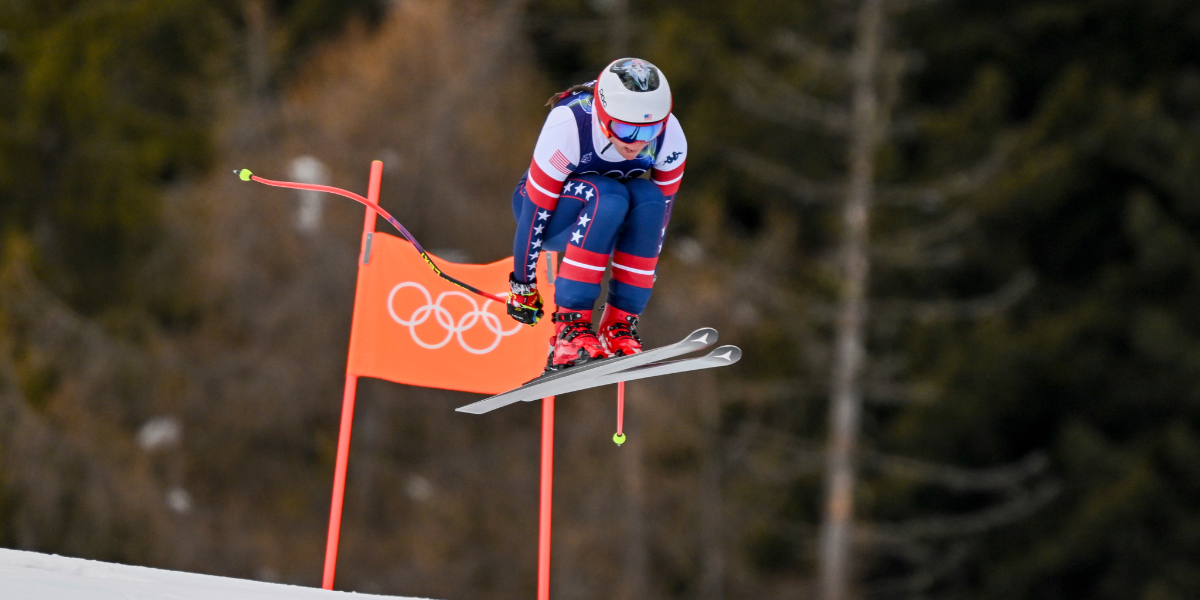
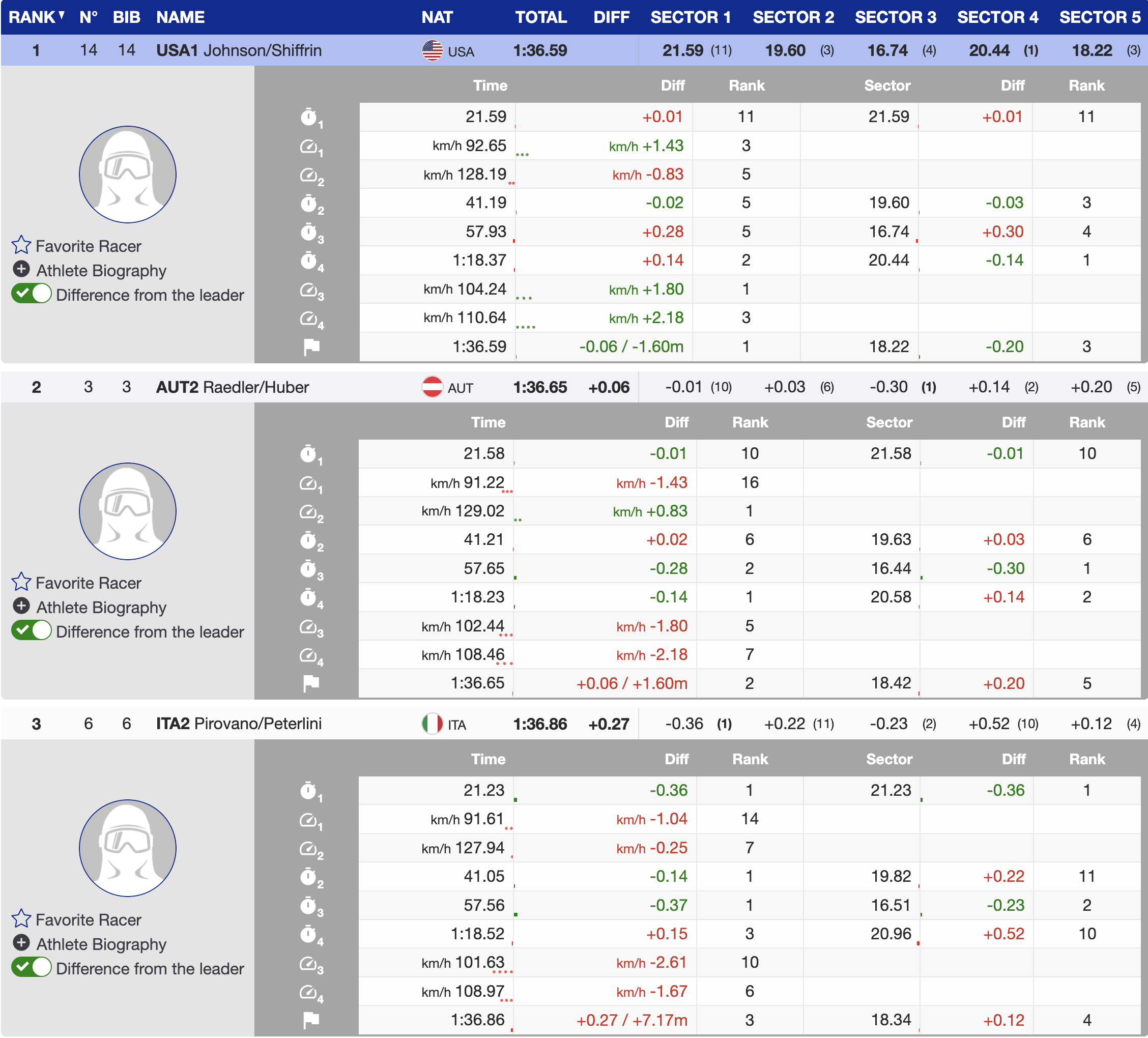
USA 1, the reigning Team Combined world champions, sent Breezy Johnson (1996) — the reigning World and Olympic downhill champion — down the hill with Mikaela Shiffrin (1995) waiting to anchor the slalom. Johnson gained time on Rädler in the opening sector, gave some back through the next two, then turned on the jets in the final sections. She produced the fastest finish, crossing the line 0.06 seconds ahead of Austria and taking the downhill lead.
Johnson did it again, handing the team to Shiffrin in the best possible position.
The timing revealed just how tight the race had become. USA 1 built its advantage late, while AUT 2 was strongest through the middle of the course and ITA 2 — with Laura Pirovano (1997) skiing for Martina Peterlini (1997) — was fastest early before losing ground in the fourth sector. At the halfway point, USA 1 led, with USA 2 just 0.45 seconds back, giving the United States two teams inside clear medal contention.
The downhill also claimed notable casualties. USA 3 saw its race end early when Isabella Wright (1997) missed a gate before the end of the first sector, eliminating the team before the slalom. Like ITA 1, USA 3 will not advance.
Breezy Johnson: Trusting the Finish
After setting the downhill pace for USA 1, Breezy Johnson said the run came together once she committed to speed and confidence at the bottom of Olimpia delle Tofane.
“I’ve always been pretty good at the bottom,” Johnson said. “It’s about carrying speed and pressing the terrain. Once I realized I wasn’t going to blow out, I just thought, ‘Let’s have some fun. Let’s ski relaxed and free.’”
Johnson also described the unique pressure of the Team Combined format, where one skier carries another’s Olympic hopes.
“It’s both the most and the least pressure you ever feel,” she said. “You’re holding somebody else’s Olympic dream, but you also don’t have to do the whole thing yourself.”
Jacqueline Wiles: Delivering for the Team
Jacqueline Wiles embraced the responsibility of setting up USA 2, knowing her downhill would shape Paula Moltzan’s opportunity in the slalom.
“You want to give your teammate something to work with,” Wiles said. “It’s not about being perfect — it’s about being solid and giving them a chance.”
Wiles said the Team Combined format sharpens focus rather than adding fear.
“You’re skiing for more than just yourself,” she said. “That changes how you approach it, but it’s also why this event is so special.”
Eight Teams Within a Second as Slalom Looms
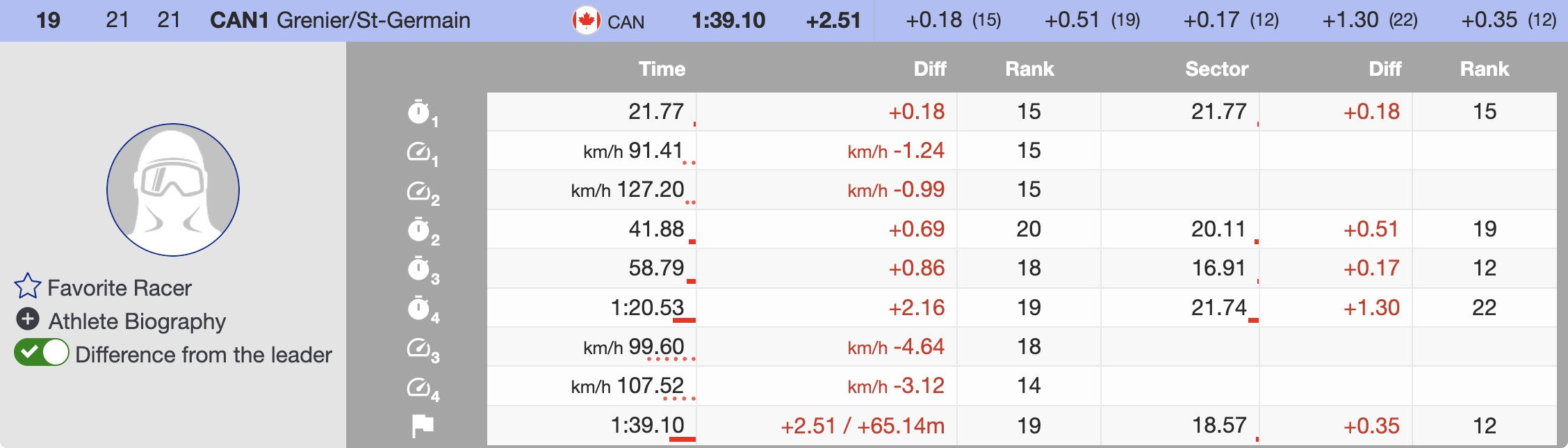
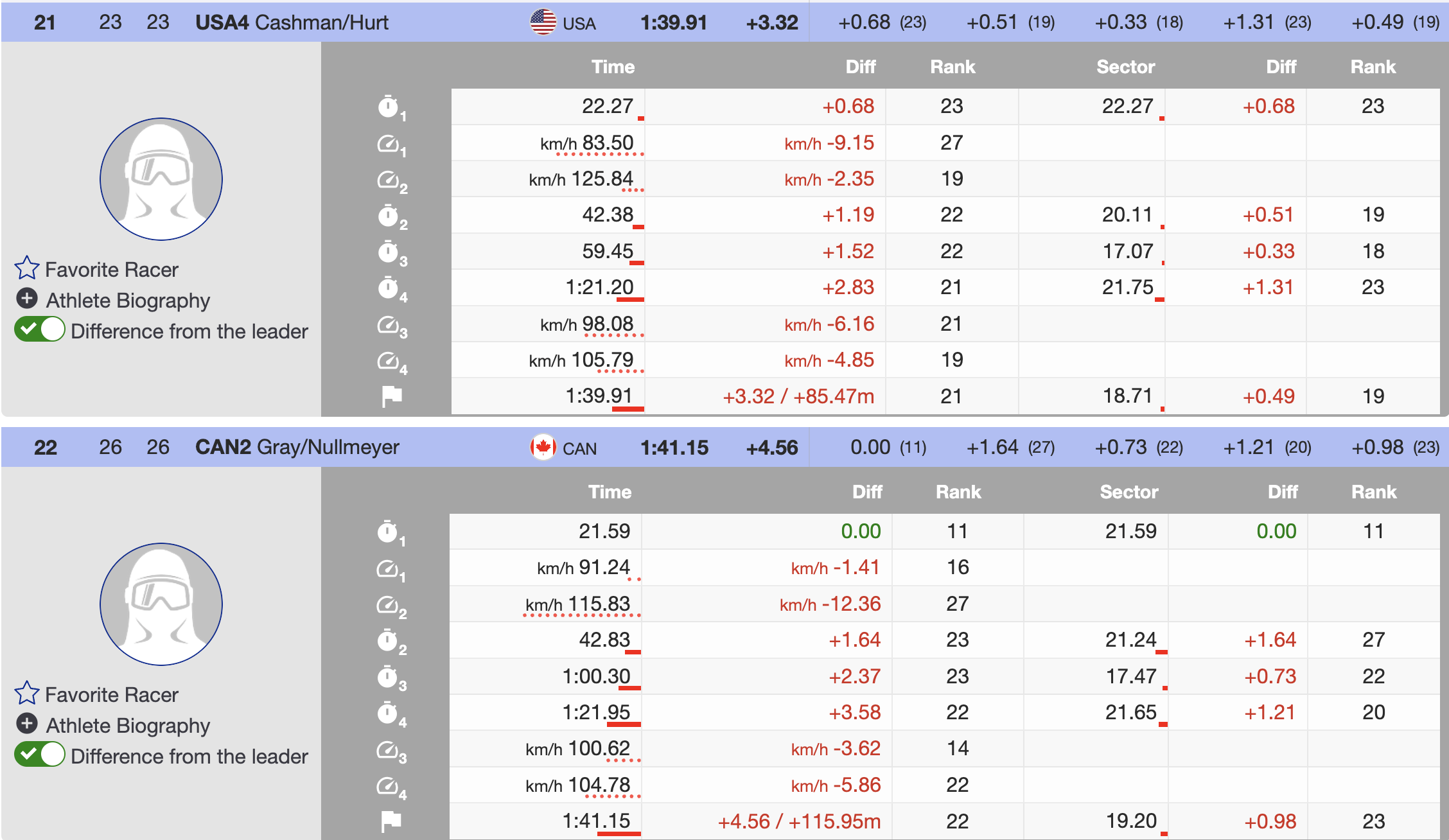
Canada faced a challenging afternoon. CAN 1, with Valérie Grenier (1996) — a past downhill podium finisher on this course — crossed 2.51 seconds back, while CAN 2 saw Cassidy Gray (2001) finish 4.56 seconds behind, leaving slalom partner Ali Nullmeyer (1998) a significant deficit to overcome.
With the downhill complete, the slalom will run in reverse order of the downhill results after a scheduled break, with the fastest teams going last. The second run will feature many of the sport’s biggest names, including Mikaela Shiffrin and Petra Vlhová (SVK, 1995), who returns to Olympic competition after more than two years of injury recovery.
The downhill has drawn the lines. The slalom will decide history.
United States
- 1st 🇺🇸 USA 1 — Breezy Johnson (1996) / Mikaela Shiffrin (1995) — 1:36.59
- 4th 🇺🇸 USA 2 — Jacqueline Wiles (1992) / Paula Moltzan (1994) — +0.45
- 21st 🇺🇸 USA 4 — Keely Cashman (1999) / AJ Hurt (2000) — +3.32
- DNF 🇺🇸 USA 3 — Isabella Wright (1997) / Nina O’Brien (1997)
Canada
- 19th 🇨🇦 CAN 1 — Valérie Grenier (1996) / Laurence St-Germain (1994) — +2.51
- 22nd 🇨🇦 CAN 2 — Cassidy Gray (2001) / Ali Nullmeyer (1998) — +4.56

Downhill Results: women’s Combined
Click Images to Enlarge
Timing Analysis: fastest three Performers and Other North American Teams
About the Author: Peter Lange