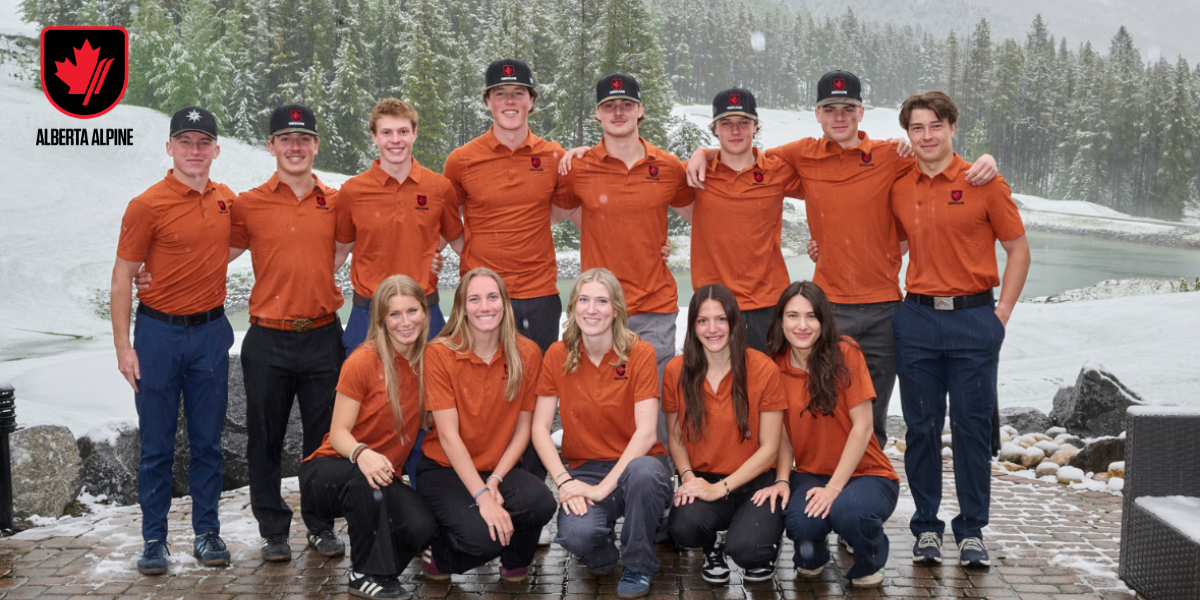
Featured Image: Alberta Provincial Ski Team/ Alberta Alpine
Alpine Canada has updated its Project Excel hub with a 2026–27 action plan, fitness performance standards and an NCAA eligibility update.
The organization describes Project Excel as an initiative for promising racers graduating from U21 who have not yet joined the Canadian Alpine Ski Team.
The action plan also addresses earlier stages of development. Its goals include improving communication about fitness and skills progression. It also explains the rationale behind random start order for U14 and U16 racers. Two U18 development projects are planned for this season.
For older athletes, the need for a clear next step is becoming more pressing. New NCAA Division I and II eligibility rules could reduce the college racing time available to athletes who delay enrollment while pursuing FIS and Nor-Am goals.
Josh Benge, athletic director of the Alberta Alpine Ski Association, serves on the Project Excel working group. Johnny Crichton, vice president of BC Alpine, is also a member.
Both see an opportunity to better connect provincial development programs with the national team. They also want to support athletes whose progress does not fit neatly within selection criteria or age categories.
A Gap That Does Not Begin at U21
Athletes graduating from U21 without a national-team place can face substantial costs and limited training options, Benge said.
“For an athlete coming out of U21 who has not yet achieved CAST status, there are a lot of headwinds,” he said. “If their goal is genuinely to make the national team, they are taking on a significant financial burden at a time when the pathway becomes increasingly difficult.”
Athletes need access to strong training environments, he said. They also need enough high-quality training to continue improving. At the same time, senior national-team selection criteria become harder to meet as racers get older.
Crichton said athletes who miss C or D Team criteria may still have considerable room to develop.
“We’ve seen athletes get to that stage where the options become pretty limited, hopefully NCAA, or finding the resources to pursue an academy opportunity in Europe, or sadly, being done with the sport,” he said.
An injury, missed benchmark or later development timeline can leave an athlete outside a formal program. That can happen before the athlete has reached their potential.
For Crichton, Project Excel should help keep more of those racers progressing. It should also keep them connected to Canadian ski racing.

Preparing Athletes Before FIS
Crichton believes that work must begin earlier. Athletes entering FIS racing may suddenly find themselves starting farther back. They must ski rutted courses while trying to improve their rankings.
Crichton has advocated for random start order at younger ages. The approach could help racers learn those skills before results and selection criteria carry as much weight.
Changing start positions can challenge leading athletes to perform in tougher conditions. It can also help the athletes chasing them. Those racers may begin to view the performance gap as something they can close, Crichton said.
“With random start, we’re taking the racing we’re already doing and changing the environment to better prepare athletes for what’s coming next,” he said. “In my opinion, that’s a positive development change that can make all the athletes better without asking families to spend more money to achieve it.”
The 2026–27 action plan addresses the reasoning behind the random start order initiative. It calls for greater awareness of the approach among U14 and U16 racers.
Crichton’s example shows that the working group is examining the pathway well before athletes reach the post-U21 gap.
Connecting Provincial and National Support
Project Excel brings together Alpine Canada and provincial ski associations. Its working group includes representatives from British Columbia, Alberta, Ontario and Quebec. Alpine Canada staff also participate.
Benge represents Alberta on the committee. He wants athletes to experience a clearer progression from club to province and, ultimately, the national team.
Training and racing with peers from across Canada could create valuable opportunities, he said. Those opportunities may be difficult for an individual province to provide on its own.
“I don’t think we can simply fund individual athletes and expect the pathway to fix itself,” Benge said. “We need to create environments where athletes are pushed by the people around them and where the collective level of the group continues to rise.”
U18 Projects Planned for This Season
The action plan identifies two Project Excel U18 development projects for 2026–27. A European project is planned for January, followed by a U18 Nor-Am Cup event in February.
Their inclusion provides a concrete example of the shared opportunities Benge wants to see across the pathway. He also raised broader ideas, including combined speed training and more international experience for younger athletes.
Crichton said the working group has operated collaboratively. Members share responsibilities based on their experience and the work required.
Provincial programs bring knowledge of athletes, coaches and clubs on the ground, he said. Alpine Canada offers a national perspective on what racers need to succeed internationally.
Building Common Standards Across Canada
A common direction does not require every province to operate the same way.
Snow conditions, geography, travel demands and available resources differ across Canada. Crichton wants athletes to benefit from those differences. That could include training in environments unlike those they experience at home.
“There should absolutely be common standards and a shared understanding of where we’re trying to take athletes, but there also has to be room for provinces to figure out the best way to get there,” he said.
What Project Excel will provide to an athlete who has aged out of U21 is still evolving, according to Crichton.
He pointed to British Columbia’s support for NCAA athletes who did not make the national team. Those athletes can join the BC Ski Team for summer dryland sessions and on-snow camps. Their primary training and competition programs may still be based elsewhere.
The arrangement is one example of how a province can keep athletes connected after they leave its full-time program.
The NCAA Clock Changes the Decision
Under the NCAA’s new Division I and II model, eligibility is generally measured within a continuous five-year period.
The period begins with an athlete’s initial full-time college enrollment or an age-based trigger. The age-based trigger is tied to the academic year after the athlete’s 19th birthday. Whichever happens first starts the eligibility clock.
Once the period begins, sitting out or delaying competition does not stop it. Athletes who first enroll full time during the 2026–27 academic year will receive transitional consideration. They will be assessed under either the previous rules or the new model, whichever benefits them more.
Athletes who first enroll in fall 2027 or later will be assessed under the age-based model alone.
Less Time to Delay College Enrollment
Racers sometimes spend additional years pursuing FIS and Nor-Am results before entering college. Under the new model, part of their eligibility period could pass before they join a college team.
The rules do not guarantee every athlete five full years of college competition.
Benge believes the change will push racers to decide earlier whether the NCAA is part of their plan. He also thinks college programs may need to place more emphasis on developing younger athletes.
“If we are going to see 18-year-old athletes entering the system and expecting them to ultimately become NCAA national champions and, ideally, go on to their respective national teams, the model needs to evolve toward genuine athlete development,” he said.
For Canadian racers and their families, the decision involves more than when to enroll. They must also consider where the athlete can access the right coaching and competition.
Financial support is another important factor. Each option could affect the time an athlete has available to compete in college.
What Athletes Still Need to Know
The action plan identifies projects and development goals for the coming season. Those include the January European project and the February U18 Nor-Am Cup event.
However, it does not identify which athletes will participate. It also does not explain the selection process or the support available to those athletes. Alpine Canada’s public Project Excel page does not name a 2026–27 athlete cohort. It also does not specify funding and coaching arrangements for athletes beyond U21.
Those details will matter to families considering the cost of continued development. For older racers, they may also affect the timing of college enrollment.

Defining Success for Project Excel
Benge said success over the next few years would mean creating a more connected pathway. That pathway would give athletes meaningful opportunities to train and race together. It would also prepare them to move onto the senior national team.
Crichton would examine whether more athletes enter FIS prepared for the next level. He would also consider whether they continue improving and remain involved in the sport.
The goal is to prevent racers from falling out of the pathway because they missed a benchmark at a particular age.
“If Project Excel can help change that narrative and create a pathway where athletes can see how they might progress from their club, through their province and ultimately onto the national team, I think that’s incredibly important,” Crichton said.
About the Author: Katie Twible