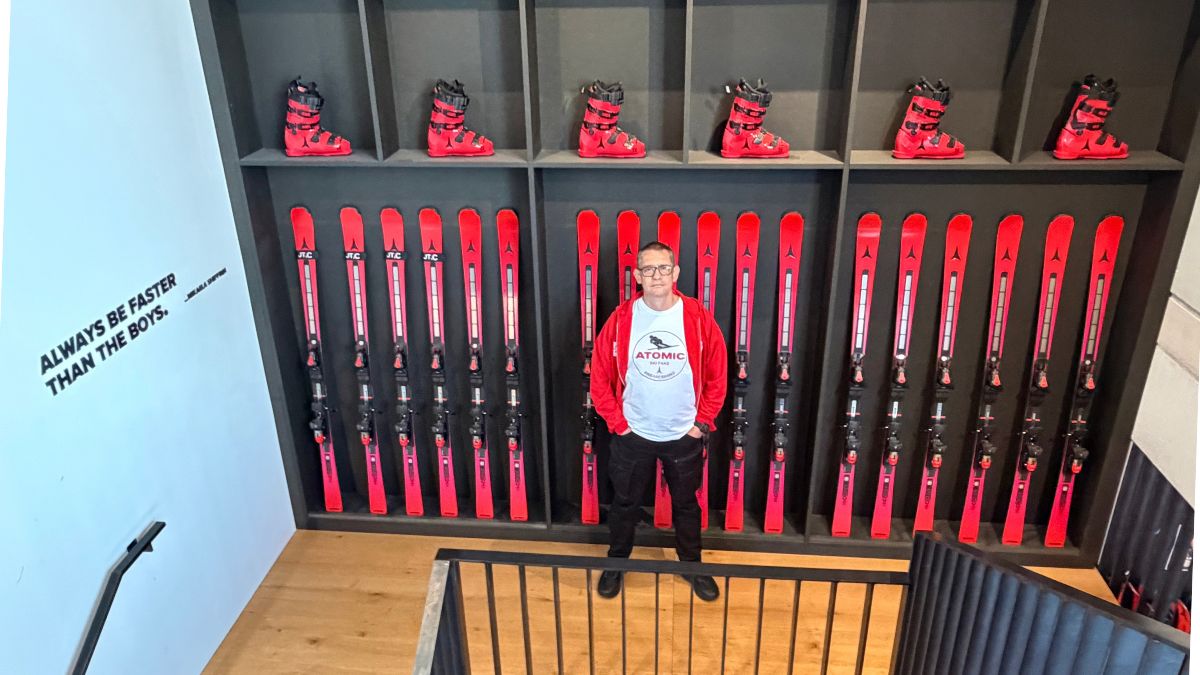

Olympic Valley North Tahoe Photo: Adam Fischer
Project Olympic in Palisades Tahoe began with a simple question from a World Cup athlete: “Where’s your gym?” The answer—a small setup in the old cantina building—inspired Adam Fischer’s mission to match Palisades’ world-class terrain with equally high-caliber infrastructure for training and living.
That conversation launched a far-reaching, community-centered development that now includes deed-restricted workforce housing, a public fitness center, a home for Creekside Charter School, a potential high school facility, and limited commercial space for local businesses. With momentum building and support from across the region, Fischer and his collaborators believe Project Olympic could become a national model for community development in ski towns
A Shared Vision from the Start
Fischer isn’t building this project alone. Travis Ganong was among his earliest supporters, a two-time World Cup downhill winner, recently retired U.S. Ski Team athlete, and a proud native of Tahoe. Ganong quickly saw the project’s potential and joined Fischer to co-host community fireside chats, speak with potential donors, and help guide the vision forward.
“Growing up in Tahoe, we had an amazing mountain to train on, but off the hill we had no gym or educational facility to foster the other parts of being a student-athlete,” Ganong said. “I still made it to the world stage, but many others slid through the cracks.”
He believes this project can close that gap. “My vision is to complement the world-class mountain with a community-owned and operated development that addresses multiple needs—training, education, housing and connection,” he said.
Broad Support From Stakeholders
Project Olympic has already earned support from local residents, businesses, and institutions—including Creekside Charter School, Palisades Tahoe, and regional environmental groups. “We’ve had nothing but support so far,” Ganong said. “Everyone sees this as a win-win.”
Fischer and the team proactively met with Sierra Watch, the Mountain Area Preservation Foundation, and Friends of Olympic Valley—three organizations often critical of new development in the Tahoe Basin. Their goal was to ensure early transparency and collaboration. “We wanted to avoid the litigation that derails so many Tahoe projects,” Ganong said.
Placer County Supervisor Cindy Gustafson has offered guidance and helped the team connect with key grant agencies and government contacts. Palisades Tahoe leadership supports the vision and sees an opportunity to collaborate with Project Olympic. “They’re not driving it, but they recognize how this improves quality of life in the valley,” Fischer said.

Funding Silos and Purpose-Driven Support
Project Olympic addresses three interconnected areas of need—each with its own set of expected donors:
- Deed-Restricted Workforce Housing: Rent-restricted units for coaches, teachers, ski patrollers, and other local workers will likely draw support from community members and organizations focused on long-term economic stability.
- Education and School Access: The project includes plans to provide a permanent home for Creekside Charter School and potentially expand to include high school grades. “We lose too many kids after eighth grade,” Ganong said. “This project gives them a chance to stay rooted here, continue their education, and stay in sport.”
- Athlete Training and Community Wellness: The proposed fitness and performance center—open to both athletes and the public—will appeal to ski racing families, regional sports foundations, and even outside donors interested in sports and human performance innovation. “This is about creating space for both community and performance,” Ganong said.
To provide financial stability and preserve the valley’s small-business identity, the project includes limited commercial space. Fischer plans to retain existing tenants—Olympic Boot Works, Arcade Belts, and the post office—as long-term occupants. “It’s not a commercial development in the traditional sense,” Fischer said. “But we want a few stable, community-minded tenants whose rents support the foundation and keep services local.”
Anchored in the Valley
The 5.22-acre parcel sits at the entrance to Palisades Tahoe and carries deep significance. Fischer secured the land through a formal purchase and sale agreement with the Poulsen Family Trust.
The Poulsen family, led by Wayne Poulsen, co-founded the ski area that would become Palisades Tahoe. “We’re building on legacy here,” Fischer said. “This project honors what the Poulsens created while building for the future.”
Zoning regulations permit development without variances, and Fischer’s team limits density by choice. “You could build a 600,000-square-foot hotel here,” he said. “Instead, we’re proposing something closer to 100,000–120,000 square feet, no taller than three stories. We want it to fit the environment.”
Community design charrettes will shape the final plan once the project hits its first fundraising milestone: $200,000. Grassroots donors have already contributed more than $42,000—including Ganong, who made a personal contribution through his work with the Directors Cup Ski Invitational.
Housing for Those Who Keep the Valley Running
The project supports the people who keep the community running—ski coaches, teachers, firefighters, EMTs, ski patrol staff, and others working in and around Olympic Valley. It offers rent-restricted units, not for sale, ranging from studios to three bedrooms.
“This isn’t luxury housing,” Fischer said. “It’s stable, affordable, and employment-linked. That’s who this is for.”
Rents will be based on Placer County’s area median income (AMI) calculations. A community-based foundation will oversee and manage the project, reinvesting all net proceeds into building maintenance, educational programs, scholarships, and future community initiatives.
A Place to Train—and Gather
The training and performance center is designed to meet both athletic and community needs. Ganong sees it as more than a gym. “It’s a third space,” he said. “Beyond home and work, this will be somewhere people connect—training side by side, grabbing a smoothie, seeing each other regularly.”
Plans include space for public training, high-performance use, and even future research partnerships focused on sports science, recovery and innovation.
“We have a high-performance culture in Tahoe,” said Ron Kipp, director of team performance for Team Palisades Tahoe. “Every aspect of training is scrutinized and viewed as essential to be at the top of the sport. Having the attributes of a performance center is a necessity if athletes are to reach and maintain world-class results. This project will yield amazing dividends for the community and country.”


A Permanent Home for Education
Only two public schools in the United States partner with a gold-level ski club, and Creekside stands as one of them.
“This could completely change the game for local student-athletes,” Ganong said. “And it gives the broader community access to better education without leaving the valley.”
Allison Mollin, a U.S. Ski & Snowboard Alpine Team athlete and Creekside alum, emphasized the school’s lasting impact: “While I was an eighth grade student at Creekside looking for high school options, I remember wishing that Creekside continued on into high school. Every high school I visited I compared to my experience at Creekside. Choosing to attend middle school through Creekside was the best decision my parents ever made, not only for my athletic and academic careers, but for my experiences as a person.”
Jeff Kraunz, executive director of Creekside, underscored the importance of sustaining academic opportunities alongside elite athletics. “To succeed at an elite level, we must prioritize the critical thinking and brain development in a supportive environment. So many student-athletes are forced to sacrifice either a high-quality education or forgo access to world-class events. With a permanent home, we would be able to continue an education through high school that would allow for students to thrive at the highest level without sacrificing community, identity or opportunity.”
Eric Garayoa, director of teams at Team Palisades Tahoe, added: “As one of only two U.S. Ski & Snowboard high-performance centers and gold-certified clubs nationwide partnering with public schools, we are committed to a standard which provides access and excellence to all community members—where youth athletes may pursue the highest of goals without leaving their home mountain or school community.”


A Sustainable, Reinvesting Model
A nonprofit foundation will direct all net proceeds from rental and retail leases through an endowment structure. This ensures continued reinvestment in the community and avoids dependency on outside operators.
“This isn’t a one-and-done build,” Fischer said. “This is meant to sustain itself and feed future opportunities.”

What They Want the Ski World to Know
At the end of the interview, Fischer was clear about what he hopes the ski racing world understands:
“We have to do this now. It’s a once-in-a-lifetime opportunity, and if we don’t act, we risk losing the chance to shape the future of this valley.”
Ganong reinforced that message:
“This isn’t just about athletes. It’s about teachers, ski patrollers, and families. This project is about making Olympic Valley livable—permanently. And if we do it right, it can be a model for every ski town in the country.”
A Call to Action
The Project Olympic team is raising $200,000 to launch architectural planning and community engagement work. Early support from donors has already brought in more than $42,000.
To learn more or contribute to the project, visit the Project Olympic website.
About the Author: Peter Lange