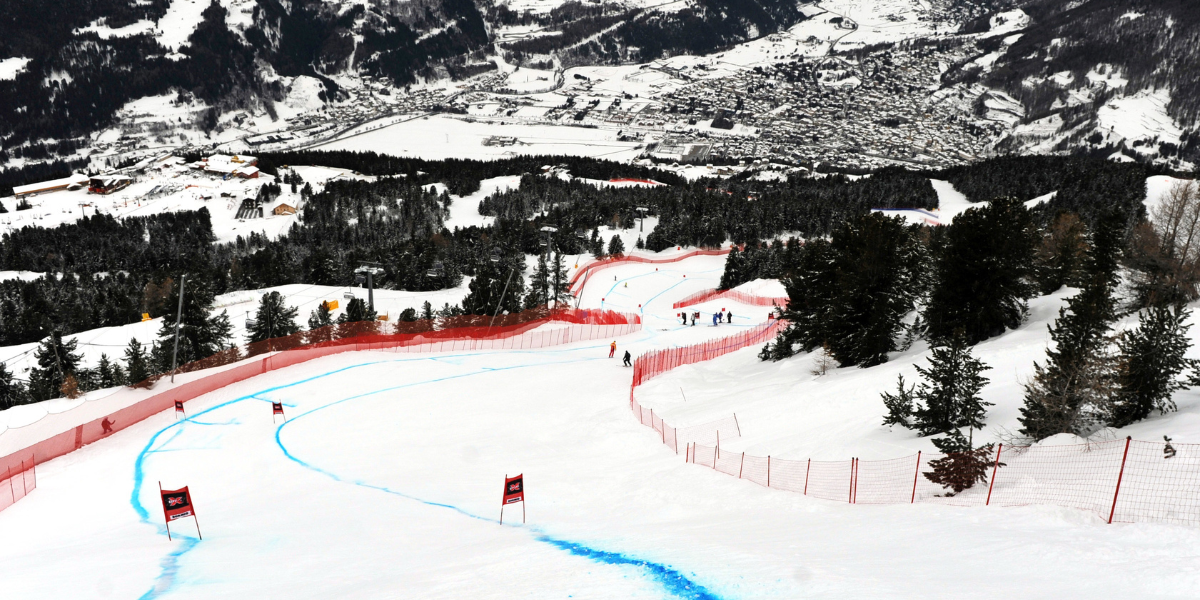
Bormio’s Stelvio Downhill December 27th: GEPA pictures
Bryce Bennett on February 2026 Olympic Downhill: ‘Light on the Course Will Be Fun’
BORMIO, Italy – Considering the violent crashes of Cyprien Sarrazin, Gino Caviezal, and Pietro Zazzi, the future Stelvio Olympic downhill course in Bormio left a bitter impression following the World Cup races on Dec. 28-29. The three racers face long and arduous recoveries.
Sarrazin’s brutal fall and serious injuries in downhill training prompted his French teammate Nils Allègre to criticize organizers: “They don’t know how to prepare a course. They don’t deserve to have the Olympic Games here.”
While racers have offered love and full support to Sarrazin – who suffered significant head injuries and faces an uncertain future in the sport – most athletes concluded that the string of crashes stemmed from the inherent risks of racing the icy, dark, and bumpy 2.1-mile Stelvio track.
Despite the alarming incidents, many racers expressed enthusiasm and curiosity about tackling the daunting Stelvio under projectedly different conditions at the Milan Cortina 2026 Olympic Winter Games in February. Skiing the piste later in the winter is expected to bring more sunlight, better visibility, and possibly softer snow.
Innerhofer Eyes a Final Olympics
Italian 4-time Olympian Christof Innerhofer remains motivated to compete in one final Olympic Games. The 40-year-old veteran, who has been racing the Stelvio since December 2006, won his first World Cup in Bormio in 2008 at age 24.
“For sure, the Olympics will be special here – this will be the toughest Olympic downhill in 30 years, but I also hope they prepare the track differently because the last part can be very nice to ski,” Innerhofer told Ski Racing Media.
“When I won in 2008, I thought this was the coolest. Pushing the limit here is rock ’n’ roll for the World Cup. But now, when I think about this slope from the San Pietro Jump to the finish, everyone should have more fun.”
Innerhofer finished 18th in his most recent race on the Stelvio while nursing knee pain. His thoughts remained with less fortunate racers.
“This weekend was a bad weekend – these injuries are too much,” Innerhofer said.

Kriechmayr Anticipates Gentler Conditions
Few downhill racers possess more Stelvio experience than Austrian Vincent Kriechmayr, who is striving to compete in his third Olympic Games. Seeking his first Olympic medal, the 33-year-old Austrian believes slope conditions in February will differ significantly.
“The slope will be completely different with so much more sun throughout the day,” Kriechmayr told Ski Racing Media. “I think it will be much smoother than in December.
“It won’t be easier to win, though. The gap between the top guys can be closer.”
An 18-time World Cup winner and 2-time world champion, Kriechmayr hopes a new Stelvio in February will lead to a different outcome than his previous best Olympic finish of fifth in Beijing 2022.
Italian Pride Just ‘Around the Corner’
Innerhofer’s teammate Mattia Casse – who missed the Bormio downhill podium by just 0.07 seconds – echoed similar sentiments about the course while anticipating an Olympics on Italian snow.
“I’ve never been here in February, but for sure there will be more sun. Maybe the snow will be different,” said the 34-year-old Italian. “They will still prepare icy conditions.”
Casse, who has represented Italy at four world championships but never the Olympics, clocked a field-leading top speed of 86.4 mph at the final speed gun.
“It will be incredible and amazing to have the Olympics here in Italy. Especially to compete on the Stelvio slope,” Casse said. “It’s near home for me – only two hours – but still a long time away.”
Preparing the Stelvio for the Big Show
Bormio World Cup Race Director Omar Galli, who will serve as Sport Manager for the 2026 men’s Olympic Alpine skiing venue, emphasized the importance of strategic course preparation.
“The big problem when we have a long slope like this, over 3,000 meters, is that it’s impossible to maintain the same kind of snow from top to bottom,” Galli told Ski Racing Media.
“We’re always thinking about how we can improve – we have one plan and use the water the same way. But then the wind comes, it rains, temperatures change, and it is all very difficult.”
Test runs this February will provide valuable insight.
Looking Back to February 2005
The Stelvio downhill was last raced in mid-winter during the 2005 FIS Alpine Ski World Championships. Conditions were notably gentler, highlighted by Bode Miller’s iconic one-ski performance in the Alpine combined downhill.
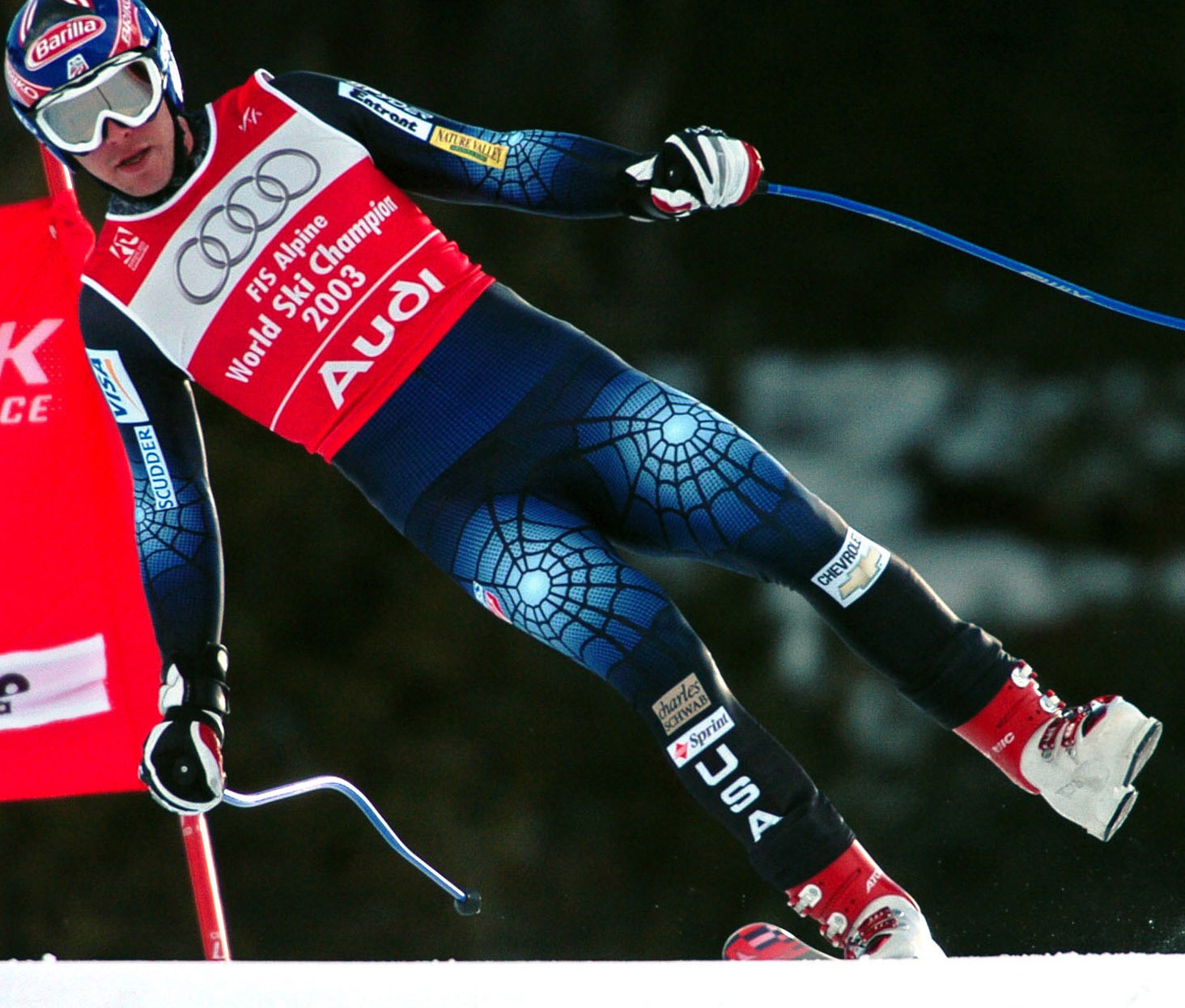
“The whole nature of the course changes from being this intimidating battle to something you can charge,” said Stifel U.S. Ski Team member Kyle Negomir. “If you remove some of the snow and light challenges in February, it allows people to push harder and take more risks.”
Bennett Looks Ahead
Stifel U.S. Ski Team’s Bryce Bennett, whose best Stelvio finish was fourth in 2018, candidly admitted his struggles with the track in recent years.
“I am excited to ski this in the sun,” Bennett said. “It will probably still be bumpy and icy, but at least with a little bit of light, it will be fun.”
USA’s Beijing 2022 super-G silver medalist Ryan Cochran-Siegle shared similar optimism: “I’m sure the organizing committee will do a good job prepping it and getting it ready. It really needs to be consistent from top to bottom.”
Full Speed Ahead to February 2026
The men’s Olympic downhill in Bormio on Saturday, Feb. 7, will open the Milan Cortina 2026 program. Sun or no sun, the Stelvio will test the limits of the world’s best ski racers as they pursue Olympic glory.
And who knows, maybe they’ll even need a pair of shades too.
Follow Brian on Instagram – @brian.pinelli
About the Author: Brian Pinelli