Four years ago, the US Ski Team cut its entire men’s World Cup slalom team. This year at the Olympics, Team USA included only one slalom skier.
While the line connecting those two events might sum up the state of American Men’s slalom, the reality is more nuanced, offering both hope and challenge. Throughout this season, athletes and coaches offered their perspectives on where we are as a country in ski racing’s most finicky and competitive event.
Before diving in, let’s look at why it is so hard to move onto the World Cup in slalom, an event that requires the minimum amount of hill space and can be trained indoors, year round. The accessibility of slalom is a double-edged sword, allowing for more specialists, and thus, more competition. That – and the very nature of the precision, rapid-fire event – makes the upper ranks extraordinarily tough to crack. Establishing yourself on the men’s slalom World Cup requires doggedly fighting your way up the ranks, incrementally lowering your all-important start number. It is a process that takes grit and time. Furthermore, as US Ski Team vet Robby Kelley puts it simply, “slalom is tough because so much can go wrong.”
Where we have been
In the fall of 2013, coaches gathered in Boston at the annual USSS symposium to hear a presentation by Sasha Rearick about this being the “the age of SL” in the US. Rearick had good reason to say it. The US had ten men in the top 100 in SL, five of whom would score World Cup points that season. From 2012-2016, nine athletes scored World Cup slalom points and the US had between 9-11 men ranked in the top 100 each season. “There are not many other times when we had that many guys actually getting second runs,” says Kelley.
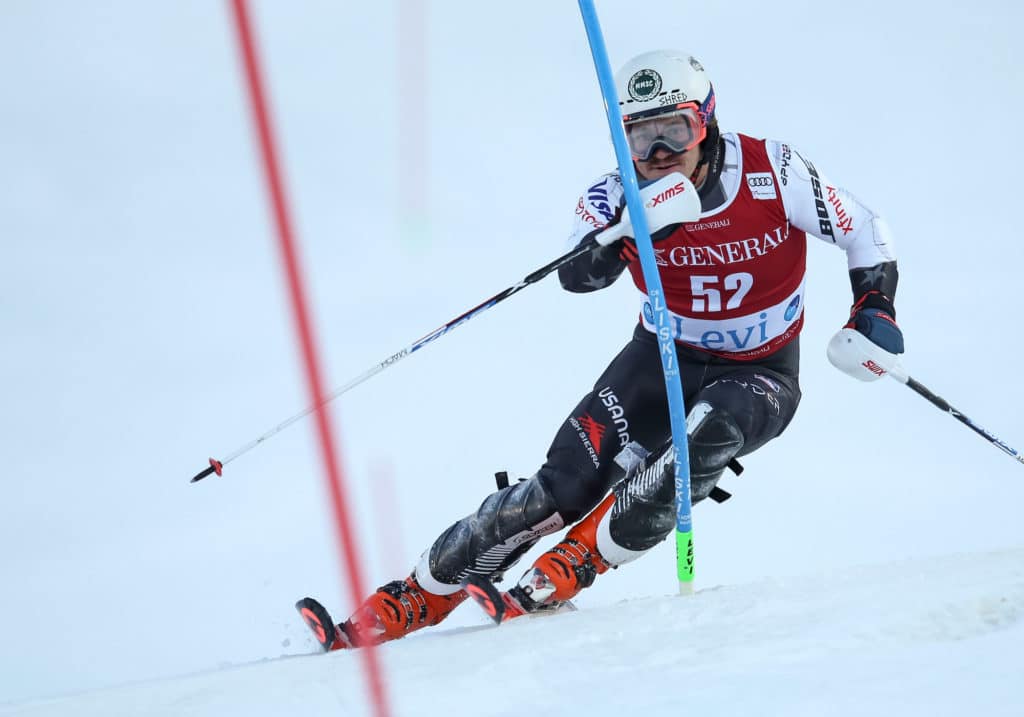
Nonetheless, the national team whittled its vets each year, and in 2018 – with three athletes scoring SL points – cut its World Cup slalom team entirely. The following year, no American scored World Cup SL points.
“We all had two years of skiing WC slalom,” says Kelley of his teammates, who were cut at various stages. “It does take time getting used to World Cup conditions.” Case in point is Dave Ryding, who, after 7-8 years on the circuit, had his first podium at age 30 and scored his first victory at age 35.
Amid the cuts, independent teams like Team America and Redneck Racing, as well as the short-lived National UNI team (2015-16, 2016-17) helped athletes outside the national team’s age requirements continue to develop and gain experience. The men’s tech team established World Cup criteria for non-national team athletes (like Kelley) and maintained a fluid environment for them to join the team at races during the season. All of these things helped keep older athletes in the game but were not a systemic fix. Such a thing would involve many factors, mainly time.
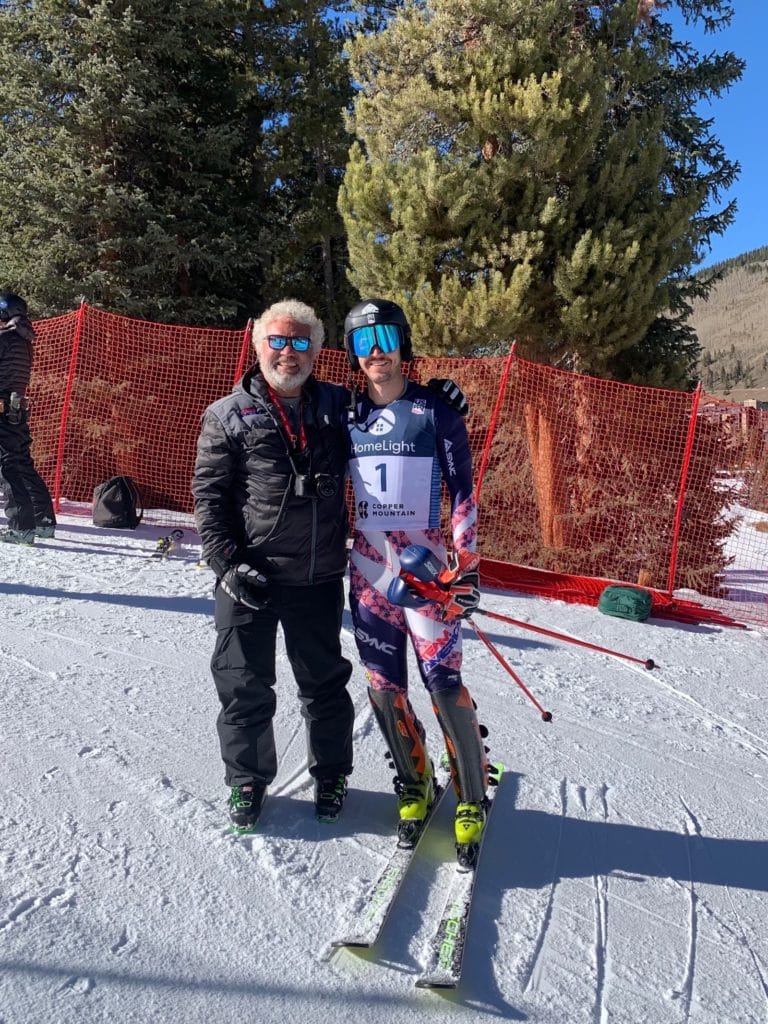
“In my opinion, it’s all about patience,” says Peter Lange, former coach of both Team America and the National University Team. Half of the six-member N-Uni team are still competing and four (including three this year) eventually earned World Cup spots.
Lange is one of many who beats the drum for optimizing development by giving athletes a longer runway. He also believes US athletes have suffered from a lack of World Cup slaloms in North America. “Momentum plays a big part in athletic performance because you are confident,” says Lange, listing the many American skiers, men and women, who had their first World Cup exposure or success on home soil. “When athletes race at home, they rise above, and that momentum carries into the season.” Lange worries about what will happen if the US loses the Beaver Creek GS – the only men’s tech event in North America – for good.
Kelley points out that the European athletes are typically better prepared because they can more easily train in World Cup conditions. While lanes on Mt. Hood have value for fundamentals and repetition and early season on Colorado’s buffed-out slopes facilitate low FIS point scores, neither replicate training on gnarled glaciers surrounded by the top World Cup athletes from every nation. “It’s hard to get good volume and prep on that kind of World Cup surface leading to January,” says Kelley. January is World Cup slalom season, when the grind is relentless and true slalom chops are revealed.
Where we are now
All agree that in Ben Ritchie (21), Luke Winters (24) and Jett Seymour (23) the US has three very talented athletes with the potential to be regulars in the Top 30. Their challenge, and the team’s, is keeping their intensity and keeping the faith. AJ Ginnis was a 2015 World Jr. medalist in slalom and a rising US star when he was cut along with the slalom team in 2018, at age 23. Now competing in the World Cup for his native country of Greece, he remains a strong advocate for both the US Ski Team and, especially, the athletes on the slalom team.
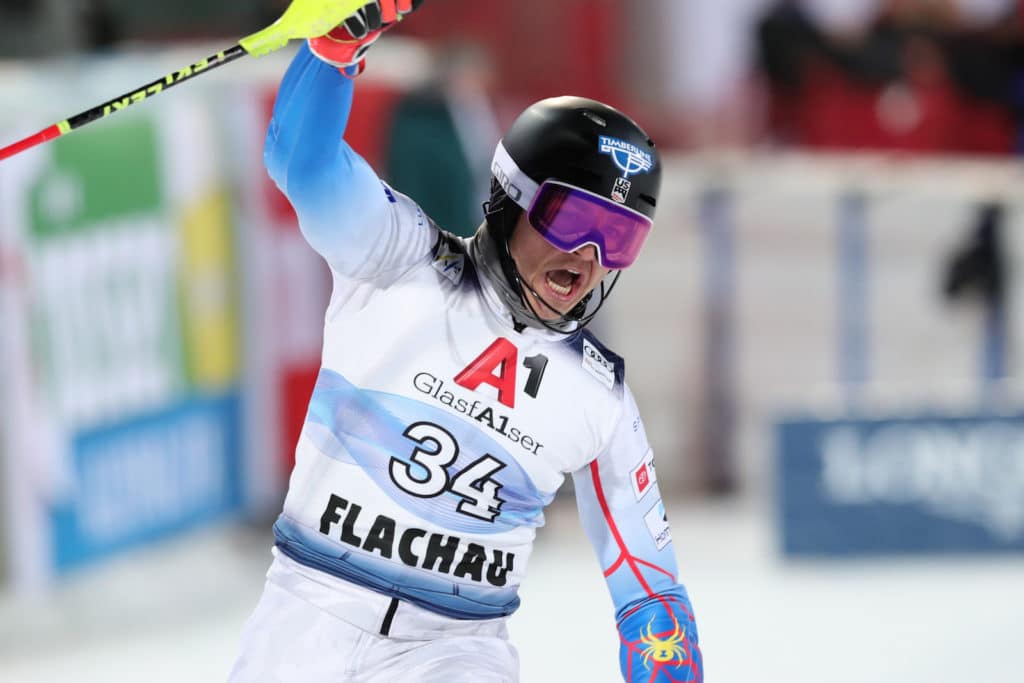
“These guys are extremely good skiers,” says Ginnis. “Ben is going to be the next top 15 skier, Luke had three top 10s this year, and Jett has the pure raw speed.” What’s most impressive to Ginnis is how the three have navigated their ways up the ranks without any of the veteran leadership their European peers enjoy. Older athletes help with everything from inspection and tactics, to training and equipment knowledge, while bringing the perspective to help get through discouraging slumps and avoid burnout. Their results also take the pressure off younger athletes, allowing them to grow and learn in the World Cup without the heavy burden of expectations.
USST Men’s head tech coach Ian Garner calls slalom “such a finicky event. It’s not going to come and be consistent right off the bat.” When interviewed mid-winter, Garner saw his US guys building confidence and getting “snippets” of what they’re capable of, especially when training with the Swiss, Germans and French during the season and with the Norwegians during the summer. “They’re skiing as fast as anyone we train with,” says Garner. What they lack, he says, is the consistency that comes with blending both intensity and tactics – something veteran David Chodounsky, who was cut as a top 30 skier, did well. “David was a big help,” says Garner. “It would be great to have him around right now.”
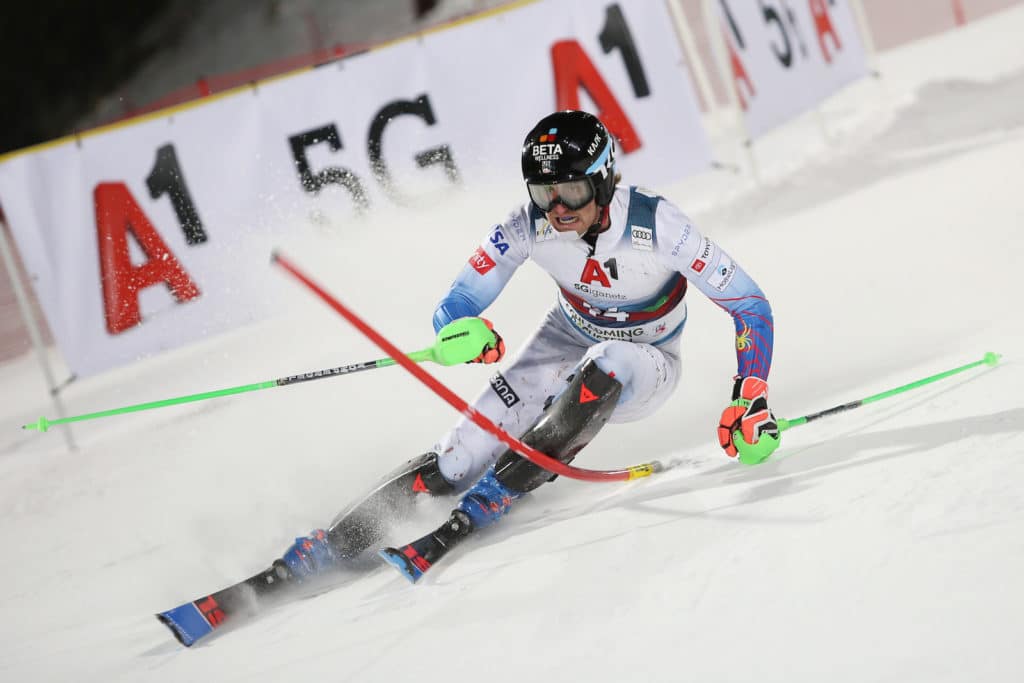
Institutionally, the team has built on the experience of its former vets, including Chodounsky, who skied a lot of GS throughout the prep period and season. “It allowed him to work on many of the same things but without the mental pressure of slalom,” says Garner. “We’re doing better at that with these younger guys now as well.”
Garner is also optimistic about skiers coming up in the Europa Cup group and in the development group. “I think, as a whole, we have a little more depth than we have had. It’s going to be a little while because that younger group is very young.”
The US does have athletes who bridge that gap racing independently (through teams like Global Racing) and also in the collegiate ranks. Every year, collegiate athletes from other national teams, particularly Norway and Canada, pop through to race the World Cup. Most recently, Swiss skier Tanguy Nef, a former Dartmouth skier and NCAA champ, won a World Cup slalom run. This year’s eastern collegiate circuit was dominated by Norwegian Jagge Lindstoel, who, at age 24, and like Nef during his college years, trained with his national team in the off-season and prep period. Efforts to coordinate such fluidity in the US have, so far, been institutionally hamstrung.
Where are we going?
Garner sees the USST showing more patience with all its athletes, especially now that athletes have the security that both funding and roster spots are guaranteed for two years. “For development, it’s the right way to go,” says Garner.’
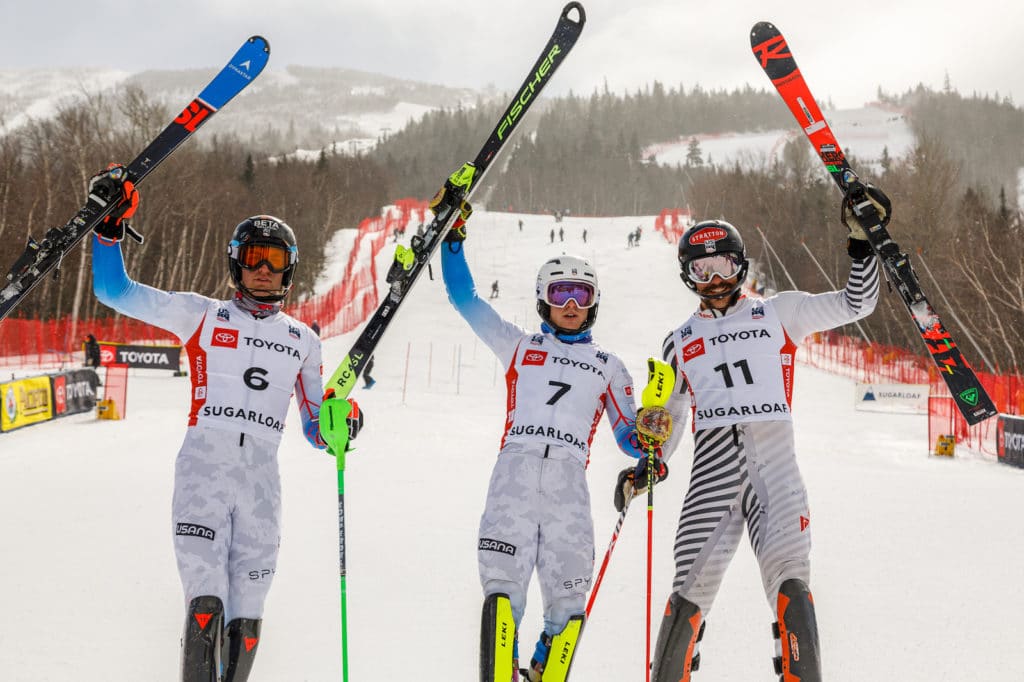
Ginnis describes the USST’s past approach to developing talent as “angsty,” in that they tend give up on athletes who are still developing but may not be on track to be superstars. As top 20 or top 15 skiers, they could nonetheless offer tremendous value to developing racers. “When you start looking for who’s going to win the next globe, you get rid of a lot of potential,” says Ginnis.
As for college racing, it is an avenue with funding and talent in place when both sides take on responsibility. Collegiate athletes who have succeeded in the World Cup have done so with off-season support and an open path from their own national teams. On the other hand, says Ginnis, “For an NGB to trust the development of athletes to the colleges there needs to be an understanding that they need good surfaces, good sets and the backing to make that happen.”
When it comes to talking slalom development, the drumbeat from all is patience. That includes encouraging and welcoming athletes who distinguish themselves at a high level, regardless of age and path; supporting athletes who are progressing in a very tough event, with the appropriate training and resources; and hanging on to athletes who have shown they can score at the World Cup level to build this generation of slalom skiers and pull up the ones to come. Additionally, advocating for tech events in North America, and fighting to keep the tech races we do have, could help create the momentum other events have enjoyed.
The state of slalom might not be as strong as it could be, but with the right amount of care and feeding, it’ll be on the upswing.
About the Author: Edie Thys Morgan