Lucas Pinheiro Braathen GEPA pictures
Pristine Weather Sets the Stage for Men’s GS at Birds of Prey
Another cold, clear morning greeted fans and racers in Beaver Creek, Colorado, as the stage was set for the final event of the men’s Birds of Prey race series. Perfect conditions welcomed the highly anticipated Giant Slalom (GS), marking the first men’s GS in Beaver Creek since Stifel U.S. Ski Team member Tommy Ford claimed a historic 2019 victory. That win remains the last World Cup GS triumph for a U.S. male skier. The Americans’ most recent podium appearance at Beaver Creek came in 2021, when now-retired Travis Ganong secured third place in the Super-G. Adding to the history, the legendary Ted Ligety, known as the “king of Beaver Creek,” dominated this slope with five GS victories over five seasons. The energy and excitement in the air promised a thrilling day of racing.
The course presented a challenge with its tight, nearly maximum number of gates and the trademark aggressive snow of Beaver Creek. Racers prepared for a test of skill, precision, and stamina.
Marco Odermatt Faces Strong Field in Beaver Creek GS
As the day began, Switzerland’s Marco Odermatt stood out as the favorite. His dominance last season, winning all but one GS, cemented his status as the skier to beat. However, Norway’s powerhouse team seemed well-suited for the Beaver Creek conditions.
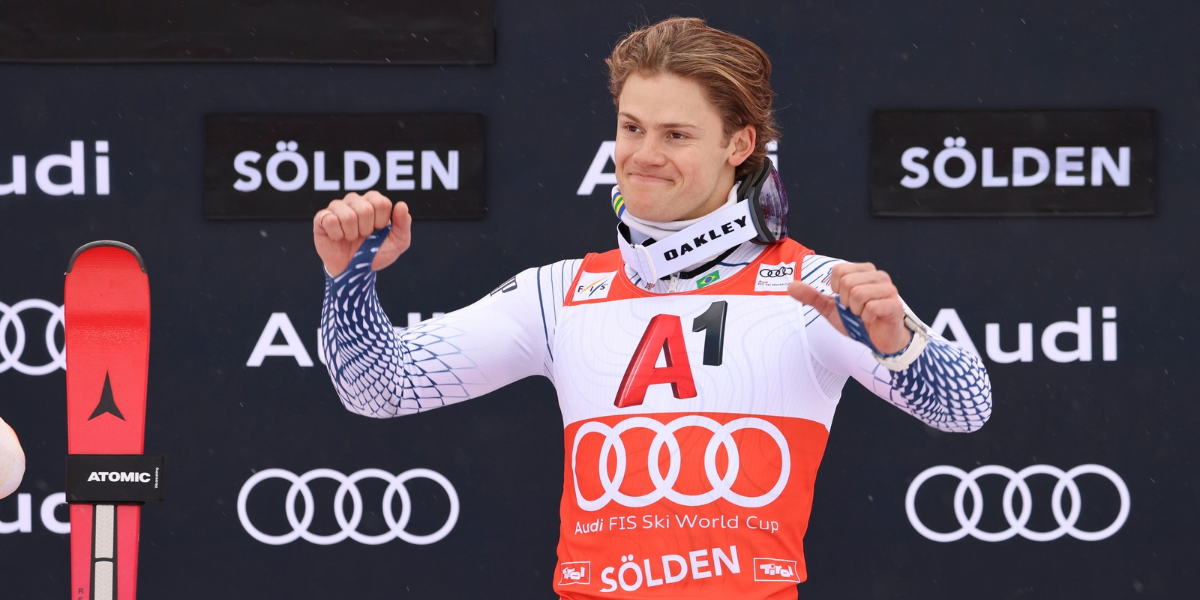
Aleksander Steen Olsen, 23, opened the season with a victory in Sölden, joined on the podium by teammates Henrik Kristoffersen and Atle Lie McGrath. Adding intrigue, their former teammate Lucas Pinheiro Braathen, now competing for Brazil, narrowly missed the podium in fourth place.
Despite high expectations, ski racing remains unpredictable, and the tightly set Beaver Creek course delivered plenty of surprises.
Thomas Tumler Sets the Pace as Early Contenders Battle Beaver Creek’s Challenging GS Course
Swiss skier Loïc Meillard opened the action with a strong performance, showcasing his skill despite missing the Sölden season opener. His smooth and controlled run revealed that while the course was slower than expected, it remained highly skiable and ready to challenge the field. However, Meillard’s time at the top was brief. His veteran teammate, Thomas Tumler, skiing with bib three, surged to the lead with an impressive 1.13-second advantage.
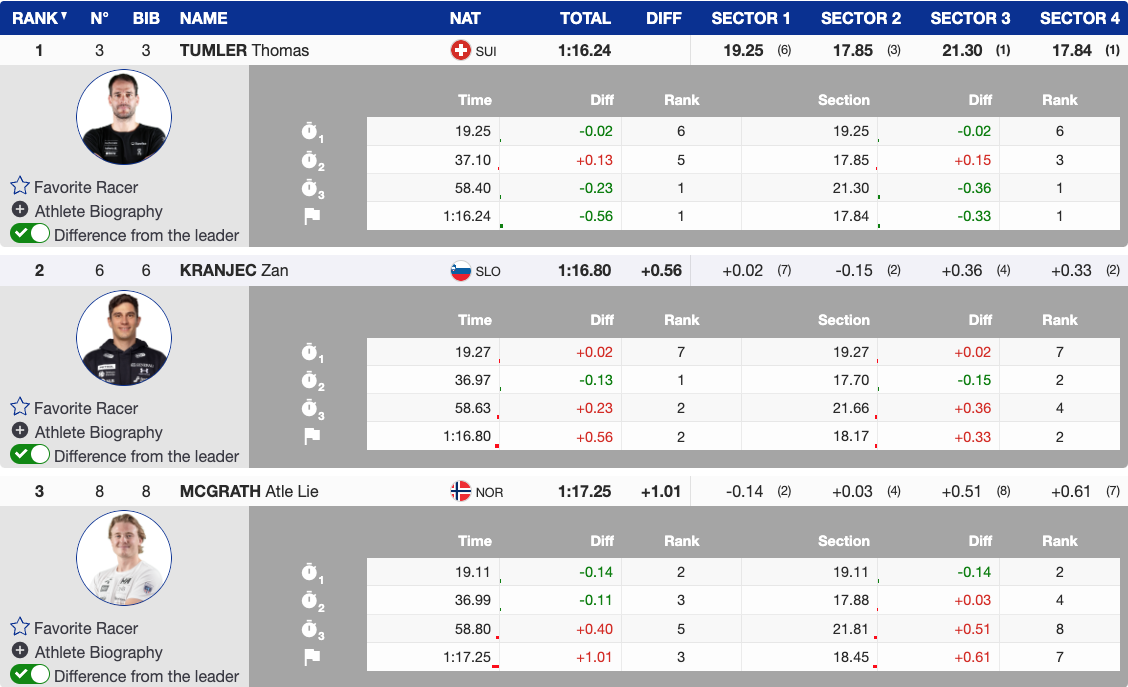
After the first six racers completed their runs, Tumler remained in the lead, with Slovenia’s Žan Kranjec trailing by 0.56 seconds. All eyes then turned to Tumler’s teammate, Marco Odermatt, wearing bib seven. The reigning overall World Cup champion couldn’t match Tumler’s pace, finishing his first run in sixth place, 1.26 seconds off the lead.
Norwegian Felix McGrath, son of former U.S. Ski Team member Felix McGrath Sr., took the course next wearing bib eight. Delivering a composed and technically brilliant run, McGrath crossed the finish line in third place, 1.01 seconds behind Tumler and 0.65 behind Kranjec, keeping the competition tight heading into the next wave of racers.
After the first run,Tumler led the field with a commanding performance, followed by Kranjec in second, 0.56 seconds back. Lie McGrath claimed third, 1.01 seconds behind Tumler, with Brazil’s Lucas Pinheiro Braathen in fourth, just 1.07 seconds off the lead and narrowly trailing McGrath by 0.06 seconds.

River Radamus Carries North American Hopes in Front of a Home Crowd
Click image to enlarge
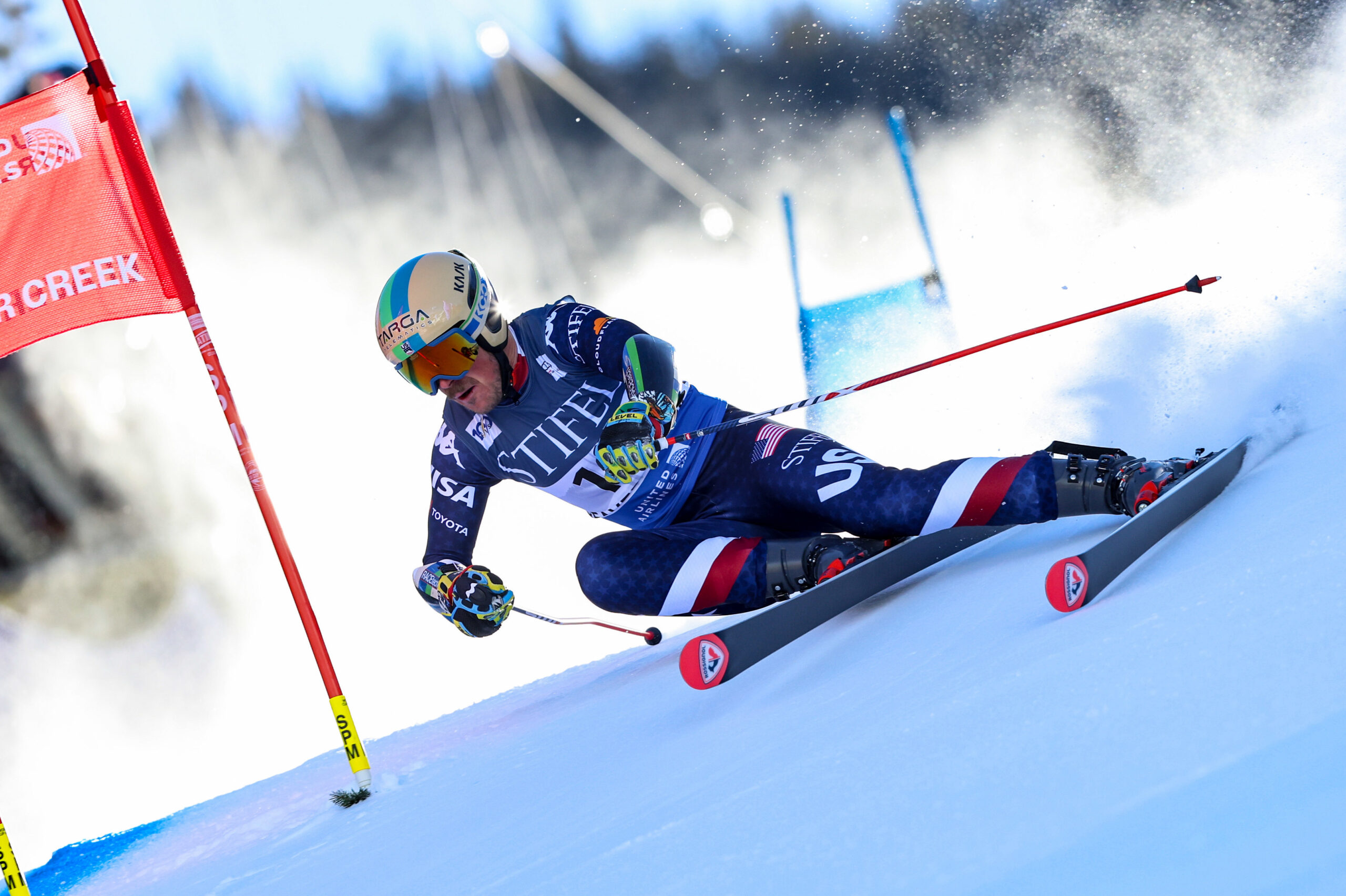
The first North American to take the course was Stifel U.S. Ski Team’s top GS skier, River Radamus. Hailing from nearby Edwards, Colorado, Radamus had the crowd firmly behind him, their cheers echoing across the slope. Despite the home-snow advantage, he struggled to match Tumler’s blistering pace, finishing 1.83 seconds off the lead.
By the time the first 30 racers completed their runs, Radamus was ranked 14th, just 0.82 seconds behind the third-fastest skier, Lie McGrath. This left him within striking distance for a potential podium push in the afternoon.
The only other North American starting among the first 30 was Stifel U.S. Ski Team veteran Tommy Ford. Ford, the winner of the last World Cup GS held in Beaver Creek and the most recent U.S. male GS victor, was unable to finish his run, becoming the second DNF of the race.
Pinheiro Braathen Thrills Crowd with Electric First Run
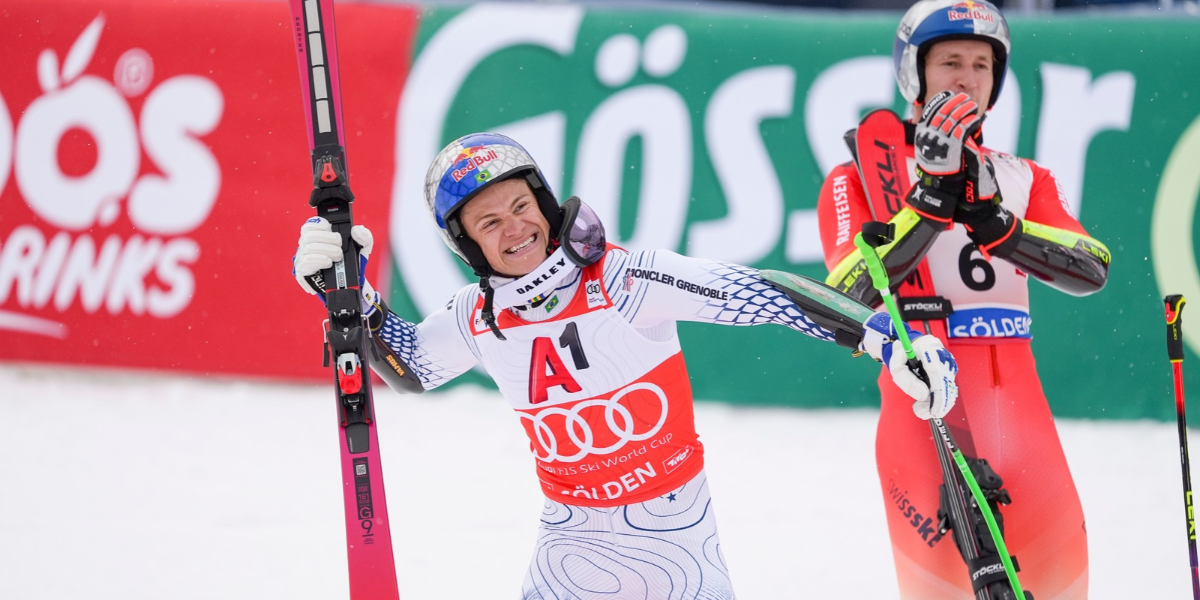
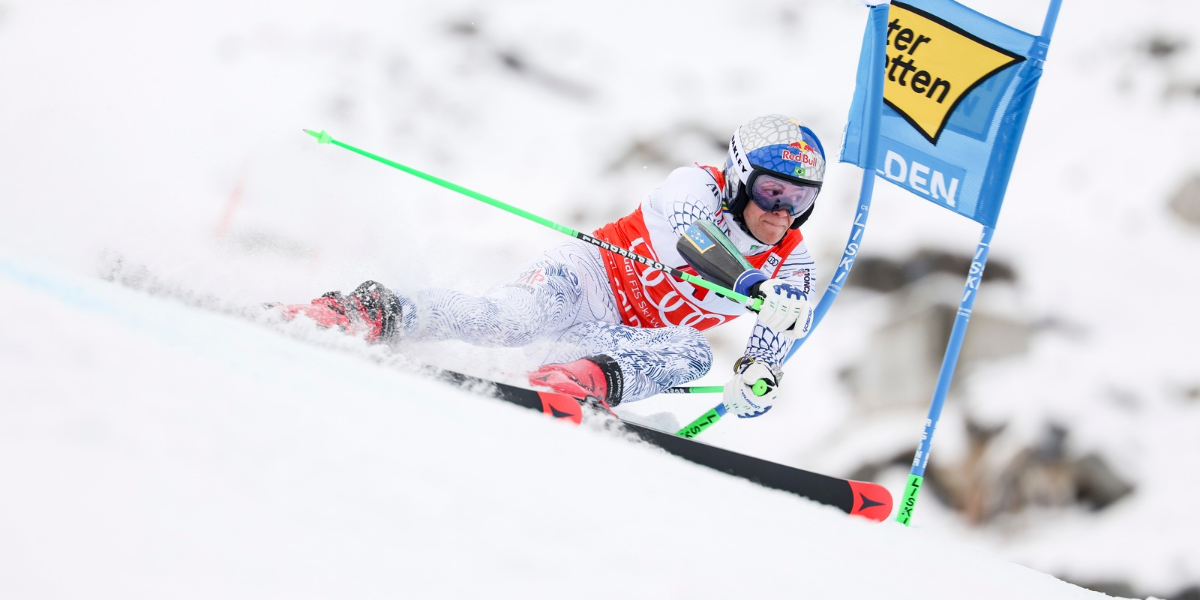
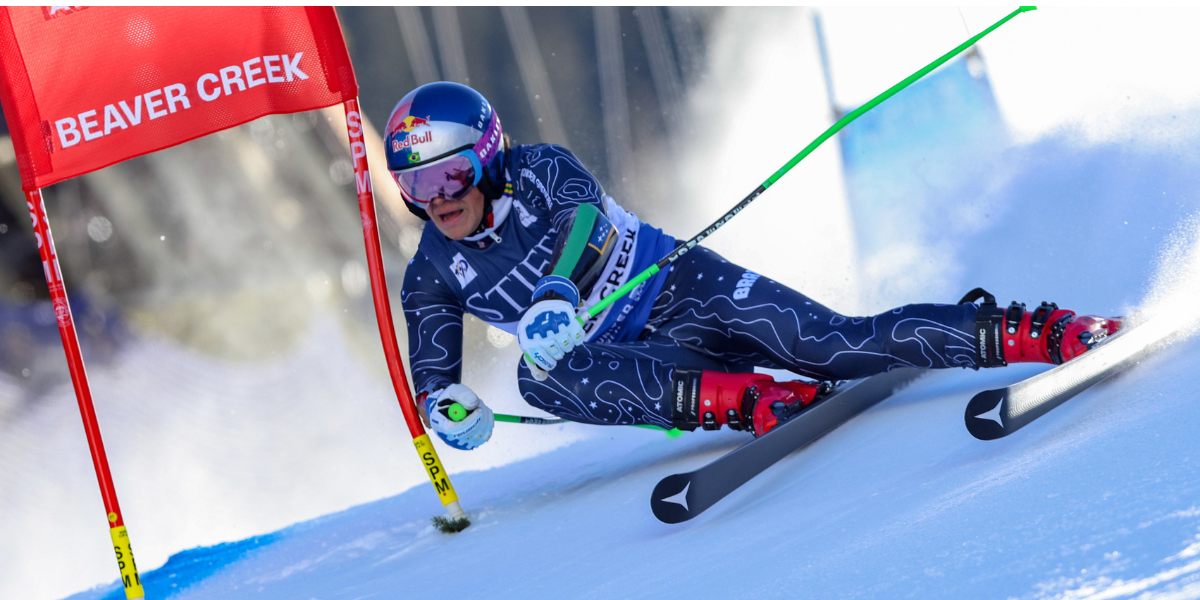
It came as no surprise to those who follow the sport that bib 29, Pinheiro Braathen, delivered the most exciting run of the morning. Leading at the first split, he maintained impressive speed with powerful, precise skiing. Pinheiro Braathen, known as one of the most engaging personalities in the sport, delighted the crowd as he charged across the finish line into fourth place, just 1.07 seconds behind leader Thomas Tumler and a mere 0.06 seconds behind his best friend and morning’s third-fastest skier, Lie McGrath.
Notably, due to the slower pace of the course and the exceptional quality of Beaver Creek’s snow, the first racer to record a DNF was bib 21. By the time the first 30 competitors had completed their runs, only two had failed to finish. This low attrition rate raises the bar for later bibs, demanding even more precise and aggressive skiing to secure a spot in the afternoon finale.
Patrick Kenney Shines as an Independent Racer on Home Snow
Patrick Kenney, an independent racer for Global Racing and SYNC team member, thrilled U.S. fans with a standout performance. The Burke Mountain Academy graduate, who scored World Cup points last season in Palisades Tahoe, has been on a determined path since being cut from the U.S. Ski Team. After competing for the University of New Hampshire, Kenney joined Global Racing and has been steadily achieving his potential.
Skiing with bib 42, Kenney was one of the few racers with a later start number to qualify for the afternoon finale. He crossed the line 2.59 seconds behind the first-run leader, placing 21st and securing an exciting result for both himself and the enthusiastic U.S. crowd.
With the high bar set to qualify for the second run, six racers with bibs above 30 managed to make the cut. French speed specialist Cyprien Sarrazin, wearing bib 31, led the group by finishing the morning in 20th place. The highest bib to qualify was U.S. independent racer Patrick Kenney, skiing for Global Racing and representing the SYNC Team, whose determined effort earned him a spot in the finale. The time spread among the 30 qualifiers was a tight 2.95 seconds, setting up an intense battle for the afternoon run.
None of the Canadian racers or the other Stifel U.S. Ski Team members managed to qualify for the second run, highlighting the difficulty of the tightly set course and the high standard required to advance.
First Run Top 30 Results and Analysis of the Fastest Three and Qualified North Americans
Click images to enlarge
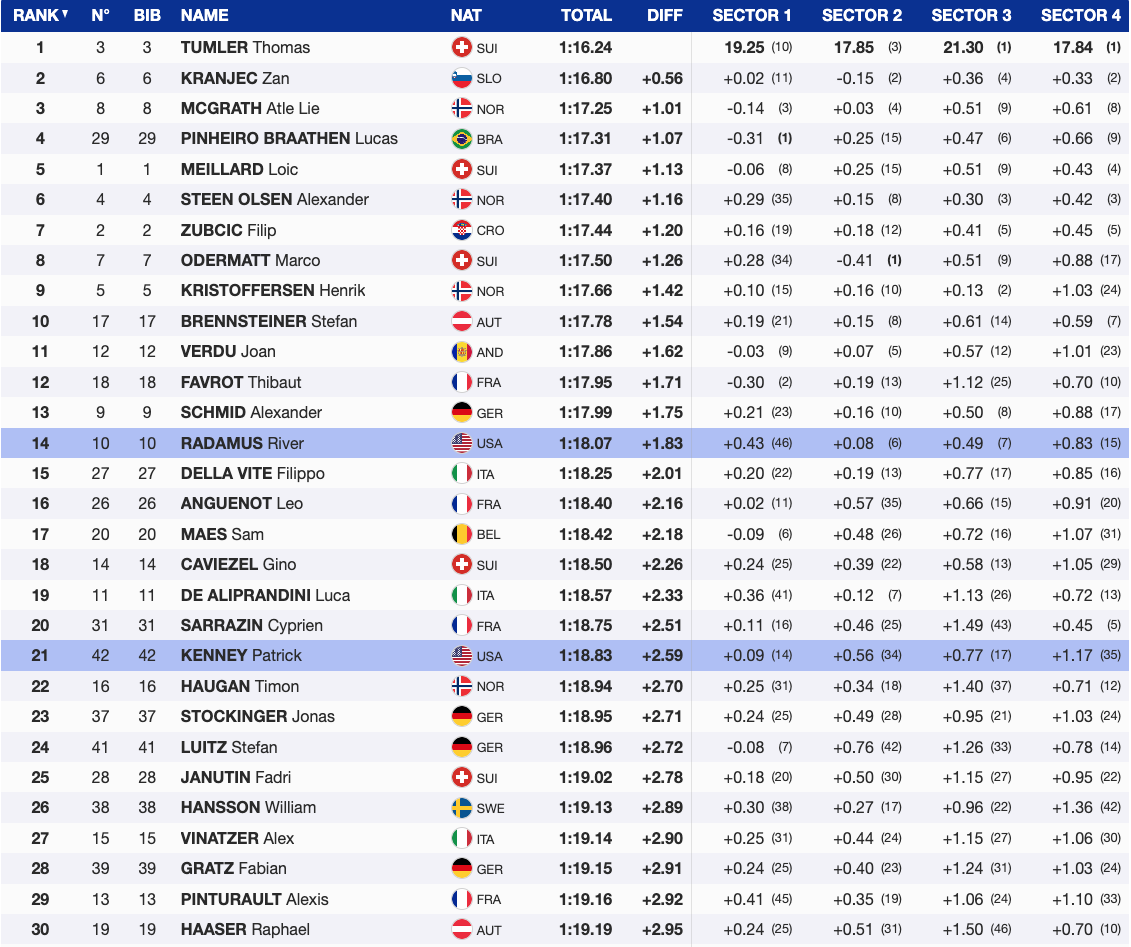
Breaking Down the Fastest Three and North Americans Advancing to Run Two


Related Story: Thomas Tumler Leads Swiss Sweep in Beaver Creek as Radamus Shines for U.S.
About the Author: Peter Lange