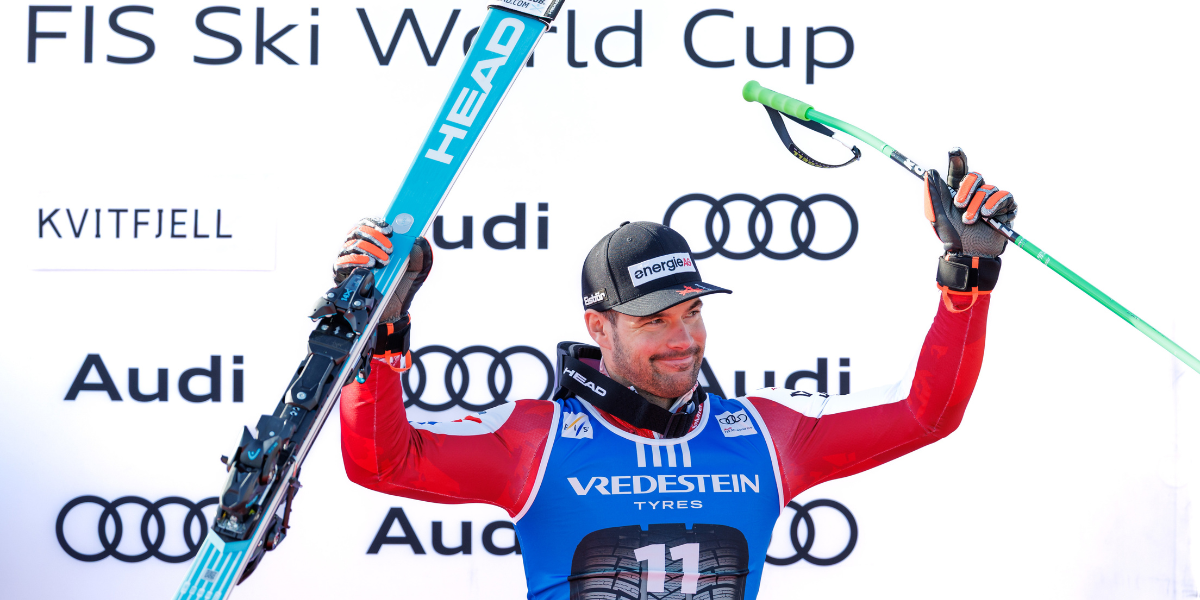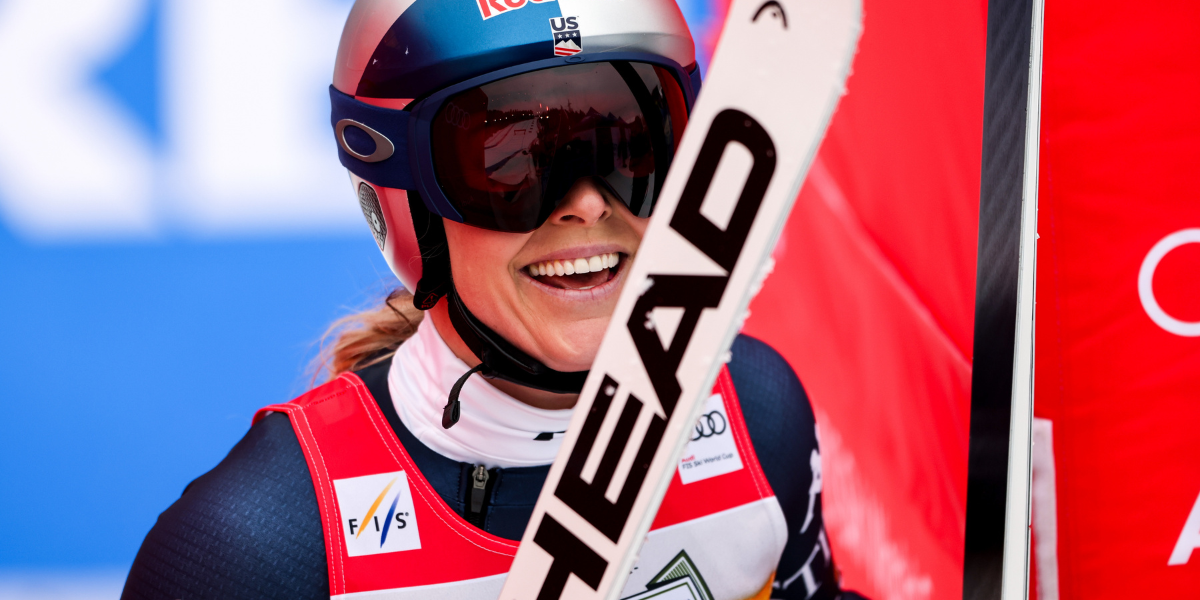
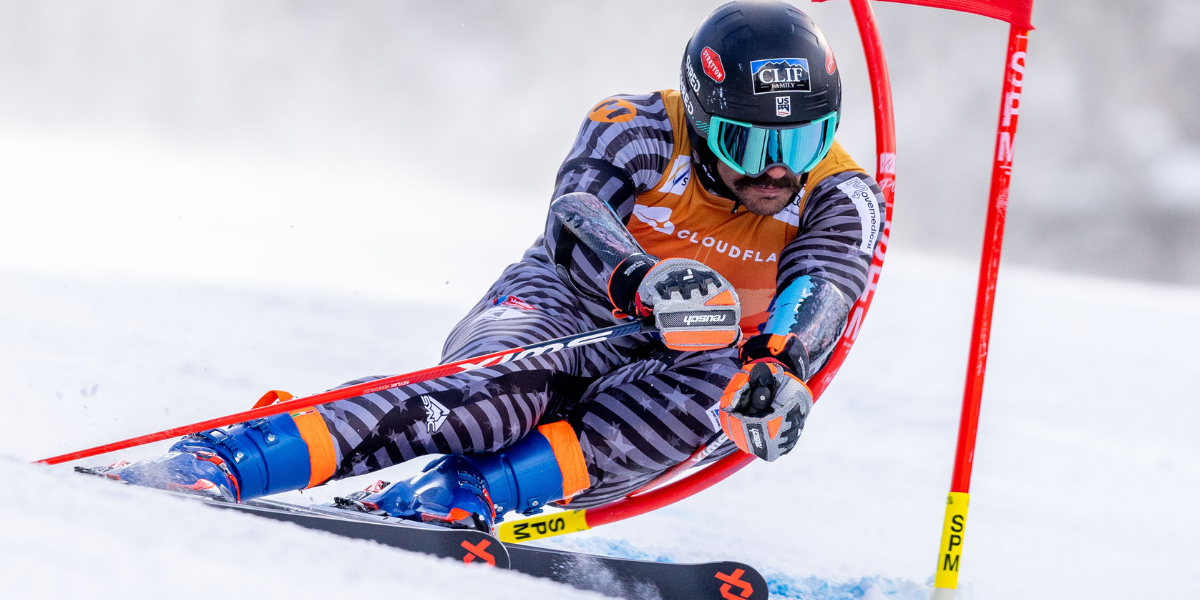
George Steffey, Global Racing, Beaver Creek, GEPA pictures
March 18, 2026
Global Racing Ski Team to Disband After World Cup Finals in Hafjell.
The 2025–26 World Cup Finals in Hafjell will mark more than the end of the season for many technical specialists. It will also close the chapter on one of alpine skiing’s most unique and influential independent teams.
After 13 years, the Global Racing Ski Team, founded by American coach Paul Epstein, will officially cease operations.
“Hafjell will be the last World Cup event for the Global Racing Ski Team,” Epstein told skinews.ch. “It wasn’t an easy decision for me, but I’m closing this door and will be pursuing other opportunities.”
Epstein confirmed he will remain involved in the World Cup circuit in a new role, with details expected in the coming days.
Who Is Paul Epstein?
Epstein’s roots in U.S. ski racing run deep.
He developed at Green Mountain Valley School under the leadership of Dave Gavett before skiing collegiately at the University of Vermont, where he earned All-American honors in 2005 and 2006.
After coaching at Green Mountain Valley School, Epstein moved to Austria, where he lives today with his wife and three children.
That background—and his experience on both sides of the Atlantic—helped shape the philosophy behind the Global Racing Ski Team: a high-level, independent pathway for athletes looking to reach or return to the World Cup.
Why Is the Global Racing Ski Team Ending?
The decision reflects both personal and professional realities.
Epstein built the team into a respected international training group, but increasing administrative demands gradually pulled him away from coaching and family life.
“I love being a coach and am passionate about it,” he said. “But the administrative and organizational tasks have steadily increased and have taken time away from my duties as a coach and as a father. That’s no longer the right path for me.”
He made it clear there will be no continuation of the project under a new structure.
“The name Global Racing Ski Team has made a name for itself and enjoyed a good reputation in the sport. That’s how I want it to be remembered,” Epstein said.
A Unique Pathway for International Athletes
Since its launch in the 2013–14 season, the Global Racing Ski Team offered something rare in alpine skiing: a high-level, independent training environment for athletes outside traditional national team systems.
The model attracted:
- Skiers from smaller nations without deep federation support
- Athletes removed from national teams seeking a return to elite competition
Notable athletes who trained within the program include:
- 🇧🇪 Sam Maes (BEL, 1998, Völkl, Marker, SHRED)
- 🇩🇰 Christian Borgnaes (DEN, 1996)
- 🇮🇹 Simon Maurberger (ITA, 1995)
- 🇩🇪 Stefan Luitz (GER, 1992, Völkl, Marker)
- 🇳🇱 Maarten Meiners (NED, 1992)
- 🇦🇹 Magnus Walch (AUT, 1992, Völkl, Marker)
- 🇸🇰 Adam Zampa (SVK, 1990) and Andreas Zampa (SVK, 1993)
- 🇦🇹 Marcel Mathis (AUT, 1991, Head)
Several Swiss racers also used the team as a pathway back into their national system.
Athletes funded their participation themselves, contributing roughly €50,000 per season.
A Proven Path Back to the World Cup
The program also played a measurable role in helping athletes re-establish themselves at the highest level.
Among U.S. skiers, several athletes not only returned to the Stifel U.S. Ski Team in giant slalom after training in this environment, but also scored World Cup points:
- 🇺🇸 Brian McLaughlin (USA, 1993, Völkl, Marker) — Green Mountain Valley School / Dartmouth College
- 🇺🇸 Patrick Kenney (USA, 1997, Völkl, Marker, SHRED) — Burke Mountain Academy / University of New Hampshire
- 🇺🇸 George Steffey (USA, 1997, Völkl, Marker, SHRED) — Stratton Mountain School
Their progression underscores the team’s core mission: creating a second pathway for athletes to compete at the World Cup level and perform.
George Steffey, one of those athletes, said the program filled a long-standing gap in the sport.
“Global Racing was pretty unique because it provided an opportunity for athletes like me who wanted to ski at the World Cup level but didn’t necessarily have support from a national team,” Steffey said. “One of only a few programs in history to fill that gap.”
He added that the team consistently helped athletes move from the European Cup level to breaking through on the World Cup.
“They did a very good job of progressing athletes from the Europa Cup level to starting to break through in the World Cup,” he said.
Beyond results, Steffey emphasized the culture Epstein built.
“Paul did an exceptional job organizing a high-level program that was more or less like a family,” Steffey said. “In all the teams I’ve been on, it’s definitely been one of the best environments for progress.”
What Happens Next for the Athletes?
The team’s closure leaves a significant gap.
Christian Borgnaes, who joined the program after switching to the Danish federation, described the uncertainty facing current members.
“The end of the Global Racing Ski Team creates a vacuum for the athletes,” he said. “It will be difficult to get equal opportunities for the money we’ve paid so far.”
Athletes are now exploring options, including:
- Forming new private training groups
- Hiring coaches collectively
- Partnering with national federations
However, costs are expected to rise.
“There will certainly be an increased financial burden for each of us starting next winter,” Borgnaes said.
What Made the Team Special?
The strength of the Global Racing Ski Team was its diversity and internal dynamic.
Athletes from different nations, systems, and backgrounds trained together without competing for limited national team spots. That environment created strong internal competition and shared development.
George Steffey said the team’s international structure was one of its most valuable and unique strengths.
“You have coaches and athletes from all over the world skiing together on one team,” he said. “You start to understand how different nations think about ski racing.”
That exposure gave athletes a broader understanding of the sport than they would typically get within a single national system. That global exchange of ideas became a defining part of the team’s identity.
“You get a much wider exposure to different philosophies,” Steffey said. “That’s really useful for improving your understanding of the sport and figuring out how to make yourself better.”
Christian Borgnaes echoed that perspective.
“Different athletes with very different experiences came together and pushed each other,” Borgnaes said. “That was perhaps the heart of Global Racing.”
A Legacy That Changed Careers
Sam Maes, one of the team’s most successful athletes, emphasized the impact Epstein had on individual careers.
“I am incredibly grateful to Paul for what he has built for us,” Maes said. “There are very few people who would invest so much to help others realize their dreams.”
At the same time, the very success of the program contributed to its complexity.
As the team expanded, balancing athletes across World Cup, European Cup, and NorAm levels—while covering both slalom and giant slalom—became increasingly difficult.
“Managing all of this and doing justice to each athlete became more and more demanding,” Maes said.
End of an Era in Hafjell
When the final gates fall in Hafjell, it will mark the end of more than a season.
It will mark the end of a rare model in alpine skiing—one built on opportunity, independence, and shared ambition.
For 13 years, the Global Racing Ski Team gave athletes a second path to the top level.
Now, that path closes—leaving behind a legacy that reshaped what is possible outside the traditional system.
About the Author: Peter Gerber Plech