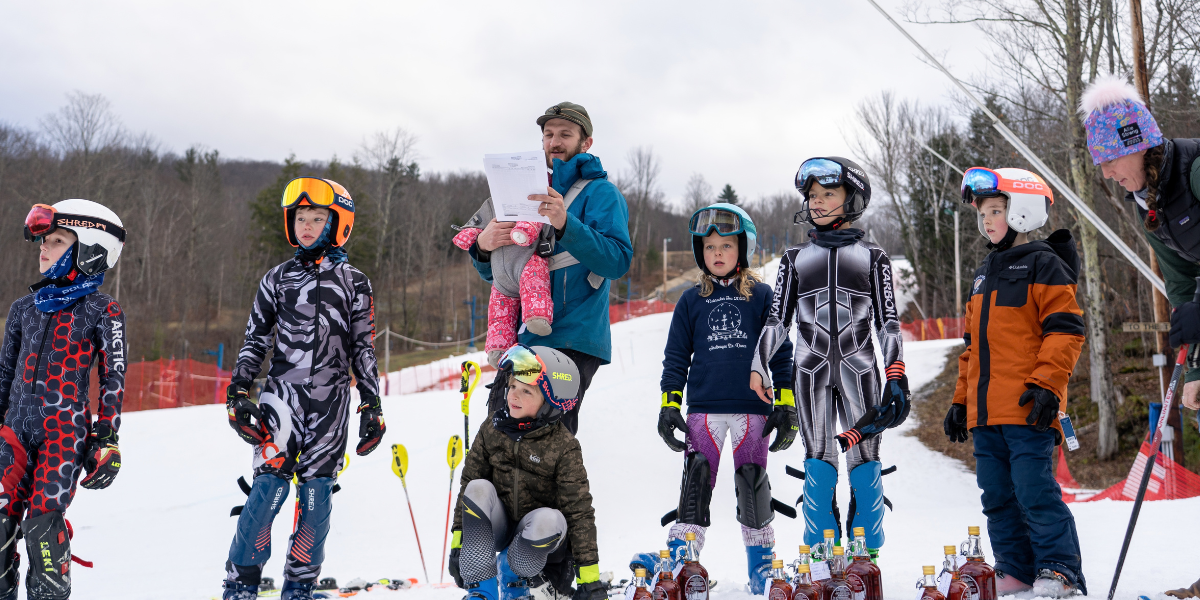
Cochran’s Ski Area / Photo Tucker Marshall
A financial look at why American ski racing places much of its development burden on families—and why that structure is unlikely to change soon.
Every ski racing family knows the feeling. The season-opening invoice arrives: program fees, equipment, race entries, travel and lodging. Then the total quietly climbs beyond what many American families spend on an entire year of youth sports.
It is not exactly a surprise. Still, it is always a shock.
Why is youth ski racing so expensive in America? Families ask that reasonable question as the bills accumulate. It is not simply a complaint. Instead, it reflects an effort to understand where the money goes and why families carry so much of the financial burden themselves.
There is no single villain and no single policy failure. Ski racing combines several expensive realities: limited commercial revenue at the top of the sport, unavoidable travel, year-round training demands, extensive equipment and inherently labor-intensive coaching. Together, those factors keep the sport expensive. They also help explain why so much of the cost rests with families rather than the institutions above them.
Why Is There No Financial Waterfall?
Major American team sports begin with an economic advantage that ski racing cannot approach. The NFL and NBA generate billions of dollars annually through media rights, sponsorships and franchise value. Some of that revenue supports youth initiatives and community facilities. The NFL Foundation reports that it has contributed more than $1 billion throughout its history and helped build or refurbish 680 fields nationwide.
That is not incidental generosity. It is what can happen when a professional league generates enough commercial revenue to make grassroots investment routine.
Ski racing has no comparable financial engine. It has no franchise owners, home markets or large U.S. television audience generating substantial rights fees. World Cup coverage in the United States remains fragmented across broadcast and streaming platforms. Its reach bears little resemblance to the audiences watching football, basketball or baseball. Without a comparable audience, the sport cannot generate broadcast revenue on the scale that supports development elsewhere.
What Does the World Cup Prize-Money Debate Reveal?
FIS approved direct prize-money support for the 2025-26 season. In June 2025, the FIS Council approved an increase of up to 20% across World Cup disciplines. FIS guaranteed 10%, while local organizing committees could contribute another 10% voluntarily. As Ski Racing Media previously reported, the governing body’s broader prize-money commitment totaled approximately €7 million.
At the 56th International Ski Congress in Geneva that same month, Austria, Germany, Norway, Switzerland and the United States proposed a 30% prize-money increase across all disciplines. Germany, Norway, Switzerland and the United States stipulated that the increase should not place an additional financial burden on national ski associations or local organizers. The national associations ultimately withdrew the proposal.
The debate continued in October, when the FIS Council addressed the 2026-27 season. Its summary minutes stated that 20% FIS support would remain and that local organizers would have to cover an additional 10%. The sequence demonstrates both FIS’s increased financial commitment and the continuing disagreement over how to fund larger purses.
More importantly for families, none of these measures creates a broad revenue stream for junior or club-level racing. World Cup prize money supports athletes who have already reached the sport’s highest circuit. It does not substantially reduce the cost of developing the next generation.
How Much Can National-Level Funding Cover?
The contrast becomes clearer at the national level. U.S. Ski & Snowboard and its affiliated entities reported approximately $50.4 million in net revenue and support available for programs and administration in fiscal 2024. That money had to support multiple sports, elite teams, domestic programs, events, marketing and administration.
Unlike many international federations, U.S. Ski & Snowboard does not receive a routine direct federal appropriation to operate its teams and development programs. In fiscal 2024, its revenue included sponsorship contracts and rights fees, fundraising, membership and competition fees, endowment support and more than $9 million from the U.S. Olympic and Paralympic Committee.
That distinction matters. U.S. Ski & Snowboard invests in elite and domestic athletic programs, while individual clubs raise substantial private support. Yet no broad source of commercial or government revenue can push significant funding through every level of the development system. Much of the remaining cost reaches families because no institutional layer can absorb it first.
Why Does Advancement Require So Much Travel?
Ski racing depends on specific terrain, snow and course access, and none of those resources is evenly distributed. A local club may provide regular training close to home, especially in an established mountain community. However, travel expands quickly as athletes progress from local races to regional, national and international competition.
The size of the country magnifies that expense. A competitive junior may travel hundreds or thousands of miles to find the appropriate competition, snow conditions or speed terrain. Airfare, rental vehicles, fuel, lodging, meals, lift access and race entries accumulate across an entire season.
High-level participants in many youth sports travel extensively. Ski racing adds another constraint: Families must plan around the limited mountains that can provide the necessary snow, terrain and prepared racecourses. As a result, the nearest suitable training or racing venue may be several states—or an international flight—away.
Why Does Training Continue After Winter Ends?
Competitive ski racers train throughout the year, although not every athlete needs summer snow to improve. Strength, endurance, mobility and recovery work remain the foundation of the offseason for most programs.
For athletes seeking additional time on snow, however, the calendar creates another major expense. Many teams travel to the Southern Hemisphere during the Northern Hemisphere summer. Camps in Chile, Argentina and New Zealand offer longer runs and winter conditions. Those trips require international airfare, lodging, coaching, lift access and equipment transport on top of an already expensive season.
Some programs also use indoor ski halls, which offer dependable conditions largely unaffected by weather. Still, their short, highly consistent slopes cannot replace varied terrain or full-length courses.
Published estimates show how quickly those choices can reshape a family budget. Green Mountain Valley School estimated $10,000 to $21,500 in competition-trip and training-camp expenses for alpine athletes during the 2025-26 season. Listed options included a $2,500 indoor slalom training block before airfare and a $4,850 camp in Corralco, Chile, also before airfare. Those costs came on top of tuition, race entries and several other required expenses.
Not every racer follows an academy schedule, and not every family pays those amounts. Nevertheless, the example illustrates the real cost of pursuing the training volume expected at the upper levels of the sport.
How Does Equipment Expand With the Athlete?
Few youth sports require such a large collection of specialized equipment. Young racers begin with a manageable setup, but their needs grow with age, competitive level and the number of disciplines they contest.
Slalom and giant slalom require different skis. Super-G and downhill add longer, discipline-specific equipment as athletes advance. Boots, bindings, poles, helmets, goggles, speed suits, protective gear, wax and tuning tools all add to the total. In addition, skis require regular preparation and repair.
Families do not necessarily replace everything each season. They reuse equipment, buy through race programs, shop at swaps and pass skis among siblings and teammates. Manufacturer support and club pricing also reduce retail costs for some racers.
Even with those savings, the bill remains substantial. Rowmark Ski Academy in Utah estimates annual equipment costs of $1,000 to $5,000 for U16 athletes and $3,000 to $8,000 at the FIS level. The amount varies greatly according to the manufacturer support an athlete receives. A FIS-level racer who must replace damaged equipment during the season can spend beyond that upper range.
Growth creates another unavoidable expense. Children outgrow boots, ski lengths and protective equipment on their own schedule. A setup that worked perfectly one winter may not fit the next, even when it still has useful life.
Why Is Coaching So Labor-Intensive?
Ski racing requires trained coaches, course setters, equipment, transportation and safe access to limited terrain. The staffing numbers show how labor-intensive the sport can be. Gould Academy in Maine lists a 6-to-1 athlete-to-coach ratio for its U12 and U14 development camp. That standard would be difficult and expensive to reproduce in most team sports.
A youth soccer coach can lead a drill involving an entire team simultaneously. By contrast, a ski racing coach works with a small group of athletes on a racecourse, one run at a time.
That ratio creates costs beyond the hill. Coaches travel to each training venue, camp and race. They prepare and inspect courses before athletes arrive. Programs must also house and feed coaches at every stop, often for days at a time. Whether paid annually or by the day, those expenses accumulate across a full season and flow into program fees. Speed training demands even more terrain, equipment and supervision.
Much of that expense reflects the genuine labor and infrastructure required to operate a responsible mountain program.
What Financial Help Is Available?
Many of the most direct responses to the affordability problem come from clubs. Cochran’s Ski Club in Vermont offers one example of how a community program approaches the problem.
For the 2025-26 season, the club published three membership tiers and invited families to select the rate that worked best for them. A U14 athlete could register at $810, $1,015 or $1,220. The club positioned the lowest tier as financial assistance. Meanwhile, anything paid above the base rate at the highest tier qualified as a tax-deductible donation.
The model allows one program to serve families across a broad range of financial circumstances. It also avoids a separate application process or a visible distinction between families paying different rates.
Other nonprofit clubs use fundraising and scholarships to offset the burden. Ski & Snowboard Club Vail, for example, says program fees do not cover the full cost of operating its programs, so it relies on donors to close the gap. The club reported awarding $482,000 in scholarship funding during a recent season.
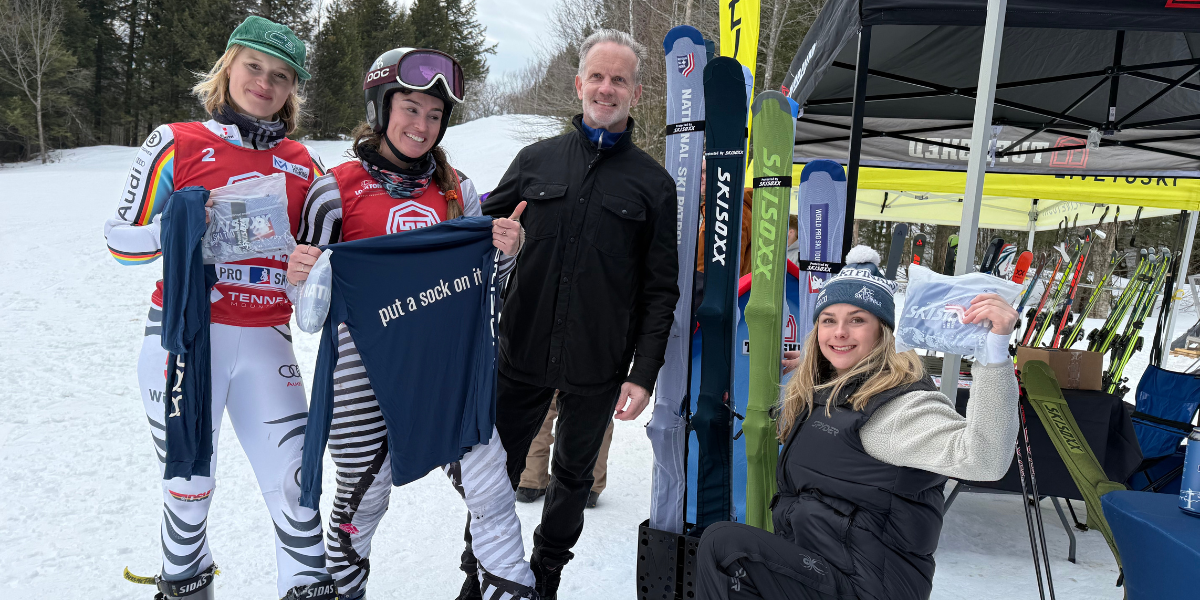
Industry programs and nonprofit organizations can help some ski racers manage the financial burden. Ski Racing Media partner SYNC Performance invests significantly in supporting racers at multiple levels of the sport. Nonprofits such as the Lindsey Vonn Foundation and World Cup Dreams also provide financial assistance that helps eligible athletes offset their expenses. Although this support can be meaningful, funding remains limited, and families still cover most of the cost.
That assistance matters to the families who receive it. However, individual clubs—no matter how generous—cannot solve a national affordability problem through fundraising alone.
U.S. Ski & Snowboard’s regional development structure also provides targeted assistance to a limited group of high-performing athletes. That support can reduce costs at an important stage of a career. Still, it reaches relatively few racers and does not extend to most club-level families navigating the sport season by season.

Why Do Families Continue to Carry the Cost?
The expense of ski racing grows from a structural reality. It is a geographically constrained, equipment-intensive and individually contested sport that sits outside the American sports mainstream. Consequently, it also sits outside much of the financial infrastructure that mainstream sports have built over decades.
Clubs and federations can make the system more efficient, expand scholarships and direct assistance toward more athletes. Those efforts deserve scrutiny and continued support. Yet they cannot eliminate the underlying costs of terrain, travel, equipment and specialized coaching.
Until ski racing develops the viewership, broadcast revenue and institutional support needed to send more money down through the development system, the cost of the sport will continue to rest where it always has. With the families who love it enough to keep paying for it.
About the Author: Paul Rechberger