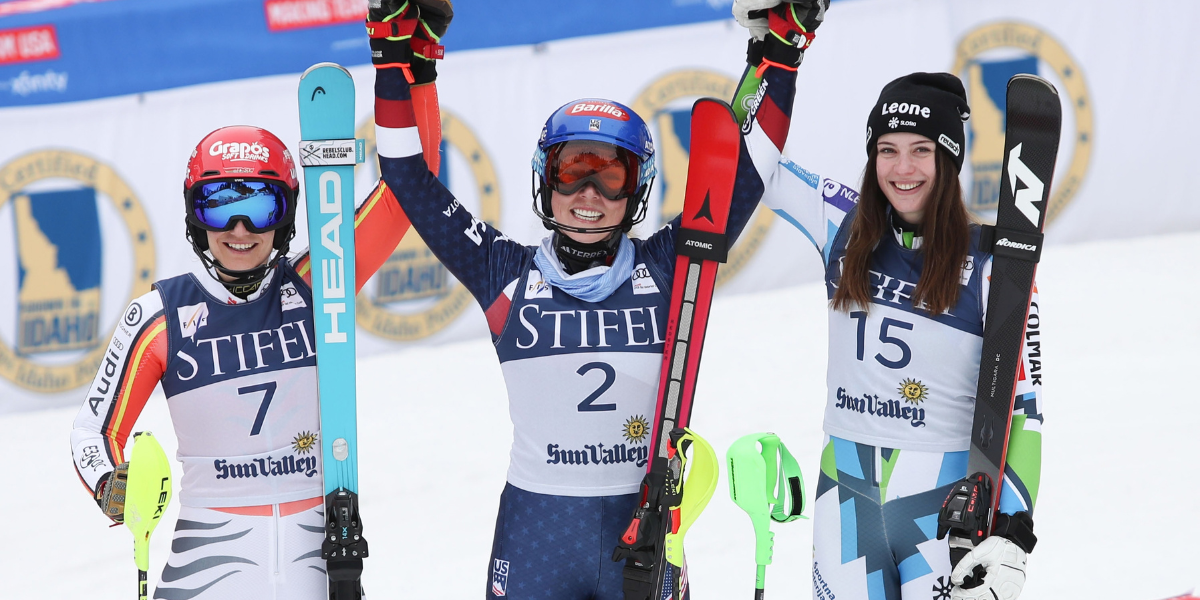

Mikaela Shiffrin has collected enough victories, medals and crystal globes to fill several remarkable careers.
Yet the most successful alpine ski racer in history says those numbers reveal little about why she continues.
In her YouTube video, “Why Do You Keep Going? | My Honest Answer,” Shiffrin offers an unusually open account of her current thinking. The solo episode of her “What’s the Point?” series explores motivation, retirement, giant slalom, super-G and the demanding offseason hidden behind her public appearances.
Her answer to the question surrounding the next stage of her career comes down to one word: curiosity.
“I just want to learn what’s around the corner,” Shiffrin said. “And I want to see if the work that I do right now can impact what’s around the corner in a positive way.”
At 31, Shiffrin understands why questions about retirement have become more valid. She also leaves little doubt about her immediate intentions.
“We’re still doing this thing, right?” she said.

Records Cannot Capture the Experience
Shiffrin recited a career résumé that includes 110 World Cup victories, 168 World Cup podiums and 18 crystal globes. She also listed three Olympic gold medals and 15 world championship medals, including eight golds.
Reading those achievements aloud made her uncomfortable.
“It’s cool, but it’s hard to connect with it,” Shiffrin said.
Her latest season added another extraordinary chapter. She won nine of 10 slaloms and secured the discipline title before the end of January. She also earned her sixth overall globe and returned to the top of the Olympic slalom podium.
Still, statistics cannot recreate the sensation of solving a technical problem, finding speed in training or producing the turns she imagined during Olympic pressure.
For Shiffrin, that connection remains more meaningful than any numerical milestone.
“It’s always been about the turns,” she said. “That’s what I can feel.”
Her Olympic slalom victory provided the clearest example. Shiffrin carried a substantial advantage into the second run but refused to ski protectively.
Instead, she attacked.
“I skied my heart out,” Shiffrin said. “It was the best run of slalom that I’ve ever done on that stage.”
She took the risk that her approach might not work. The reward came from skiing the turns she wanted in the sport’s biggest environment.
The gold medal confirmed the result, but the skiing gave the moment its meaning.
Giant Slalom Presents the Next Question
Shiffrin’s slalom dominance commanded the brightest spotlight, but her progress in giant slalom may have carried greater personal significance.
While rebuilding after her November 2024 crash in Killington, Vermont, Shiffrin fell to 30th in the giant slalom World Cup Start List rankings. By the end of the 2025-26 season, she had climbed back into the top seven and ranked fourth.
Shiffrin called that recovery “a monumental step” for herself and her team.
It also gave her another reason to continue.
Shiffrin believes the level of women’s giant slalom has risen since she won her last discipline globe. She described the current field as more powerful and faster, with athletes performing at an exceptionally high level.
Rather than finding that development discouraging, she finds it exciting.
“I don’t know if I can consistently win GSs or win at all,” she said. “There were moments this past season where I felt like that level was within reach.”
At other times, she questioned whether she could reach it.
That uncertainty creates the appeal.
“OK, let’s find out,” she said.
Super-G Pulls Her Beyond the Familiar
Super-G provides another source of curiosity.
Shiffrin returned to several super-G races during the season. She described those starts as exhilarating, nerve-racking and extremely challenging.
Each one pushed her beyond her comfort zone.
Still, the same thought arrived whenever she crossed the finish line.
“Let me do that again,” she recalled thinking.
That reaction told Shiffrin she still had something to pursue in the event.
She also recognizes how much work remains. Shiffrin said she needs improvement in several clear areas before she can become competitive in super-G.
Much of that progress, she believes, will come through repetition and greater exposure to speed. Her brain must relearn how to process the gates, terrain, snow and other demands that arrive at a faster pace.
The outcome remains uncertain. Once again, that is part of the attraction.
Ski Racing Refuses to Follow a Script
Shiffrin also explained why alpine skiing can remain difficult for casual audiences to understand.
Athletes try to recreate the conditions they expect to encounter. However, weather and snow can transform a race.
A snowstorm may arrive. Temperatures can rise or fall. Fog can move onto the course between start numbers. Cloud cover can turn a bright track dark within minutes.
Shiffrin said those changes can create a difference of five-tenths to a full second. That margin may separate a victory from third, fifth or even 10th place.
Many of the variables remain outside an athlete’s control.
That unpredictability makes ski racing difficult to explain and forecast. It also ensures that athletes must keep adapting.
Even after 16 World Cup seasons, Shiffrin can still encounter something new.
Outside Her Comfort Zone
Shiffrin’s search for growth extends beyond skiing.
During a packed week in New York, she participated in two live recordings of “What’s the Point?” and attended the ESPYS, the TIME100 Sports Gala, Fanatics Fest, sponsor appearances and the FIFA Club World Cup final.
Those appearances may look glamorous from the outside. Shiffrin experiences them differently.
She described herself as a natural introvert who feels more comfortable behind a helmet and goggles than making small talk on a red carpet.
She compared entering a crowded event to walking into a school cafeteria without knowing where to sit.
“It does not come naturally at all,” she said.
However, those uncomfortable experiences have helped Shiffrin recognize how many people remain unfamiliar with alpine skiing.
She views that limited awareness as an opportunity.
Her podcast and other projects may help introduce the sport to a broader audience. Her platform also allows her to discuss subjects that matter to her, including grief, post-traumatic stress disorder, mental health, access to sports, cancer research and climate change.
Shiffrin recently appeared on Anderson Cooper’s “All There Is” podcast. She said the responses from listeners gave meaning to a conversation that required her to revisit painful experiences.
Her skiing created the platform. She does not want to take it for granted.

The Offseason Is Not a Vacation
Shiffrin also addressed a persistent misconception about the life of an elite ski racer.
After the Olympics, she still had six weeks of racing. Once the season ended, equipment testing followed. June and July then brought an intensive strength and conditioning block.
Shiffrin commonly trains twice a day for a combined four to six hours. Media appearances and sponsor commitments fit around those sessions, not in place of them.
Her team even considers proximity to a properly equipped gym when selecting lodging.
Next comes Southern Hemisphere training before Shiffrin returns to Europe in October for final preparation ahead of the World Cup season.
Once racing begins, the circuit moves between countries and occasionally continents until late March.
The schedule leaves Shiffrin only four or five weeks a year at her Colorado home. It also limits her concentrated time with fiancé Aleksander Aamodt Kilde, who follows his own training and racing schedule with Norway.
Because the women’s and men’s tours usually compete at different venues, the couple receives little uninterrupted time together.
Shiffrin said they have not started planning their wedding. The delay does not trouble her.
“I know who I want to spend my life with,” she said.
For now, they value the limited time they can spend together.
Still More to Discover
Shiffrin has achieved more World Cup success than any alpine ski racer in history.
She does not believe that means skiing has nothing left to offer.
She wants to learn whether she can reach another level in giant slalom. She wants to discover what greater repetition could unlock in super-G. She also wants to use her platform to bring more attention to alpine skiing and to subjects that matter beyond racing.
The records describe what Shiffrin has accomplished.
Curiosity explains why she continues.
“I simply love skiing,” she said. “And I still feel like there’s more in that.”
This article is based on Mikaela Shiffrin’s YouTube video, “Why Do You Keep Going? | My Honest Answer,” published as part of her “What’s the Point?” series.
About the Author: SR Staff Report