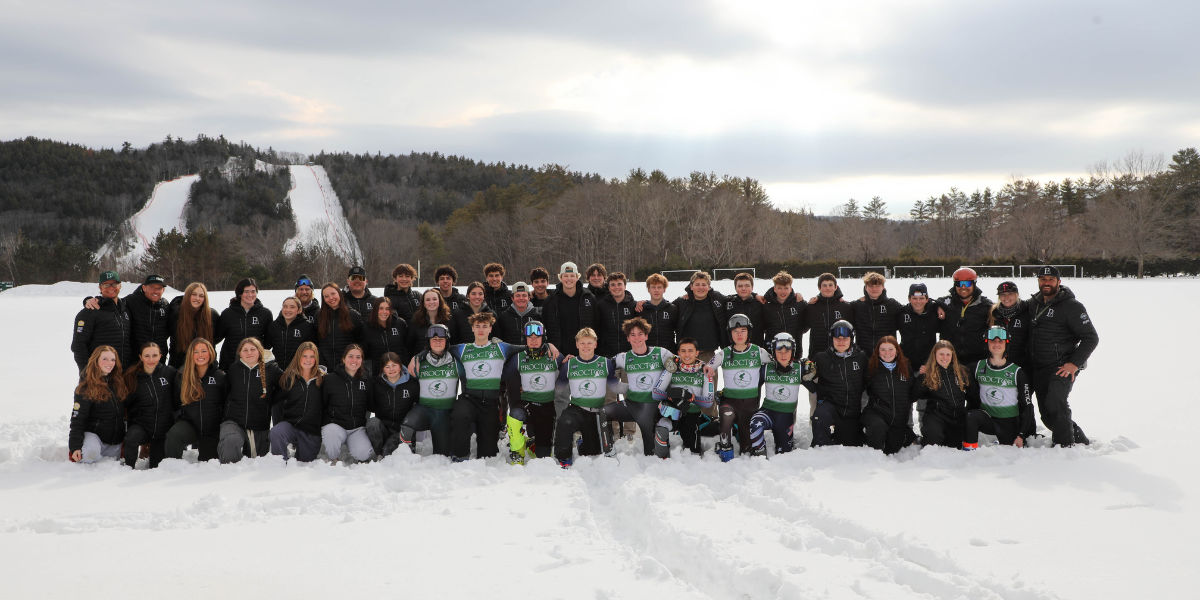
Members of the Proctor Academy Ski Team. Photo courtesy of Proctor Academy.
The first thing you notice at Proctor Academy is that nobody stands still.
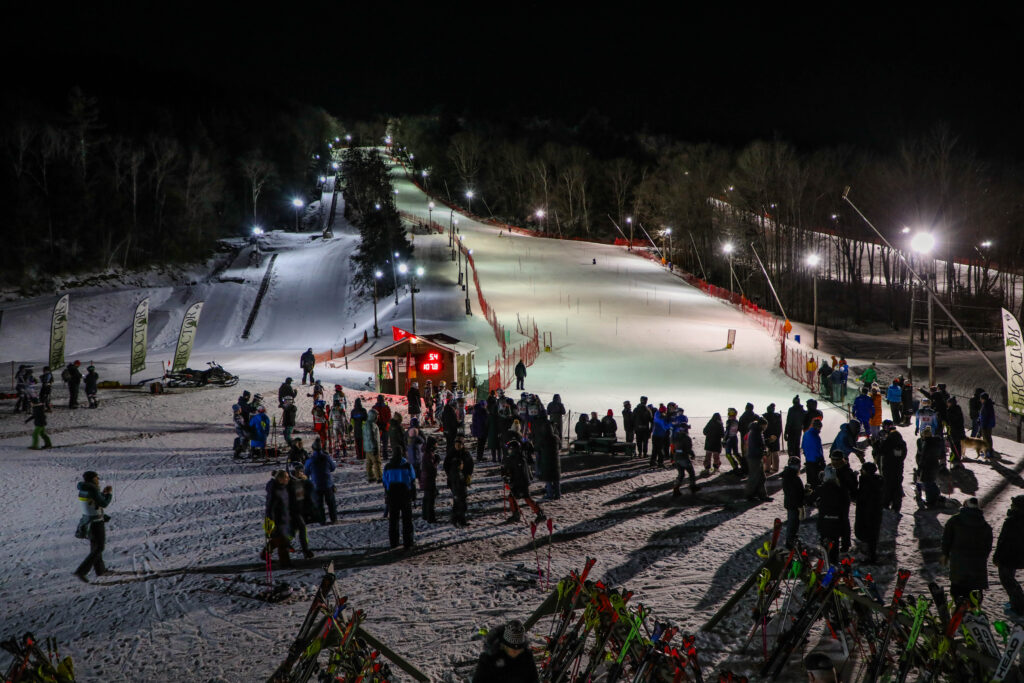
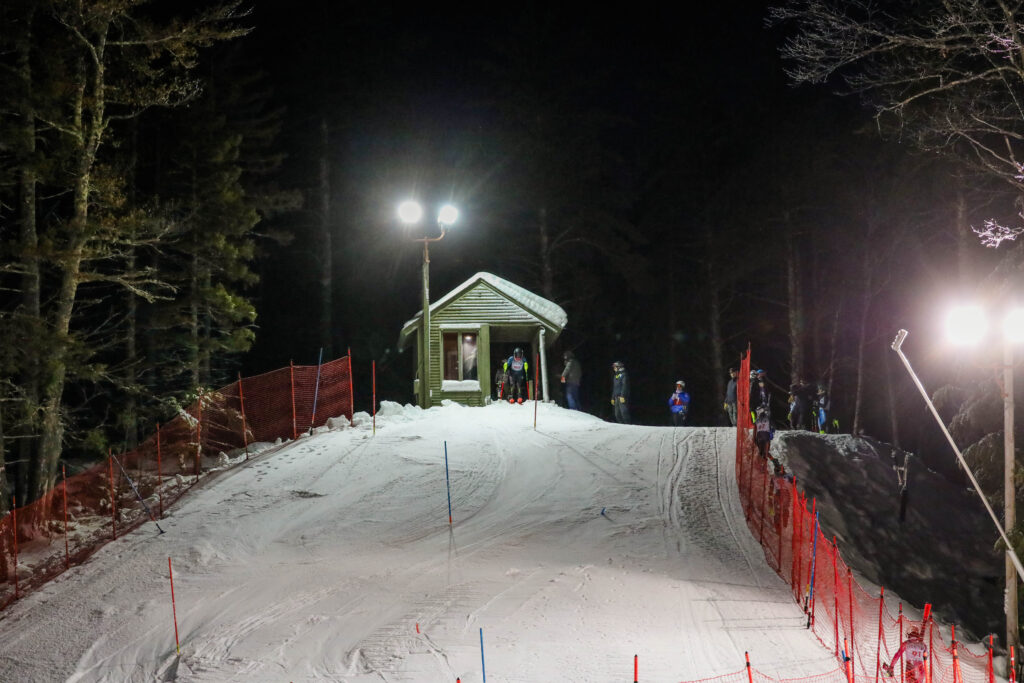
Athletes click into skis fast. Coaches move gates while kids cycle laps. The hill never really stops moving. On a winter night in New Hampshire, Proctor athletes stack run after run under the lights while Dartmouth, Boston College and Harvard racers train on the same surface earlier in the day. The lodge sits mostly empty.
That is exactly how Proctor wants it.
This philosophy has become the foundation of one of the Northeast’s most innovative ski racing programs and now Proctor is pushing even further with a major investment in snow farming.
After watching increasingly inconsistent winters limit early season training opportunities across North America, Jason “Moot” Nelson, Alpine Director at Proctor Academy, realized the program needed greater control over its training environment.
“I think for me, looking at what happened in the West this year with no snow and no training available out there for those guys minus Copper,” Nelson said. “We are not running a ski academy. We can’t just pack up and fly somewhere to train, this is a college prep boarding school.”
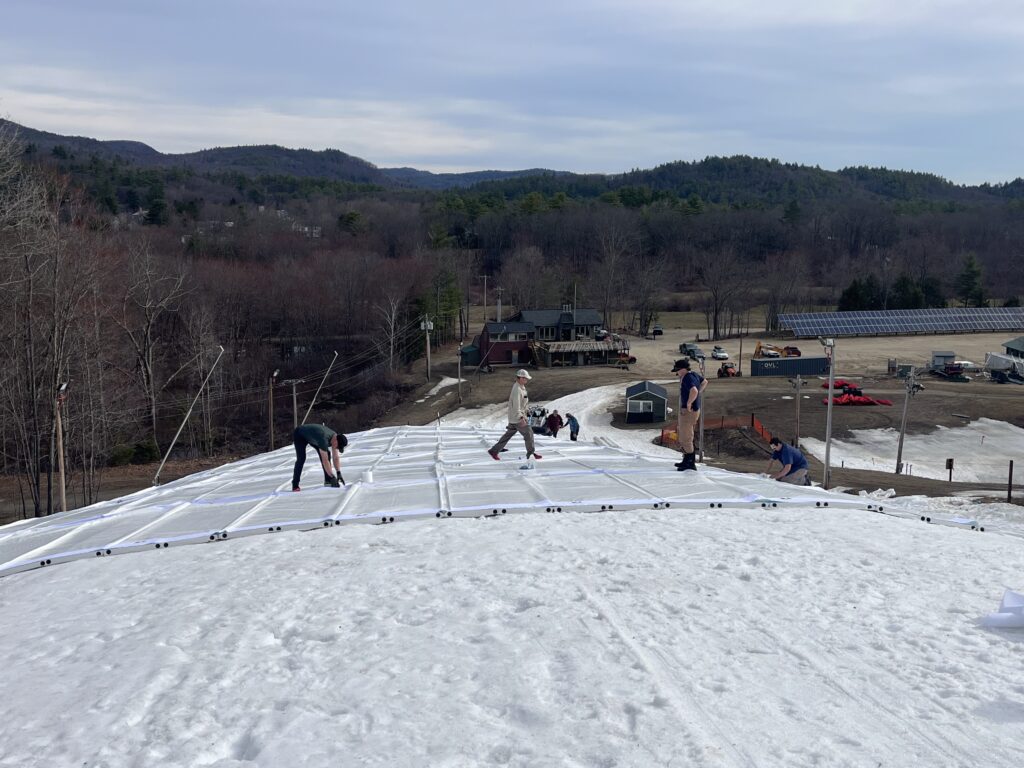
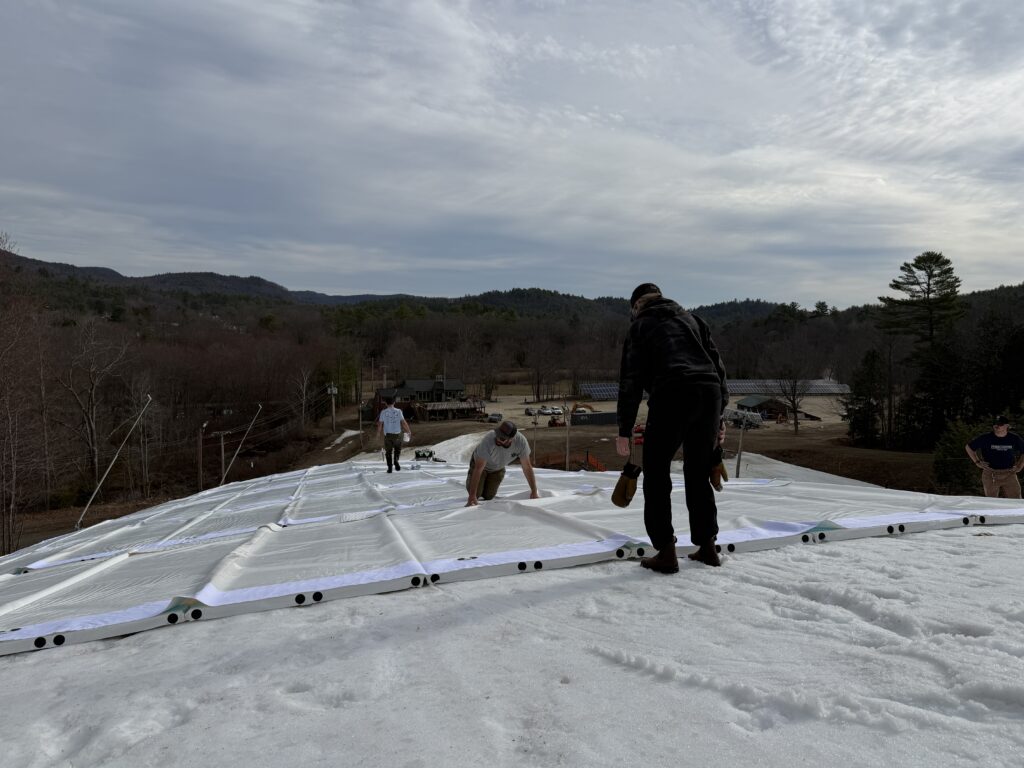
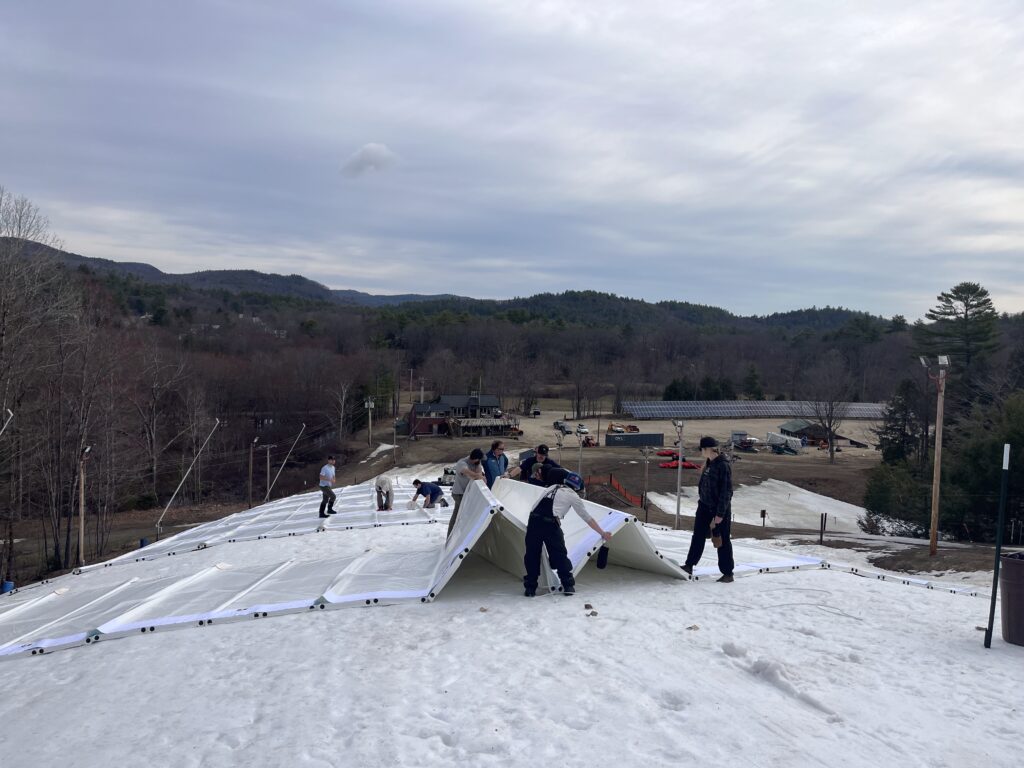
Working with Finnish snow farming company Snow Secure, Proctor built a massive covered snow pile this spring that now sits roughly 25 to 30 feet tall, 160 feet long, and 80 feet wide. The goal is simple: get athletes on snow earlier and create reliable training opportunities before the traditional winter season even begins.
“The idea is that we’ll be having those early season sessions before we go out to our fall camp,” Nelson said. “Then when we come back home, we should be from the top of the T bar down, maybe two weeks earlier than what we normally are. That’s huge.”
Repetition Over Vertical Drop
While many programs prioritize larger mountains and longer runs, Proctor has built its identity around maximizing repetitions and training quality.
“Our athletes are able to get up to 12 runs in an hour and 24 runs in a 2.5 hour block,” said Proctor U16 Head coach Cooper McNealus. “We have no lift lines. It doesn’t take a lot of time to make 12 runs happen at Proctor.”
The hill itself may not compare in size to major western venues, but Proctor built its philosophy around the idea that shorter hills with fast turnaround times create more opportunities for athletes to learn. Instead of spending long periods riding lifts, athletes spend more time skiing.
Nelson believes that training efficiency is one of the program’s greatest competitive advantages.
“What are you doing in the nine minutes a day that you actually get to ski down the hill?” Nelson said. “If we’re not using that, then what are we doing?”
That philosophy has already translated into results.
This season, Proctor qualified 4 athletes to U18 Nationals, 3 to U.S. Nationals, 5 to U16 Nationals, and 5 athletes to U14 Can Ams, while also producing a regional champion and national level podium athletes throughout multiple age groups.
Why Surface Matters
Nelson repeatedly returned to one idea throughout the interview: surface quality accelerates athlete progression faster than anything else.
“All Jason ‘Moot’ Nelson does is care about the surface,” McNealus said. “Whether it’s grooming, raking, whatever it is, Jason controls that hill. That’s our surface, and that’s our ski team as he sees it.”
Proctor’s race crew and hill staff have become known throughout the region for their ability to maintain hard, consistent conditions while efficiently running high level races.
“We broke 280 gates last year because the snow is that hard,” Nelson said.
The academy has also developed a reputation for running some of the Northeast’s most efficient competitions, including dual gender slaloms and night races that attract massive participation.
“We actually ran three full field, (140 competitors) FIS races in one day,” Nelson said. “And I think that’s a testament to the surface. If you don’t have a surface, you could never do that.”
A Different Approach to Development
What makes Proctor unique is that it is not a traditional ski academy.
The school remains deeply committed to multi-sport participation and broader student development. Athletes are encouraged to pursue rigorous academics, soccer, field hockey, baseball, softball, lacrosse, arts, off campus programs, and other interests alongside skiing.
“We want kids to develop a passion for the outdoors and be able to ski anywhere in the world when they leave here,” Nelson said.
Rather than focusing solely on producing elite junior racers at younger ages, Nelson describes Proctor’s philosophy as a “slow burn” model.
The goal is long term athlete growth without burnout.
“We’re teaching them life skills along the way,” Nelson said. “We’re not just catering to a ski lifestyle.”
That approach is increasingly producing results.
This season, Proctor qualified five of its 14 U14 athletes to Can Ams, an impressive achievement that underscores the strength and development of its junior program.
Looking Ahead
Nelson believes snow farming could become one of the most important developments in North American ski racing over the next decade.
As winters become less predictable and early season training opportunities shrink, preserving snow through the summer may become essential for programs hoping to maintain consistent training access.
“We wanted to be the first to do something in the Northeast,” Nelson said. “Everybody’s going to be doing this eventually.”
For Proctor, the project is about much more than simply saving snow.
It is about controlling the training environment, creating more opportunities for athletes, and building a sustainable future for ski racing development.
And if Nelson is right, the future of athlete development may not depend on bigger mountains or luxury lodges.
It may depend on who can build and preserve the best “snow surface.”
About the Author: Katie Twible