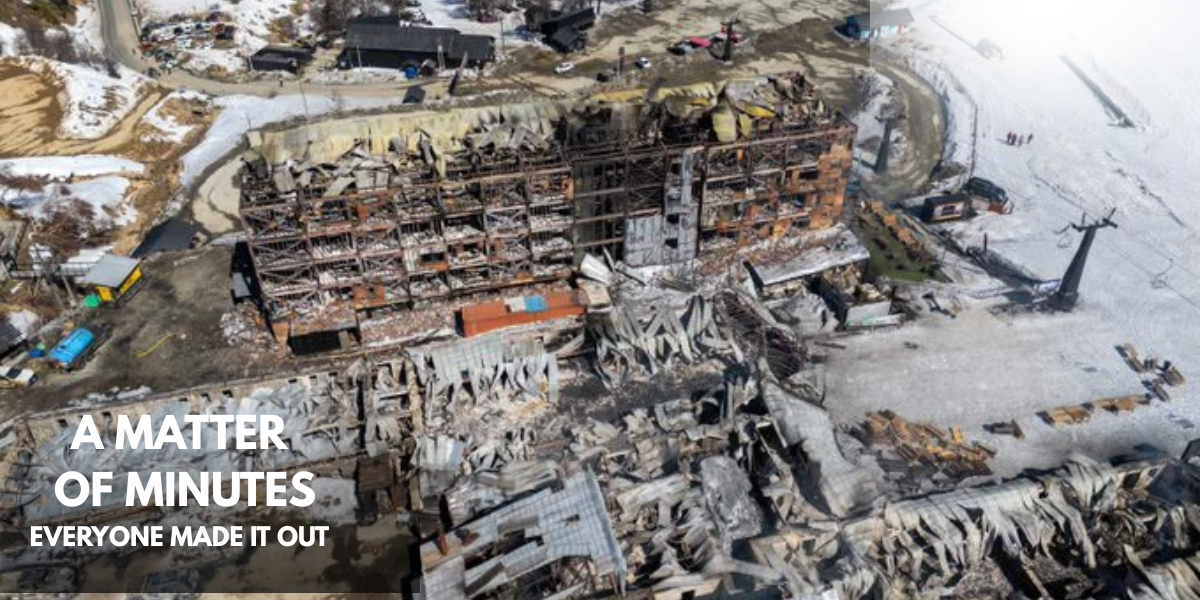
A fire destroyed the Hotel Alto Nevados and damaged part of the Nevados de Chillán ski area in Chile, forcing the cancellation of the FIS Masters Cup opener. All guests escaped, but many racers returned home with little more than the clothes they were wearing.
Lisa Ballard was sitting on her bed in long underwear and sweatpants, reviewing video from that morning’s slalom training, when her phone rang. She had about 30 minutes before she was scheduled to meet with athletes for video analysis, and her attention was on her laptop, not on what was happening outside her fourth-floor room at the Hotel Alto Nevados in Chile.
On the other end of the phone was Isabelle Reed, a Canadian racer from Quebec attending Ballard’s South American Masters camp. “All she had time to say was, ‘Lisa, get out. Fire,’” Ballard recalled.
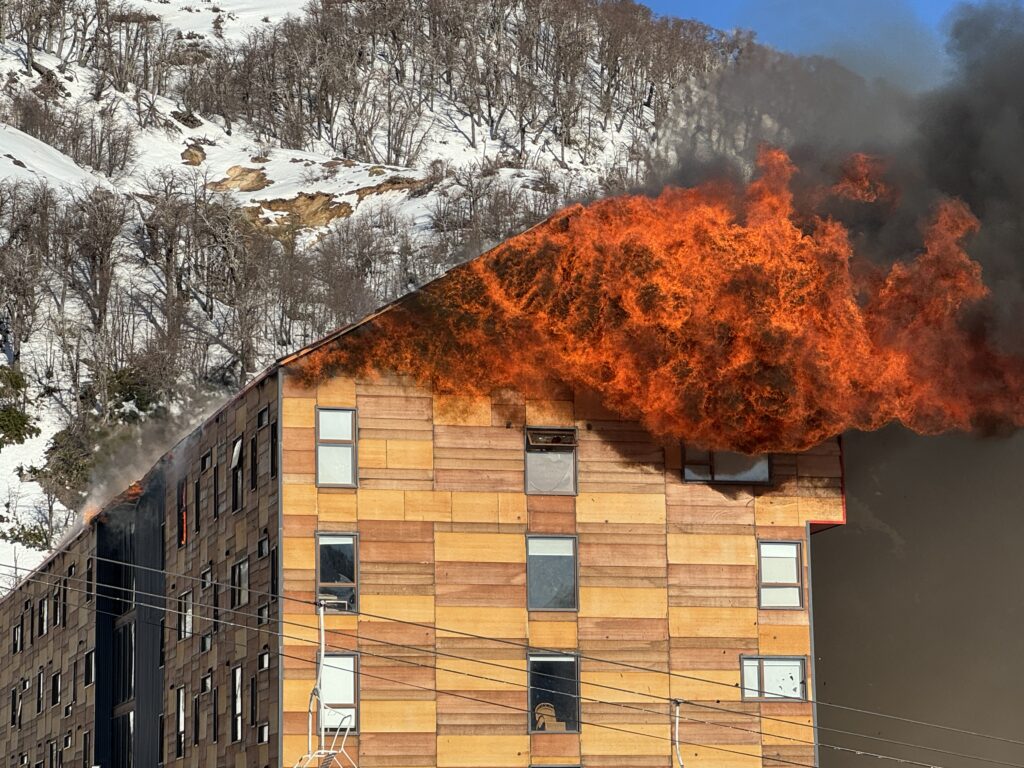
Ballard looked out the window and saw thick black smoke billowing past it. “When I saw the smoke, I knew it was the real deal,” she said.
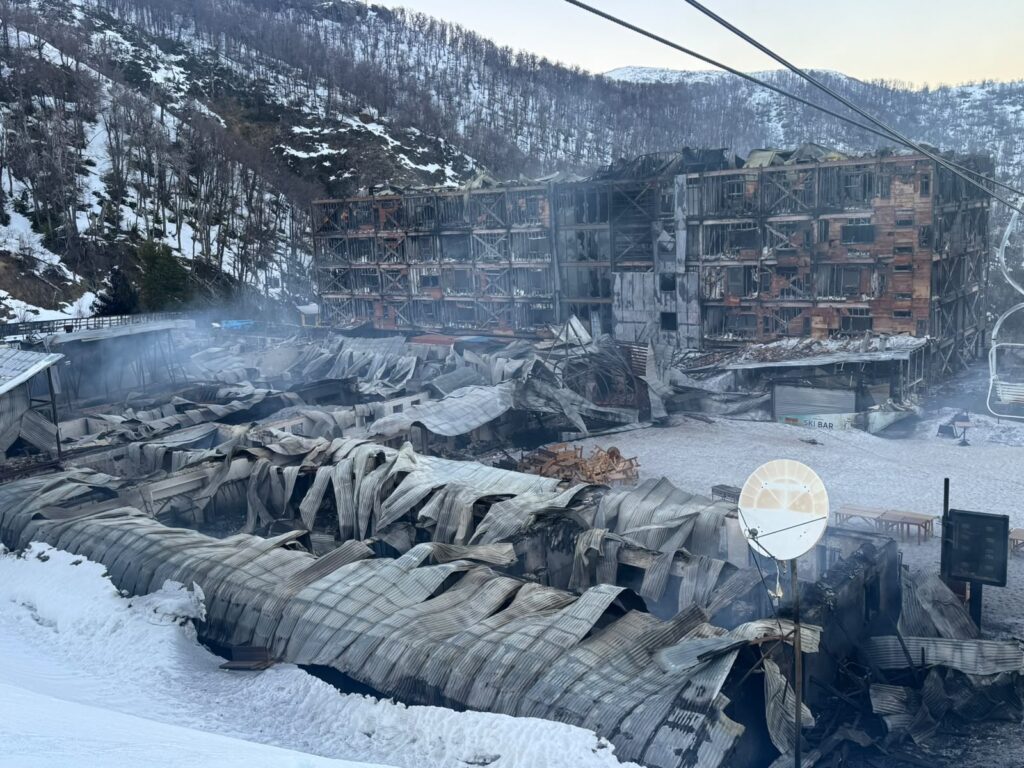
The fire, which broke out Sept. 6 at the ski-in, ski-out hotel at Nevados de Chillán, destroyed the building and spread into other parts of the resort’s upper base area. Ballard said the hotel’s rental shop, ski school, retail space and storage areas were among the facilities lost or badly damaged. She was also told that vehicles parked nearby burned and that heat from the fire damaged lift infrastructure.
The full extent of the losses is still being determined, but what mattered most that evening was that everyone made it out alive.
A matter of minutes
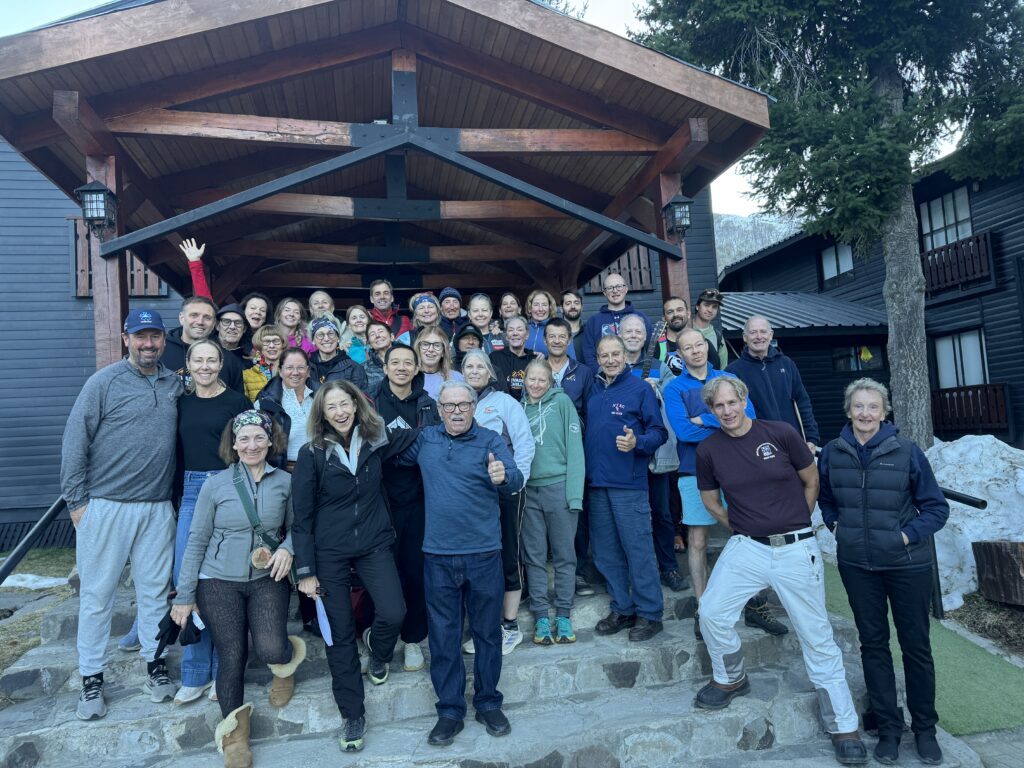
Ballard, an award-winning writer, photographer, television producer and longtime ski racer, directs a South American Masters camp each year around the opening FIS Masters Cup races on the continent. She brought a group of about 40 athletes and coaches to Nevados de Chillán, where she previously ran the camp in 2019.
This year’s group included racers from the United States, Canada, Australia, Great Britain and France. They were on their second day on snow and had finished slalom training when the fire began at approximately 5:30 p.m. By chance, the entire group was staying on the fourth and fifth floors, the top two levels of the hotel.
Ballard’s roommate had just stepped out of the shower when Ballard saw the smoke. “I just yelled at her, ‘Fire, we’ve got to get out of here now,’” she said.
What happened next took only seconds. Ballard grabbed her passport, wallet and phone. Her laptop was already on her lap, so she threw it into a nearby backpack. Then she thought about the snow outside and put on shoes. There was no time to find a coat.
The two women ran into the hallway and joined others sprinting down the main staircase before exiting directly onto the snow. For Ballard, who was responsible for a large international group, getting out of the building was only the beginning. She could not immediately locate two people from the camp.
“That was a very tense, stressful moment, especially for me,” she said.
Both had escaped from the other side of the building, and eventually the full group was reunited and accounted for.
No alarm and few firefighting resources
Ballard said she did not hear a fire alarm and saw no sprinkler system or clearly marked fire escapes like those commonly found in North American hotels. Guests learned about the fire through phone calls, people yelling outside, smoke entering rooms and employees knocking on doors.
Masters racer Lee Ormiston said the conditions exposed how quickly familiar escape tools can become useless.
“A smoke-filled room or hallway renders your eyes useless, regardless of the flashlight on your phone,” he said.
Ormiston had noticed a second stairway near his room before the fire, but it did not have the red exit sign he expected to see. Unsure whether it led outside or to a dead end, he assumed it was not an emergency exit. He later learned from other guests that the stairway did reach the ground floor and an outside exit.
“Safety features and criteria differ by country,” Ormiston said. “There were no smoke alarms — at least none that made an audible noise — in the hotel. The exit stairway closest to my room did not have the traditional red ‘Exit’ sign above it, so I did not know whether it was viable or a dead end.”
Ballard believes two circumstances prevented the emergency from becoming far more devastating: The fire appeared to begin in the roof rather than below the guest rooms, and it started while people were still awake.
“Had it been in the middle of the night, 2 or 3 in the morning, we wouldn’t have made it either,” Ballard said. “There was no fire alarm. There was no sprinkler system.”
Ballard said the initial belief was that the fire may have been electrical, although the official cause remains subject to investigation. The resort’s remote mountain location also limited the response. Ballard estimated it took about an hour for the first firetruck she saw to arrive, and by then flames were already shooting through the roof.
“It’s like bringing a Swiss Army knife to a gunfight,” she said of the scale of the response compared with the fire.
Nevados de Chillán’s ski patrol is equipped to respond to on-mountain injuries and maintains ambulances at the resort, Ballard said, but the area did not have the resources needed to contain a major structural fire. Patrol members instead focused on evacuating the hotel and helping ensure no one remained inside.
“The ski patrol really were instrumental in getting everybody out of the building,” she said. “Nobody was hurt. Nobody died in that fire, which was amazing.”
As guests evacuated, employees entered the ski room in the basement and pulled race skis outside. Ballard estimated that about half of the group’s skis were saved, although many ski bags and most other equipment were lost. Some of the recovered skis eventually made the trip home wrapped in blankets.

From evacuation to getting people home
Once Ballard knew her group was safe, the challenge shifted to finding shelter, food, medication and travel documents. The racers walked down the snow to a lower parking area, where the resort transported them by bus to another hotel and nearby condominiums. Staff found beds and meals for the displaced guests.
For some members of the camp, replacing lost medication was urgent. Masters racers range in age from 30 to over 80, and several people had prescriptions they could not safely go without. A pharmacy in the city of Chillán, about 90 minutes away, remained open past midnight while resort staff made two trips to retrieve replacement prescriptions. Although some medications were unavailable in Chile, Ballard said they were able to replace most of what the group needed.
Then there were the passports. Many people had escaped with only what they were wearing, and Ballard estimated at least half of her group no longer had passports or other essential documents. She contacted the U.S. Consulate in Santiago, which helped expedite emergency documents for the Americans and connected other travelers with their respective embassies.
“Think about feeling vulnerable without your passport,” Ballard said. “They were so helpful.”
Ormiston said the experience underscored how much harder the aftermath could have been for someone traveling alone.
“For those without a passport, wallet or credit cards, if they weren’t with a broader group, it would have been a huge challenge to get medicine and food in the near term, and home in the longer term,” he said.
Monday was consumed by individual police reports and additional documentation for those who had lost passports. Travelers who still had their documents began the trip home Tuesday. Most of the others followed Wednesday or within the next several days, depending on how quickly replacement documents could be issued.
The FIS Masters Cup races scheduled to follow the camp were canceled. Ballard said the decision reflected both the scale of the emergency and the reality that many competitors no longer had boots, skis, speed suits or any of the other equipment required to race.
“Everybody had everything they needed to train and race in ski racing for slalom, GS and super-G, and it’s all gone,” she said. “It’s pretty overwhelming to think about it.”
A community steps in
Throughout the interview, Ballard kept returning to the way the people of Nevados de Chillán cared for those who had just lost nearly everything. She had stayed at the resort before and knew many of its employees. In the aftermath of the fire, she watched them put guests first even as their own workplace and community faced an enormous loss.
“They’re just good people with kind hearts,” she said.
Ballard said several resort leaders and staff members appeared to work for nearly 48 hours without sleep, coordinating rooms, meals, medication, transportation and paperwork.
Ormiston also credited Ballard’s leadership throughout the crisis. “I’m not sure if Lisa has had crisis management training, but wow, was she impressive,” he said.
When Ballard finally boarded a bus for Santiago, she was still wearing the same smoke-filled clothing from the night of the fire. A resort employee handed her a clean T-shirt from a mountain bike race.
“I was like, ‘Oh my God, a clean shirt. Thank you so much,’” Ballard said. “Then she gave me a huge hug and was pretty much in tears. We both were.”
Support continued after the group left Chile. Ski manufacturers and others across the racing community began contacting Ballard almost immediately to ask how they could help the athletes and coaches replace what they lost.
“We’re all in this individual sport in one sense, but in another sense, we’re all the same family,” she said. “A crisis like that, it was so heartwarming to see how everybody came together and stepped up.”
A new part of every travel plan
Ski teams regularly discuss medical plans, on-hill emergencies and what happens when an athlete is injured. Hotel evacuation plans rarely receive the same attention, but that will change for Ballard and others who escaped the fire.
Several people have said they will now keep passports, medication and other essentials together beside the bed whenever they travel. They will also locate the exits when they arrive and establish a meeting point for the group in case of an emergency.
Ormiston said he was relatively fortunate to have thought about some of those risks in advance. A former CIA field agent who worked at his firm had introduced him to the concept of “getting off the X” — recognizing a dangerous location and knowing how to leave it quickly under duress.
Workplace fire drills had also conditioned Ormiston to think about what he would need in an emergency.
“As much as I hate the fire drills we do at work, they did condition me to think about what I needed and be able to grab it in an emergency — passport, wallet, chargers, laptop,” he said. “Everything else can usually be bought.”
Still, he wishes he had tested the unmarked stairway near his room when he first arrived.
“I knew that second stairway was there, and I should have taken it as a test ahead of time,” he said. “I noted the absence of an exit sign before the fire and assumed it wasn’t one. Fortunately, I didn’t need it.”
Ormiston now plans to add portable combination smoke and carbon monoxide alarms to his travel bag, particularly for international trips and stays in vacation rentals.
For Ballard, discussing hotel evacuation procedures will become a standard part of every future camp. It is a simple conversation, but one she believes every coach and team should have.
“I always talk about the medical plan,” she said. “Now, for sure, I’m going to do that too.”
For Ormiston, much of the aftermath has been emotional.
“For me, all the things after the fire were mostly emotional — thinking about what might have been,” he said.
For Ballard and the rest of the group, the scale of what was lost will take time to process. The hotel is gone, much of the equipment they carried to Chile is gone and the races they traveled to compete in never happened. But every person walked out.
“It was really a miracle that it started in the roof and not from the basement up,” Ballard said. “And it was really a miracle that it didn’t happen in the middle of the night while we were asleep. Those were the two saving graces, truly.”

About the Author: Katie Twible