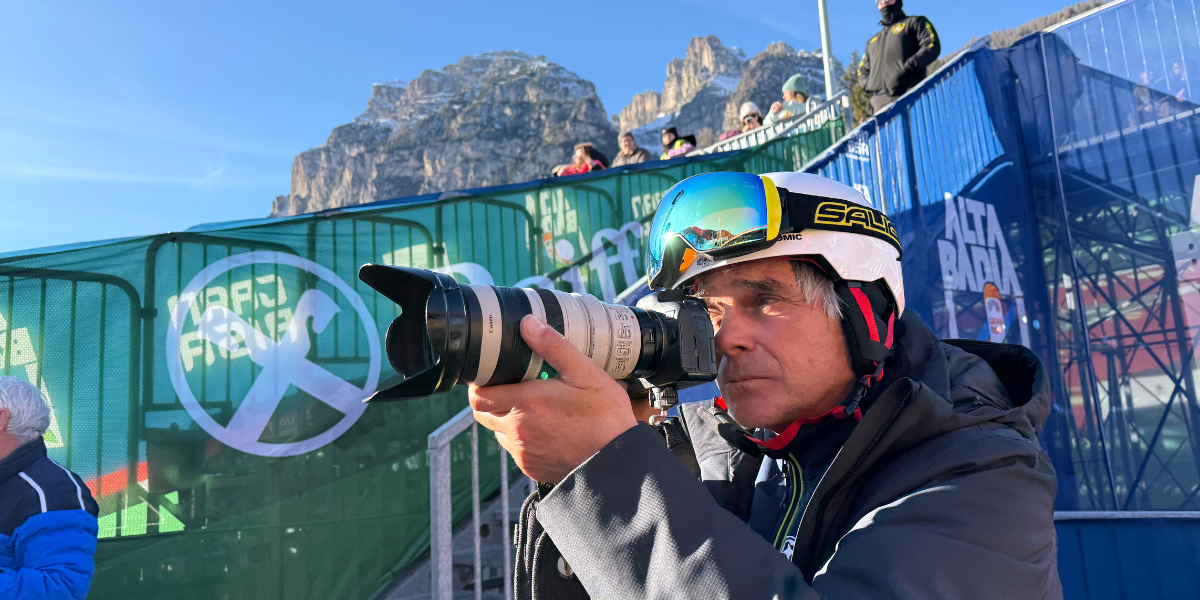
Freddy Planinschek / Alta Badia Photographer / Photo Shauna Farnell
Alta Badia’s photographer has documented the event’s evolution since its debut in 1985.
As the official photographer of the Alta Badia World Cup since its inauguration in 1985, Freddy Planinschek says nearly every aspect of alpine racing has changed in the past 40 years, from equipment to snow conditions, safety, course access — and of course, photography. He points out that through most of the ’90s, Planinschek and every other photographer sprinted from the race finish to a darkroom to spend hours developing photos.
“With digital, it’s better,” says Planinschek, an Alta Badia native in his late 60s who also shoots the nearby Val Gardena, Madonna di Campiglio, and Cortina d’Ampezzo World Cups. “Now I shoot pictures on the slope and send pictures directly to the press office. It’s instant. I remember 40 years ago shooting the first photos in black and white.”
The action circa 1985
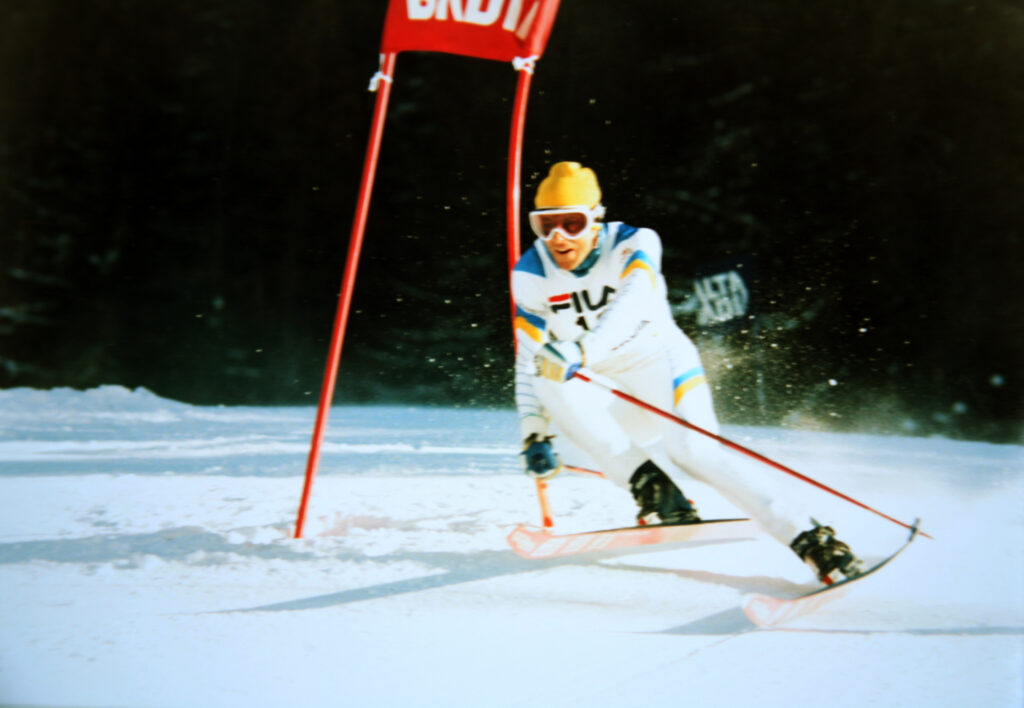
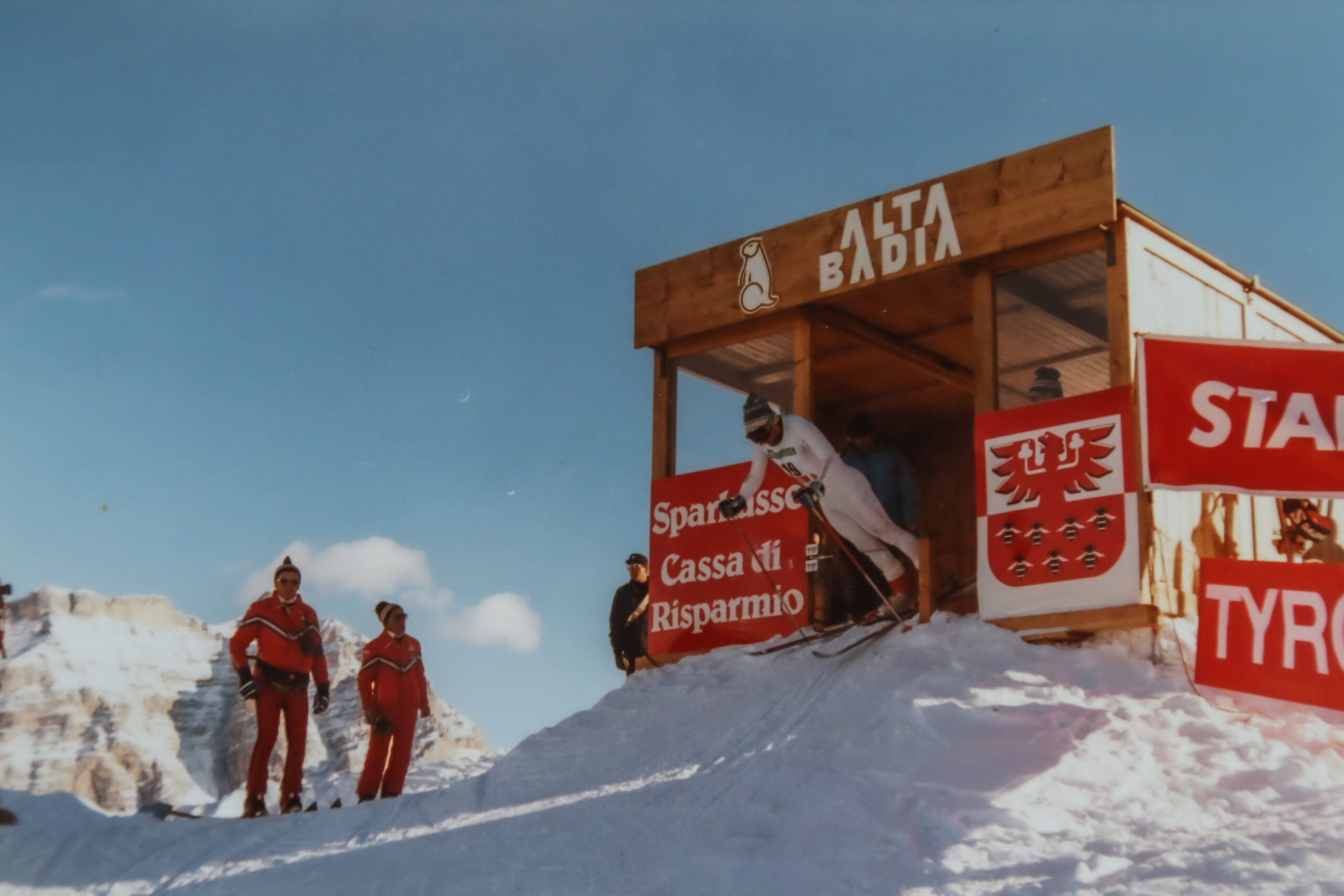
In December 1985, at the first World Cup giant slalom on the now-iconic Gran Risa course, Planinschek’s lens captured 29-year-old Swedish star Ingemar Stenmark kicking out of a start house that more closely resembled a woodshed than a modern race facility. At the time, the Swede wore a bright yellow hat, a basic white race suit, and his signature Caber Alfa boots — even though production had been discontinued in 1979. Meanwhile, rooster tails of powder exploded from every turn as he carved impressive arcs on straight Elan skis nearly the same length as those used by today’s downhillers.
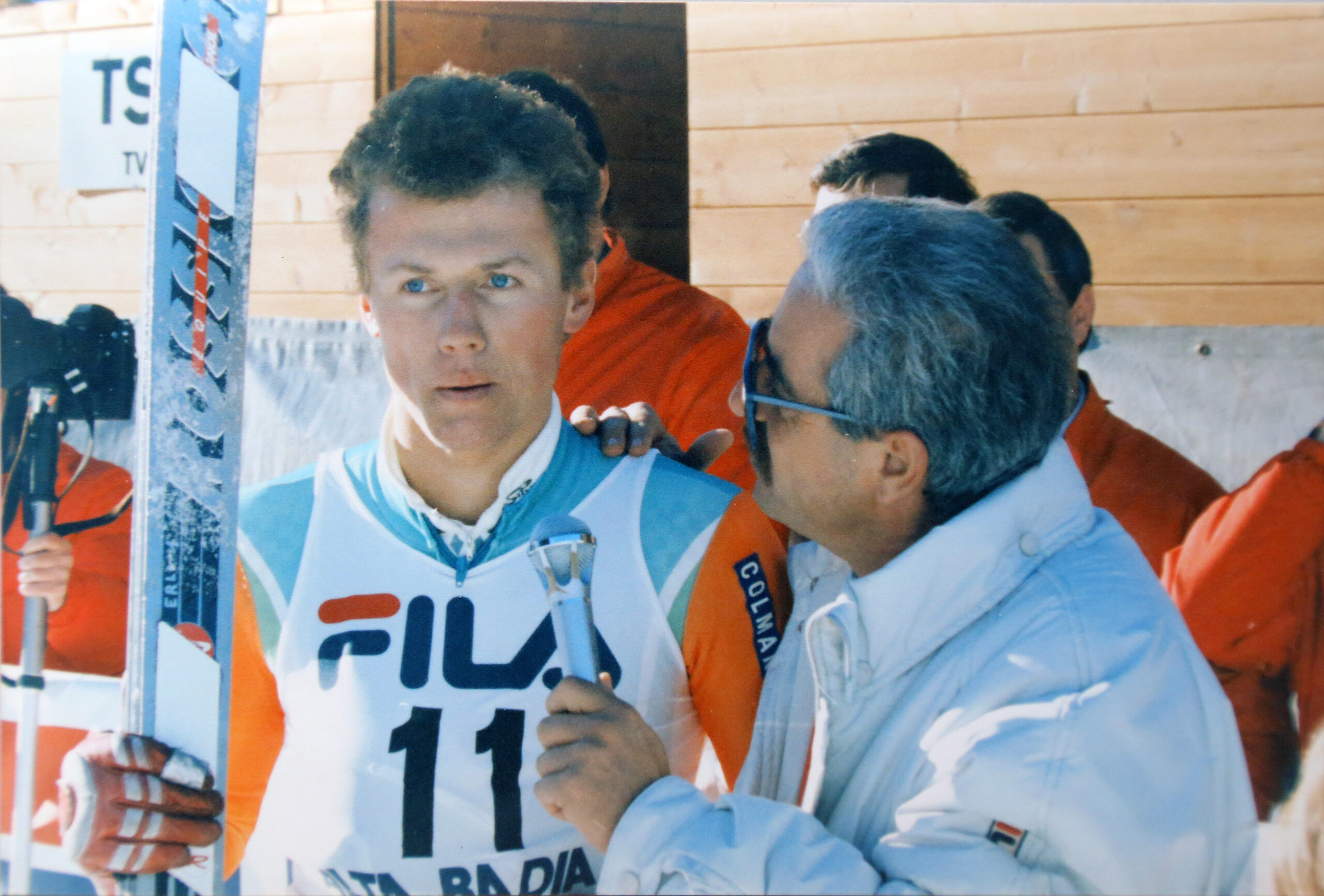
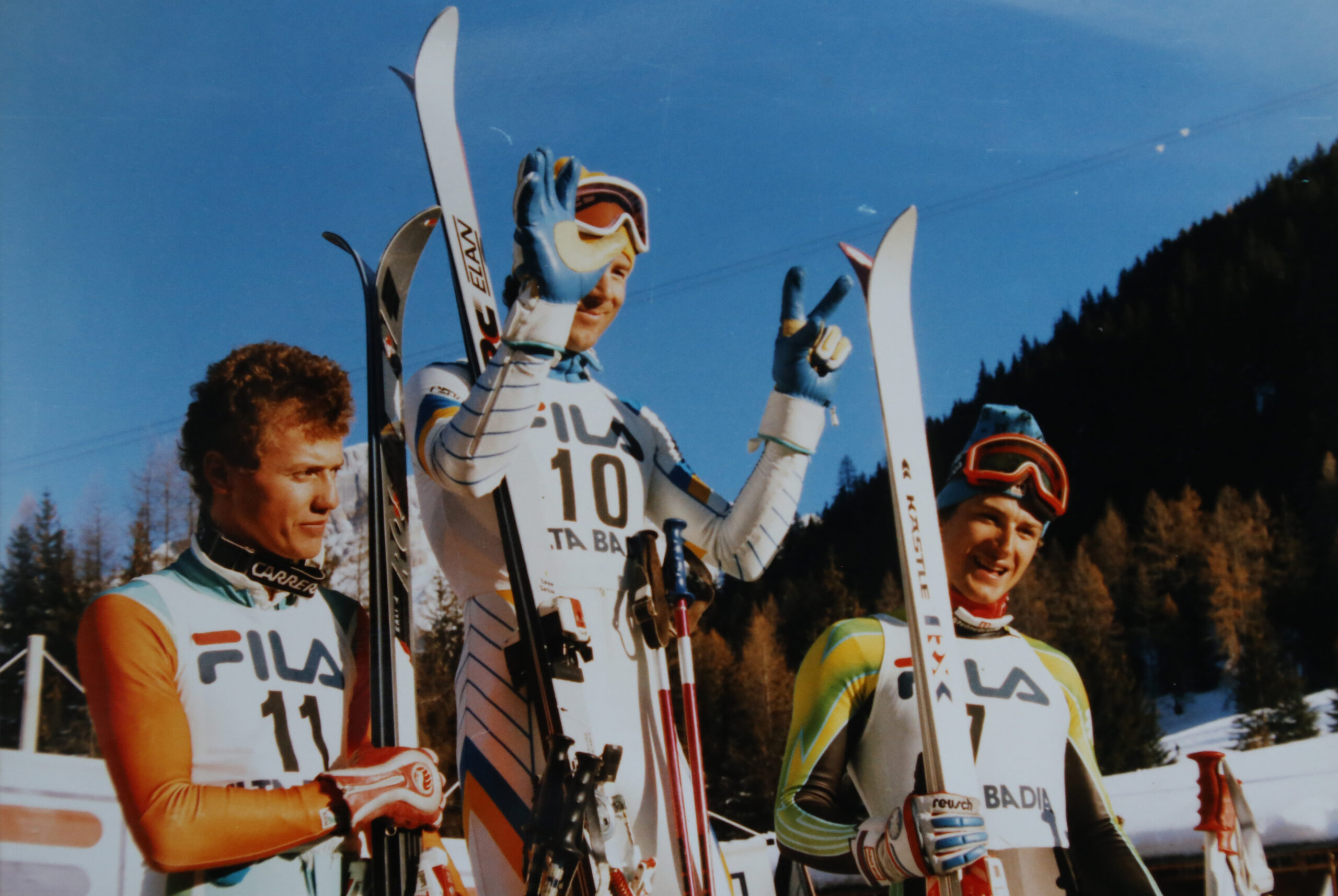
By the end of the day, Stenmark had clinched his monumental 80th World Cup victory. His two-run time of 2 minutes, 38.95 seconds — a stark contrast to today’s faster margins, with Marco Schwarz winning this December’s race in 2:35.02 — edged Austrian Hubert Strolz by nearly a half-second. To the crowd’s delight, local up-and-comer Roberto Erlacher rounded out the podium, finishing nearly a second behind Stenmark.
Snow conditions and course preparation
“Other changes are how they prepare the slope,” Planinschek says. “Now it is all ice and much faster. When you look back 40 years ago, the snow was all natural. Some of the snow was soft.”
As a result, there are no powder plumes trailing today’s alpine racers. Instead, Alta Badia — part of the Dolomiti Superski system that encompasses 12 ski areas across 45 mountain villages — relies on one of the most state-of-the-art snowmaking systems in the world. According to Alta Badia Ski World Cup Chairman Andy Varallo, the resort’s cannons can produce enough snow to blanket the entire racecourse in just 24 hours.

World Cup vision and scheduling savvy
At the same time, beyond modern snowmaking, Alta Badia’s World Cup roots run deep. Varallo also serves as president of Dolomiti Superski, the massive ski system launched in Alta Badia in 1946 with Italy’s very first chairlift. Located just a few hundred meters from the Gran Risa course, the lift was built by Varallo’s grandfather using a Leitner tractor engine.
From that foundation, the Gran Risa World Cup itself took shape under the guidance of Varallo’s father, former downhill racer Marcello Varallo.
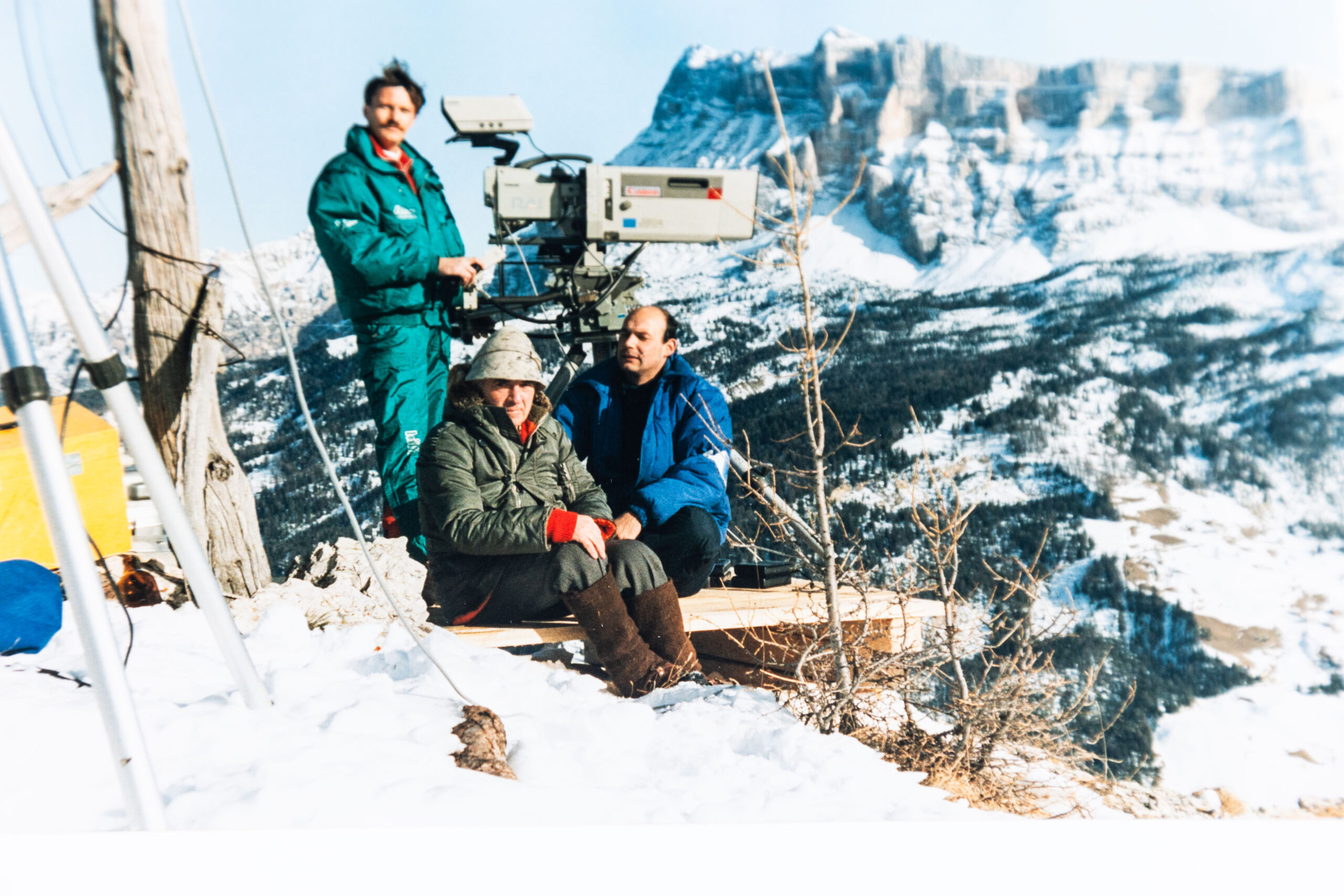
“He understood we needed something more — big events to promote our valley,” Andy Varallo says. “He went to the FIS Council in 1984 and they said we had to take the Sunday before Christmas. Other committees said, ‘We don’t want it at that time.’ My father and grandfather said the worldwide broadcast before the start of the season — and television exposure at that time — was the best. We could triple the arrival of guests after the Alta Badia World Cup.”
Ultimately, the idea proved to be a golden goose. Today, Alta Badia ranks among the most-watched ski races in the world, and the televised spectacle at the start of the season continues to drive a surge in winter bookings.
The spectacle
By any estimation, the Alta Badia event ranks among the most jaw-dropping live spectacles on the World Cup. Not only does the steep, technical Gran Risa course produce some of the sport’s most impressive giant slalom turns, but the experience extends far beyond the racing itself.
To open the races, the Frecce Tricolori — Italy’s national aerobatic team — charge across the sky, with the delayed roar of their jet engines reverberating off the walls of the Dolomites. Flying in tight formation, plumes of green, red, and white smoke — representing the Italian flag — trail in their wake.
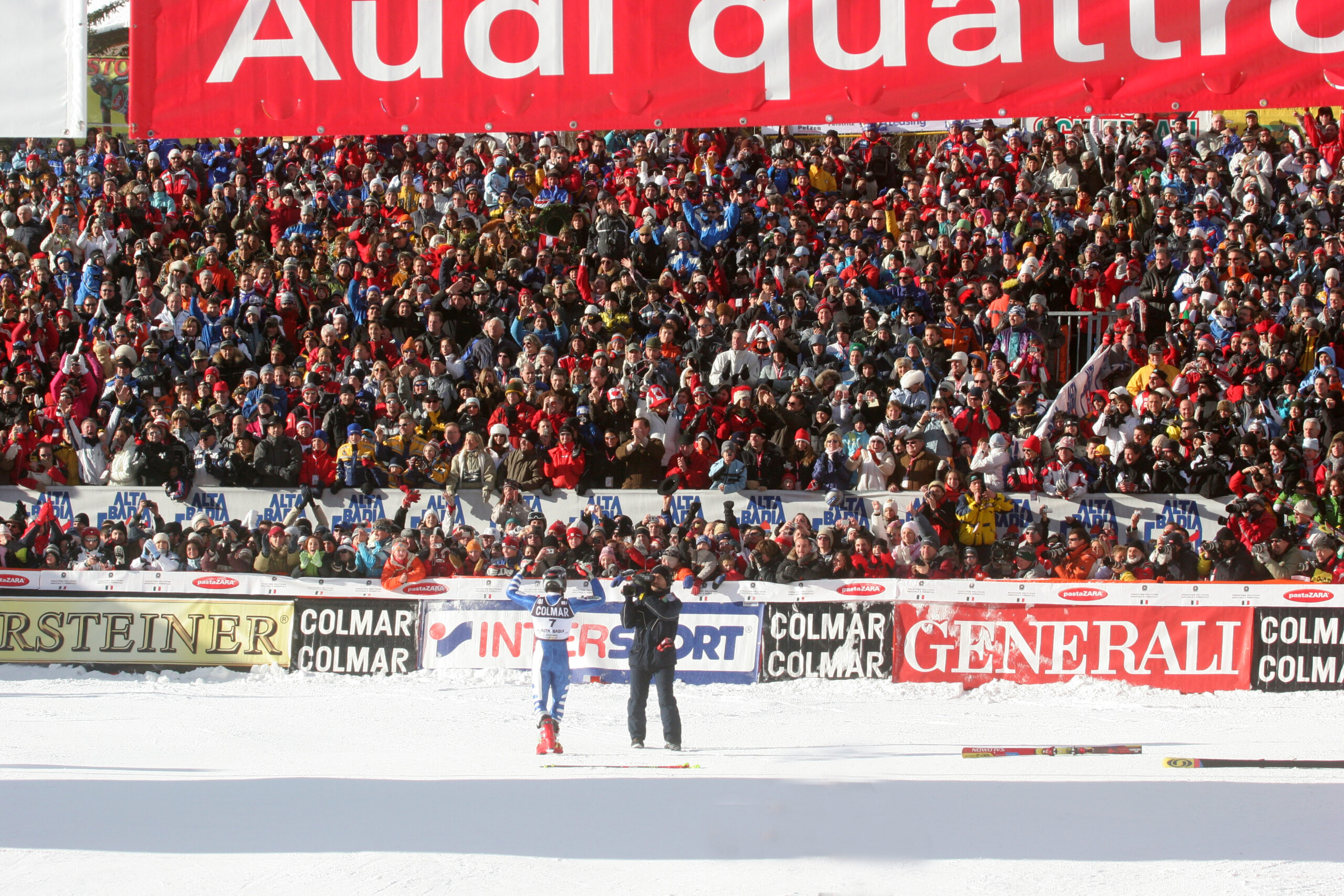
At ground level, the spectacle continues. Surrounding the finish stadium are not one but three VIP lounges, each serving fine wine and regional delicacies throughout the races. Then, on the second day of competition, Alta Badia’s slopes open at 7 a.m. for SunRisa, allowing skiers to carve pristine corduroy before heading to mountaintop rifugios for a gourmet breakfast.
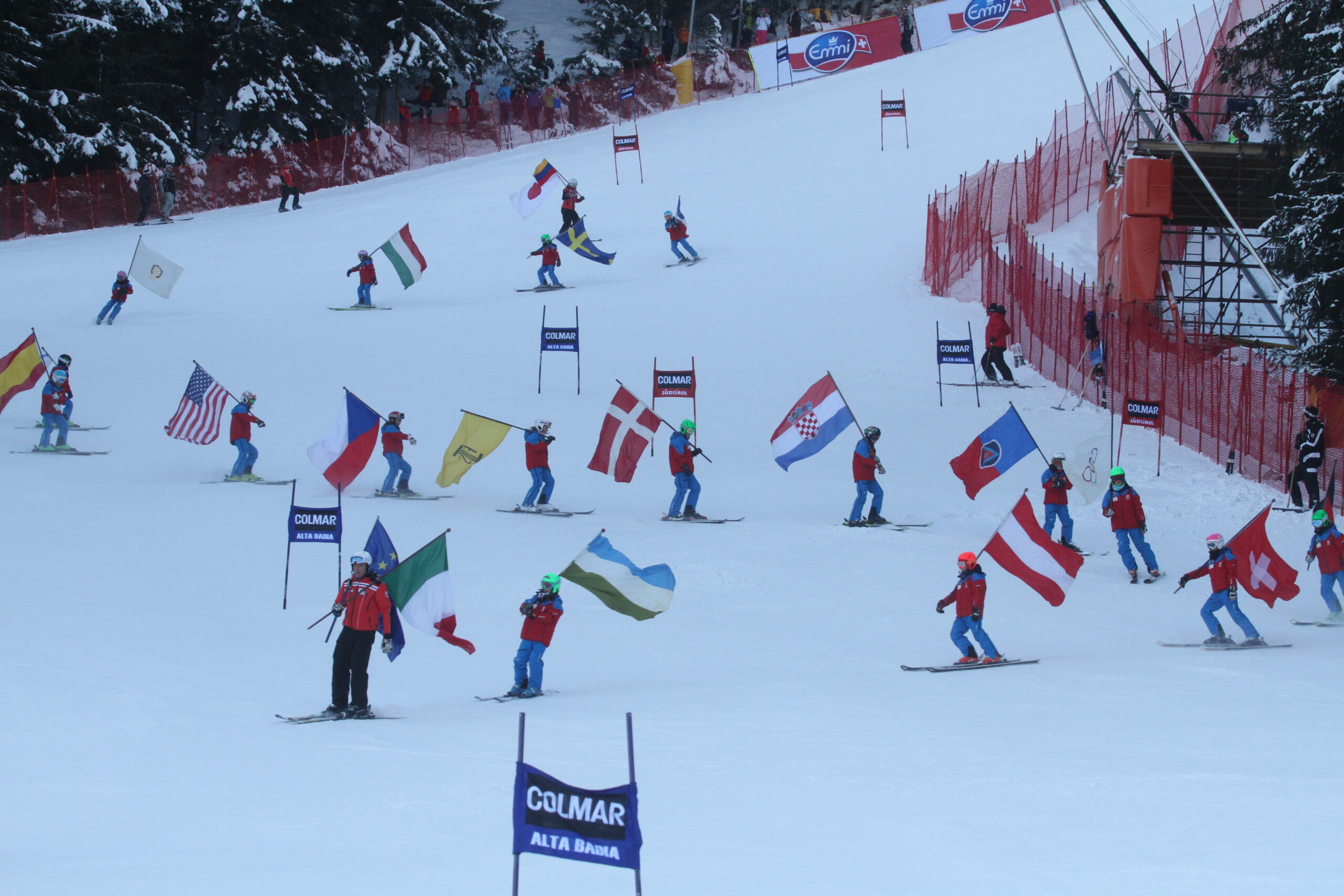
Meanwhile, to keep the race crowd engaged between runs, a lively local dance troupe and an electronic violinist perform throughout the day. The exhibition feels like a Ladin-culture-infused version of a Super Bowl halftime show.
However, this level of production did not emerge overnight. It took years for Alta Badia — and other iconic World Cup venues — to evolve into such multifaceted entertainment events. In earlier decades, star power alone was enough to draw massive crowds.
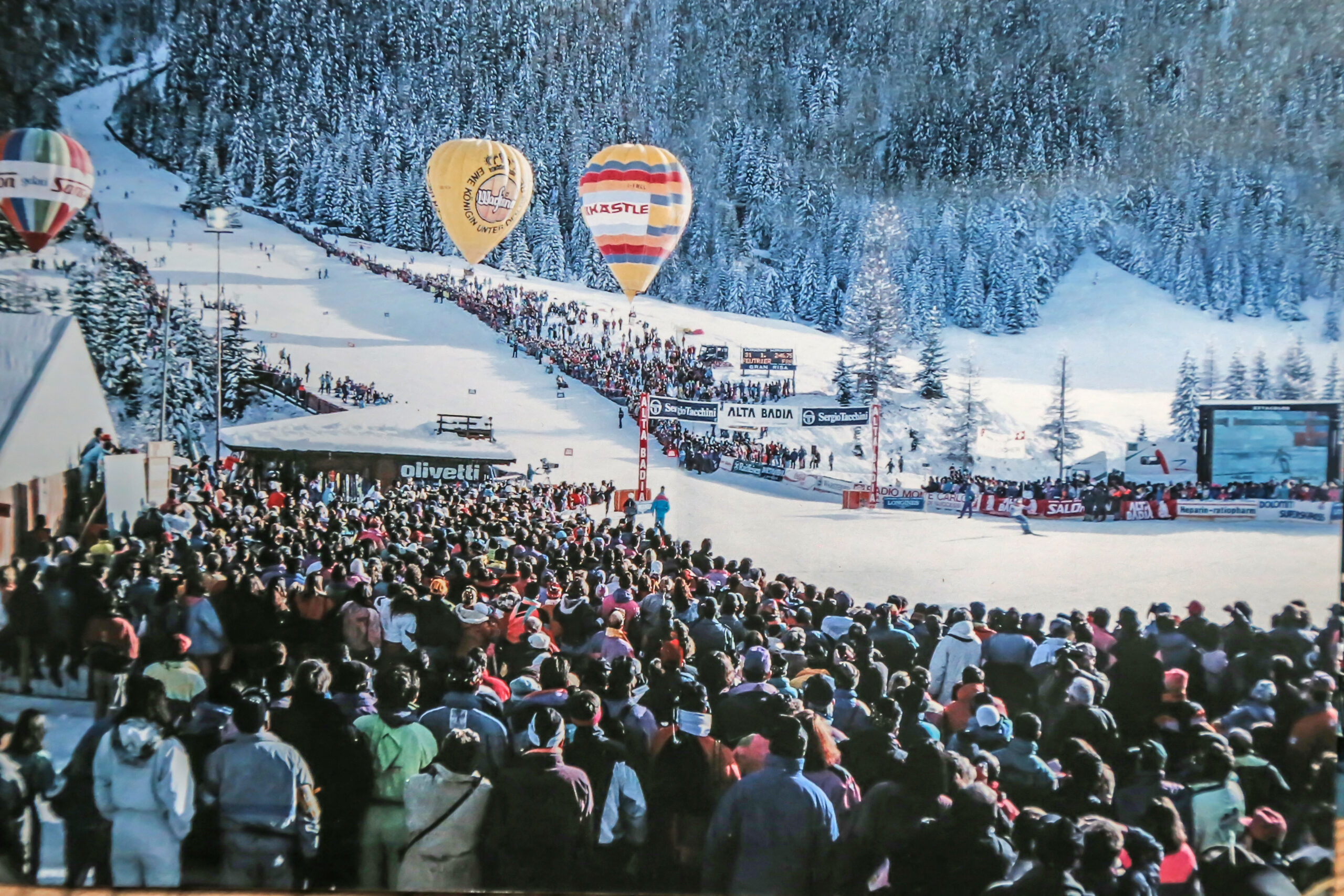
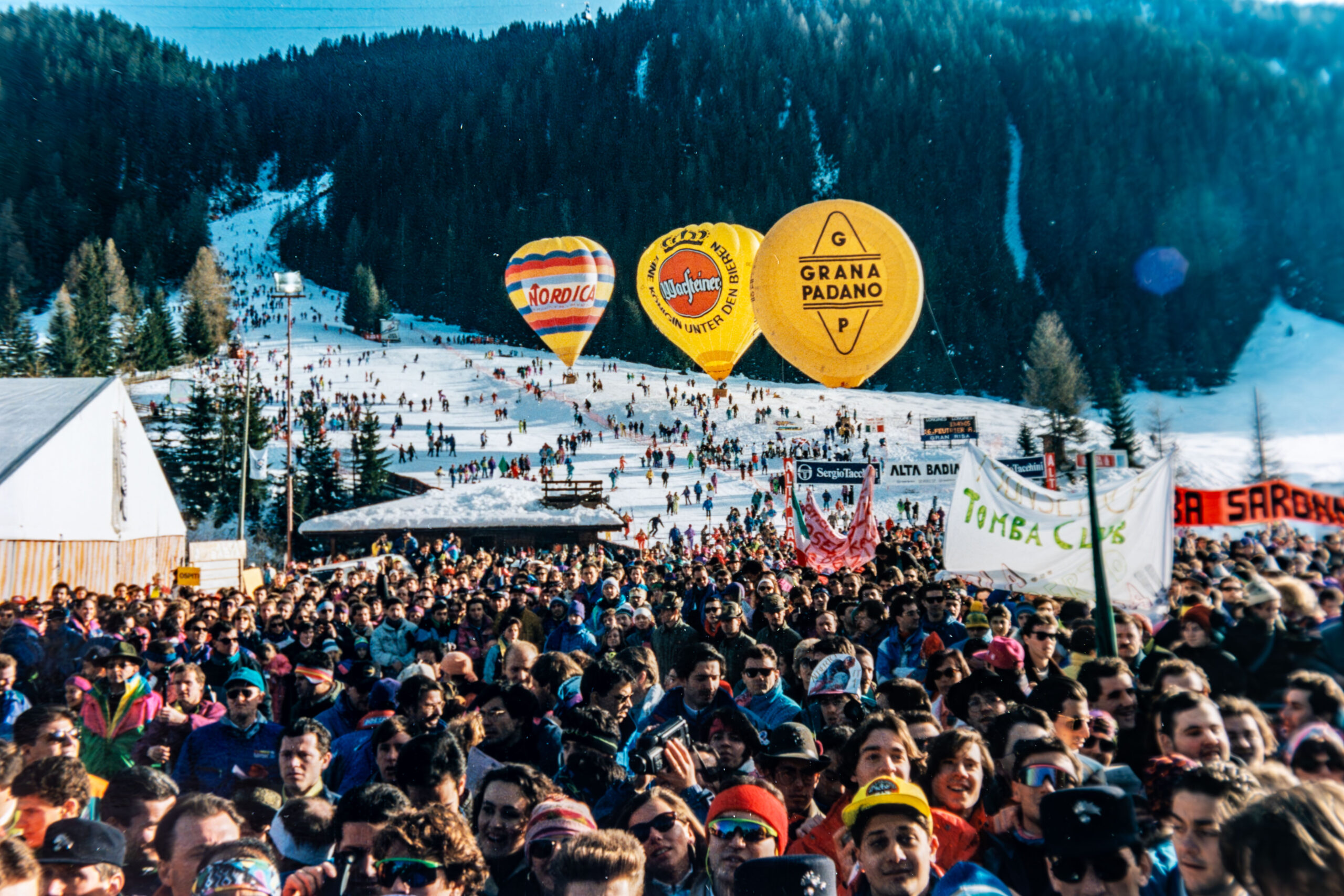
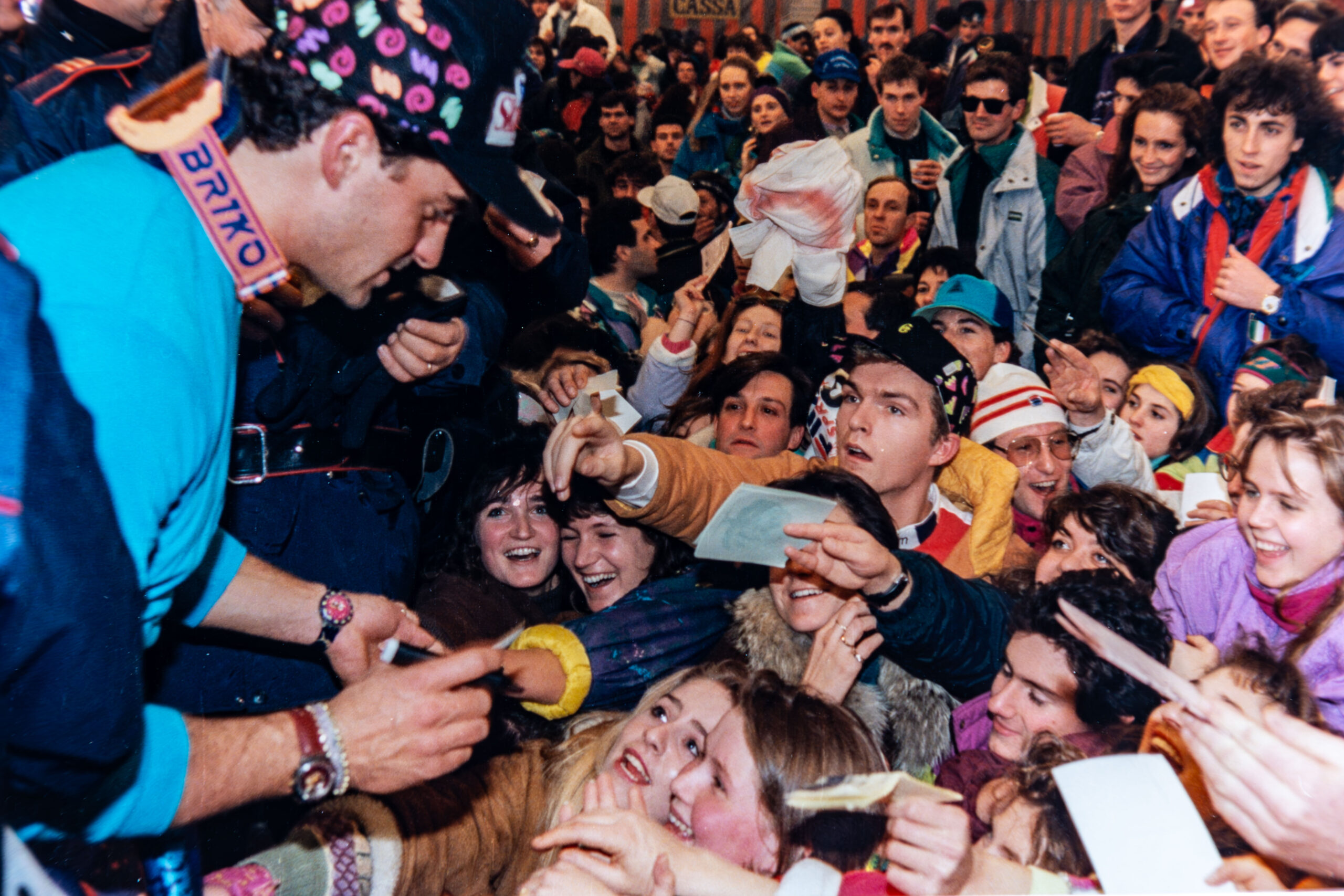
“In the past, it was more about celebrity,” Planinschek says. “It was 30,000, 40,000 people who would come to watch Tomba.”
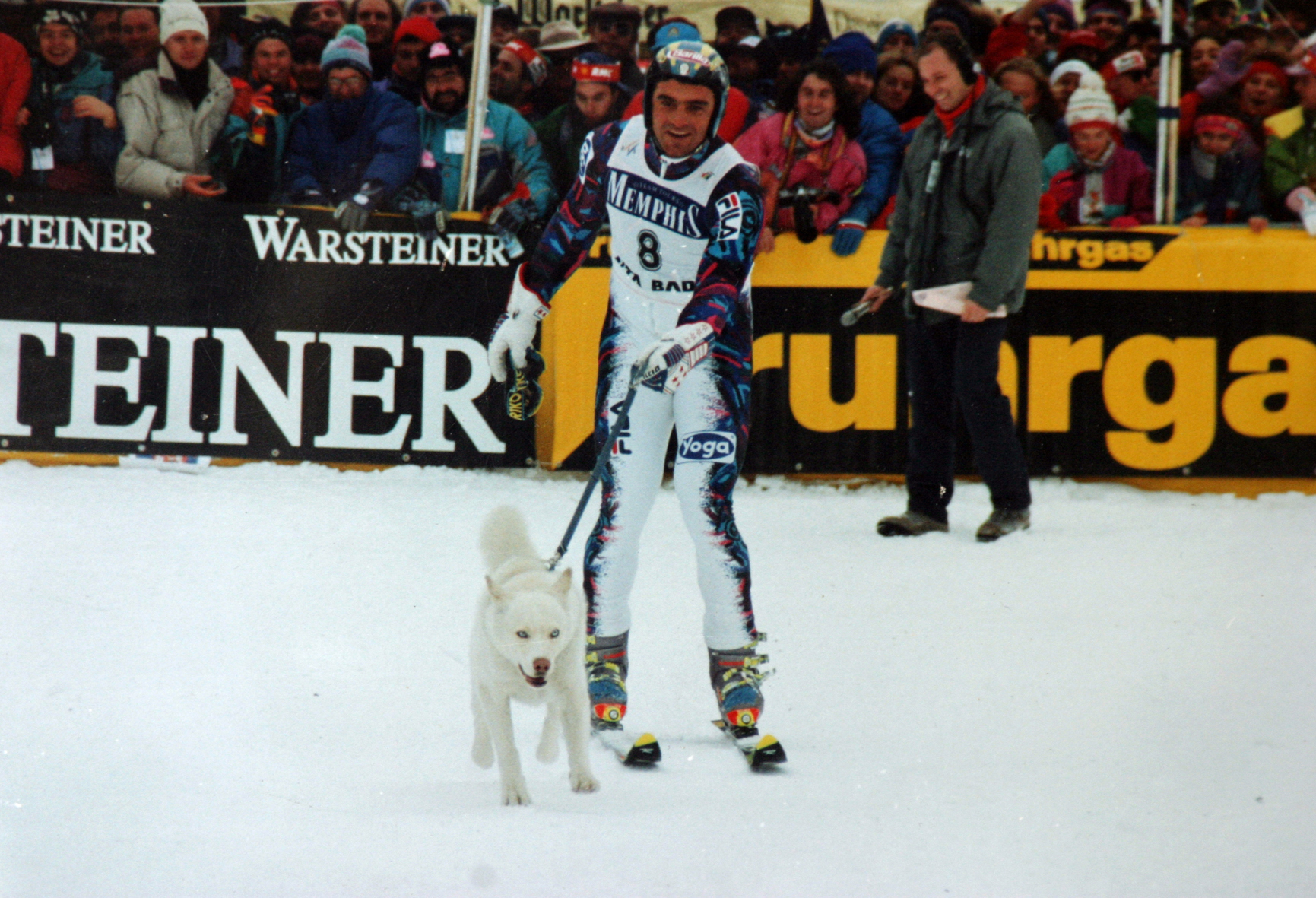
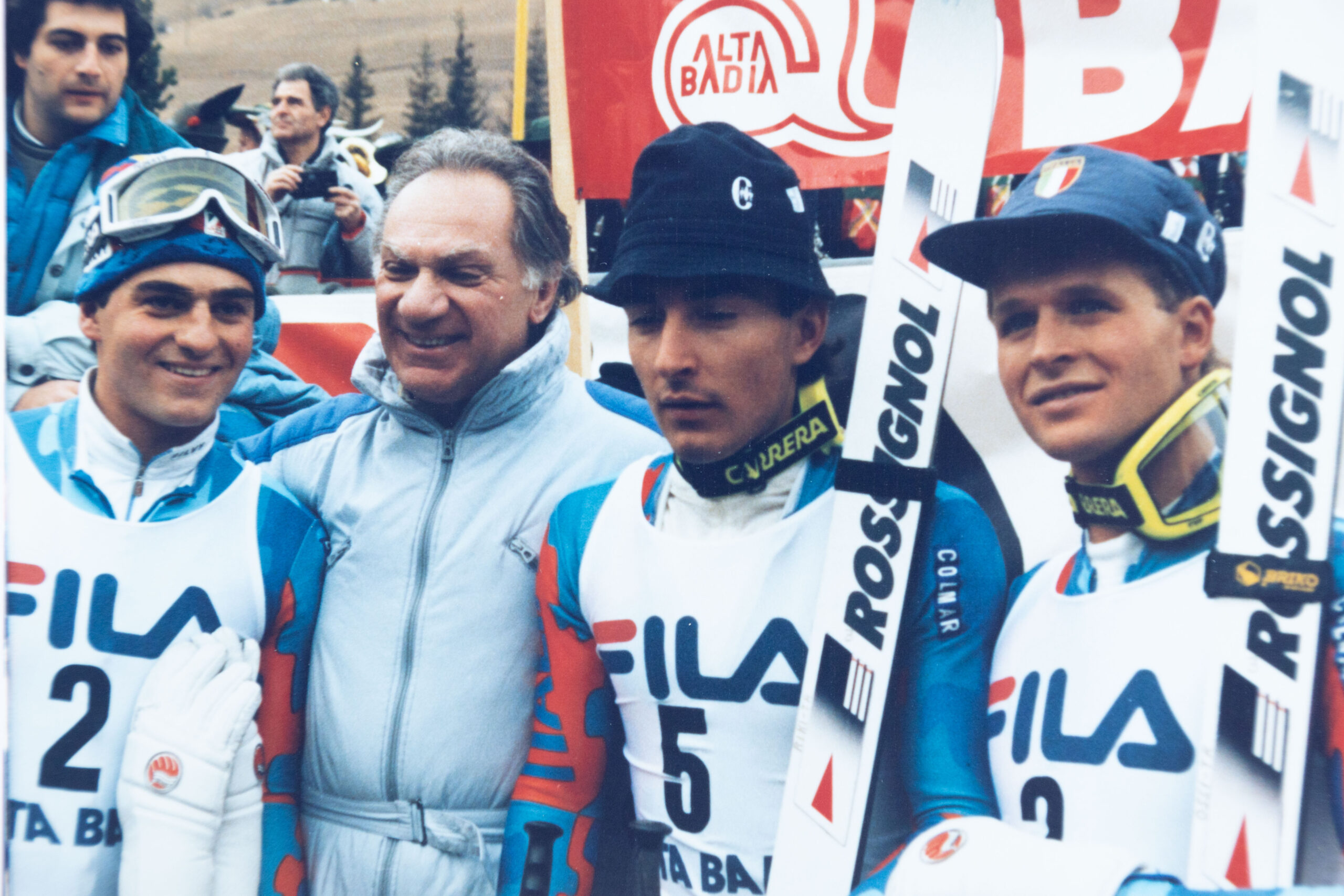
In that era, Italian hero Alberto Tomba left an indelible mark on the Gran Risa slope, winning the Alta Badia giant slalom in 1987, 1990, 1991, and 1994. From the bib draw ceremony to the moment he stepped out of the finish area, he was swarmed by fans chasing autographs.
Equipment
Looking back 40 years, skis in every discipline were longer than they are now. Men’s GS skis typically ranged from about 203 to 210 centimeters with virtually no sidecut, compared to today’s strict World Cup rules: a 193-centimeter minimum length for men’s GS skis and a 30-meter minimum sidecut radius.
Poles were also basic, most adorned with leather straps. Race suits were not nearly as tight or technical as they are today, and helmets were non-existent.
“No helmets. The ski material, clothes — all were different,” Planinschek says. “Now it is more aerodynamic.”
Safety and security
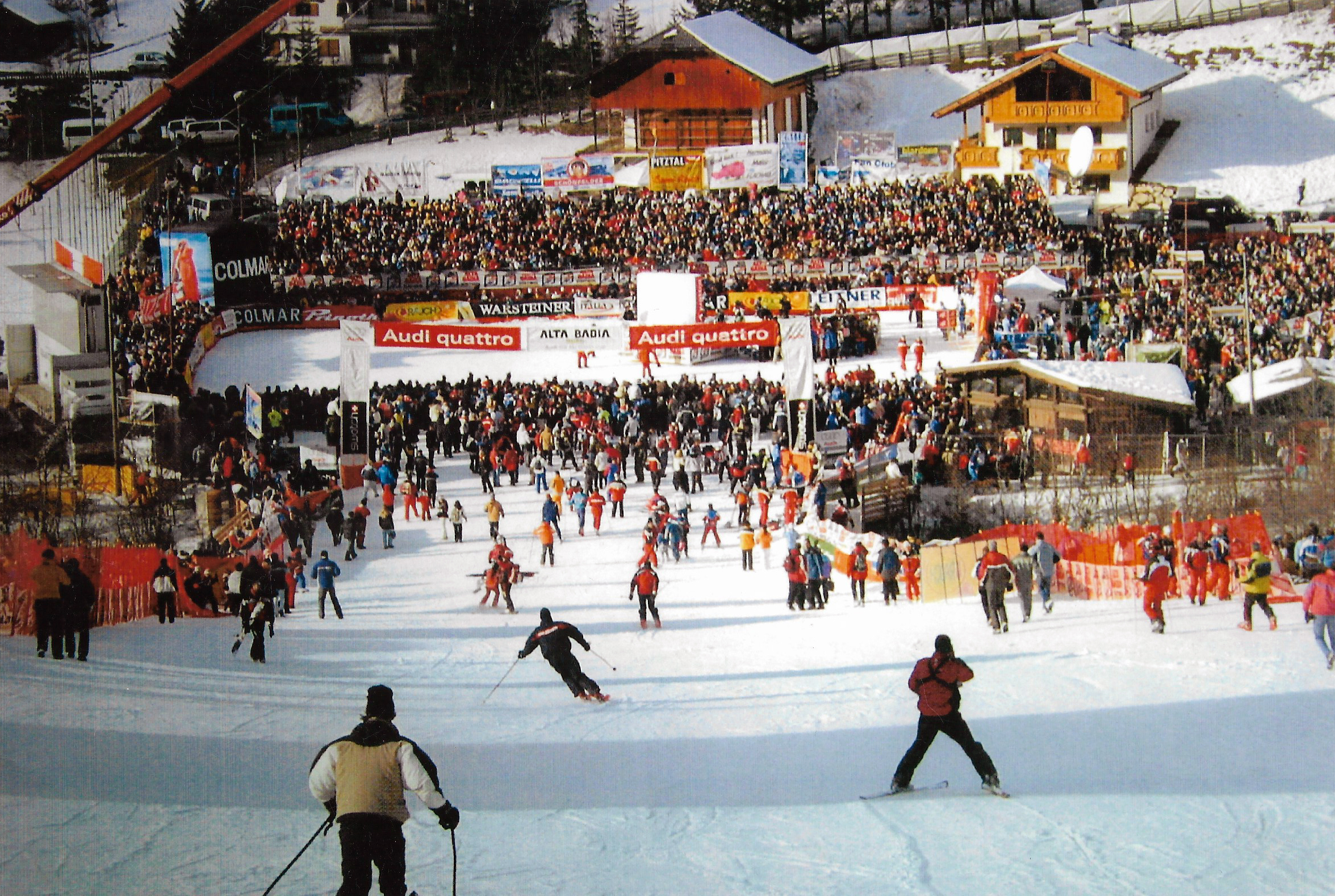
In addition to the introduction of helmets — which have been mandatory in FIS World Cup alpine racing since 2012 — racecourse safety and access looked vastly different 40 years ago. At the time, access to the finish area and much of the racecourse was largely unrestricted. Spectators lined the entire course, often walking and skiing down it immediately after the race.
Meanwhile, although B-nets had just made their debut that season, beginning the transition away from hay bales as crash barriers, parts of the course in 1985 remained protected only by a simple fence. Spectators stood directly behind it, cheering just feet from the racing line. As a result, anyone and everyone could crowd the finish area.
“The security of the slopes is different. Before, it was more of a party,” Planinschek says.
Despite those changes, the photographer — who is also a longtime ski instructor in Alta Badia — remains incredibly proud to document the one-of-a-kind race scene on his home hill.
“I always enjoy it. Always,” he says. “The thing I enjoy most is making photos of this talent on my home slope.”
Alta Badia through time: Freddy Planinschek’s four decades behind the camera
click images to enlarge
About the Author: Shauna Farnell