
Black Diamond: Beaver Creek/Vail's Win Big in Many Ways

 ANTALYA, Turkey – Beaver Creek and Vail’s victory was not just a win for the resort. It was a triumph for the entire sport of skiing and particularly for alpine competition in the United States.
Globally, the very actuality that alpine skiing will enjoy a major championship in North America is a convincing move on the part of the FIS. The past seven World Championships have been held in Europe. While Alpine competition is most definitely a Eurocentric sport, the FIS council took a global position in moving the championships across the Atlantic. In the United States, the lead up to the championships should boost both competitive and recreational skiing. There are youngsters competing right now who will give their all to be in the start house at the 2015 Beaver Creek Worlds. To ski with Andrew Weibrecht and Lindsey Vonn in a home game; how cool a goal is that for today’s 12 to 22-year-old competitors.
Perhaps more esoteric, but key to winning the bid, was the true partnering of the process between USSA, Vail Resort and the Vail Valley Foundation (VVF). In the past, Vail Resort and VVF handled the bid on their own. The approach was successful for the 1989 and 1999 championships bids but the nature of the process was changed dramatically when the FIS Congress turned over the responsibility of selecting World Championships organizers to the members of the council. Suddenly a bidder’s challenge was to convince members of one of the world’s hard-wearing “old boys club.” In the last 12 years Vail’s bid failed twice while using their formerly successful vote gathering technique.
Realizing the importance of this bid, at the urging of FIS observers, USSA led by Bill Marolt, the current FIS council member and Hank Tauber, a past council member and now honorary FIS member, were asked to actively participate. Both have long-term associations with many current council members. That in and of itself played a very important role in the final outcome. For Beaver Creek/Vail, veteran committee members Ceil Folz, Erik Borgen and John Garnsey played a critical role as well. In the end the joint effort changed the feeling of the effort at least in the eyes of the FIS.
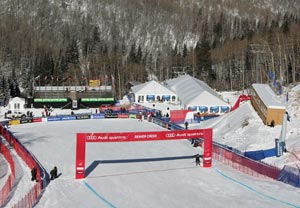 Beaver Creek/Vail’s success in gaining the 2015 alpine World Championships gains more weight when one considers what might have happened had the Colorado resort failed to win. It would have been a cruel blow to alpine sport in the United States. Management of the Beaver Creek/Vail resort never would have tried a fourth time. Besides the pure dollar costs of making a bid (the process costs around $500,000), a third failure would have been accompanied by too much frustration and too much bad baggage. Vail simply would not have bothered with the FIS for the foreseeable future, perhaps for as long as 25 to 30 years. The absence of a major alpine event on this side of the Atlantic would have lasting consequences.
Fortunately, a loss was not the case! The benefits alpine competition and competitors will enjoy are immeasurable. Start with the building of what should be the first truly demanding woman’s downhill course in the United States. The new race trail, which will be to skier’s right of the existing “Birds of Prey” course, will provide opportunities for women’s speed racing just not available in the United States today.
The United States is coming off its best winter games in history and refocusing on the 2015 alpine championships certainly will not hurt. Going forward, it will be important that both Vail/Beaver Creek and USSA leverage this opportunity by starting to promote it this winter. It will be five short years till the athlete march in the opening ceremonies. G. B. Jr.
About the Author: Gary Black

Related Post


