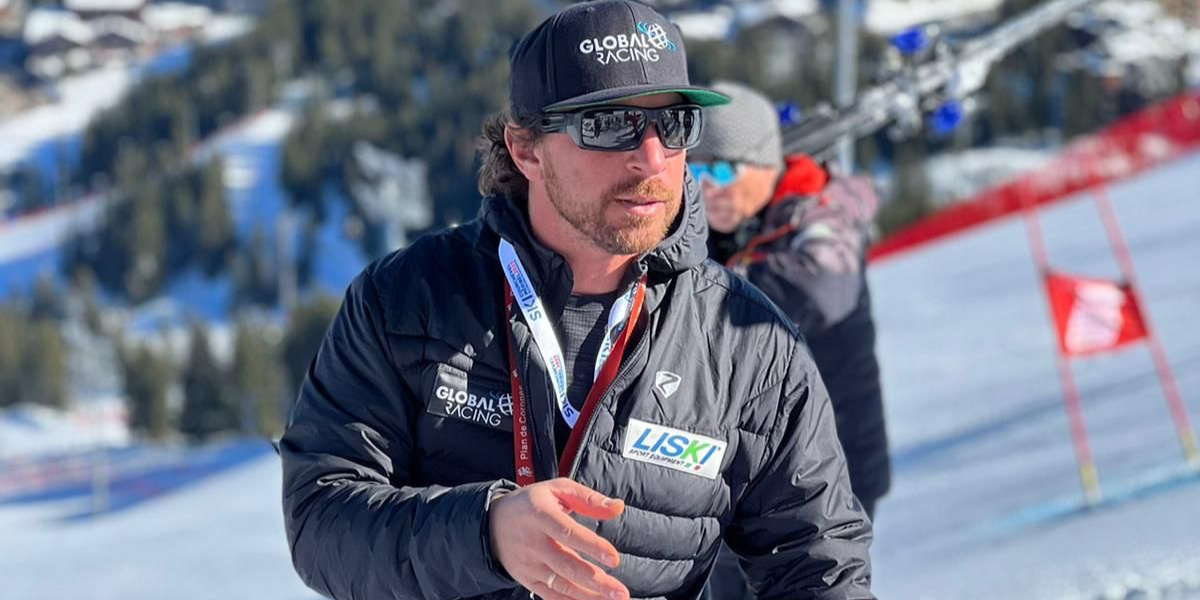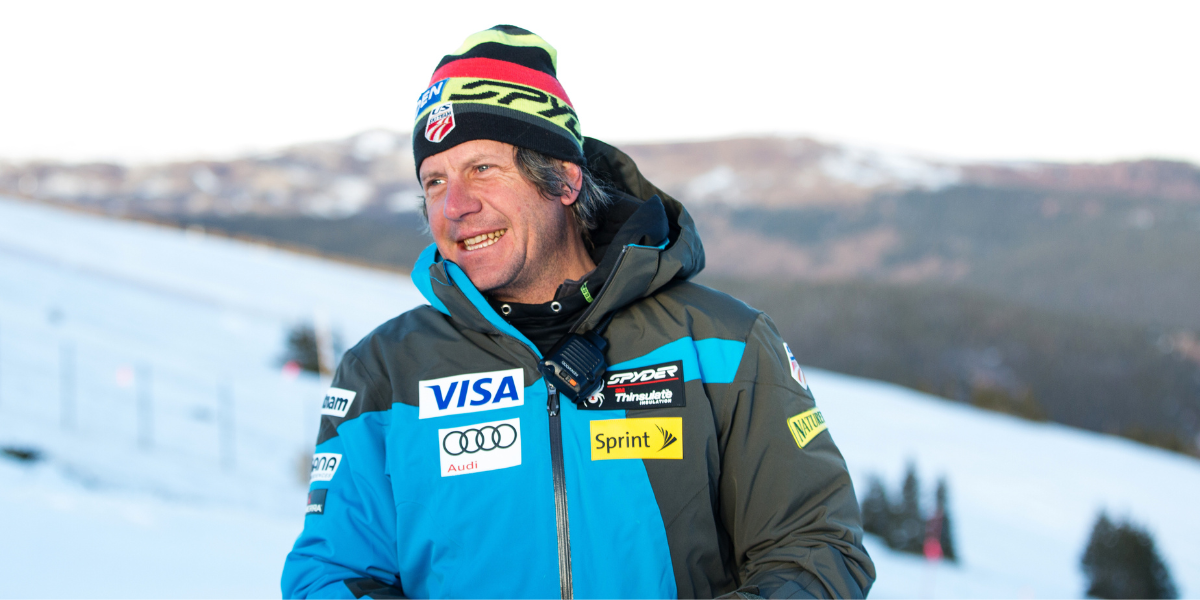

Featured image: Martina Sailer, Greta Sailer Cook and Erich Sailer in coach’s tower
Setting the Scene at Buck Hill
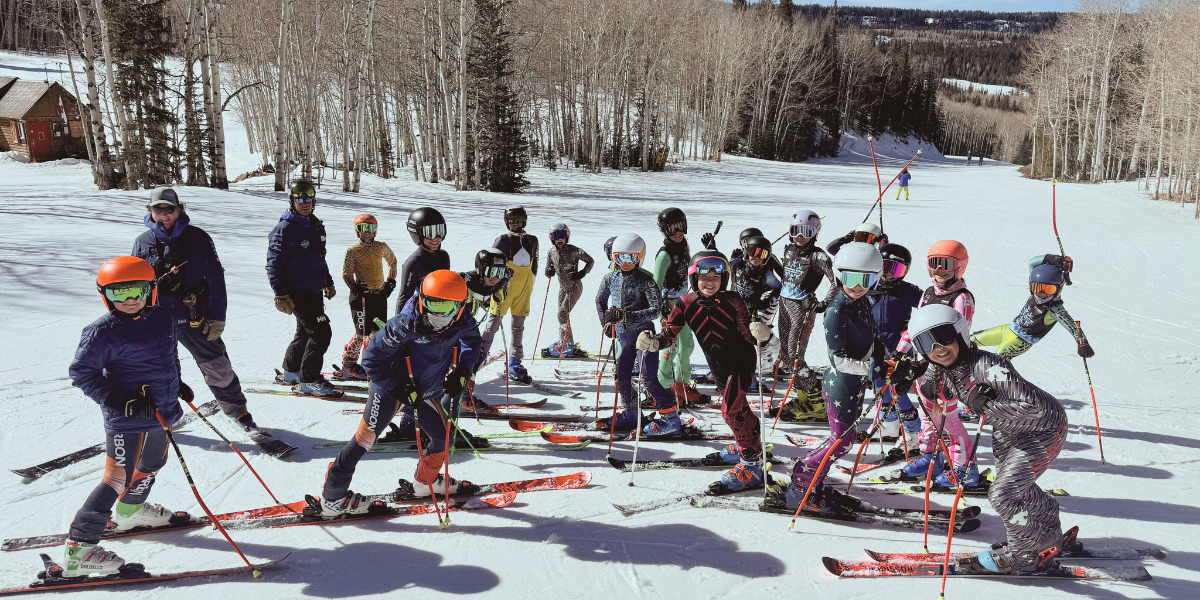
Just outside Minneapolis sits Buck Hill, a modest slope with only a 310-foot vertical drop. Despite its small size, this hill became one of the country’s most successful youth ski racing programs. Legendary Austrian coach Erich Sailer transformed Buck Hill into a “slalom factory,” producing U.S. ski racing stars like Kristina Koznick, Lindsey Vonn, Paula Moltzan and many other Olympians. Sailer’s motto, “Creating champions in ski racing and life,” turned this small hill into a powerhouse of talent, resilience and teamwork.
Click images to englarge
Erich Sailer’s Vision: A Foundation for Success
When Erich Sailer arrived at Buck Hill in 1969, he saw potential where others saw limitations. He knew that the Twin Cities’ large youth population held great promise. “There are millions of people here in the Twin Cities,” said his daughter, Martina. “He thought, ‘There must be some good ski racers here.’” From this insight, Sailer built the foundation of an enduring legacy in U.S. ski racing.
The legend, who championed the philosophy of simplicity, repetition, and sought to have pace skiers train with the entire group, will turn 99 on Thursday, November 7th.
Kristina Koznick’s Perspective: A Champion’s Tribute
As Buck Hill’s first World Cup race winner, Kristina Koznick, stands out as one of the program’s most successful athletes. Three core factors fueled Koznick’s journey: her coach, the unique atmosphere, and Buck Hill’s high-repetition training setup.
She first credited Sailer as the driving force behind her achievements. “I’ve said this my whole career, and I still give him all the credit. He was an amazing coach for me,” she said. Known for bringing out each skier’s strengths, Sailer coached without enforcing a rigid style. “He never said, ‘You must ski a specific way just like this,’” she explained, emphasizing how he enhanced her natural abilities. This approach shaped not just her career but her life.
Supporting Koznick’s sentiments, Matt Strand also highlighted Sailer’s unique ability to see and develop each skier’s strengths. “He didn’t try to change how kids ski,” Strand said. Instead, Sailer focused on “fixing what needed to be fixed” while preserving what made each athlete fast. Strand noted that Sailer’s philosophy fostered confidence and allowed skiers to bring their individual strengths to the hill.
Former World Cup podium skier Uroš Pavlovčič, who later served as Sailer’s assistant, admired Sailer’s ability to nurture individuality while developing world-class talent. “He saw each skier for who they were,” Pavlovčič shared, emphasizing that Sailer’s approach was never about molding athletes to a specific standard. Instead, he celebrated their differences, allowing each to maximize their potential.
Through Sailer’s influence, Koznick, Moltzan, Strand, and countless others gained technical skills, confidence, and resilience that fueled their success. Sailer’s ability to bring out each athlete’s best qualities remains central to his legacy at Buck Hill.


A Culture of Success and Family Support
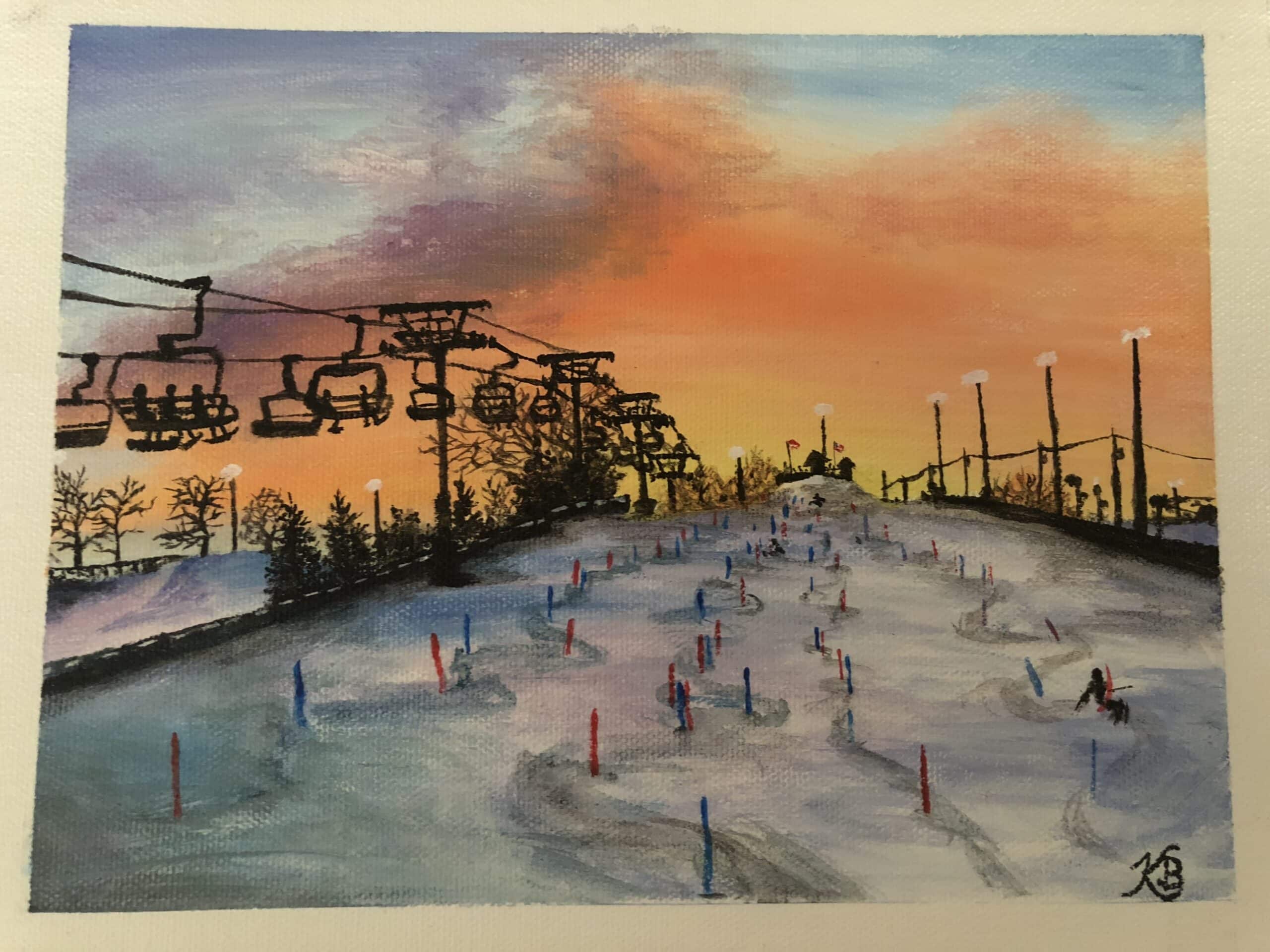
Koznick, Paula Moltzan, and Matt Strand each spoke about the unique atmosphere at Buck Hill. Evening training sessions under the lights created a close-knit environment where everyone genuinely wanted to be there. “It was so much fun,” Koznick said, likening Buck Hill to a “one-room schoolhouse” where skiers of all ages trained together. This setup fostered a familial bond that Koznick cherished: “It was very family-esque.”
Koznick attributed much of this family feeling to Buck Hill’s original owners, Nancy and Chuck Stone. “They made Buck Hill super family-friendly,” she recalled, highlighting how the Stones’ warmth and dedication created an inviting space for families. Their vision transformed the ski hill into a place where both skiers and their families felt welcomed and supported. “It just lined up perfectly,” Koznick explained. “All the ski racing kids had a great time, and so did the families who came to support them.”
Strand shared similar sentiments, calling Buck Hill’s environment a “culture of success” that passed through generations. “It was the Carlsons, the Koznicks, the Vonns, the Moltzans,” he said. “This program can provide you whatever it is that you want it to be.” This legacy of success and Sailer’s approach encouraged Strand, Moltzan, and countless others to reach higher.
For Moltzan, Buck Hill offered a foundation she felt lucky to experience. “I didn’t know there was anything else out there,” she said, recalling how Sailer took her “under his wing” while offering honest feedback. Moltzan appreciated how his methods instilled confidence through a straightforward approach. “When I click into my slalom skis, it’s like riding a bike,” she said, describing the skill repetition that made slalom feel like second nature.


Buck Hill’s Secret Weapon: The Rope Tow and Repetition
Koznick, Strand, and Moltzan also credited Buck Hill’s rope tow for giving them an edge through relentless repetition. “We skied so many more gates; it wasn’t even funny,” Koznick said, emphasizing how the rapid, high-volume training sharpened her skills.
Strand supported this, describing repetition as the backbone of Buck Hill’s training strategy. “Repetition was the key to success,” he said. “It was about rinse and repeat, rinse and repeat.” He viewed Buck Hill’s setup as “an ice rink tipped on its side,” where skiers maximized every night of training through sheer volume.
Moltzan agreed, explaining that the rope tow allowed her to get countless runs. “It might not be the mountain,” she reflected. “It might just be the rope tow.” For six years, she logged more than 20 runs in a single night, developing the consistency essential for competitive racing.
Former World Cup podium racer Uroš Pavlovčič, who later worked as Sailer’s assistant, marveled at the hill’s efficiency. “It takes 45 seconds to go up and 20 seconds to go down,” he said, noting how this unique setup enabled Buck Hill athletes to build skill rapidly without missing school.
Accessibility and Sailer’s Relentless Dedication
Buck Hill’s affordability and accessibility were essential for athletes like Moltzan and Strand, who came from middle-class families. Strand noted how he grew up only 10 minutes away from Buck Hill, allowing him to train affordably while attending public school. “I was able to make skiing a passion without it being an overbearing financial burden,” he said. The program’s low cost widened the pool of skiers, allowing a diverse group to access top-level training.
Sailer’s influence went beyond technical coaching; he instilled a belief in each skier. “He’s the master chef who adds that magic ingredient,” said Martina, noting his ‘superpower’ of helping athletes believe they could be the best. Pavlovčič recalled how Sailer’s constant presence inspired dedication in each skier: “He was there every night.” This commitment fostered a passion for skiing that extended far beyond Buck Hill. Martina also credited Erich’s partnership with Pierce Skate & Ski as a critical factor in the program’s success.
A Path Beyond Buck Hill: Camps Out West
While Buck Hill’s setup was ideal for slalom, its limited vertical drop presented challenges for giant slalom training. Sailer organized camps in the western mountains to address this issue, allowing his skiers to train on longer and steeper runs. These camps offered young athletes essential experience, preparing them to compete beyond Buck Hill’s slopes.
A Legacy That Lives On
Erich Sailer’s work at Buck Hill built a legacy of accessible, high-level coaching and a profound belief in his athletes’ potential. For skiers like Kristina Koznick, Paula Moltzan, and Matt Strand, Sailer’s influence shaped their careers and ignited a passion for the sport. His daughter, Martina—who skied for the U.S. Ski Team—shared much of the valuable insights into his coaching and leadership, emphasizing his role in fostering champions on and off the slopes.
Sailer’s legacy lives on through the values, achievements, and camaraderie he instilled. His commitment to helping young athletes succeed, regardless of their background, remains an enduring testament to his vision. The inspiration and dedication he fostered continues to impact ski racing, showing that even a modest hill can shape champions and build a community of lifelong believers in the sport.
Click on Image to see Rope Tow video
About the Author: Peter Lange