
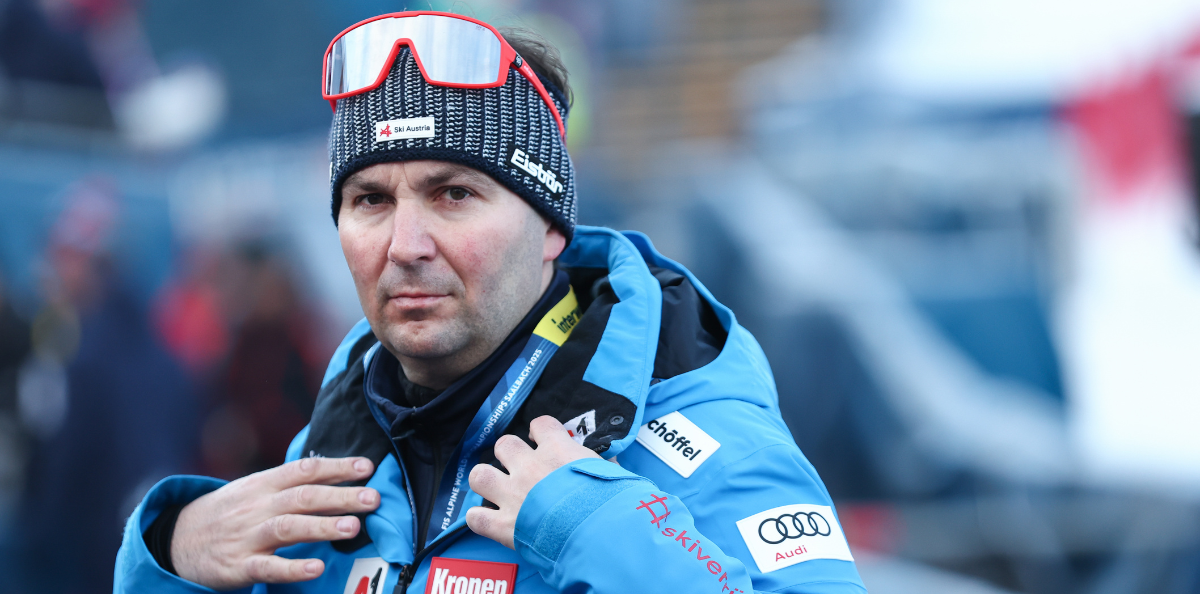
Christian Scherer / Saalbach 2025 / GEPA pictures
Christian Scherer believes the most important debate surrounding FIS finances is no longer about the past.
It is about what happens next.
The longtime Chief Executive Officer and Secretary General of Ski Austria (ÖSV) contacted Ski Racing Media following the publication of a recent analysis examining the past five seasons of FIS evolution.
Scherer didn’t dispute the accuracy of the facts discussed in that article. However, he expressed concern that the analysis focused primarily on revenue growth and other positive developments, while paying less attention to the federation’s underlying financial sustainability, the development of equity and the observations contained in the EY audit report.
Why does Scherer believe the approved budget deserves closer attention?
In Scherer’s view, a complete assessment requires looking not only at the growth in revenues, but also at the evolution of costs, recurring operating performance and the federation’s long-term financial position.
For this reason, he argued that another document deserves equal attention: the recently approved FIS 2026-27 budget.
In Scherer’s view, the budget raises important questions about the federation’s long-term financial sustainability. His concerns are based on how he interprets the approved budget and what he believes it may signal about the federation’s future financial direction.
Scherer bases his analysis on the council-approved budget rather than audited financial statements. Budgets often change as organizations sign sponsorship agreements, negotiate media-rights deals and manage fluctuating expenses throughout the year. Still, Scherer believes the approved budget offers a valuable window into the federation’s future direction.
Future financial results will ultimately determine how closely the federation’s actual performance matches current projections.
Scherer summarized his position simply:
“I am concerned both about the current financial position and about the federation’s future outlook.”
What is clear is that Scherer, who leads one of the most influential national federations in alpine skiing and also serves as Treasurer of the International Biathlon Union, views the budget as a document that deserves careful consideration.
What does the FIS 2026-27 budget project?
The FIS Council approved a budget that projects total revenue of CHF 172.6 million for the 2026-27 financial year.
That revenue includes:
- CHF 32.0 million in IOC revenue
- CHF 106.3 million in World Cup revenue
- CHF 35.1 million in World Championship revenue
After direct costs, staffing expenses and administration costs, the budget projects an operating result of plus CHF 25.5 million.
The federation then plans to return substantial funding to the sport through distributions to member federations and athlete support programs.
The distributions and support programs that directly benefit NSAs and athletes include:
- CHF 5.0 million in basic distributions to national ski associations
- CHF 9.3 million in Infront-related distributions
- CHF 2.2 million in Longines-related distributions
- CHF 7.5 million in special distributions
- CHF 7.0 million in prize money support
After accounting for those distributions and support programs, the current budget projects a net result of negative CHF 5.5 million.
For Scherer, although the results could differ significantly from the budget, the current projected result is one of the most significant figures in the document and contributes to his concerns about the federation’s long-term financial direction.
“Even if you allocate the entire IOC contribution to one single year and still end up with a deficit, then the alarm bells should be ringing.”

Why does Scherer believe the financial picture is weaker than headline revenue figures suggest?
At the center of Scherer’s concerns is what he sees as a structural imbalance between revenue growth and spending.
“The structural deficit of FIS is approximately CHF 20 million per year,” Scherer said. Scherer bases this estimate on allocating the IOC contribution across the full Olympic cycle, removing one-off effects and focusing on recurring revenues and expenditures rather than accounting timing effects.
Scherer uses that figure to describe what he believes is an underlying imbalance between revenue growth, spending commitments and distributions. The figure reflects his interpretation of the federation’s financial position rather than an official FIS financial income statement metric.
His argument is that revenue growth alone does not necessarily indicate stronger financial health.
“The revenues increased, but the costs increased as well. In my view, costs have increased proportionally faster than revenues.”
Scherer does not dispute the growth figures presented in earlier analyses.
On the contrary, he acknowledges that revenues have increased and that FIS has invested significantly across the sports.
However, he believes that focusing solely on revenue growth provides only a partial picture of the federation’s financial position.
“Growth is important, but growth alone does not determine financial sustainability.”
According to Scherer, evaluating the federation’s financial position requires looking beyond top-line revenue figures and examining what remains after costs, distributions and other commitments are taken into account.
Why does Scherer believe equity and distributions matter?
Scherer also pointed to observations contained in EY’s audit report regarding equity levels and the relationship between distributions and earnings.
He believes those observations support his concerns about the federation’s long-term financial sustainability and reinforce the need to examine more than revenue growth alone when assessing the organization’s financial position.
The audit report notes the reduction in equity over recent years, states that distributions should remain aligned with earnings and discusses the legal framework applicable to Swiss associations should financial conditions deteriorate.
Scherer views those observations as relevant when evaluating the federation’s future financial direction.
For Scherer, the discussion is not simply about how much revenue FIS generates. He believes equal attention should be paid to equity levels, retained earnings, distributions and the long-term sustainability of the federation’s financial model.
According to Scherer, the central question is whether the federation’s financial position is becoming stronger over time while continuing to support athletes, organizers and member federations.
He believes those questions deserve careful consideration as member federations evaluate the organization’s long-term direction. Scherer also notes that concerns regarding the Federation’s financial position are not being raised solely by member federations. FIS management has repeatedly discussed similar concerns during Council meetings, Finance Committee discussions and other official FIS forums.
Does revenue growth tell the whole story?
Supporters of the current administration can point to several measurable developments during recent years.
Commercial revenues have increased. Sponsorship programs have expanded. Prize money has risen. All member federations have received distributions. FIS introduced new commercial initiatives across the sport.
Scherer does not dispute those developments.
Instead, he argues that simple comparisons with previous years can be misleading because FIS’s commercial operations have changed significantly.
According to Scherer, the centralization of media rights means that more revenue now flows through FIS. However, he notes that additional costs also flow through the federation.
As a result, Scherer evaluates financial performance primarily by what remains after expenses and distributions rather than by revenue growth alone.
His view is that the most important question is not how much money enters the organization, but whether that money generates sustainable long-term value.
Why is return on investment central to Scherer’s analysis?
Throughout the conversation, Scherer repeatedly returned to one theme: return on investment.
He stressed that readers should not interpret his comments as a personal criticism of FIS President Johan Eliasch.
“I think we all need to admit that Johan is a great guy for Head. Head is one of the biggest supporters of the sport,” Scherer said.
At the same time, Scherer questioned whether investments made during Eliasch’s presidency have generated sufficient financial returns.
“There had been a lot of investment being done. We all appreciate it, but the return on investment is so bad that we need to say that the money was wrongly spent,” Scherer said.
Whether those investments have generated sufficient returns is ultimately a matter of interpretation. Scherer believes the financial results do not justify the level of investment, while others may place greater weight on future commercial opportunities and longer-term outcomes.
He also argued that current economic conditions have reduced the value of World Championship commercial agreements relative to previous contracts, and believes the trend could place additional pressure on the federation’s finances in the years ahead. According to Scherer, Congress delegates would benefit from greater transparency regarding future World Championship revenue assumptions, including the distinction between revenues that are already contractually secured and those that remain dependent on future commercial developments.
Scherer nevertheless remains focused on what he sees as the central issue.
“The problem is that if you invest money, you need a return on investment,” he said.
Why are distributions and prize money part of the discussion?
Importantly, Scherer is not arguing against distributions to member federations.
In fact, he acknowledged their importance to national ski associations worldwide.
His concern is whether those distributions can be sustained over the long term if the federation’s underlying financial position is weaker than headline figures suggest.
The approved budget allocates more than CHF 24 million in direct distributions to member federations through various programs, in addition to CHF 7 million in prize-money support.
Scherer also pointed to the planned level of prize-money support as another indicator he believes deserves attention.
“If FIS would have done commercially so great, why is FIS reducing its contribution to prize money?” Scherer asked.
He believes the final budget decision may signal financial pressures warranting closer attention.
According to the official FIS Council meeting minutes, an initial proposal called for a 20% increase in prize-money support before the council ultimately approved a 10% increase.
Even with the approved increase, Scherer believes the final decision raises questions about the federation’s financial priorities and long-term financial capacity.
Others may interpret the same budget item differently, viewing the approved increase as evidence of continued investment in athletes and the sport.
That difference in interpretation reflects the broader discussion currently taking place across international skiing and snowboarding.
What does the budget tell us — and what doesn’t it tell us?
The approved 2026-27 budget provides a snapshot of how FIS expects the coming financial year to unfold.
Budgets often reflect only committed revenue and known expenses at the time organizations approve them. Actual results may differ as organizations sign additional sponsorship agreements, sell media rights and generate other revenue throughout the year.
Like any budget, it represents current expectations rather than final results. Sponsorship revenue may exceed projections. Media-rights sales may evolve. Expenses may rise or fall. Commercial initiatives may perform better or worse than anticipated.
That context matters because Scherer’s analysis is based on what he believes the budget suggests about the federation’s future financial direction.
Future financial results will provide a clearer picture of how closely the federation’s actual performance matches those projections.

What questions does Scherer believe members should consider?
Scherer believes member federations should pay close attention to what the budget may be signaling.
As he prepares to conclude his tenure leading Ski Austria, he hopes federations will look beyond headline revenue figures and ask a more fundamental question:
Can the federation’s current commercial strategy generate the sustainable long-term returns needed to support athletes, organizers and member federations in the years ahead?
For Scherer, the issue is not whether revenue has increased.
The issue is whether the federation’s investments are producing sustainable financial returns.
“The issue is not whether investments were made. The issue is whether those investments have generated an adequate return and whether the federation is financially stronger and more sustainable today than before those investments were made.”
His comments come as FIS member federations prepare to elect the organization’s next president on June 11.
Scherer is not a candidate, and Austria is not nominating a presidential candidate. His focus, he said, is on what he believes the approved budget reveals about the federation’s long-term financial trajectory.
Ultimately, the financial results FIS delivers in the year ahead will determine how closely actual performance matches current projections.
Until then, the approved budget remains an important reference point in an ongoing discussion about the future of international skiing and snowboarding.
About the Author: Peter Lange