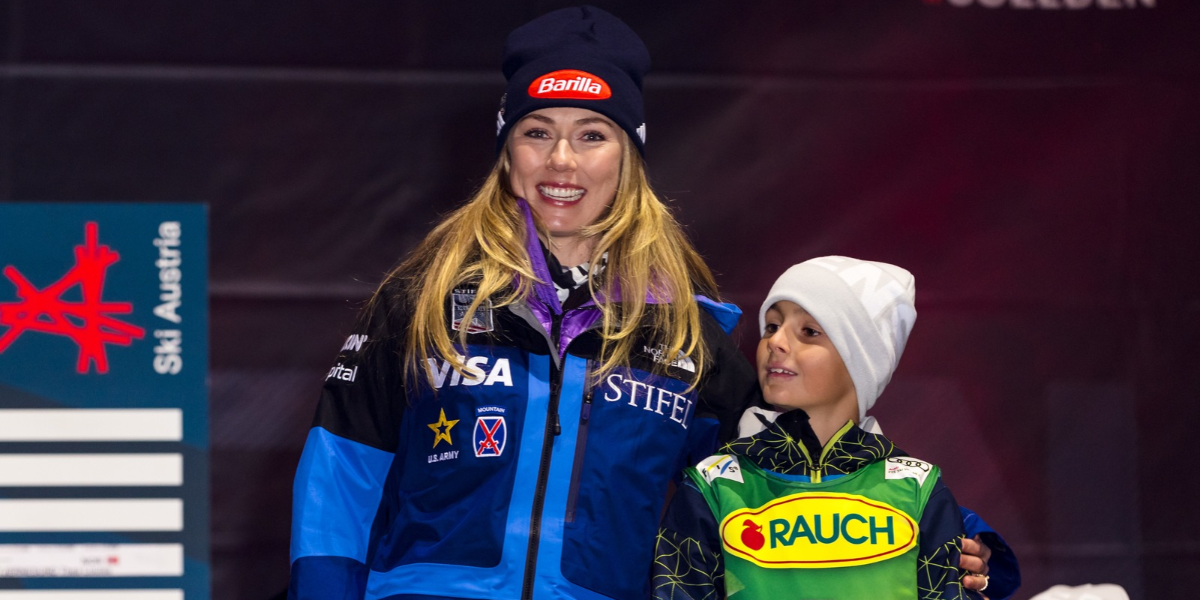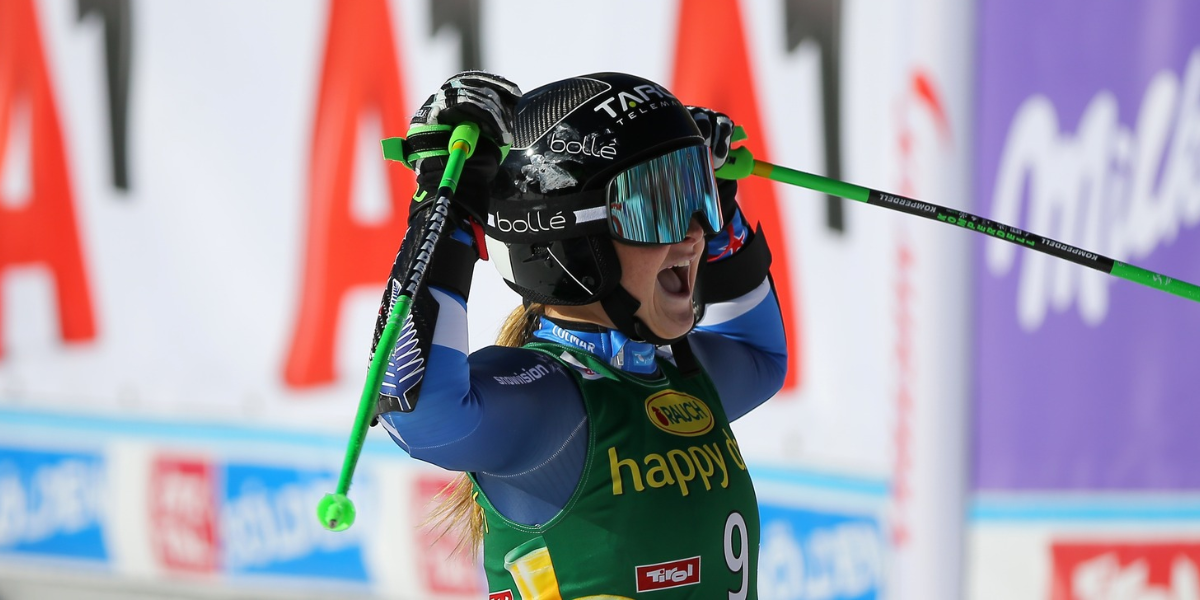
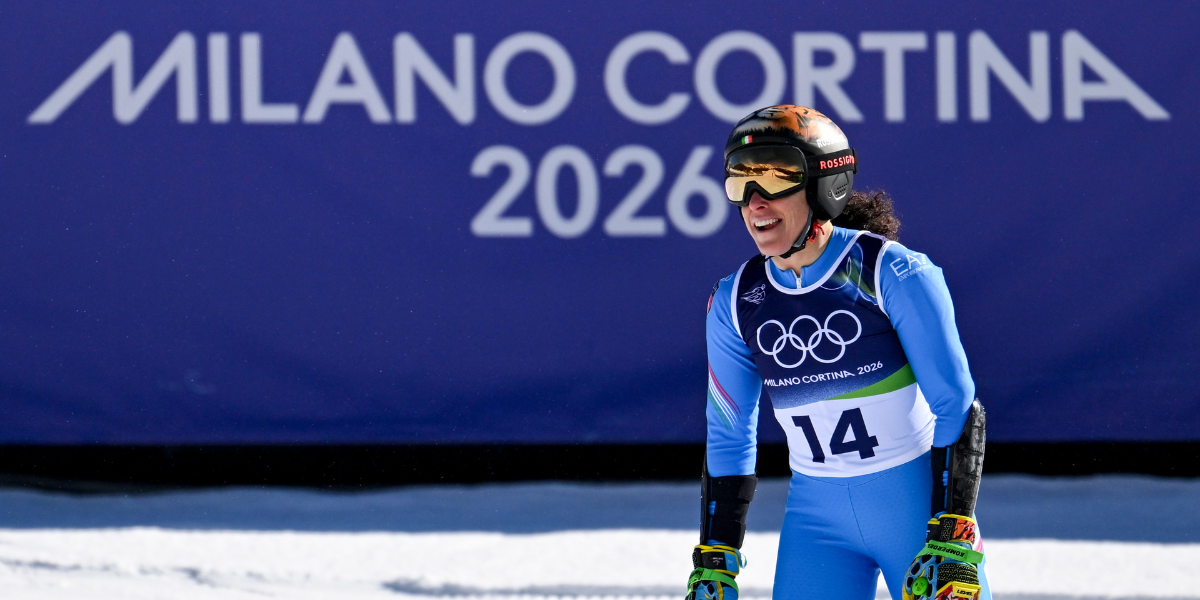
Federica Brignone/ GEPA picture
Brignone Sets the Tone in Opening Run of Women’s Giant Slalom
The first run of the women’s Olympic giant slalom belonged to Federica Brignone.
From the moment she left the start gate, the Italian veteran skied with authority, delivering a masterclass in precision and efficiency. On a challenging track full of terrain that demanded both discipline and bravery, Brignone was exceptionally clean in her line, navigating the terrain with confidence and composure. Where others were tentative or slightly off rhythm, she was fluid.
What stood out most was her ability to stay low and aerodynamic, minimizing excess movement and carrying speed through every transition. She absorbed the terrain rather than fighting it, allowing her skis to flow seamlessly from turn to turn. It was not just fast skiing — it was intelligent skiing.
In doing so, Brignone didn’t just take the lead. She set the tone.
The rest of the field now knows exactly what it will take to win. The standard has been established, and it’s high.
Her performance carries even more weight considering the journey that brought her here. Just ten months ago, Brignone was sidelined by a significant injury. Since returning, she has done more than rebuild. She has dominated. Already an Olympic gold medalist in the Super G at these Games, she is now in prime position to chase a second gold medal.
The first run has made one thing clear: Brignone is here to win.
With the stage set for the second run, the pressure shifts to the rest of the field. But if her opening performance is any indication, Brignone is skiing with both momentum and belief — a dangerous combination in championship racing.
All eyes now turn to the final run.
Women’s Olympic Giant Slalom — Top 5 After Run 1
- 1. 🇮🇹 Federica Brignone — Bib 14 — YOB 1990 — 1:03.23
- 2. 🇩🇪 Lena Duerr — Bib 16 — YOB 1991 — +0.34
- 3. 🇮🇹 Sofia Goggia — Bib 17 — YOB 1992 — +.46
- 4. 🇦🇱 Lara Culturi — Bib 10 — YOB 2006 — +.74
- 4. 🇸🇪 Sara Hector — Bib 2 — YOB 1992 — +.74
- 4. 🇳🇴Thea Louie Stjernesund– Bib 1- YOB 1996- +.74
A Statement Run in Unfamiliar Territory
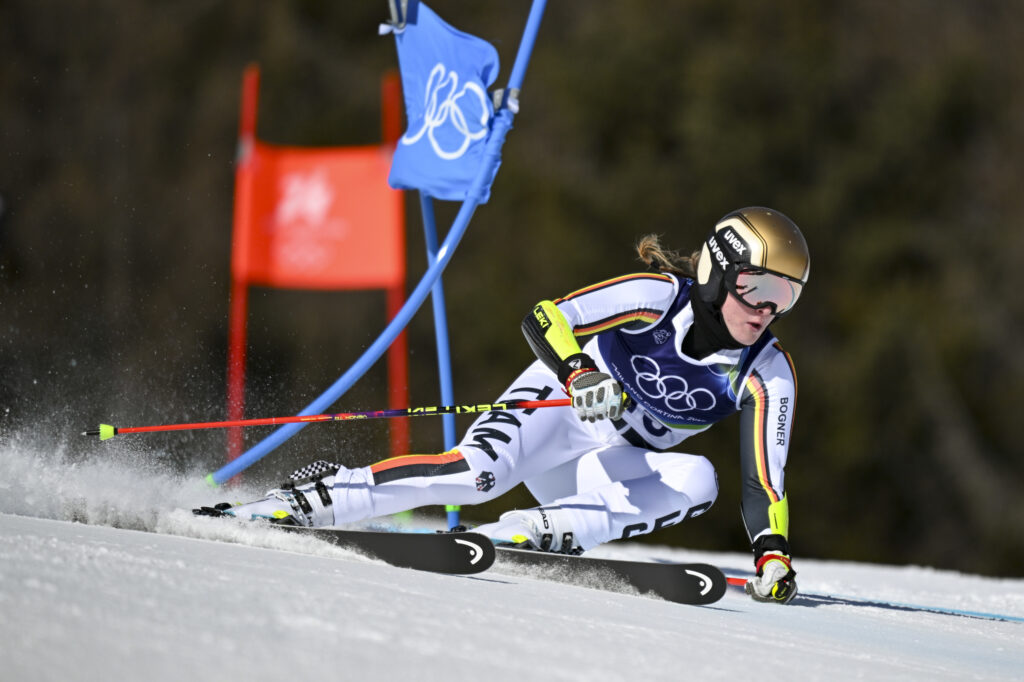
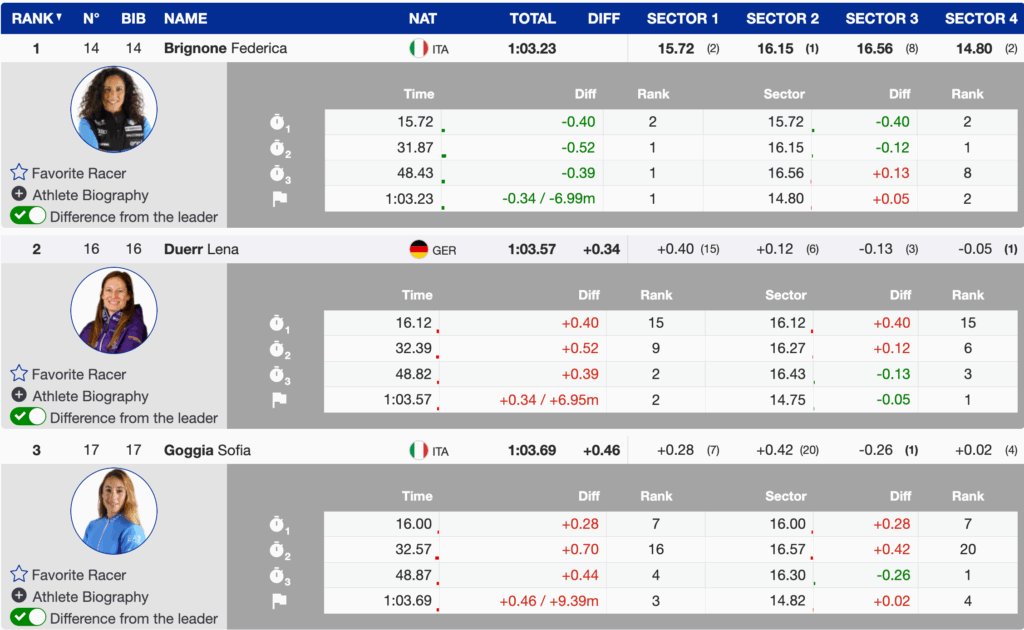
Behind Brignone, Lena Duerr – 2nd delivered a smooth and consistent performance to put herself firmly in podium contention.
In what was her first-ever Olympic giant slalom start, Duerr rose to the occasion. The German skier owns one Olympic medal, a team parallel medal from Beijing 2022, but she has never stood on a World Cup giant slalom podium during her career. Despite that, she showed no signs of inexperience on this stage.
Duerr did not have the most explosive push out of the start and appeared slightly cautious in the opening turns, but she quickly found her rhythm. From there, she built speed methodically, skiing a clean and composed line down the hill. She managed the terrain exceptionally well, especially over the rolling sections, staying disciplined and balanced while maintaining momentum. Her smooth approach paid off in the final stretch, where she carried outstanding speed to the finish and posted the fastest split in the bottom section. The result positions her strongly heading into the second run and into what could be a career-defining opportunity.
Redemption Run
Sofia Goggia – 3rd, another Italian, was equally impressive and fed off the energy of the home crowd. After a heartbreaking DNF in the Super G while chasing gold, she arrived at the giant slalom start looking determined and focused. She did not compete in the Olympic giant slalom in Beijing in 2022, and her best Olympic GS result came in PyeongChang in 2018 where she finished 11th.
Her World Cup résumé in giant slalom includes three podium finishes, all second-place results, but she has never claimed a victory in the discipline. Her last GS podium came in Kranjska Gora in 2018, making this performance on the Olympic stage particularly significant.
Her run was not the fastest through the top two sectors, but she remained controlled and solid. As the course flattened in the lower sections, Goggia’s speed background became evident. She stayed aerodynamic, carried her glide efficiently, and attacked the larger rolls with confidence. Skiing in front of home fans added another layer of intensity, and her strength in the final sectors kept her firmly in the medal conversation going into the second run.
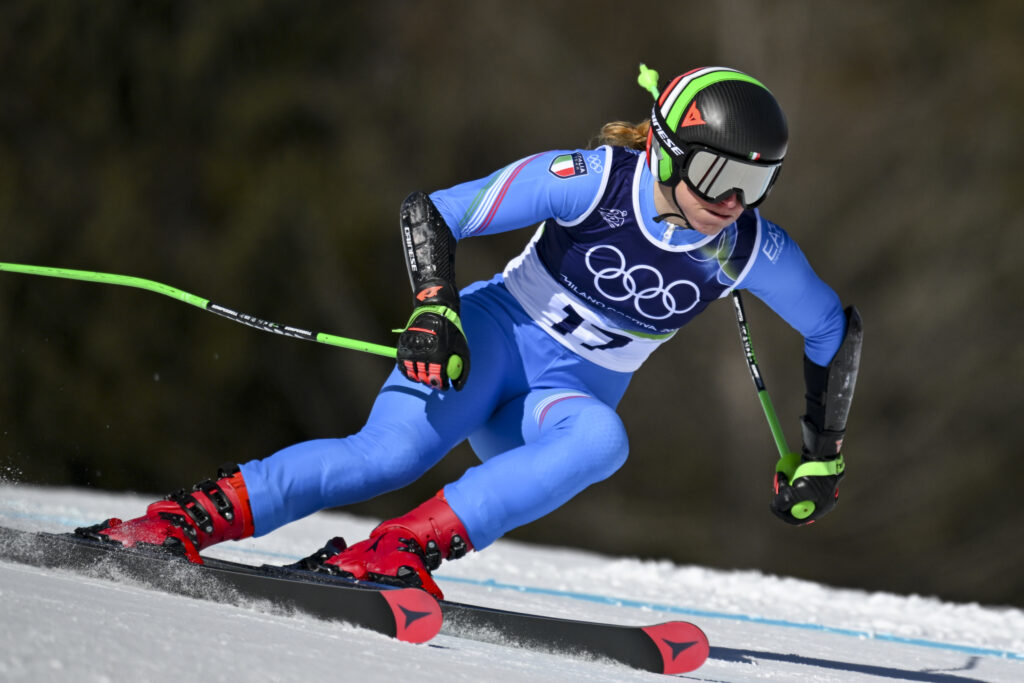
A Three-Way Tie Sets Up Second-Run Drama
Just behind the podium positions, a rare three-way tie has added another layer of intrigue to the women’s giant slalom.
Sara Hector – T4, Thea Louise Stjernesund – T4, and Lara Colturi – T4 sit 0.74 seconds off Federica Brignone’s leading time after the first run. In a discipline often decided by hundredths, matching times between three athletes is uncommon, setting the stage for a compelling second run.
Hector brings both experience and pedigree to the fight. The reigning Olympic giant slalom champion from Beijing 2022, she is competing in her fourth Olympic Games and knows exactly what it takes to deliver under pressure. A proven force in the discipline, Hector owns eight World Cup giant slalom victories, including a win in the final GS race before the Olympics in Špindlerův Mlýn. With that momentum and championship experience, she remains a serious threat heading into run two.
Stjernesund adds depth to the battle. The Norwegian finished 6th in the giant slalom at the Beijing 2022 Olympics and continues to build her résumé in the discipline. She has three World Cup podium finishes, all third-place results, with her most recent coming this season in Copper Mountain. Known for her tactical precision and calm approach, Stjernesund is well positioned to capitalize if the second run demands patience and clean execution.
For Lara Colturi, the moment carries a different kind of significance. Competing in her first Olympic Games, she continues to establish herself among the discipline’s rising talents. Colturi owns two World Cup giant slalom podiums, the most recent coming last season in Åre, Sweden, proving she has the capability to challenge the very best when the margins are tight.
With all three athletes sharing the same time and less than a second separating them from the lead, the second run promises high stakes and little room for error. The tie adds another unpredictable element to a race that is already shaping up to be one of the most compelling battles of the Games.
🇺🇸 Americans Within Striking Distance
USA After Run 1
- 🇺🇸 Mikaela Shiffrin — Bib 3 — YOB 1995 — 7th (+1.02)
- 🇺🇸 Paula Moltzan — Bib 5 — YOB 1994 — 13th (+1.16)
- 🇺🇸 Nina O’Brien — Bib 11 — YOB 1997 — 29th (+2.58)
- 🇺🇸 AJ Hurt– Bib 23- YOB 2000- DNF
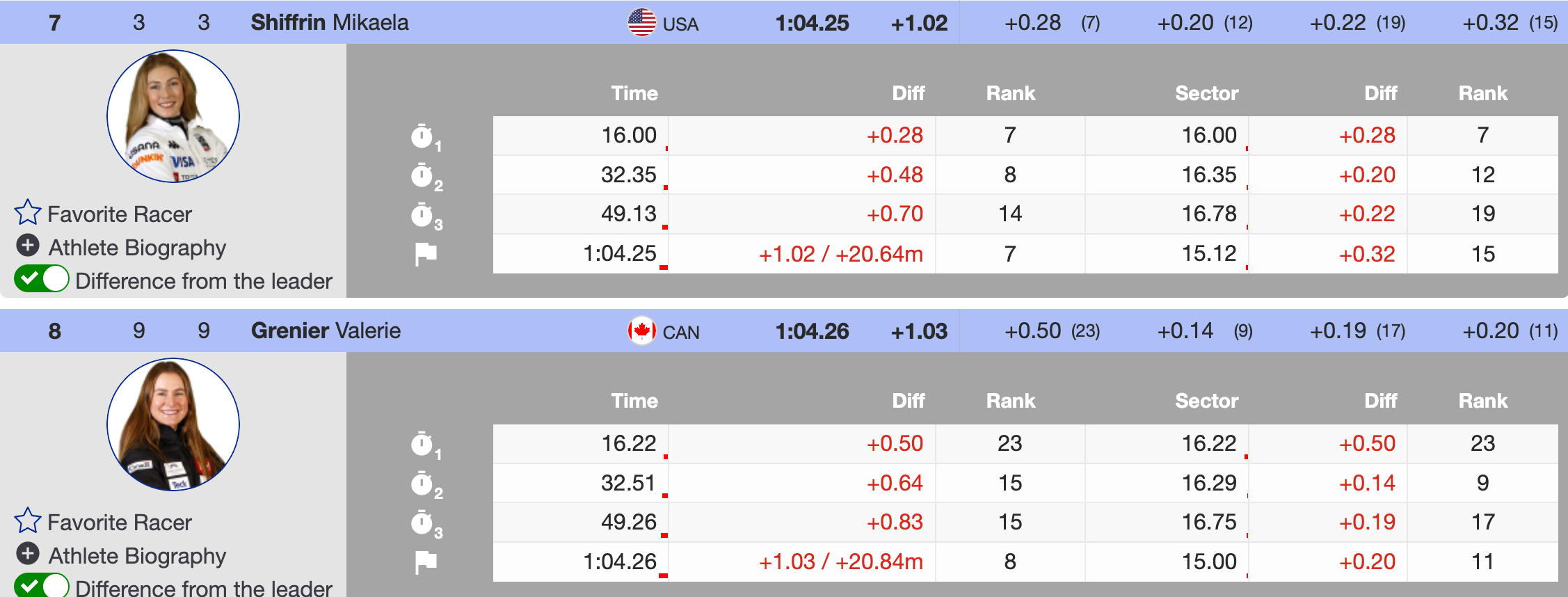
The United States had four starters in the first run, led by Mikaela Shiffrin – 7th, who sits 1.02 seconds behind Federica Brignone.
Shiffrin’s Olympic campaign carries its own story of perseverance. Just one year ago, she suffered a major crash in the giant slalom in Killington and later spoke openly about working through PTSD in her return to racing. The Olympic giant slalom champion from PyeongChang 2018, Shiffrin owns 22 World Cup GS victories, with her most recent coming in Lienz.
On this track, she skied with her trademark precision and technical discipline. However, compared to Brignone’s tactical command over the terrain, Shiffrin showed brief moments of hesitation in her line selection. While clean and composed, she was not able to match the Italian’s seamless flow over every feature. Still, within just over a second of the lead, she remains very much in contention heading into the second run.
Paula Moltzan showed strength out of the start and carried solid speed through the upper sections. Her skiing was aggressive and confident early, but she lost significant time in the lower portion of the course. Over the bigger terrain features, she was unable to maintain the speed she generated up top, which cost her valuable tenths heading into the finish.
Nina O’Brien, returning to the Olympic stage after a devastating injury in the last Games, demonstrated flashes of strong skiing in the opening sectors. There were signs she was shaking out early nerves, but true to her style, she quickly shifted into full attack mode. O’Brien never holds anything back. However, she was not as clean through the lower terrain, where the larger rolls disrupted her rhythm and led to additional time loss.
AJ Hurt was putting together a solid run and showed competitive speed through the early splits. But as the course progressed, she was slightly late in her line and did not generate enough direction into a key section. That mistake forced her off rhythm, and she was unable to recover, resulting in a DNF.
With three Americans advancing to the second run and Shiffrin within striking distance of the podium, the U.S. team remains firmly in the fight as the Olympic giant slalom unfolds.
Canadians Keep Themselves in the Mix
- 🇨🇦 Valerie Grenier — Bib 9 — YOB 1996 — 8th (+1.03)
- 🇨🇦 Britt Richardson — Bib 15 — YOB 2003 — 20th (+1.74)
- 🇨🇦 Justine Lamontagne — Bib 42 — YOB 2002 — 32nd (+3.11)
- 🇨🇦 Cassidy Gray– Bib 34- YOB 2001- DNF
Canada also fielded four starters, highlighted by a poised performance from Valérie Grenier – 8th, who sits 1.03 seconds off the lead and just 0.01 behind Mikaela Shiffrin, who is seventh at 1.02 back.
Grenier delivered a smooth, tactical, and intelligent run. She showed no visible signs of nerves, skiing with calm control from the start. Clean in her line and disciplined over the terrain, she carried her speed efficiently and avoided the costly mistakes that plagued others. Her composure placed her firmly among the top contenders heading into the second run, within striking distance of a major result.
Britt Richardson – 20th was charging early and posted strong splits in the upper sections. She looked aggressive and confident through the steeper terrain, but the lower rollers proved costly. A few mistakes disrupted her rhythm, and she was unable to regain the speed she had built up top. Sitting 20th, she will have an uphill battle in the second run but has the ability to move up with a clean performance.
Justine Lamontagne – 32nd, an NCAA skier out of Montana State University, brought full attack out of the gate in her Olympic debut. She was ahead by 0.82 seconds at the first split, an impressive showing that turned heads early in the run. Young and competing in her first Olympic Games, Lamontagne pushed hard but accumulated too many errors in the lower sections and was unable to maintain her early speed, ultimately being pushed into 32nd position after the first run.
Unfortunately, Cassidy Gray, a former NCAA skier at the University of Colorado, was not able to find the finish line today. However, she showed flashes of speed in sections of the course, proving she has the pace to compete at this level. While the result will be disappointing, there were positive segments to build on moving forward.
With Grenier positioned just over a second from the lead and others eager to rebound, the Canadians remain very much part of the second-run storyline.

First Run Results
click image to enlarge
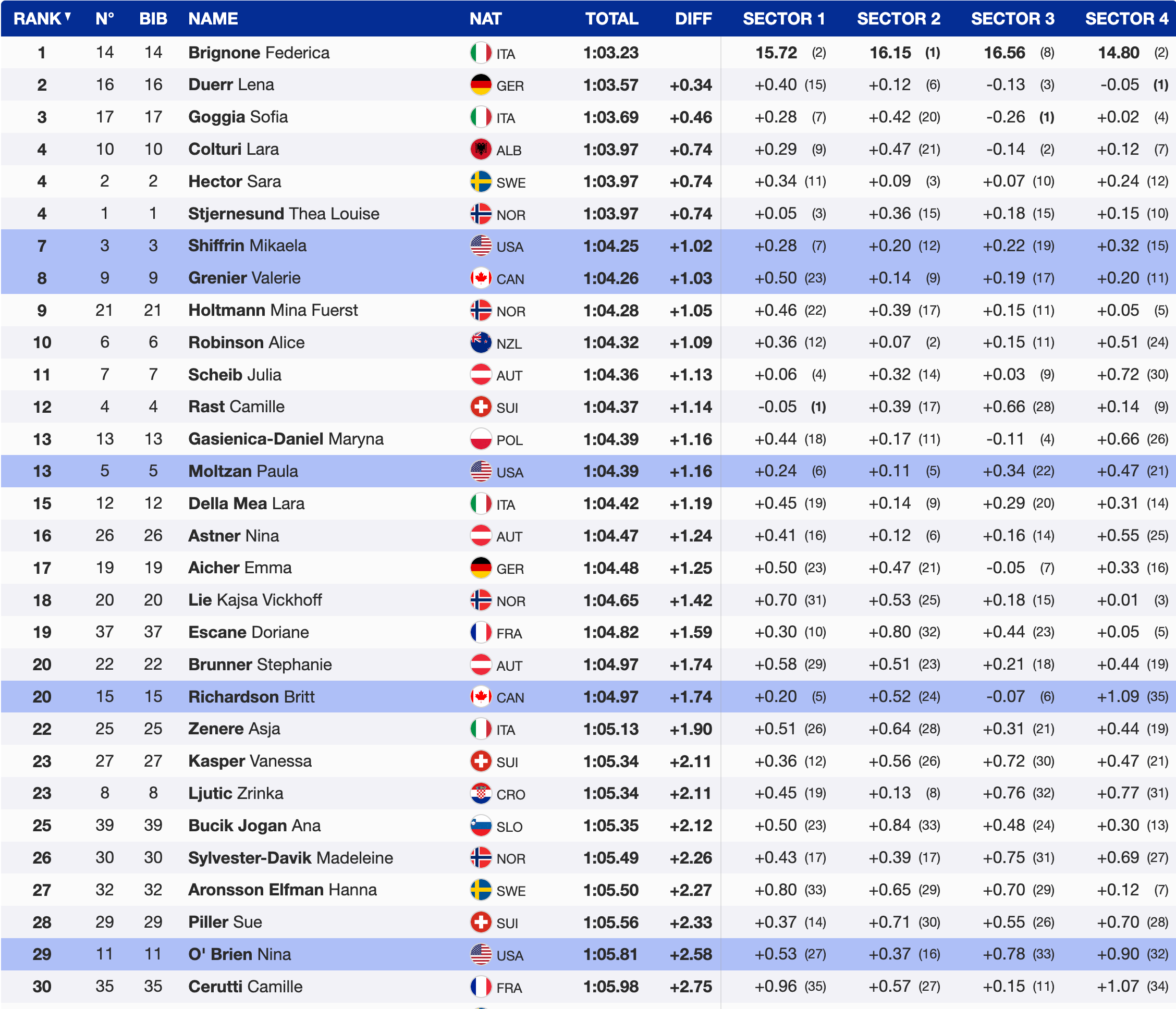
First-Run Analysis: Fastest Three and North Americian ahtletes



About the Author: Katie Twible