
Daron Rahlves 2024 Palisades Tahoe World Cup Photo: Blake Kessler/Palisades Tahoe
Daron Rahlves: Details, Risk, and the Pursuit of Greatness
Few American ski racers have shaped the legacy of U.S. alpine speed racing like Daron Rahlves. Born in Walnut Creek, California, and raised on the slopes of Lake Tahoe, Rahlves became a dominant figure on the World Cup circuit, earning 12 victories—including nine World Cup downhills, more than any other American male skier, and one more than his legendary teammate Bode Miller. Rahlves was a key player during the golden era of U.S. men’s speed skiing. He also claimed the 2001 super-G world title in St. Anton, Austria, and added a downhill silver and giant slalom bronze at the 2005 World Championships. His story, however, stretches far beyond the finish lines. In this in-depth interview, Rahlves reflects on his wild ride from Squaw Valley free skier to Kitzbühel champion and beyond.
Early Days in Tahoe
“The fun of skiing took over early,” Rahlves said. Weekend trips to Alpine Meadows with his family gave him his first taste of mountain life. Hot chocolate, cheese and crackers with a view of Lake Tahoe are some of his fondest early memories. He started racing with the Alpine Meadows Ski Team before switching to Squaw Valley at age 10.
“We trained gates on Red Dog and Siberia and freeskied a ton. We had all sorts of competitions—sending the biggest air, racing Banzai style, or charging West Face off KT-22 non-stop to earn candy from the team room drawer.”
Freeskiing iconic Squaw terrain helped shape his approach. “KT-22 is the best coach out there,” he said. “It tests your physical and mental skills. Trying to ski challenging terrain fast while staying in control built confidence and progression.”
A Leap to the East
In high school, Rahlves made the bold decision to leave California for Green Mountain Valley School in Vermont.
“It was a combo of ski program, school and competition,” he said. The transition wasn’t easy. “That first year was a struggle—being away from home and poor race results. But it lit a fire in me to step up my commitment.”
Finding the Edge
Rahlves admits his early results weren’t promising. “At 19, I was decent in the U.S., but not internationally. My Junior Worlds best was 33rd in super-G.”
But then something clicked—mental imagery, tactical risk, fitness, and belief in his strengths combined with aggressive, aerodynamic skiing. At 21, everything came together. “Wins and podiums in FIS, NorAm, and Europa Cup gave me confidence. I broke through in Kvitfjell with a 4th in super-G. Writing in a journal helped me keep it all together.”
Off-season competition was a key ingredient. “Winning the Jet Ski Expert World Champs in 1993 gave me confidence and kept my competitive fire burning.”

Mastering the Downhill
“The ultimate desire was to be a downhill racer,” Rahlves said. “Risk, tactics, speed—I loved it. I studied the hills to ski a line no one else would.”
Support from coaches and the U.S. Ski Team’s physical training program took him to the next level. Red Bull joined his journey in 2003–04, introducing elite mental and physical prep. “I had to dial back the volume but found a program I could handle. That training let me go all out on Bormio and Adelboden.”
Austria’s Biggest Stages
Rahlves called performing in Austria his “number one priority.”
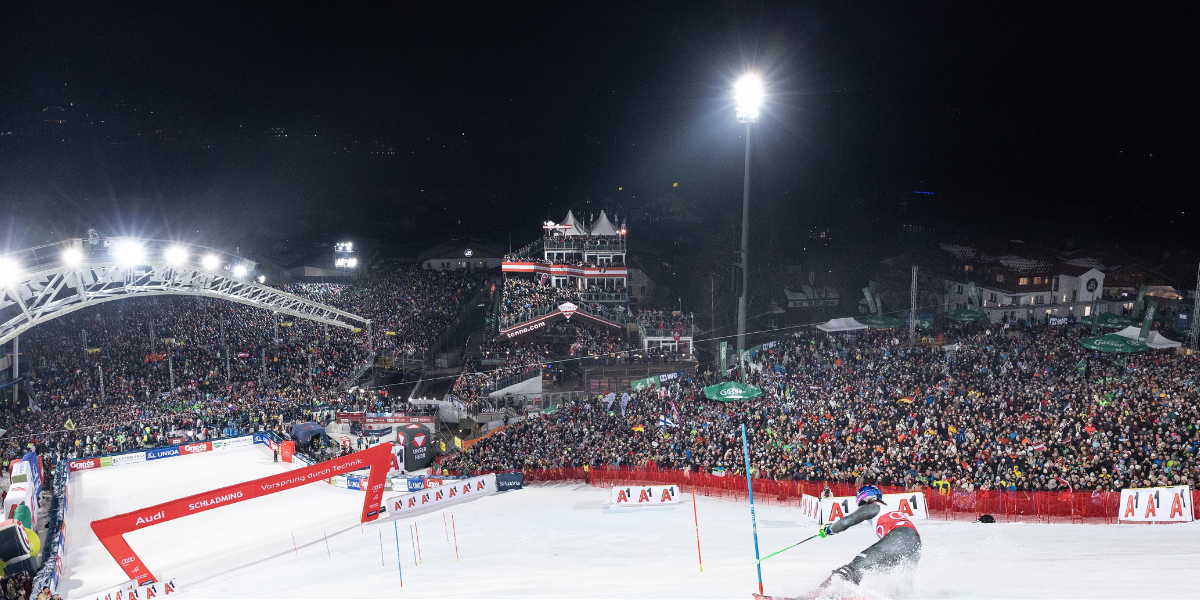
“Kitzbühel was the highlight of every season. I lived for it. Winning in front of 60,000 fans—after beating the Austrians in St. Anton in 2001—meant everything. I went all in during those races.”

The Ski Tech Brotherhood
Trust with his ski techs played a crucial role. “I knew I had the equipment to compete. Edi Waldburger brought his own ski plates and even a ‘Black Magic’ guy to read ski energy.
Wiltz, who worked with Tommy Moe, and later Thomas Buergler with Atomic all helped elevate my skiing.””
“My win was their win.”
Mentors and Teammates
AJ Kitt was a key early mentor. Coaches like Johno McBride, Phil McNichol, Pedro-Peter Bosinger, Per Lundstam and Chris Brigham built a culture of respect, honesty and celebration.
“At Hausbergkante, Per would ask if I ate elephants and barb wire for breakfast. That energy helped us perform.”
Training battles with Tommy Moe, Chad Fleischer, Bode Miller, and others pushed him daily. “When Bode arrived, the intensity went up. We fed off each other.”
Life on Tour
“Racing the best hills in the world—that’s why I did it,” Rahlves said. He came to appreciate the places, the people, the parties, and the shared purpose.
A New Chapter: Ski Cross
After retiring, Rahlves wasn’t ready to hang it up. He found a new outlet in Ski Cross, racing the X-Games and earning a spot on the 2010 Olympic team.
“It was like moto on skis. I was told not to do it, but I wanted a new challenge. I wasn’t as driven as I was in alpine, but it was rewarding to learn new tactics and adapt to racing side by side.”
The Drive to Compete
Jet skiing. Motocross. Extreme skiing. Rahlves chases challenges across all sports.
“I’m 52 and still racing moto. I just won the Donner Challenge in the A Open class—beating 18- to 29-year-olds. I want to find out what I’m made of.”
Family and Giving Back
He still skis with his kids, Miley and Dreyson. “They did ski competitively, but not anymore. They’re amazing athletes and want to do it all. Skiing has always been a family lifestyle.”
Giving back remains central to Rahlves’ identity. Whether coaching at American Downhiller camps, skiing alongside Team Palisades Tahoe, or reviving his own Rahlves’ Banzai Tour, he continues to inspire the next generation with his presence, energy, and passion for the sport.
“The Banzai is coming back! Palisades Tahoe will host KT-22 Rahlves’ Banzai, April 11–12, 2026. Ten years since the last one.”
Message to the Next Generation
“Ski racing tests you,” Rahlves said. “It teaches risk, resilience, heartbreak, confidence and character. The mountains and the challenge—it’s a life worth living.”
The Freedom of Now
Rahlves still chases speed, spicy lines, and new terrain, but without the pressure of competition.
“I love being outdoors, finding new zones, and skiing with people who love it.”
Asked what made the difference in his career, he kept it simple:
“The details.”

About the Author: Peter Lange