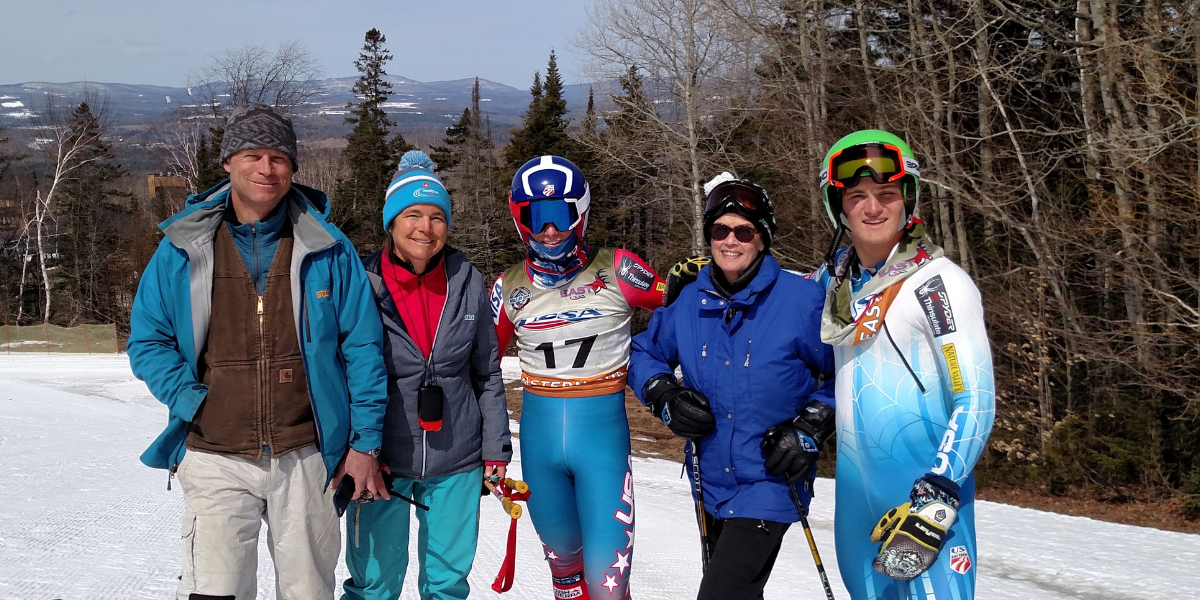
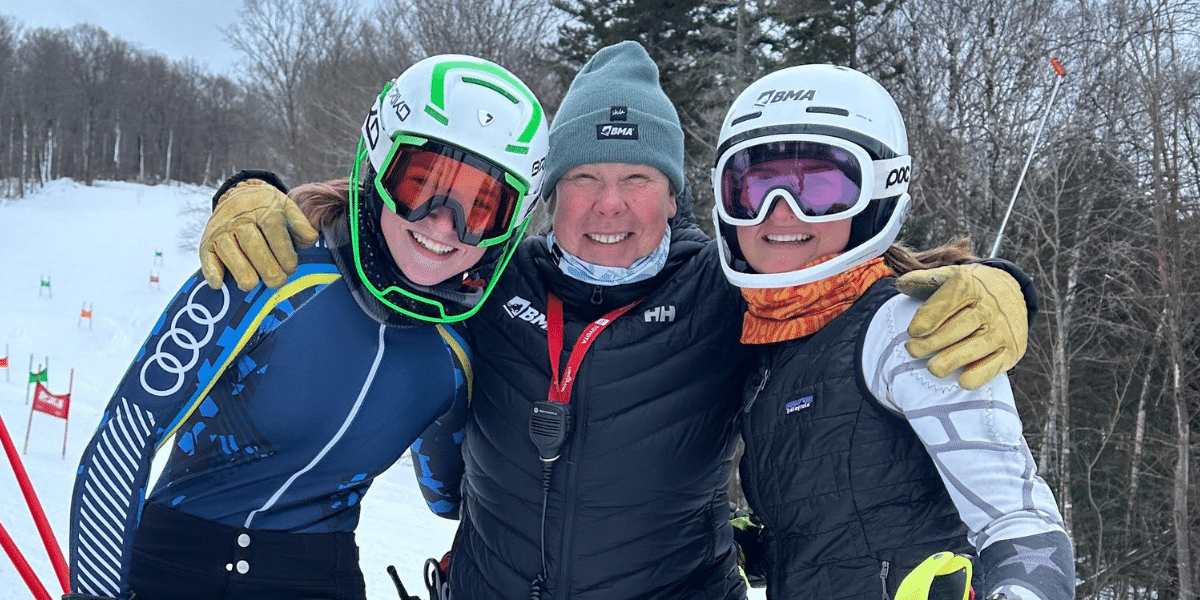
Diann Roffe is one of only nine American women to win an Olympic gold medal in Alpine skiing. Thankfully for U.S. skiing, she has remained deeply engaged with the sport’s development as a full-time professional. For the past seven years, she has been the foundation of Burke Mountain Academy’s junior program, guiding the youngest athletes with purpose. She also volunteers as a member of the U.S. Ski & Snowboard Alpine National Faculty within the Sports Education Academy, training the next generation of coaches.
Her commitment reflects a belief that the future of U.S. ski racing depends on strong education for coaches working with the youngest age groups. She stresses that coach members should continually strive to further their education, and that clubs and divisions have a responsibility to clinic, mentor, and educate their staffs. While many dedicated people in sport education are working hard to get it right, she believes programs and divisions must also collaborate to improve and support learning.
Curiosity and Commitment
Roffe never set out to join the national faculty. She said yes only after Dave McCann, U.S. Ski & Snowboard’s Director of Sport Education, called and asked if she would consider it.
“At first I asked him, ‘Why me? I’m not running with the big dogs anymore,’” she recalled. “But he told me, ‘Your name keeps coming up because you’re making impactful change at the entry level of our sport.’”
That struck a chord. Roffe was already curious by nature, fascinated with learning and problem-solving. She realized her voice, as someone who had raced at the highest level but now worked every day with children, could matter. Her motivation remains simple: “If we don’t really change what we’re doing nationwide at the U10, U12 and U14 level, we’re not going to have elite skiers.”
Collaboration and Respect
When Roffe first entered the coaching education field, the process often felt top-down. Today, she sees a stronger sense of collaboration.
“There are very intelligent people running programs across the country,” she said. “They know more than just ski technique. They know about what we’re facing day to day with children and young adults.”
That collaboration inspires her. The national faculty has grown from 20 to 35 members in just one year, a reflection of both need and momentum. Roffe respects the voices around the table and values the knowledge she gains from them. “Every assessment, every meeting, somebody has a better idea than I have,” she said.
She emphasized her admiration for her colleagues. “When you think about the people that are in the room on the national faculty, it’s amazing,” Roffe said. “I’m proud to be a part of it, and I’m learning a lot from it.”
Challenges at the Youngest Levels
One concern dominates her thinking: Inexperienced coaches are often assigned to the youngest athletes.
“The most overarching issue is our tendency to have less experienced coaches at the youngest levels, when we actually need the most,” she said. Many new coaches draw only from their own athletic experiences. They may apply lessons they learned at 18 to 10-year-olds, with poor results.
Roffe believes programs must invest in strong, well-educated coaches for U10 through U14. Too often, those roles are treated as entry-level jobs. Housing costs, low pay, and lack of support make it even harder. “Until programs really invest in good U10, U12 and U14 coaches, we’re going to continue to struggle at the higher levels,” she said.
Progress and Positive Steps
Even so, Roffe sees progress. She points to the simplified structure of Level 100 and 200 clinics as one example.
“They are more accessible, streamlined, and involve an exam on both skiing skills and teaching ability,” she explained. That shift gives program directors confidence. If a coach says they are Level 200, Roffe now knows what that means. “It’s a boiled-down version, but a great start.”
The consistency matters. She compared it to ski school certifications under PSIA, where Level 1, 2, or 3 clearly indicates a coach’s skills. “That’s what we’re working toward in U.S. Ski & Snowboard,” she said.
The Future of Level 300
Roffe believes Level 300 certification is still evolving. “Not yet,” she said when asked if it fully identifies coaches ready to train staff and run programs.
In her view, Level 300 should mean “age group lead or head coach,” not automatically program director. That title might be suitable for smaller programs, she explained, but at larger academies. “You need more than just a Level 300 to be an Alpine director for a top program,” she said.
She also noted that the requirements for Level 300 are being strengthened. “The 300 will require some live webinars and in-depth education before assessment,” Roffe said. “The curriculum will be forthcoming.”
What Makes a Great Coach
For Roffe, great coaching is less about technical knowledge than about communication and culture.
“As an athlete, I valued technical expertise,” she said. “Now, as a director, I see it comes down to how a coach communicates, manages the group, and creates culture.”
She leads a program at Burke, where every detail matters—from daily surface reports to long-term goals. Her leadership extends beyond the hill, and she openly welcomes parents into the process. “It’s not just on snow,” she said. “It’s social events for the parents. It’s creating a place where people want to be.”
For Roffe, involving parents strengthens the culture and keeps athletes motivated. By making families feel connected and valued, she ensures the program supports every skier, not just on training days but throughout their entire experience.
She praised coaches who can balance big-picture goals with the individual progress of every skier. “It’s the ability to keep your eye on the forest while navigating the trees,” she said.
At the same time, she warned against impatience and intolerance. “Impatience has no place in coaching children,” she said. For her, character often outweighs experience when hiring: “Sometimes the person matters more than the resume, because I know I can teach the skills.”
Mentorship as the Glue
Mentorship has shaped Roffe’s career, and she works to provide it for others. Felix McGrath served as a mentor early in her coaching journey, showing her how to build culture both on and off the hill.
At Burke, she carries that lesson forward. Experienced coaches like Terry DelliQuadri mentor new assistants, gradually handing them more responsibility. Many have since moved up to higher levels within the academy.
“If you’re constantly hiring new people from outside, you risk discord,” she said. “Mentorship creates continuity, everyone rowing in the same direction.”
Strengths, Weaknesses, and Passion
Roffe sees passion as the greatest strength of U.S. coaching. Volunteers, parents, and recently retired athletes bring energy and love for the sport. “We just have to simplify the path for these passionate people to become coaches,” she said.
Weaknesses remain, especially inconsistent education at the grassroots level. Yet she believes progress is being made.
Motivation and Love of the Sport
After decades in skiing, Roffe remains motivated by daily progress on the hill.
“I want U10s who can do hop turns, U12s who are loud and noisy and having fun, and U14s who are prepared to move into U16s, ready to compete for national championships,” she said. “Understanding the phases is fun for me. I love what I do.”
Administrative work comes with the job, but Roffe insists she wouldn’t do it without daily time on snow. “When I stop learning and become grouchy, it’ll be time for me to do something else,” she said.
She also takes pride in being part of a national effort larger than her own program. “I like being part of the national faculty,” she said. “I’m proud to be a part of it, and I’m learning a lot from it.” Her respect for the staff’s work is evident: She believes their collaboration is moving U.S. ski racing in the right direction.
For now, her impact continues to ripple far beyond Burke. Olympic gold may be her past, but her present and future are rooted in building better coaches—and through them, a stronger sport.
Click here to access the U.S. Ski & Snowboard Sport Education Academy website:

About the Author: Peter Lange