Photo: Roger Carry
Few will argue that COVID changed everything. No industry was spared the exercise of intense self reflection and forced adaptation, including sports and more specifically ski racing.
It was a time to adapt or die.
The sport of ski racing did not die … and some leaders say it might have forced change for the better. Including for a major benefactor: the pocket book.
As sport and club leaders preached adaptability and creativity while navigating a sea of uncertainty around how to continue ski programs with limited competition, the eternal hot topic of “race-chasing” or “point-chasing” took a back seat as races and competitions were few and far between.
Parents learned (or reaffirmed) the value of sport in their children’s lives. Coaches stretched their ability to challenge skiers to learn more and find new ways to test their skill and speed. Kids learned to be more resilient and focus on the minutia of mastering ski racing skills.
For Aldo Radamus, a 42-year coach and current alpine director for Team Summit in Colorado, the pandemic taught the sport many lessons, including the value of racing smarter and more local. All clubs and programs in the U.S. and Canada had to create racing opportunities closer to home. This wasn’t a debate; it was a necessity.
“Race series had to be designed from the ground up to meet the needs of the competitors they serve,” Radamus opined in a recent editorial. “Reduced regional quotas for out-of-region events and the elimination of out-of-division racing for U16 and younger before mid-season kept competitive peer groups racing head to head and focused on performance, rather than chasing perceived opportunities.”

According to Radamus, racing local created a healthy list of positive benefits, including cutting costs.
“While all the solutions had imperfections, providing appropriate competition closer to home strengthens head-to-head competition for clear-cut and fair qualification to higher levels and championship events, which reduces travel expense and increases training time.”
Focus shifts to honing skills, away from chasing races
North of the border, similar sentiments are being discussed as provincial and club programs in Canada continue to “evolve,” along with lessons learned from racing closer to home.
“One of the big takeaways for me was that maybe races aren’t the motivating driver that we once thought,” said Mike Janyk, former World Cup racer and now executive director of the Whistler Mountain Ski Club.
According to Janyk, the focus has shifted now to making a more meaningful and developmentally focussed calendar, planned appropriately to allow for better and more training blocks at home.
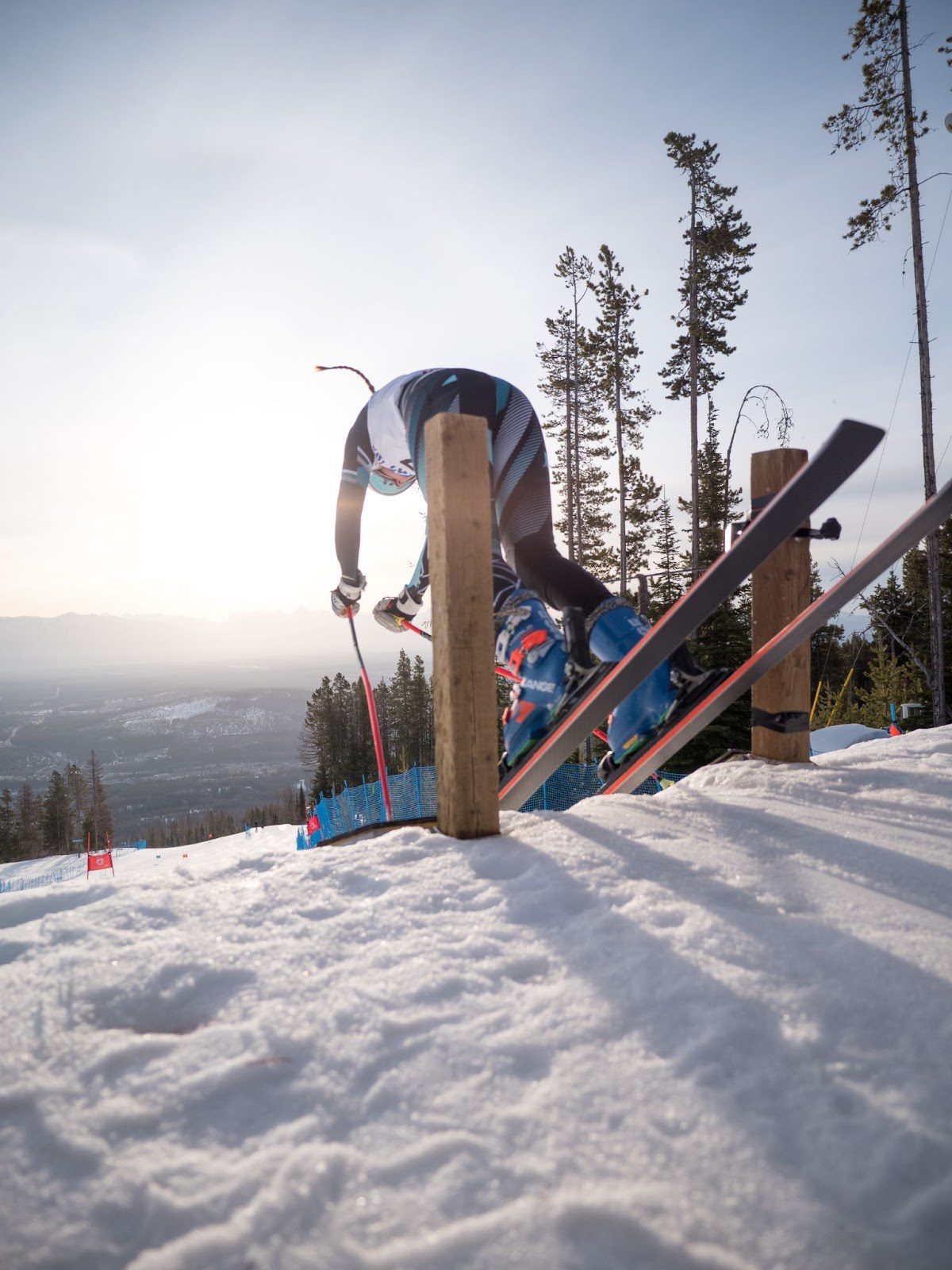
“Let’s not jam pack the calendar and let’s ensure there’s proper time there for training,” the 2009 world championship bronze medalist said.
On a deeper level, Janyk commented one of the greatest improvements in club activity was simply time. Time for coaches to collaborate, “talk shop” and focus more on specific goals for each athlete.
“It allowed us to cultivate creativity by the coaches,” he explained, “cause, man, did we have to get creative last year. Honestly, it was super fun collaborating with coaches, talking about details, like, how do we get this kid to roll the ski up? How can get this one to be cleaner at the top of the turn? How can we get more ankle mobility? How do get them to stay square through the turn rather than dumping the hip?
“These are the questions we should be trying to solve more and more, rather than how to get them ready for the next race.”
Minimizing travel could increase sport’s accessibility
Travel accounts for a significant portion of the overall cost of ski racing. Ski clubs have a wide range of travel activities, but across the board, one of the larger line items includes travel to and from races, staying in hotels, dining on the road, and other road expenses. Particularly at the U16 and FIS racing levels.
Sports travel in general is big business. The Atlantic reported in 2019 that kids’ sports is a $17 billion industry and Sports Travel Magazine also reported $45 billion was spent in 2019 on sports-related travel.
2020 is obviously a different story with travel nearly cut completely out due to the global pandemic.
Janyk commented that, time and time again, stories surface of racers in dire need of “external support,” whose families cannot afford the sometimes astronomical costs of the sport. “Accessibility is a big one for ski racing,” Janyk stated.
“One of our best female racers last year, a first year FIS, had significant financial challenges. For her, she’s really good and has had to pick and choose [opportunities] along the way. But for sure at some point external help was required.”
“If the system can align more with those people who have those challenges, the sport would be better off by putting less pressure on them. And the person that she is and the athlete she can be … seriously, you want to help her.”
Avoiding the ‘business-as-usual’ approach
According to Radamus, the requirements put into place with USSA to manage the various travel and equity challenges last season ultimately provided positive policy change, which increased the accessibility and reduced the cost of the sport.
“It made our races stronger, it made all our competitors at all levels go head to head with their peers on a more regular basis,” he said. “The opportunities were really fantastic for all the athletes.”
Radamus is convinced that the “unintended consequences” that the COVID situation presented created a situation where local racing was the only option; therefore it was unanimous.
“It actually improved the athletic experience for the skiers; better opportunities for them and they were more in the race and it opened the door to have multi-event days,” he explained. “We scheduled all of our FIS races as single day, two-race events, which allowed for a significant portion of the field to day trip the event. The smaller field size created better opportunities for all athletes, more racing (two starts in a day) and less burden on race organizers to run massive field sizes.
“Ultimately, it really helped to contain costs,” Radamus said. “I’m hopeful that we will look closely at what we did. Some of things were positive for the sport, developmental, athletically and as well financially making the sport more affordable and more accessible.”
Janyk believes the biggest influencer is the provincial and national race calendars. He expects that there will be a more efficient approach to venue selections and volume of races. For example, cutting a three-event series to two, with the same number of race starts.
“We have to be super vigilant to not make next season ‘business as usual,’” Janyk said. “I hope it’s not, because we could fall into it pretty easily. But I feel having buy-in from the coaches about the process and to not default to competition as the main driver for skill development.
Janyk believes that clubs can manufacture in-house racing through creative programming – such as regular race nights with a handicap, which allows for a competitive approach through a diverse group. Or encouraging, which Janyk referred to as “cross pollination,” amongst the various age groups to develop in-house competition.
Maximizing race opportunities
According to Janyk, the critical importance of racing has not diminished, rather the emphasis on “appropriate racing” has come to the front.
“Competition gives racers an opportunity to see what they’re about, to test out where they’re at,” he explained. “It’s a vulnerable space to be in that start gate, which is ultimately the beauty of ski racing; it can be a scary thing as they’re putting themselves on the line.”
“The beautiful thing about racing and competition and why we do it is [because] it’s a powerful tool for human athletic development. But like anything it can be abused and overused … and it has been. So how can we continue to use it in a healthy way? The biggest learning is we have to either have less trip travel but still maximize racing opportunities.”
Radamus sees a clear path forward for more permanent policy change, which would continue to positively impact the sport for the long haul. The continuation of three of the mandated rules from last season would create a lasting positive impact:
- Continue with a strict standard for overseas competition (world ranking under 350)
- Continuing with a reduction for all competitions to 50%
- Continuation of a reduced field size
“I really want to see more racing close to home and reduce the need for travel,” Radamus said, cutting to the heart of the matter. “When you don’t spend significant time traveling to a further location that’s more time for training, resting or whatever developmentally minded decision should be made.”
About the Author: Gordie Bowles