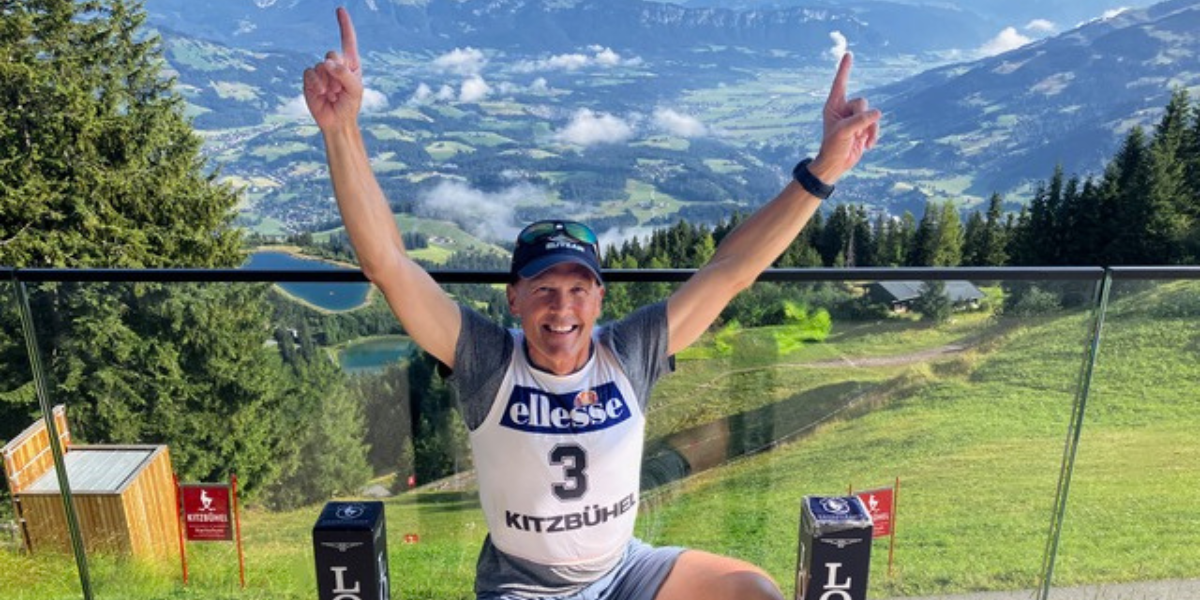
Doug Lewis at the Kitzbühel Streif start during the KAT100 by UTMB
Forty years after racing down the legendary Streif, I returned to Kitzbühel and ran back up it as a participant in one of the world’s toughest ultramarathons.
At mile 58 of Austria’s longest ultratrail, I found myself looking up a mountain I knew very, very well.
The event’s official name is KAT100 by UTMB. In plain English, it is a 100-mile ultramarathon through Austria’s Kitzbühel Alps. It also belongs to the global Ultra-Trail du Mont-Blanc World Series.
Returning to the Streif
Forty years earlier, I had stood near the top of that same mountain wearing a speed suit, helmet and 225-centimeter downhill skis. I was preparing to throw myself down one of the most dangerous downhill courses in the world.
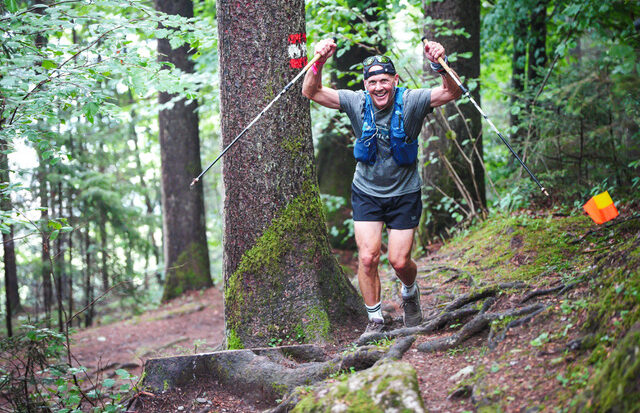
This time, I had running shoes, trekking poles, a hydration pack and nearly 60 miles in my legs.
And I was going up.
I looked up the mountain and thought, “This is completely ridiculous.”
I absolutely loved it.
Click on the images to enlarge
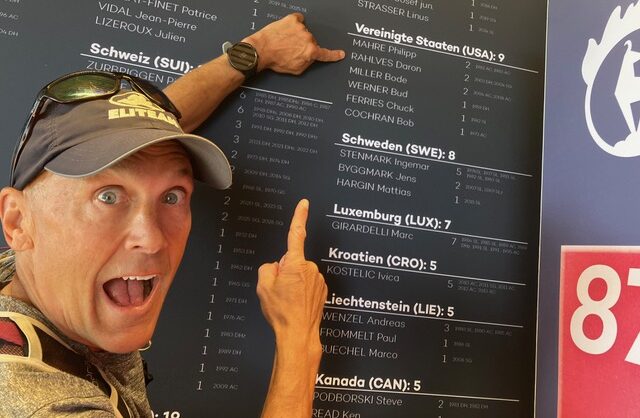

Why did the Streif suit me?
In January 1986, I was 21 years old and racing downhill for the U.S. Ski Team. Kitzbühel was — and still is — the Super Bowl of downhill racing.
It is the toughest and most dangerous downhill in the world.
My Green Mountain Valley School teammates and I watched it on television when we were younger. We made a pinkie promise that we would never race it. We had seen too many athletes crash too hard.
The Streif is legendary for a reason. It drops about 2,800 vertical feet in just over 2 miles, with sections approaching an 85% grade. Everything happens at breathtaking speed. Even small mistakes can have enormous consequences.
I watched Cory Murdoch nearly die after crashing on the Zielschuss. I was at the start when Todd Brooker catapulted off the Zielsprung. I heard helicopters take off after the start radio crackled, “This will be a long delay.”
We all knew what that usually meant. Someone’s season — and perhaps his career — had ended.
Still, when I first raced the Streif in 1984, I loved it. The course felt made for me.
Kitzbühel demanded commitment, courage and attack. Perfect arcs and textbook aerodynamics mattered, but this mountain asked for more.
At 5 feet 8 inches and barely 175 pounds, I was a smaller downhiller. However, the Streif suited the way I skied. I was aggressive, trusted my technical skills and searched for tighter lines. I tried to carry speed where bigger racers relied more on power and inertia.
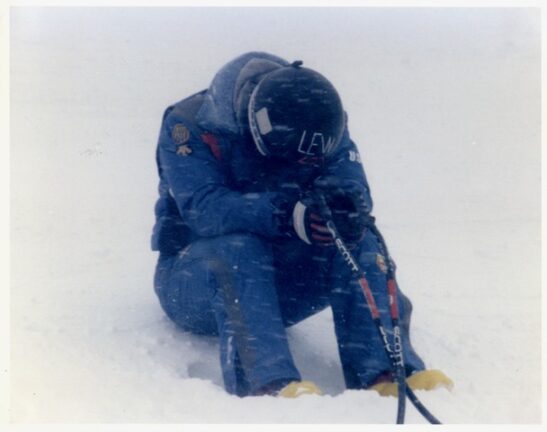
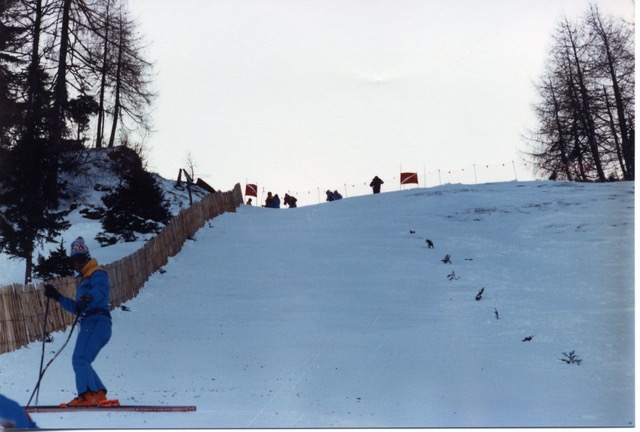
What did fifth place prove?
On Jan. 17, 1986, it all came together. I finished fifth, 1.82 seconds behind the winner, Austria’s Peter Wirnsberger. The race came one day before my 22nd birthday.
For an American downhiller at the time, fifth place at Kitzbühel was a huge result. Before then, only Buddy Werner, Billy Kidd and Bob Cochran had reached the Streif downhill podium for the United States. My finish confirmed that I could contend on the world’s toughest downhill.
It also reinforced something our U.S. speed team was beginning to believe: We could compete with anyone, anywhere, even on the Streif.
That belief kept growing. A.J. Kitt later reached the podium. Daron Rahlves won Kitzbühel in 2003, while Bode Miller and Travis Ganong added podium finishes of their own.
Why did running become my next test?
I had no idea I would return to those Austrian mountains four decades later for an entirely different kind of insanity.
Especially because, as a ski racer, I hated running.
Seriously. I hated it.
Every year, we had to run a 2-mile fitness test. Every year, I struggled through it and barely slipped under the 12-minute limit.
My physical strengths were speed, agility, quickness and technical skill. Going for a long run ranked somewhere between visiting the dentist and doing calculus.
Then I retired from ski racing. Somehow, “I hate running” eventually became, “I wonder how far I can run?”
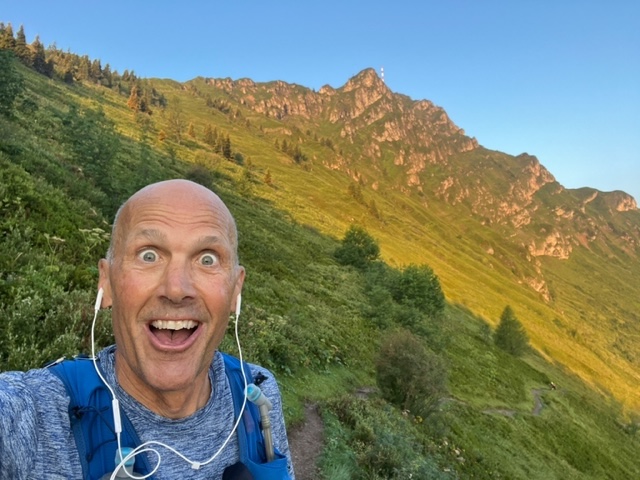
I needed another challenge.
That question pulled me into ultrarunning. There, I discovered that I loved the mental test of pushing my limits for 24, 30 or even 36 hours. I ran across brutal terrain, often alone, on trails better suited for goats than humans.
That is how I ended up back in Kitzbühel at age 62.
What made the return so demanding?
The race is a monster. The 2026 course covered 159 kilometers — nearly 99 miles — with more than 8,500 meters, or about 27,900 feet, of climbing.
Right in the middle of that suffering, the route took us up the legendary Hahnenkamm.
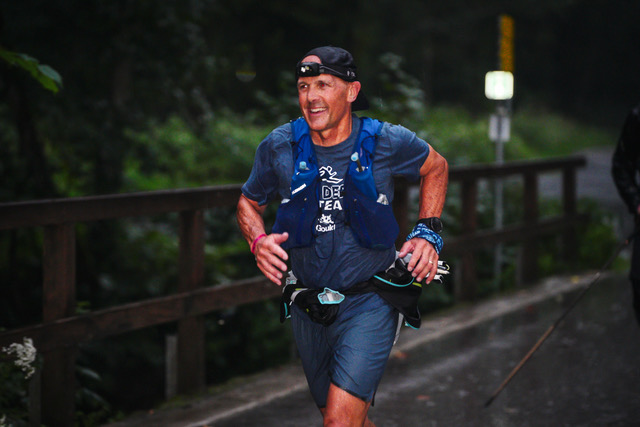
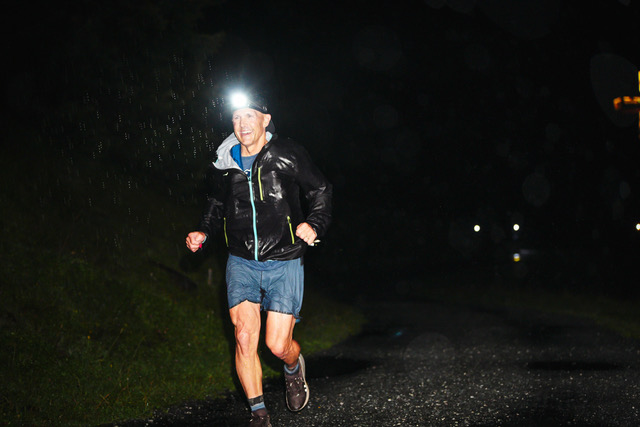
On Aug. 6, Mother Nature made the challenge even more interesting. A thunderstorm rolled through near the 6 p.m. start. We headed into the mountains through pouring rain and thunder, and the heavy rain continued for five hours into the night.
My reaction?
“Bring it on. I love this. This is where I thrive.”
Immediately, I was back in 1986.
Unsettled weather had also created uncertainty before that downhill. Fog, wind and snow covered the mountain. Many top racers wanted officials to cancel the race. I heard them quietly discussing why they did not want to compete.
I remember standing alone at the start and thinking, “This race is going to happen. I am going to be the athlete who embraces it and attacks it.”
Fast-forward 40 years: Different sport. Different decade. Same mindset.
That became one of the biggest lessons from my return to Kitzbühel. Physically, downhill skiing and ultrarunning could hardly be more different. Mentally, they demand many of the same skills.
Why does course knowledge matter?
In downhill, course knowledge is everything. At 60, 70 or 80 mph, you cannot suddenly decide where you want to be. You must know the terrain, your line, where to attack and where to remain patient.
You visualize it again and again.
“Where am I entering this turn? Where do I release the ski? Where can I attack?”
Once you leave the starting gate, there is no time for a tactical discussion with yourself. You execute. You react. You attack.
Ultrarunning requires the same preparation, only stretched across an absurd number of hours.
Before the race, I studied the course. I needed to understand the climbs, descents, trails, roads and aid stations. Most of all, I needed to know what was coming mentally.
If you think a climb is almost over and then discover you have another hour to go, your mind can turn negative remarkably fast. When you know what lies ahead and have a plan, everything changes.
“This climb is a nightmare. Settle in. One step at a time. This is where I shine.”
The lesson was simple: Know what is coming. Prepare your mind before adversity arrives.
What matters when race day arrives?
Whether you race downhill for 2 minutes or run through the Alps for 29 hours, one truth does not change: You earn your performance in the months before the race.
As a ski racer, I spent years developing my technique, aerodynamics, tactics, strength and balance. You train those skills until they become automatic. At 70 mph, you cannot think, “OK, Doug, remember to pressure the outside ski.”
You are racing.
Ultrarunning works the same way. By race morning, the training is complete. You have the fitness you have. Your job is to trust it and use it intelligently.
For nearly 100 miles, I constantly balanced my effort. Go too slowly, and I leave performance on the mountain. Push too hard, and I write checks my legs will have to cash several hours later — probably with an impressive amount of interest.
“Find the edge. Stay there. Trust your training.”
You build performance in training. On race day, you unleash it.

What happens when your mind wants to quit?
The mental battle may be the greatest similarity between downhill and ultrarunning.
Before a Kitzbühel downhill, negative thoughts are never far away. Everyone knows the danger. Throughout race week, you must acknowledge the fear without allowing it to take control.
Some racers lose the race before they leave the starting gate. I remember standing in the gate at Kitzbühel and telling myself aloud, “I’ve got this. I am the best skier on this mountain.”
Did I know that was objectively true? It did not matter. I needed to believe it for the next 2 minutes.
In an ultra, you fight the same battle. Instead of confronting it once, however, you face it repeatedly. Your brain gets tired. When it does, it becomes incredibly creative in all the wrong ways.
“This hurts. You have gone far enough. Why are you doing this? You could stop.”
During the race, some climbs were so relentlessly steep that staying positive became as important as eating and drinking. I could not think about the finish or how many hours remained.
I could control only this climb, this section and this step.
Whenever my thoughts turned negative, I had to recognize them and fight back.
“I chose this. I trained for this. I want this. Keep moving.”
The mountains were not going to get easier because I complained.
Your mind will either limit your performance or unlock it. Race day demands that you take control.
What did Kitzbühel teach me 40 years later?
After 29 hours, 7 minutes and 56 seconds, I crossed the finish line. I placed 23rd overall and won the men’s 60-64 age group by more than 13 hours.
At 62, I will take it.
The result, however, did not make this race special. Returning to Kitzbühel did.
Those mountains helped define me as a 21-year-old ski racer. Forty years later, they gave me another chance to discover what I could do.
In 1986, the challenge lasted just over 2 minutes. In 2026, it lasted just over 29 hours.
One required skis. The other required running shoes.
One sent me flying down the Streif. The other made me grind my way back up it.
Both demanded the same things: Prepare relentlessly. Know the course. Trust your training. Control your mind. Embrace adversity. Double down when things get hard.
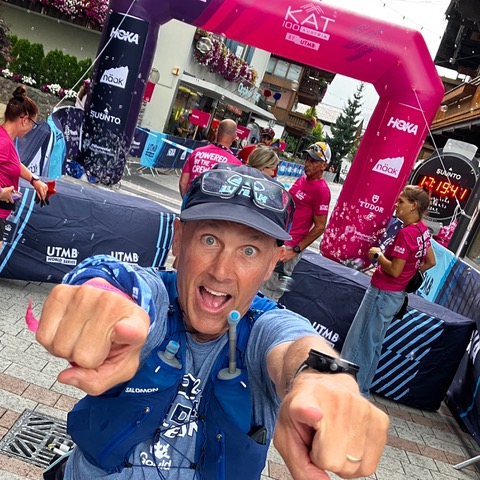
That is one of the things I love most about sport. Your arena changes. Your body changes. Your ambitions change. Yet the opportunity to push your limits never disappears.
After experiencing Kitzbühel in both directions, I can say this with complete confidence: Skiing down the Streif is a lot easier than running nearly 100 miles around it and back up it.
Yes, skiing it is much more dangerous. Absolutely. But it is easier — and a lot more fun.
The 100-mile ultramarathon was a full-on sufferfest. I chose every step of it.
Forty years after racing down the Streif, I came back, ran up it and pushed my limits one more time.
Just as I did 40 years earlier, I attacked it — and finished with a smile.
About the Author: Doug Lewis