Robert Redford and Joe Jay Jalbert Photo: Jalbert Productions
Cameraman and actor Joe Jay Jalbert shares a behind-the-scenes glimpse into the making of the unheralded late 1960s ski racing flick—having worked alongside the late Gene Hackman and Robert Redford—which marked a pivotal step to his long and successful film directing career
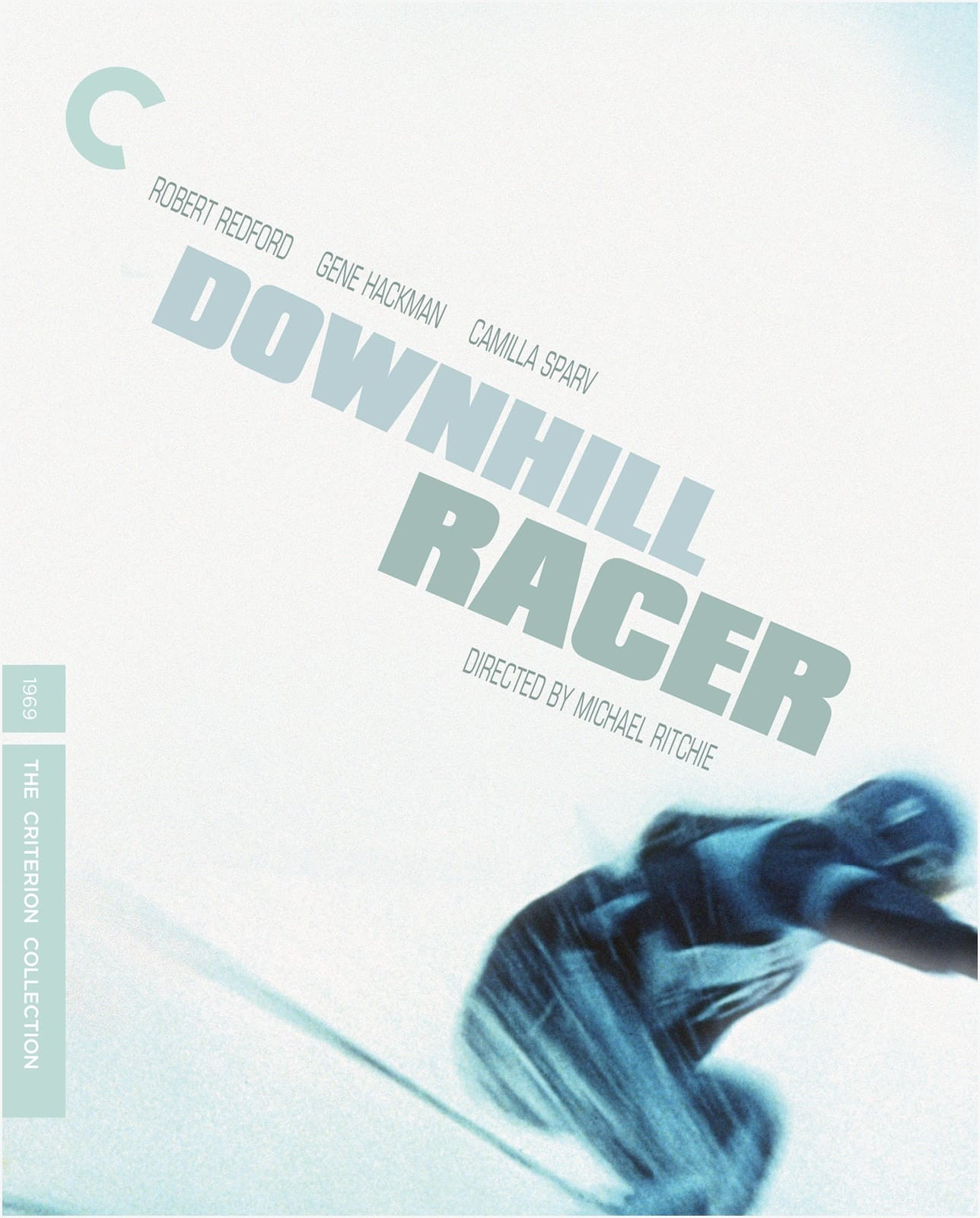
American ski racer Tommy Erb loses control, tumbles dramatically, and crashes forcefully, then gets airlifted off the mountain in the somber opening scene of the 1969 classic film drama “Downhill Racer.” Although the storyline places the incident at an early-season race in France, filmmakers actually shot the scene in Wengen, Switzerland. The actor and skiing stuntman was Joe Jay Jalbert, a mid-twenties former collegiate ski racer, who ambitiously launched his illustrious career in ski filmmaking and cinematography.
“They flew in this little Swiss rescue helicopter. I had fallen and these Swiss mountain guides wheeled me up and strapped me into this old wooden basket underneath. This was literally my first day on the set of “Downhill Racer,” Jalbert tells Ski Racing Media about shooting the film’s opening sequence.
“The director Michael Ritchie is telling me: ‘Okay, Joe Jay, you have a broken leg, compound fracture, and you have to make it look real.’ It was my first foray into acting—I’m sitting there grimacing and turning my face and he whispers in my ear, ‘Joe Jay, stop, you’re over-acting.’”
“They lift off and the helicopter tilts, and not only do I have a view of the Lauberhorn piste, but also the Eiger looming in the background. That was a pretty substantial impression.”
Click on images to enlarge
On Set with Hackman: Quiet Leadership and Lasting Impressions
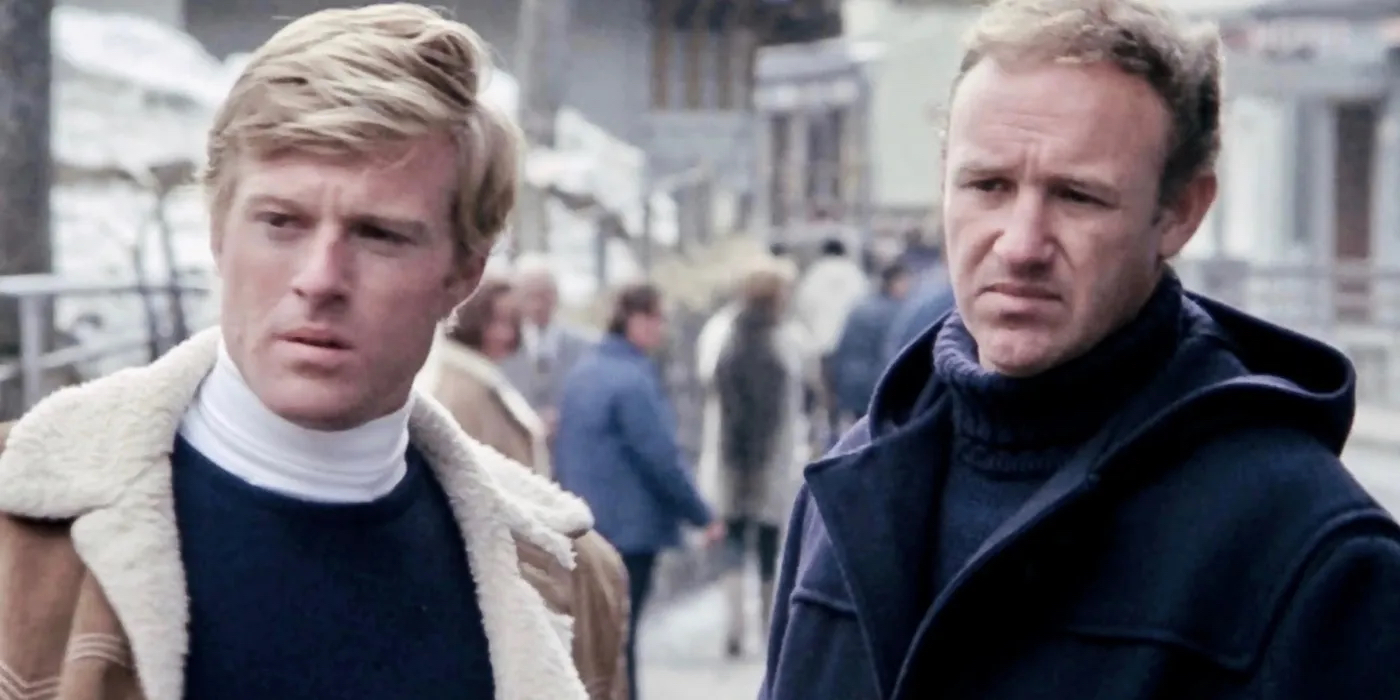
Gene Hackman—in his role as the U.S. team’s tough but supportive head coach—pays a visit to Jalbert (Erb) in the foreign hospital following the serious crash. He gazes into his room, but no dialogue is exchanged. He later informs the team that Erb is still on morphine. The plot removes Jalbert’s character after the opening sequence, with Erb injured and sent home to the States.
Jalbert shared insight about working alongside the revered actor, who died in February, at age 95.
“Gene was an upbeat guy with a lot of enthusiasm, and in his own way he was that quiet leader in the locker room,” Jalbert recalls. “He was just a lot of fun and would always come up with some quirk or idea—like having a birthday party—to keep the morale of the troops going.”
The Paramount Pictures film stars Robert Redford as David Chappellet, a talented but narcissistic and insubordinate athlete attempting to climb the ranks of international ski racing. The late Hackman co-stars as Eugene Claire, the team’s opportunistic and no-nonsense head coach.
The two leading characters clash throughout the one-hour-and-40-minute flick but strive toward one common goal—defying the odds and defeating the Europeans in their own backyard in an era when that was simply inconceivable.
Redford about Jalbert: “The Spark Plug of the Film”
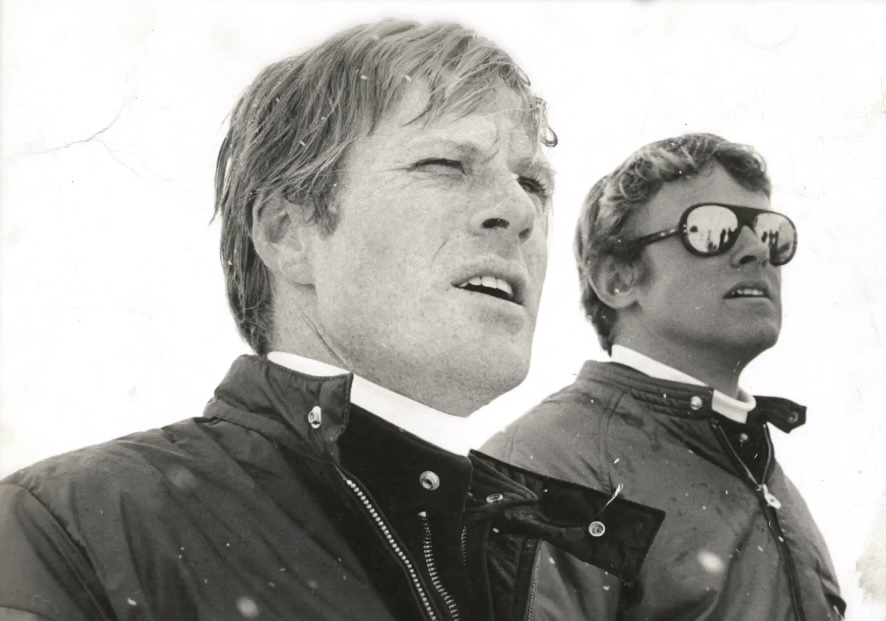
Jalbert capably continued to contribute to the production after his character’s exit, transitioning to cameraman and skiing-stuntman. Filmmakers shot “Downhill Racer” entirely on location in early 1969. World Cup race organizers granted the crew access to courses in Wengen, St. Anton, Kitzbühel and Megève.
The Idaho native earned his stripes skiing alongside Redford, toting a cumbersome 20-pound, 35mm Arriflex camera. He captured riveting visual action on the slopes, unprecedented at that time. Jalbert employed a variety of tactics to depict the high speeds and danger of the sport, after another cameraman failed to simulate speed while trailing racers in a toboggan towed by a ski patroller.
“You’re not going to simulate speed by doing that, so one day I said give me that camera and started skiing alongside the other actors hired to play the European racers,” Jalbert says. “I did some tracking shots, POVs, and learned how to tilt the camera at just the right angle to give more of a feeling of speed and steepness.
“Sure enough, we found the solution—you put a camera in a ski racer’s hands and let him go to work,” he said, with a chuckle. “My cinematography role just evolved from there.”
Crashes, Stunts and the Spark Plug of the Film
For its time, the film delivers a remarkable sense of the speed, sound, and tension of competitive downhill racing.
Jalbert also performed numerous acrobatic crashes.
“We staged the majority of the falls. The second unit director would negotiate with us and say, ‘Joe Jay, what’s this one worth?’ And I’d say, ‘Well, I did the last one for four, but I’m not going to do a retake for less than $500,’” Jalbert said. “That was on top of my salary.”
Redford commended Jalbert for his wide-ranging contributions, commenting: “The young kid from Idaho has become the spark plug of the film.”
Redford and Hackman: Legends Together on the Slopes
Filming took three consecutive months across Europe—from legendary pistes to resort hotels, on trains, and in crowded bars. Redford was often spotted in his blue American racing suit, frequently mistaken for Billy Kidd. The crew also shot additional scenes in Aspen and Idaho Springs, Colorado, Chappellet’s rural hometown in the film.
Predating the rise of 1970s sports genre movies and with a limited $1.6 million budget, the film marked Ritchie’s directorial debut. James Salter wrote the screenplay.
In one memorable scene, Hackman berates Redford after one of his character Chappellet’s flashy maneuvers on the mountain.
The coach warns Chappellet: “We are here to train as a team; we have to race as a team.” Chappellet fires back: “I’m here because I ski and I ski fast. That’s all.”
Hackman’s character brazenly escalates their argument: “You’re reckless — you rack up a lot. No consistency. You never had any real education. All you had were your skis and that’s not enough.”
This contentious relationship between coach and athlete evolves throughout the plot, while the underdog American skiers battle their European rivals. The film depicts a less friendly era, with limited, if any, interaction between racers from opposing countries. Redford also engages in a romance with a European beauty, employed by a top ski manufacturer. Her boss entices him to race on his brand.
Jalbert, at times, was a keen observer of the brilliance of the two legendary actors.
“We were part of the second unit, but I got to see them act, and they were dedicated and damn serious,” he says. “They were always upbeat. You could tell they were thrilled with their work. How could you not be, earning a living in the middle of the Alps and playing with toys like little kids?”
All Downhill Toward the Film’s Climax
The relationship between the film’s two main protagonists slowly improves over time. As the Olympic Games approach, it becomes evident that Chappellet possesses a golden opportunity. He pursues Olympic glory, something that no U.S. ski racer had achieved at that time. The film’s plot was prescient, arriving 15 years before Bill Johnson won downhill gold at Sarajevo in 1984.
At the Olympic downhill, with all of the expected hype and on a beautiful day in Kitzbühel, Hackman gives Redford one final pep talk on his walkie-talkie. He tells him: “Chappellet, you can win.”
Chappellet defies the odds, thrilling viewers in a scintillating closing action scene. Racing bib No. 15, he upsets Austrian favorite Max Meier and other French, Swiss and German rivals. Jalbert’s POV filming of Redford’s run is riveting and intense, as the film reaches its climax.
Hackman’s character is finally seen smiling, happy and relieved as he and Redford are swarmed by journalists in the Kitzbühel Olympic finish area. “He was very fast, awfully fast,” Hackman responds to one reporter’s question, as chaos ensues. “I had great confidence in him.”
Redford is succinctly asked, what’s next? He responds,“We’re going to go back to the States with a gold medal.”
Forever a Classic
The ending is euphoric, albeit somewhat predictable, once again uniting two of Hollywood’s finest actors. Charmingly dated, “Downhill Racer” has stood the test of time. The film debuted more than 50 years ago and remains the most iconic on-screen portrayal of the sport. It also captures the essence of a foregone sporting era.
“If you look at the film’s nuances about the ski manufacturers, the love stories, and the carousing of the Franz Klammers of the world, it was the way it was back then, with all of those dynamics and intrigue,” Jalbert says. “The film had the perfect Hollywood plots and subplots.”
Joe Jay created New York-based Jalbert Productions Inc. shortly thereafter in 1971. He and a growing cast of talent went on to create innumerable films and programs over five decades. The company specialized in the genres of skiing, action sports and the Olympic Games. Jalbert Productions worked on licensed projects with TV broadcasters, the U.S. Ski Team, the FIS, and the IOC, among other major players. It all started with “Downhill Racer.”
“I am thankful for the opportunity to work with Redford, but I also experienced working with the likes of Gene Hackman, Camilla Sparv, and so many other elite individuals in the industry,” Jalbert said.


Follow Brian on Instagram – brian.pinelli
About the Author: Brian Pinelli