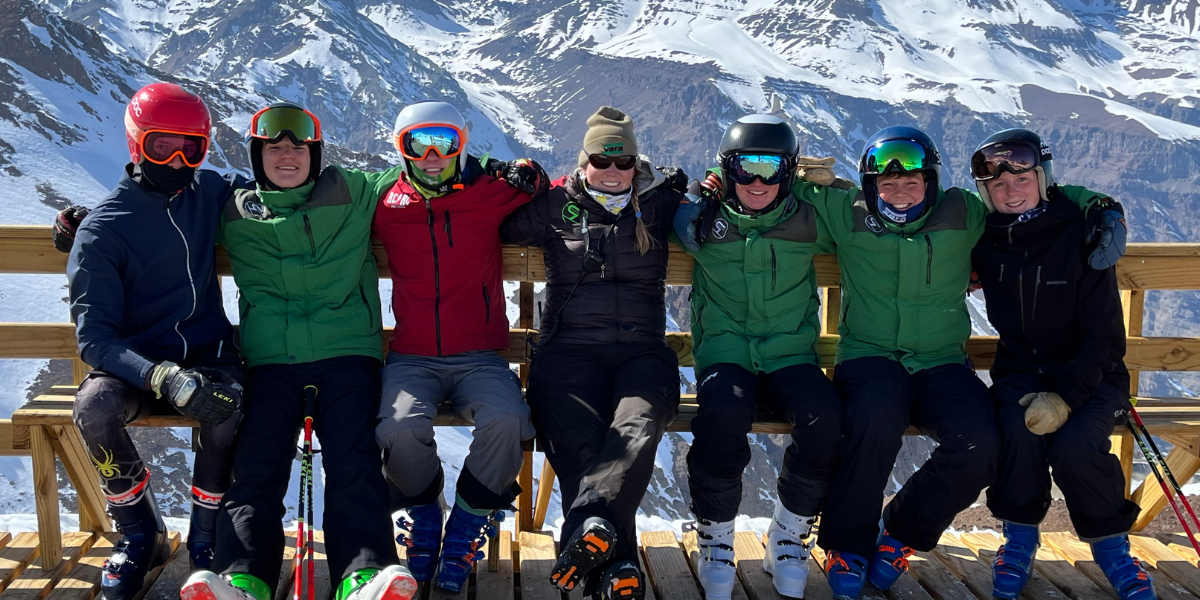
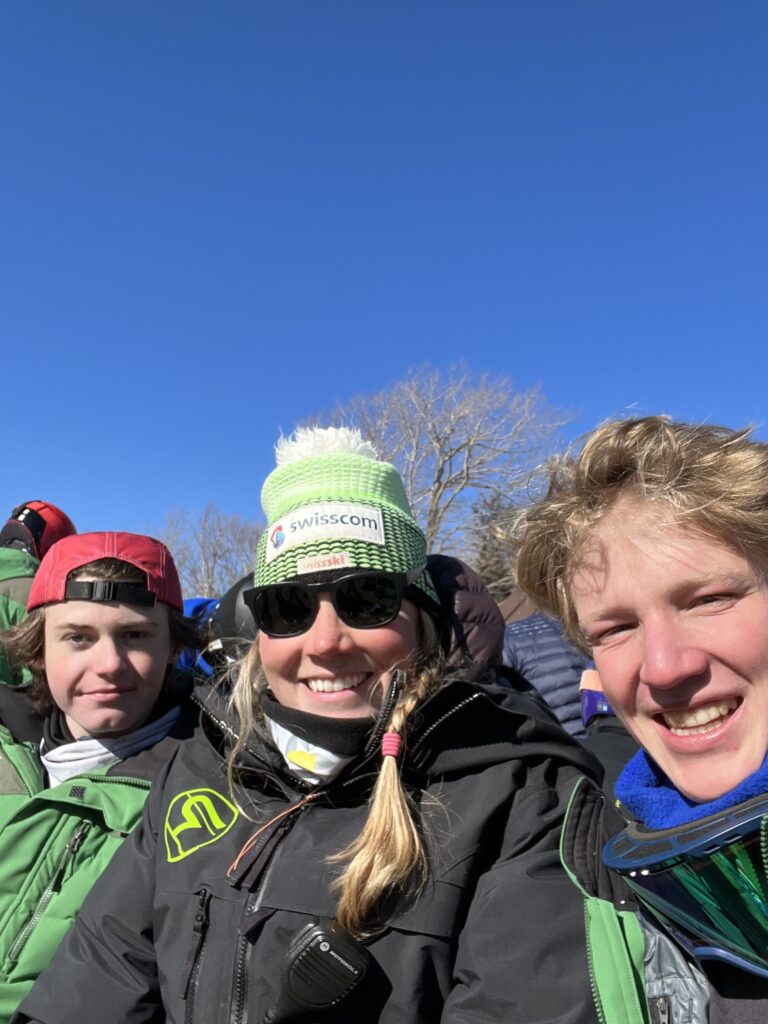
Featured Image: GMVS Junior Program Director Megan Mikell with some of her male athletes. Photo courtesy of Megan Mikell.
GMVS junior program director Megan Mikell shares five ways alpine skiing can better support coaches, strengthen the profession and create meaningful opportunities for women.
I have worked as a professional ski coach for 18 years. I am a woman, and I have coached male athletes for most of that time. That makes me an anomaly in the industry on two fronts.
Two years ago, I took over as junior program director at Green Mountain Valley School. I spend a lot of time thinking about our program and our athletes. I consider what they need to grow, thrive, find joy in the sport and make the most of these formative experiences. I challenge myself to give our program what it needs while also being present for my family.
I constantly come back to one subject: coaches.
Great programs have great people. For us, those people are our coaches.
How do we recruit them? How do we keep them? How do we help them deliver their best work so everyone benefits?
Alpine skiing does not have enough qualified coaches to meet its local, regional and national needs. Women remain especially underrepresented in full-time coaching roles, including leadership and elite-level positions.
Across the United States, associations and programs have begun identifying steps that could help reverse that trend. In recent years, we have seen more conversations about making room for women in the sport. Articles, webinars, panel discussions, presentations and celebrations of female leaders have helped raise awareness.
These are all positive, much-needed first steps.
However, how do we turn that momentum into meaningful change?
I still see gaps and blind spots within skiing’s culture that make coaching a difficult career to enter, develop and sustain.

1. Women Can Coach Athletes of Any Age or Gender
Hiring decisions should focus on a prospective coach’s skills, communication style, judgment and fit with the athlete group. That approach gives coaches the best opportunity to thrive and athletes the best opportunity to grow.
Athletes benefit from working with both male and female coaches throughout their ski racing experience. Each coach brings different experiences, communication styles and strengths. We do our athletes a disservice when we assume women are best suited to coach girls simply because they are women.
I have often had to say, “Actually, I coach boys.” I have also been asked to set the second run for the girls simply because I was the woman on staff. In those moments, I have responded that I would be equally happy to set for the boys’ field.
Career coaches must challenge those assumptions when they appear.
We need to normalize the presence of female coaches at every level.
In my experience, skiing continues to lag behind other sports in placing women in coaching and officiating roles at the youth, collegiate, elite and professional levels. That is true across both men’s and women’s programs.
2. Coaching Ability Should Matter More Than Racing Résumés
Racing success remains an unofficial qualification for coaching opportunities and promotions throughout our industry.
Young coaches often must prove themselves repeatedly. That challenge only increases if the coach is female, especially if she did not compete on a national team or for an NCAA program.
Looking beyond a person’s racing background allows programs to evaluate what matters most: coaching ability. In the long term, that approach better serves athlete development.
We owe it to our athletes and future coaches to stop treating high-performance racing experience as proof that someone will become an exceptional coach.
No one becomes an exceptional coach on day one, even if they competed at the highest level.
Coaching is learned.
I stumbled into coaching while I was in college. I never intended to make it my career, but here I am.
People gave me opportunities to learn and grow. Those opportunities, not my athletic résumé or an assumption of natural coaching talent, shaped my career.
3. Develop Coaches Before Asking Them to Lead
Inclusive practices should be intentional, not simply a way to check a box.
Rule U601.4.2.3 of the 2026 U.S. Alpine Skiing Competition Guide states, “The Jury should, where possible, include one person of a different gender.”
Because women remain underrepresented among alpine officials, that has often meant asking a woman to serve on the jury.
The intent is positive. However, the execution can be difficult when coaches are asked to take on roles they have not had enough opportunity to practice.
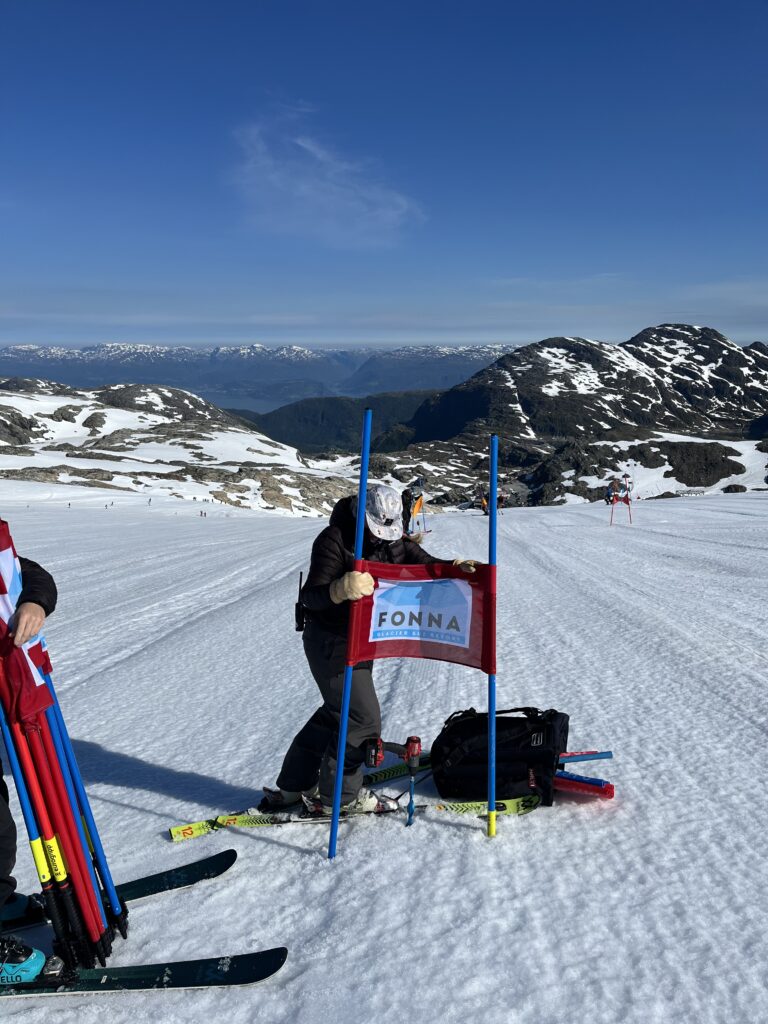
Throughout my career, I have gone through periods when I set courses every day in training and others when I hardly set at all. It depended entirely on who I worked with.
Today, I intentionally pass the drill around.
If we want coaches, male or female, to confidently set race courses, we need to hand them the drill in training. We need to let them make mistakes before race day.
Right now, too few coaches feel confident setting courses or serving on juries. As a result, the same people repeatedly fill those roles.
Nobody wants to fail publicly in front of athletes, parents and peers.
Let’s build competence and confidence during training so less experienced coaches are prepared to take on those responsibilities.
The same applies to jury work.
The jury plays a critical role in both the success and safety of every race. Every jury member should feel confident speaking up.
I have been dismissed as “the female voice on the radio” while serving as both a referee and a technical delegate. I have watched it happen to other women as well.
Those moments discourage people from stepping into leadership positions.
4. Celebrate Great Coaching, Not Gender
How we celebrate coaching accomplishments shows what our sport values.
Exceptional coaching should be recognized first for its quality and impact, not treated as notable only because of the coach’s gender.
Major coaching awards should evaluate the full field of candidates and recognize the strongest work, regardless of gender.
Creating women-only coaching categories with the goal of being more inclusive can produce the opposite effect. Those categories may increase visibility, but they can also suggest that female coaches belong under a separate standard of recognition.
The Eastern Intercollegiate Ski Association offers one example. This past season, EISA named Middlebury College’s Abby Copeland its Alpine Coach of the Year for the second time.
Her recognition showed that female coaches can and should be celebrated alongside their peers based on the quality and impact of their work.
5. Create Policies That Help Coaches Build Careers and Families
Across our sport, coaches and programs have found creative ways to balance coaching careers and family life. Unfortunately, the best ideas are rarely collected in one place.
Our sport needs a playbook that leaders can reference and share.
In my experience, many full-time programs still do not have formal parental leave policies.
If we truly want to attract and retain coaches, those policies matter.
They provide clarity, create consistency and help coaches build long-term careers.
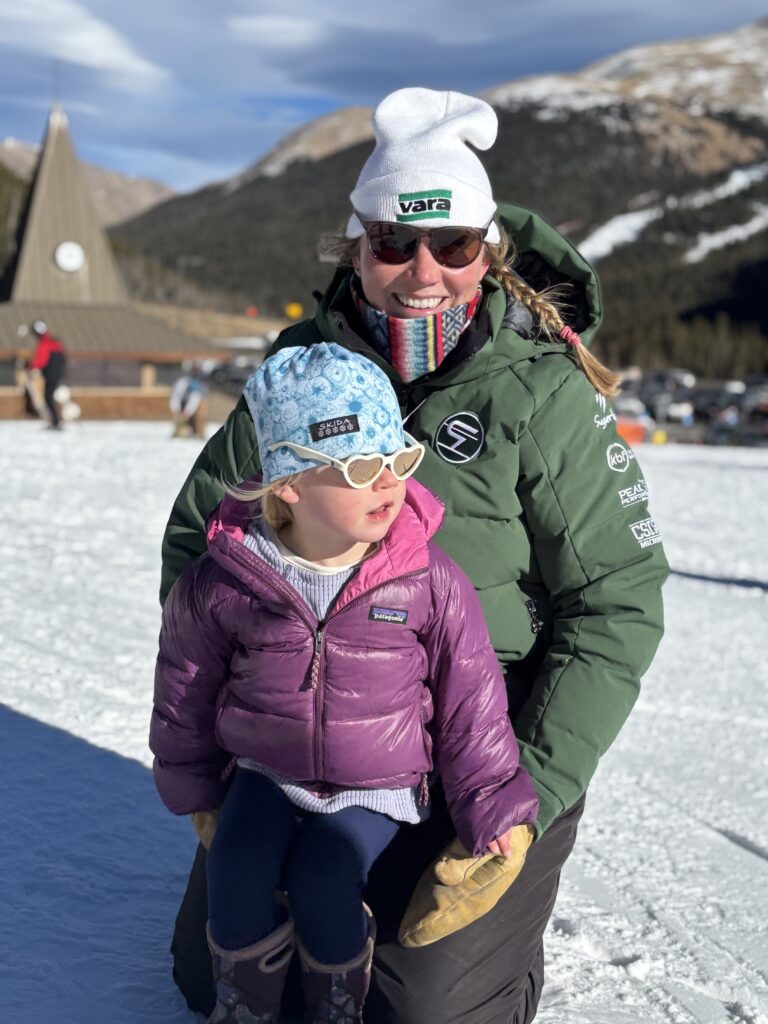
Coaches who are parents, and who often form the backbone of junior and weekend programs, need to know their programs will support them through life’s major milestones.
How should programs handle travel for coaches with young children?
How should they support coaches whose school-aged children cannot travel?
Should programs reduce or cover enrollment costs for coaches’ own children?
Programs should begin answering those questions now.
Mentorship Made the Difference
Reflecting on these ideas and on my career, one realization stood out.
I was incredibly lucky.
I had, and still have, exceptional mentors.
When difficult decisions arose, I always knew they wanted me to stay in the sport. They believed in me. They invested in me. They gave me opportunities to grow.
That support shaped my coaching career more than anything else.
I hope to provide those same opportunities for others.
To genuinely show women they belong in our coaching community, we need more than good intentions.
We need meaningful change.
We need action.
We need leaders who are willing to invest in people before they become great coaches.
I’m ready for that.
Now the sport must decide whether it is ready to do the same.
About the Author: Megan Mikell