Photo: @asvindal
For ski racing enthusiasts, those who have fought through adversity recovering from physical injury, or anyone who likes an inspiring comeback story, the new feature documentary ‘Aksel’ is not to be missed.
The recently released one-hour, 49-minute production takes viewers behind the scenes, chronicling Aksel Lund Svindal’s improbable comeback, as he endures persistent pain, from a horrific 2016 crash in Kitzbuehel in which he ruptured his ACL and injured the cartilage in his right knee, to becoming the first Norwegian and oldest ski racer at age 35 to win an Olympic downhill title two years later in PyeongChang, South Korea.
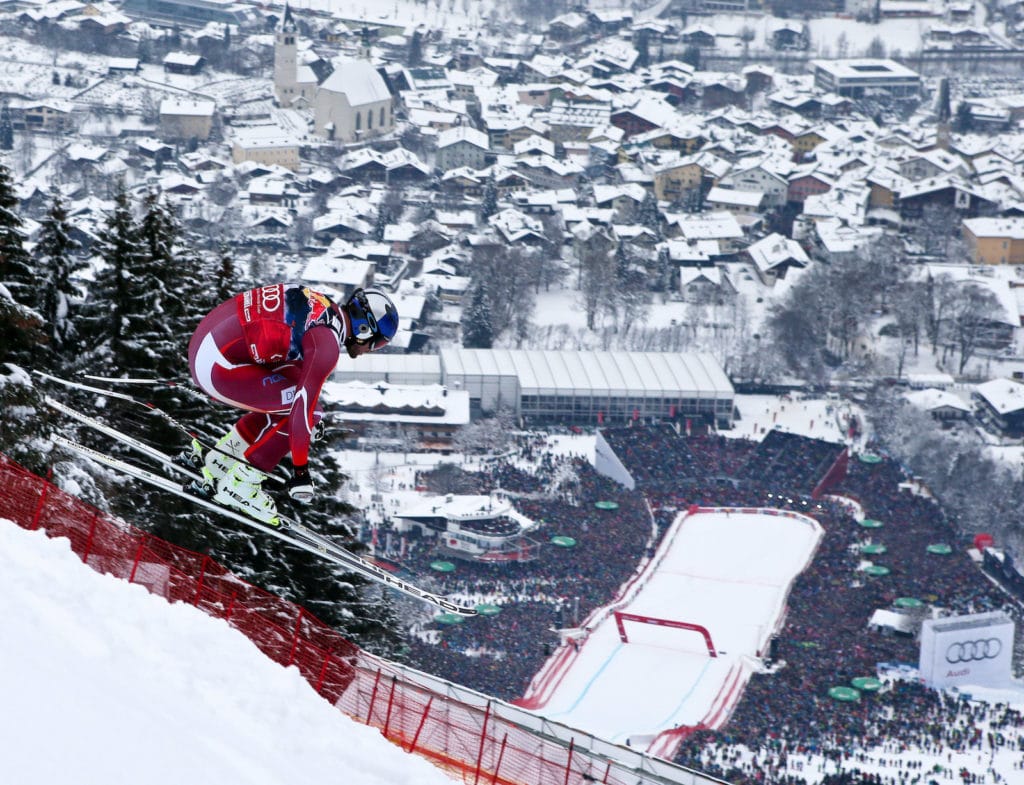
Numerous hospital scenes and revealing interaction with doctors and medical specialists offer insight, while making viewers cringe at Svindal’s gruesome-looking knee and other bruising injuries, and the not-so-rosy aftermath of surgeries, director Filip Christensen’s work also thrills with sensational never-before-seen drone footage of the 2018 Olympic downhill champion and 36-time World Cup winner hurtling himself down the Kvitfjell downhill track, while on the comeback trail.
Svindal met with journalists in Soelden, for a preview of the documentary. “It’s even more depressing in German,” the Norwegian joked, after his first glimpse of the film dubbed into a second language.
“This project started out small and it got quite big – the guys filmed 500 hours of content and it got cut down to one-and-a-half hours, so a lot of unnecessary work for sure,” Svindal kidded.
Spoiler alert: Defying all odds and after refusing to accept some of the advice given by his doctors, Svindal’s sheer determination and quiet euphoria is elegantly captured as the powerful Norwegian races to Olympic downhill gold on Feb. 15, 2018, edging close friend and longtime teammate Kjetil Jansrud, by 0.12 seconds on a glorious day for Norway. The camera is fixed on Aksel’s father Bjorn in the stands, as the film captures the wide-ranging emotions, highs and lows, and tight bond forged between Aksel and his father and younger brother Simen, their relationship strengthened as Aksel’s mother passed away due to complications of a pregnancy when he was eight.
In one poignant scene of Svindal at home in Oslo, early in the film and shortly after his 2016 surgery, he iterates: “I refuse to even consider quitting.” Fast forward ahead, with 12 months until the PyeongChang Games and the fiercely determined “Norwegian Viking” in the gym at the Elite Sports Center in Oslo, he reveals: “There’s plenty of time for more squats, more skiing. My goal is to be a favorite at the Olympics, but for everything to work out that day, that’s more of a dream.”
Behind the scenes of ‘Aksel’
‘Aksel’ premiered in Oslo on Oct. 15 and kicked off a European tour this week in Austria. The original version is in Norwegian with English subtitles, but the latest edition of the film has been dubbed into German.
According to the film’s director, Christensen, a release date in North America has yet to be finalized due to holdups over the usage of rights — protected Olympic and other footage. The Norwegian co-creator at Field Productions, who collaborated with Evan Sigstad on the project, also notes that a version of the film with English voiceovers is in production.
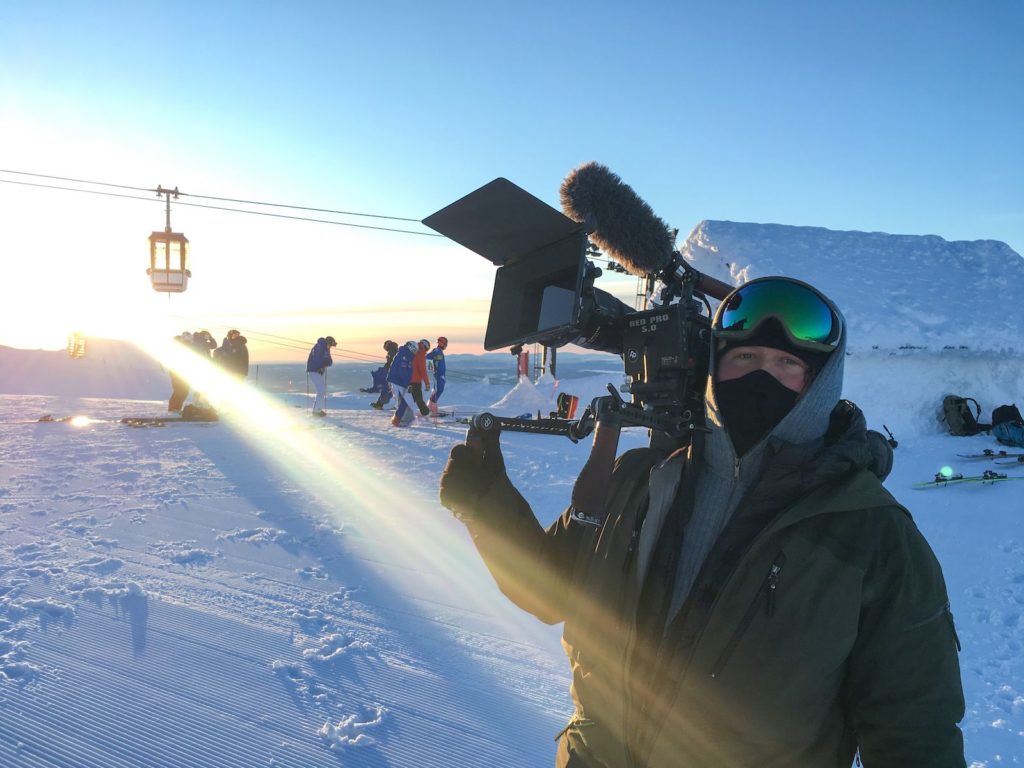
From the film’s creative and compelling drone-sequence — for which producers flew in a British gamer who won the world championships of drone racing in Dubai — to stimulating skiing visuals and captive audio on the mountain, Svindal believes the documentary truly captures the essence of ski racing unlike previous films and weekly television coverage.
“He tracked me down the Kvitfjell downhill course on a drone, basically everything from 20 centimeters to 20 meters behind my helmet,” Svindal says, of the talented drone pilot.
“The guys also tried to showcase downhill skiing in a way that maybe gives the sport even more justice than during live television.
“All of the music is original music made by two musicians in Norway and recorded with a full symphony for the movie.
“Basically, what I’m trying to say is that the more I crashed, the more they saw big potential and invested more money in the project,” Svindal says, eliciting rousing laughter from the journalists.
Aksel’s love-hate relationship with Beaver Creek
The documentary also delves into Svindal’s brutal 120-kilometer-per-hour 2007 crash flying off Beaver Creek’s Golden Eagle jump, in which he woke up from consciousness in a pool of blood and with multiple serious injuries. Svindal is shown conquering his demons on the Colorado race course, just one year later, following his rehabilitation.
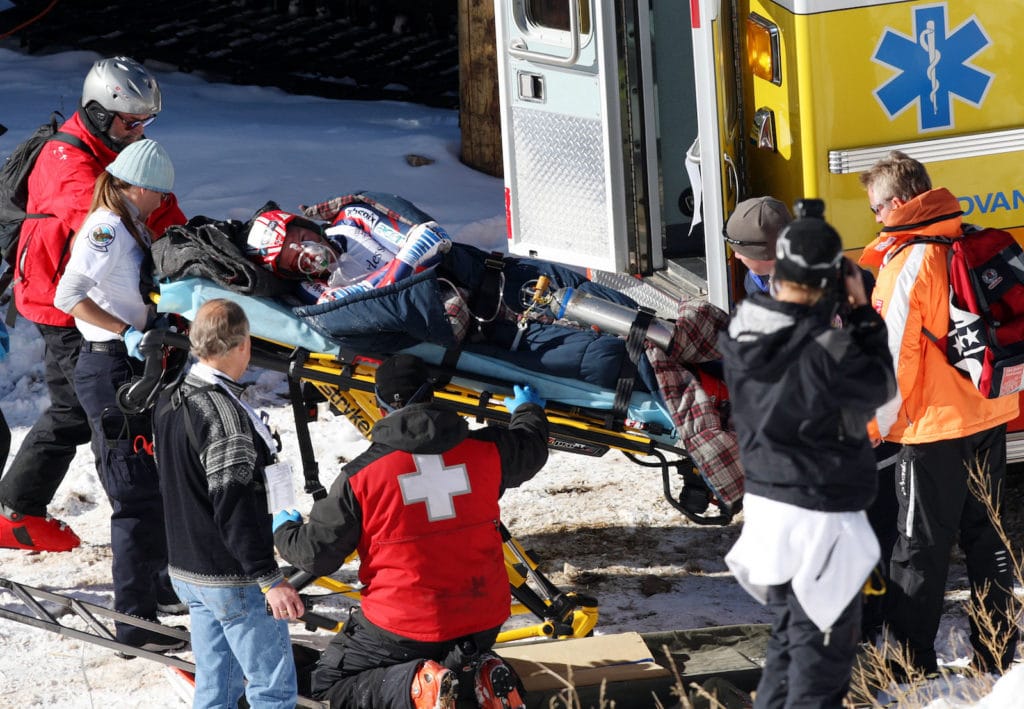
“It was a lot of work to get back on the slope and I’m a happy man right now,” Svindal says, in a clip from 2008. The Norwegian’s comeback victory in 2017, his sixth win in Beaver Creek on the Birds of Prey track is also shown, an enormous confidence booster coming less than three months prior to the PyeongChang Olympics. Eurosport’s Nick Fellows can be heard on the race call: “His knee is on the limit.”
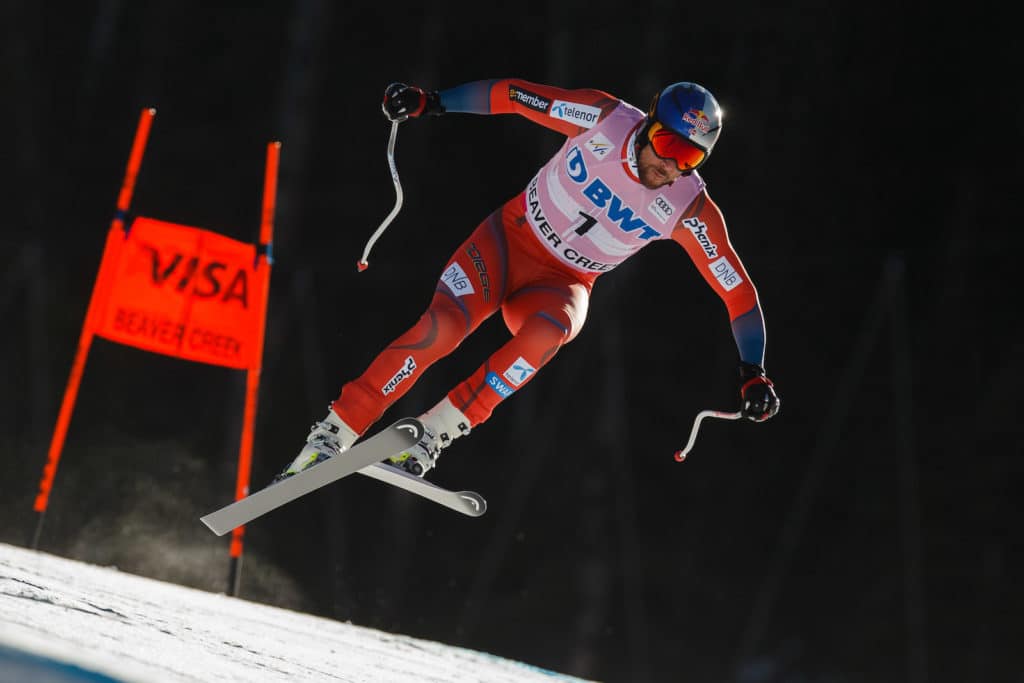
Svindal builds off the Beaver Creek victory, also winning a Val Gardena downhill and Kitzbuehel super-G.
Despite the string of victories and impressive return to form in the homestretch to his fourth Olympic Games, Svindal continues to battle pain and physical uncertainty while wearing a large black brace. With one month until PyeongChang, a Norwegian doctor warns the veteran ski racer that “the pain will get more intense.”
As we now know, that didn’t stop Aksel.
The culmination of an amazing career
A visually stimulating skiing sequence brings the film to a fitting close just a short time following Svindal’s final race at the world championships in Are, Sweden – in which he capped off his illustrious career nabbing his ninth world championship medal, a silver, second only to Jansrud – as the now-retired racer, his father Bjorn and brother Simen share quality family time, making turn-after-turn in heavenly powder on a bluebird day of heli-skiing in British Columbia, Canada.
“These guys are used to making ski movies, so there’s obviously some ski footage in there that is pretty cool,” Svindal says, about the film’s directors.
In the penultimate scene, Svindal is awarded his world championship silver medal at a jam-packed downtown ceremony in Are, Sweden. As he raises his arms in triumph and proceeds to bow to the crowd at Jansrud’s urging, culminating a nearly two-decade journey on the World Cup circuit, Svindal’s voice is heard: “Doctors have been telling me to quit for sometime now, but it’s not until now that I feel satisfied.”
Follow Brian on Twitter – @Brian_Pinelli
About the Author: Brian Pinelli