Mari Renick / photo Eric Brandolini Media
Mari Renick did not grow up dreaming about ski racing.
Growing up in Crested Butte, Colorado, she wanted to be “the coolest big-mountain skier ever.”
That childhood dream now helps explain the athlete she has become.
Renick, 17, earned a place on the Stifel U.S. Ski Team after finishing second in the NorAm downhill standings and fifth in the NorAm super-G standings during her first FIS season. Her downhill ranking also earned her a personal start position in the 2026-27 World Cup downhill.
The path was not conventional.
For many athletes, the journey begins in gates.
Renick began chasing her older brother around Mount Crested Butte.

How did Mount Crested Butte shape Mari Renick?
Renick learned to ski at age 2 in Crested Butte. Her family lived in town, minutes from the mountain.
By elementary school, skiing had become part of everyday life.
“I would go skiing pretty much every weekend and during the weekdays after school, we’d just drive five minutes up the mountain or take the bus and go skiing with all my friends and family,” Renick told Ski Racing Media.
Her family shared a love of skiing, but her older brother, Mason, had the greatest influence on her early development.
“I was just chasing after my brother down the mountain,” Renick said.
The mountain itself may have been her most important early teacher.
The confidence she developed free skiing Mount Crested Butte’s steep terrain would later become one of her greatest assets in downhill and super-G.
Crested Butte is known internationally for steep, challenging terrain and a ski culture built around hard skiing. Long before Renick focused on racing, she spent her time free skiing terrain, bumps, cliffs and natural features.
That background built more than skill. It built confidence.
“I feel like I built so much of my confidence just free skiing around Crested Butte,” Renick said.
She started ski racing at about 6 years old, but racing was not yet the center of her skiing life. At that stage, she still saw herself more as a big-mountain skier than a future speed racer.
That changed after her family moved to Vail.
Why did Renick move to Vail?
Renick’s family relocated to Vail in part because of Mason’s ski racing ambitions. Renick joined Ski & Snowboard Club Vail as a second-year U10 athlete.
The shift was immediate.
Life in Crested Butte centered on free skiing. Life in Vail centered on racing and training.
“It definitely made me a better ski racer,” Renick said. “Everyone was so much more serious about it in Vail.”
The move also accelerated her development away from the hill.
Renick credits Ski & Snowboard Club Vail and Vail Ski & Snowboard Academy with helping her become more disciplined, organized and committed.
“It helped me with my time management in school,” she said. “We’d ski in the morning, go to school in the afternoon and then I’d have to do all my homework before bed.”
Renick will enter her senior year at Vail Ski & Snowboard Academy this fall while beginning her first season as a Stifel U.S. Ski Team athlete.
The balance will require planning.
“It’s definitely going to be challenging,” she said.
Renick said she plans to complete nearly all of her coursework during the first semester. That schedule would leave her with one class during the second semester, when she expects to spend much of the winter in Europe.
Click the image to enlarge
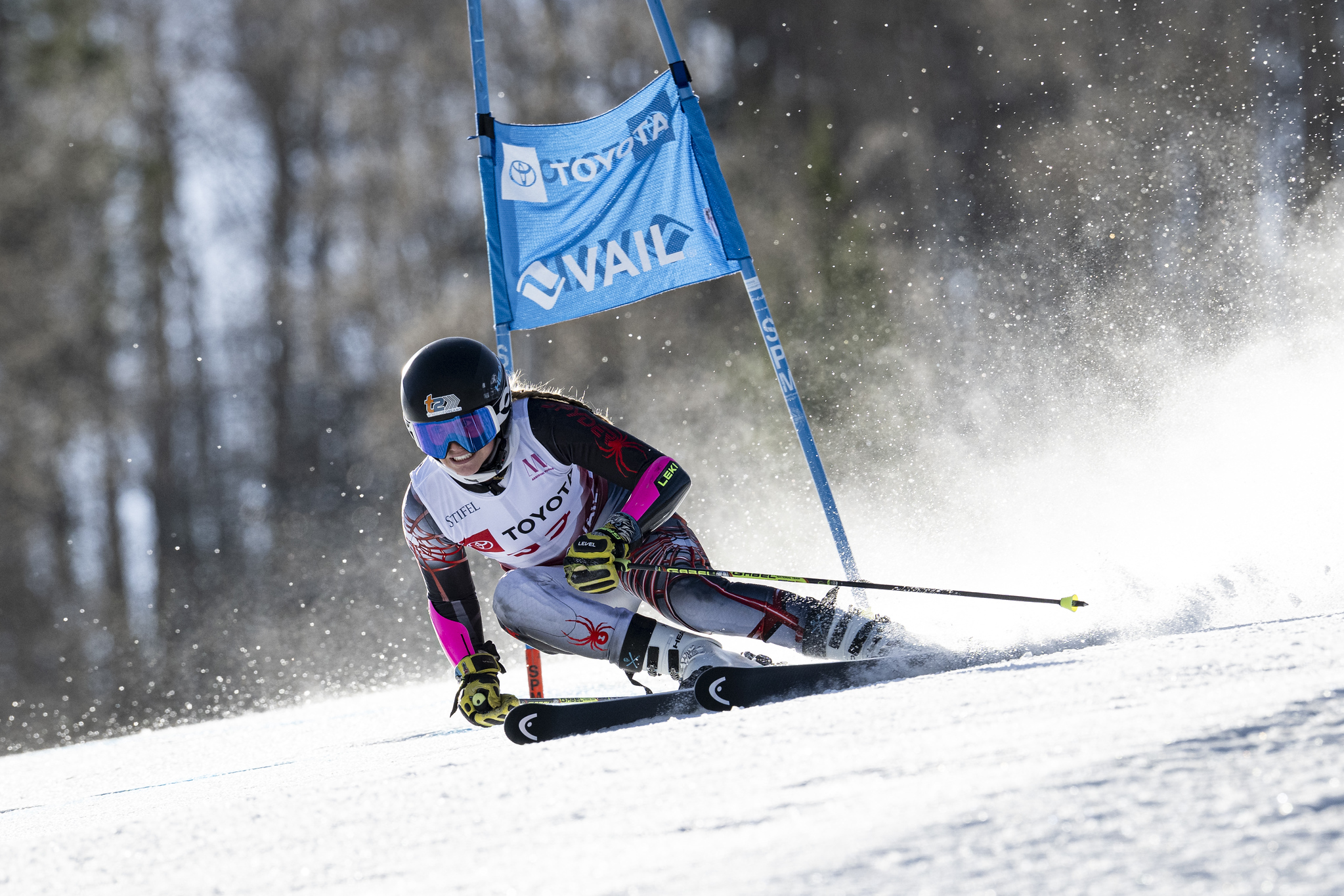
What made Whiteface the breakthrough?
The breakthrough arrived at Whiteface, New York.
During her first FIS season, Renick earned the first NorAm victory of her career at Whiteface, New York. Starting nearly last, she won the downhill and announced herself as one of the country’s top young speed prospects.
The result carried significance beyond the podium.
The victory helped secure her first trip to the FIS Junior World Ski Championships, giving Renick an opportunity to represent the United States on one of the sport’s biggest junior stages.
It also produced one of the most memorable moments of her season.
“I had never felt so supported,” Renick said. “Coach Pat Duran came down crying and I’ve never seen him emotional before.”
The win boosted her confidence and validated years of work. Yet even after Whiteface, the Stifel U.S. Ski Team still felt like a distant goal.
That perspective changed after Junior Worlds.
How did one phone call change her season?
After the FIS Junior World Ski Championships in Narvik, Norway, Renick believed her chance to qualify for the Stifel U.S. Ski Team was unlikely.
Then Mason called.
Her older brother had been tracking the qualification scenarios and saw something Renick did not. The opportunity was still alive. If she could produce a few more big results at the season-ending NorAm races in Aspen, there was still a path.
“He was very emotional on the phone,” Renick said. “He was like, ‘Mari, Mari, you still have a chance. You’re going to make the ski team if you do this, this, and this in Aspen.'”
The call changed everything.
“It gave me a lot of drive,” Renick said.
A few weeks later, Renick delivered the performances her brother had been talking about.
In the first NorAm downhill at Aspen, she finished third against a field that included established Stifel U.S. Ski Team World Cup athletes Isabella Wright and Tricia Mangan. For a first-year FIS racer still chasing national team criteria, it was one of the strongest results of her season.
The following day, Renick added another podium, finishing second behind fellow Stifel U.S. Ski Team rookie Beatrice May. Wright and Mangan did not start the second downhill, making the first podium the stronger result on paper, but the back-to-back podium performances strengthened an already impressive body of work.
Weeks earlier, Mason had called to tell his sister she still had a chance.
Aspen was where Renick closed the deal.
When the final calculations were complete, Mason called again.
This time, there were no scenarios left to discuss.
“He told me that I qualified,” Renick said. “I was just over the moon and kind of just in disbelief.”
The moment carried extra meaning because of where the season had started.
“I didn’t even expect to make World Juniors that year,” she said.
A few months earlier, Renick had been hoping to prove she belonged among the best junior racers in the country.
Now she had earned a place on the Stifel U.S. Ski Team.
Why does Renick love speed skiing?
Renick’s Crested Butte background still shows most clearly when she talks about downhill and super-G.
The appeal comes from the sensation of pushing beyond comfort.
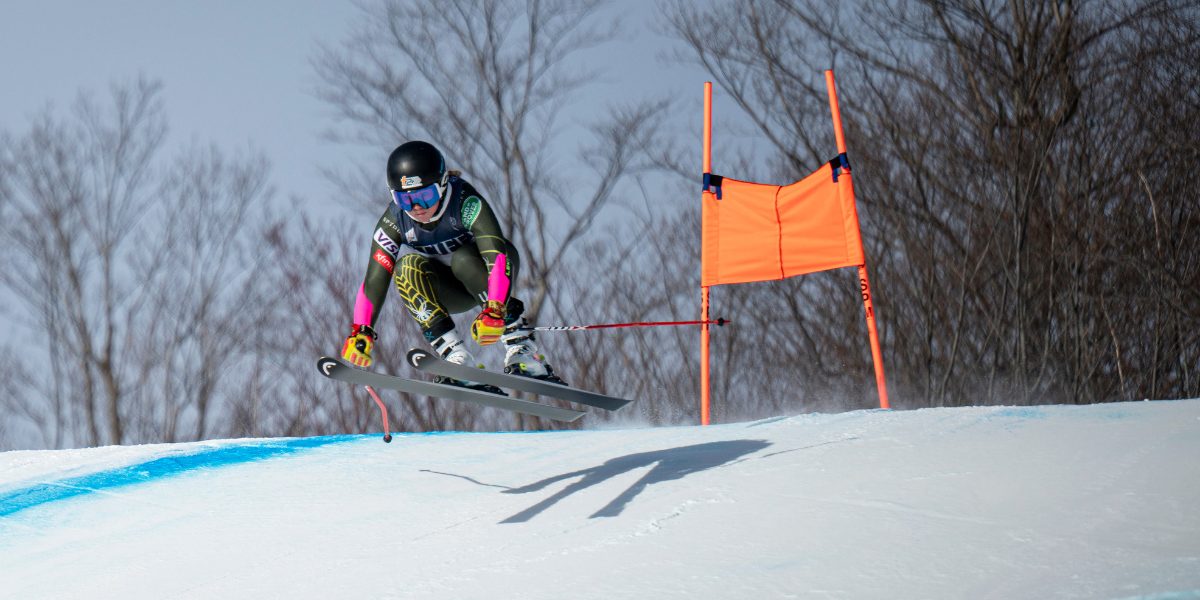
Last season, she found herself thinking often about one jump at Whiteface. She pushed the line straighter than anyone else, carried high speed, caught a bit of tailwind and launched.
“It was incredible,” she said. “I still think about it to this day.”
When asked what she loves about approaching the edge of her comfort zone, Renick described the feeling without hesitation.
“It’s so unreal to feel this adrenaline rush in my body when you’re about to make just the gnarliest turn and you know it’s going to be good because you’re pushing far past what you’re comfortable with,” she said.
Then she offered the quote that may explain her future in the sport better than any result sheet.
“Terrifying is the reason I keep doing it,” Renick said. “You’ve got to be a little crazy to do speed.”
It is an answer that perfectly captures the athlete who emerged from Mount Crested Butte’s steep terrain and eventually found her way into speed skiing.
For Renick, fear does not appear to be something to avoid. It is part of the attraction.
What kind of team is Renick joining?
Renick now joins a Stifel U.S. Ski Team women’s speed group with Olympic champions, World Cup winners and a deep collection of downhill and super-G talent.
The level has her attention.
“It’s for sure a bit intimidating being such a young athlete with the speed girls,” Renick said. “But they’re all such great people.”
Renick trained with members of the group in Mammoth, California, and came away struck by the team culture.
“They support each other and always bring each other up,” she said. “I think that’s why the women have been so strong the last few years.”
Renick will continue working this season with the newly named Europa Cup coach Pat Duran, who coached her at Ski & Snowboard Club Vail and later at the regional level. Duran remains one of the most influential figures in her development as a speed skier.
“He’s pretty much taught me speed — all the speed event things I know,” Renick said.
Renick has also benefited from the guidance of Duran’s wife, Alice McKennis Duran, one of the most accomplished American speed skiers of her generation. A two-time Olympian and World Cup winner, McKennis Duran won a World Cup downhill in St. Anton, Austria, in 2013, and later coached athletes on the U.S. Ski & Snowboard Regional Team.
For a young speed skier, learning from Pat Duran and World Cup winner Alice McKennis Duran gave Renick access to a rare depth of downhill knowledge.
Could Renick make her World Cup debut this season?
Renick’s NorAm downhill season earned her a personal World Cup downhill start position for 2026-27.
She has thought about the possibility, but she is not rushing the decision.
Renick said she will train in Ushuaia, Argentina, this summer. Her performance there may help determine whether she starts the World Cup early in the season.
A World Cup debut at Beaver Creek would be a dream scenario. It would also be demanding.
“That would be the most incredible experience ever, obviously, being at home,” Renick said. “I’m not sure I’ll do that one since it is the first World Cup of the year and it’s a pretty intense World Cup track.”
She has slipped the course many times and may forerun it before racing there.
A midseason World Cup start could be more likely if it fits her schedule. For now, Renick expects her season to center on Europa Cups, with select NorAms mixed in.
Her preparation is already focused.
Renick said she wants to become stronger, create more energy out of the ski and push herself farther out of her comfort zone. At Copper Mountain in June, she worked on higher edge angles, stronger turns and testing her limits with line and depth.
The physical goal is clear.
So is the mental one.
She wants to keep learning how to commit when the course, speed and pressure demand more.
What keeps Renick grounded?
Renick’s breakthrough season moved quickly, but she still sees her community as one of the most valuable parts of the journey.
Her teammates, coaches and school friends have become essential.
“The people I’ve met and my teammates in ski racing have become a whole new family to me,” she said. “It’s like a second family.”
That support matters in a sport built on highs, lows and constant pressure.
Renick said she wants to hold onto her connections at Vail Ski & Snowboard Academy during her senior year, even as her schedule changes.
“School is a place where I can talk to people who are not ski racers; it just clears my mind a little bit,” she said.
That balance may become more difficult as her career expands. Yet it also may become more important.
The little girl who once chased her brother around Crested Butte now stands near the doorway to the World Cup.
There is school to finish, strength to build and experience to gain. Europe awaits. So do the demands of joining one of the strongest women’s speed programs in the sport.
Still, the foundation is already there.
It was built on the steep terrain of Mount Crested Butte, sharpened at Ski & Snowboard Club Vail, strengthened by family and coaches, and revealed during a breakthrough season that moved faster than even Renick expected.
She may not have grown up wanting to be a ski racer.
But she has become exactly the kind of athlete who comes alive when the hill gets steeper, the speed rises and the comfort zone disappears.
About the Author: Peter Lange