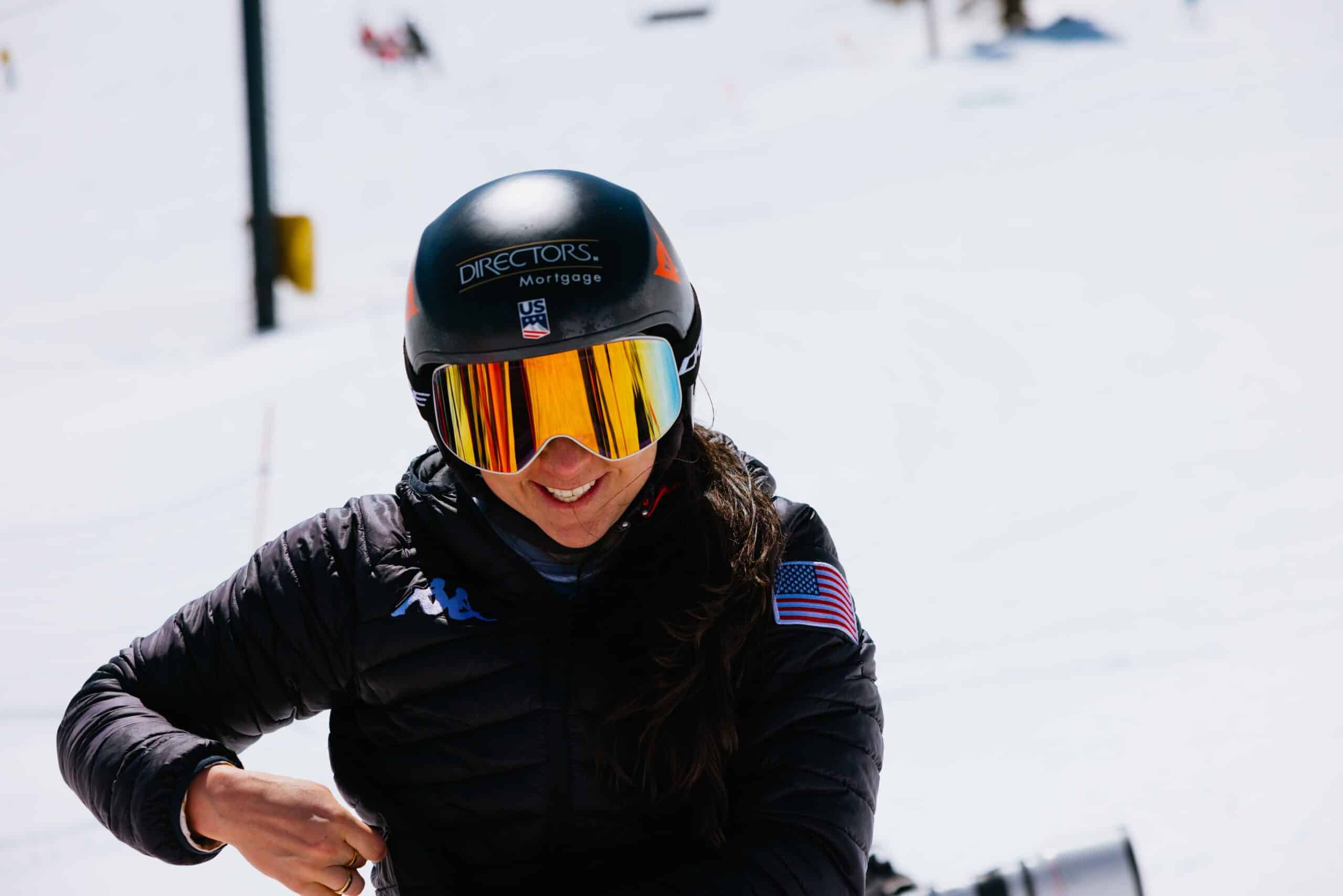
Jacqueline Wiles Altenmarkt-Zauchensee 2017: Photo GEPA
Jackie Wiles joined the U.S. Women’s Speed Team during its most shining era when teammates like Lindsey Vonn, Alice McKennis and Laurenne Ross not only imparted inspiration, expert guidance and mentorship, but proved just how resilient the human body can be. They each overcame several devastating injuries. Wiles never envisioned herself in the role of the toughened veteran, but here she is.
The eldest member of the U.S. Women’s Alpine Team returned to the speed gates for the first time in more than a year at a May camp in Mammoth, Calif. Having been riddled by injury for the better part of five years, Wiles feels she has crossed a significant threshold. She describes it as a sort of athletic rebirth.
“At first, it was just about getting my knee comfortable again, not hopping into full intensity as the winter got going,” says Wiles, who turns 31 in July. “I wasn’t too fixated on skiing gates. It was more about feeling the joy of skiing again, playing on the snow, feeling the skis, the rhythm of building pressure, and how my body was aligned. It was super important for my development, important to get back to feeling how my body works on snow and how I work the ski. It was almost like relearning the sport. It blew my mind.”
Injury timeline
Wiles’ slew of injuries began just before the 2018 Pyeongchang Olympics. She crashed during the World Cup downhill in Garmisch-Partenkirchen and “blew everything” in her left leg. It happened two weeks after her second World Cup podium, one of the most monumental moments of her career, in which she finished third in Cortina d’Ampezzo, Italy, and shared the podium with Vonn. After the Garmisch crash, however, Wiles was off the hill for nearly two years.
She returned in 2019, struggling to recapture her previous form or even land points in races before the season ended abruptly due to the pandemic.
The following season, right after notching her best result since before the left leg injury (an 18th in the Val d’Isère downhill), Wiles crashed in the super-G, breaking her collarbone and shaking her once again physically and mentally. Forging ahead to compete in the 2021 World Championships, her season finished early again with left knee surgery to address nagging, patella tendon-related pain. When training started for the 2021-22 season, Wiles was back on snow. However, the pain continued and she discovered she had also torn the patella tendon in her right knee.
She underwent minor surgery on the right knee to clean out dead tissue. Fighting PTSD from her injuries, which, along with her knee pain, resulted in her developing a defensive, non-aggressive skiing style, she nonetheless progressed through the Olympic season, finishing 21st in the Beijing downhill before re-tearing the right knee patella tendon.
This time, she was in for another long recovery.
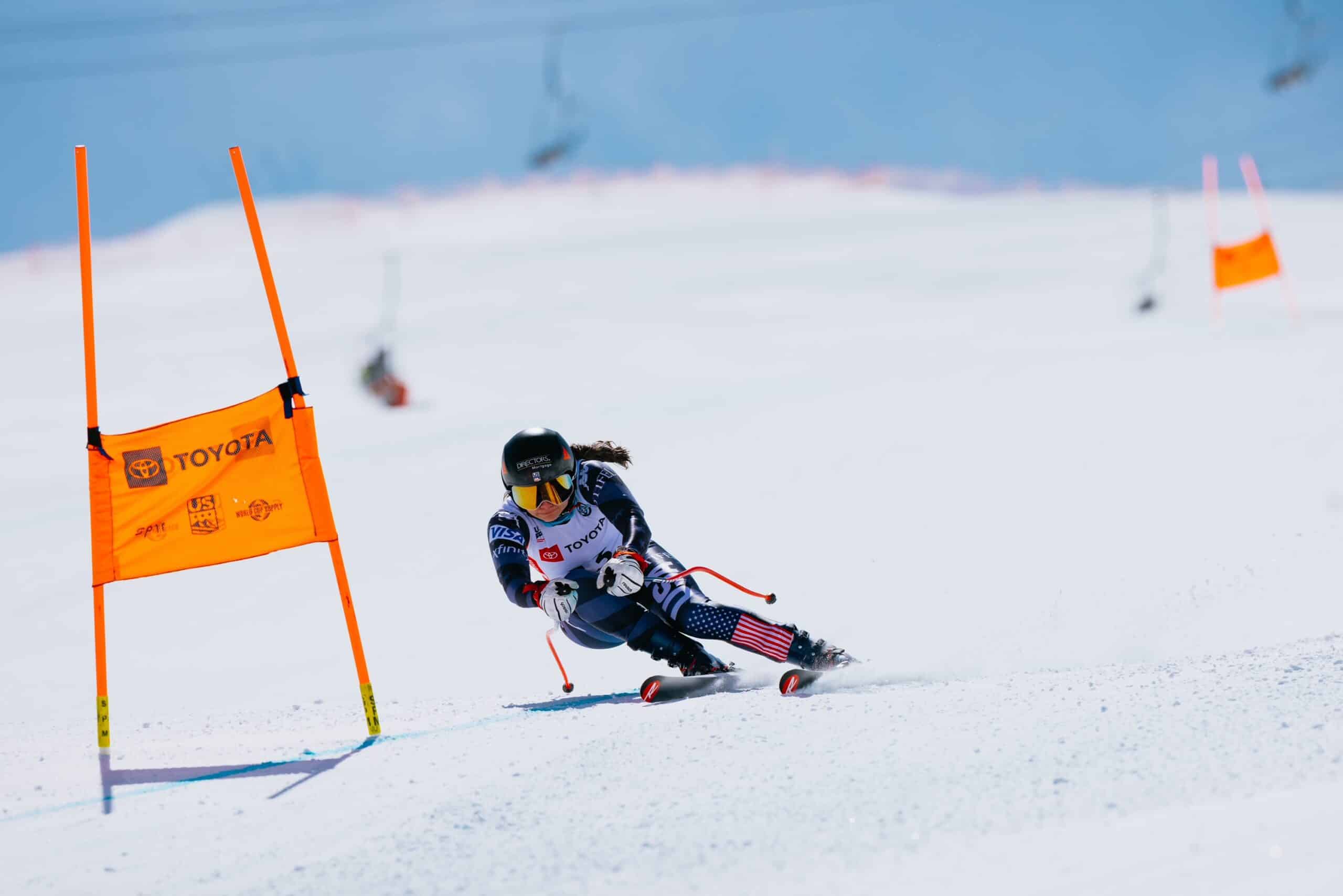
Recovering the right way
“I knew if I got the surgery I needed, it’s 12 to 18 months to do a full patella tendon reconstruction. When I found out I had to do that after the Olympics, it was pretty heart-wrenching,” she says. “I was like, can I take 18 months off? I’m 30 years old. I knew I had a lot of life left in my career. I asked the Ski Team, are you going to support me? I was super grateful and lucky that they were really supportive. They let me go the route I needed to do it right.”
Wiles spent last winter free skiing and rediscovering her love of the sport. Ready to face the risks of downhill racing with new wisdom, she hopes to continue racing through one more Olympic cycle.
“Getting older, after any physical injury or mental trauma, you have a new normal,” she says. “I know I’m never going to be the 20-year-old skier I was when I first joined the team, but it’s important I’m not that skier anymore. I’ve learned when to push, when not to push. It’s such a risky sport. You have to learn when to take that risk, when not to take that risk. I’ve been working with a psychologist to understand and accept the risk involved. When that fear creeps in, it’s about acknowledging it, not letting it control me.”
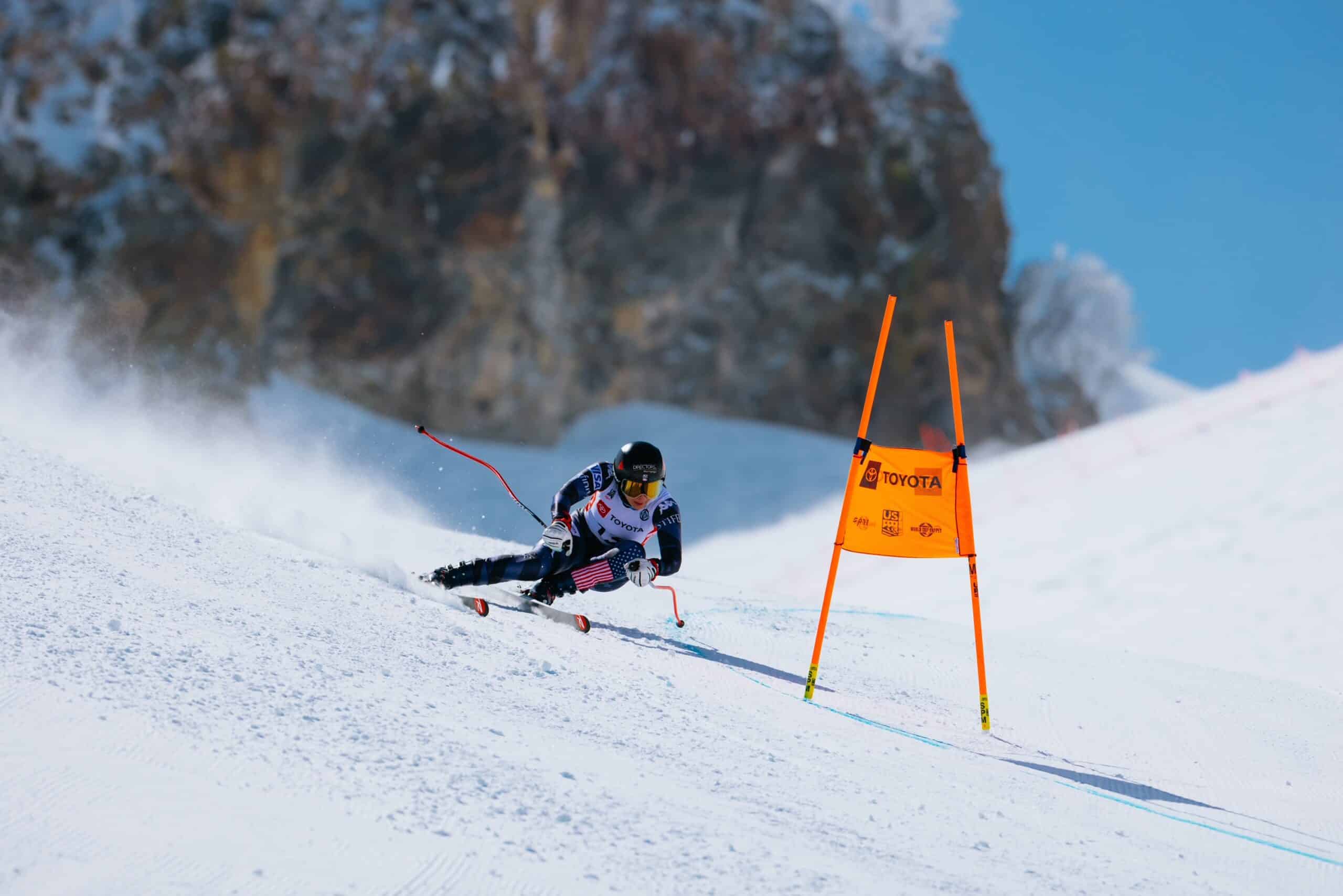
Stronger than ever
Wiles, who took up flying several years ago while recovering from injury and plans to become a pilot in her next career, will spend the summer training with the U.S. Team. She’ll return to racing in the fall. After several seasons riddled by injury, she believes after all the time she’s dedicated to recovery, she’s poised for her best season yet.
“I’m a lot stronger and more fit than I’ve ever been. I’ve had the years to build that,” she says. “I still have that eagerness and energetic drive. I’m loving it. My body feels the best it has in a long time. I’m in a really good spot. It’s those low moments that help you appreciate the highs and put things in perspective. Being older, I know I only have so many years left. I’m trying to appreciate being in the moment. What we get to do is incredible. I get to travel the world ski racing with my best friends.”
About the Author: Shauna Farnell