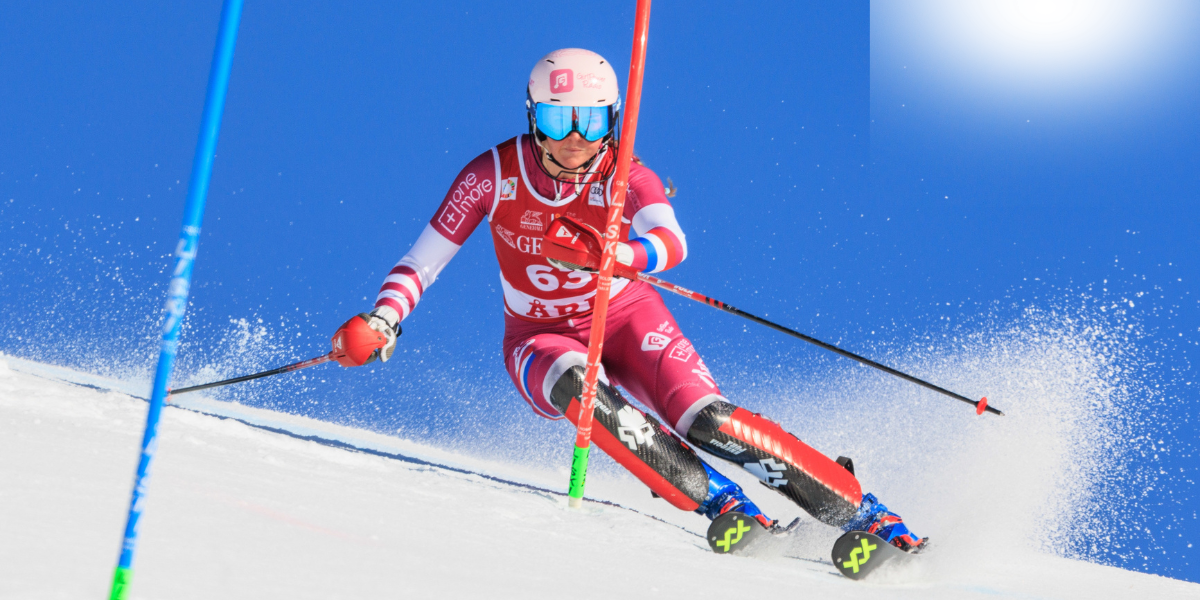
Featured Image: Kiara Derks competes in the World Cup slalom in Åre, Sweden. Photo: GEPA
From indoor slopes in the Netherlands to the World Cup, Derks has taken an unconventional road through setbacks, Olympic disappointment and a rediscovery of why she loves the sport
Kiara Derks was only three or four years old when her parents gave her a choice during a family ski holiday. She could spend the day sledding and playing with them, or she could go to ski school. If she chose ski school, however, she had to accept that she wouldn’t see them during the day.
Derks chose skiing.
“Okay, because I want to ski,” she remembers telling them.
Looking back, the story says a lot about a passion that has shaped nearly her entire life. More than two decades later, that little girl from the Netherlands has become a European Cup and World Cup ski racer, despite growing up in a country without mountains.
“The passion for the sport was there from the very beginning,” Derks said.

Becoming a Ski Racer Without Mountains
Derks first stood on skis at two during family holidays. At six, she was invited to a talent day with a ski team in the Netherlands and soon began training every week in an indoor ski hall.
By nine or 10, she was also a talented gymnast, but pursuing both sports at a high level wasn’t realistic. Skiing won easily.
“Nothing was as beautiful as skiing,” she said. “Nothing gave me the same feeling of freedom and adrenaline that I get from skiing.”
That decision eventually took her far beyond the indoor slopes of the Netherlands, but the road hasn’t been straightforward.
Derks has scoliosis and torticollis and underwent surgery last summer to address part of the torticollis. She still deals with pain regularly, but the challenges have taught her to understand her body, recovery and limits.
“When I’m skiing, I actually don’t notice it that much,” she said. “The adrenaline takes over, and I’m focused on the sport and my passion.”
When the World Cup Became Real
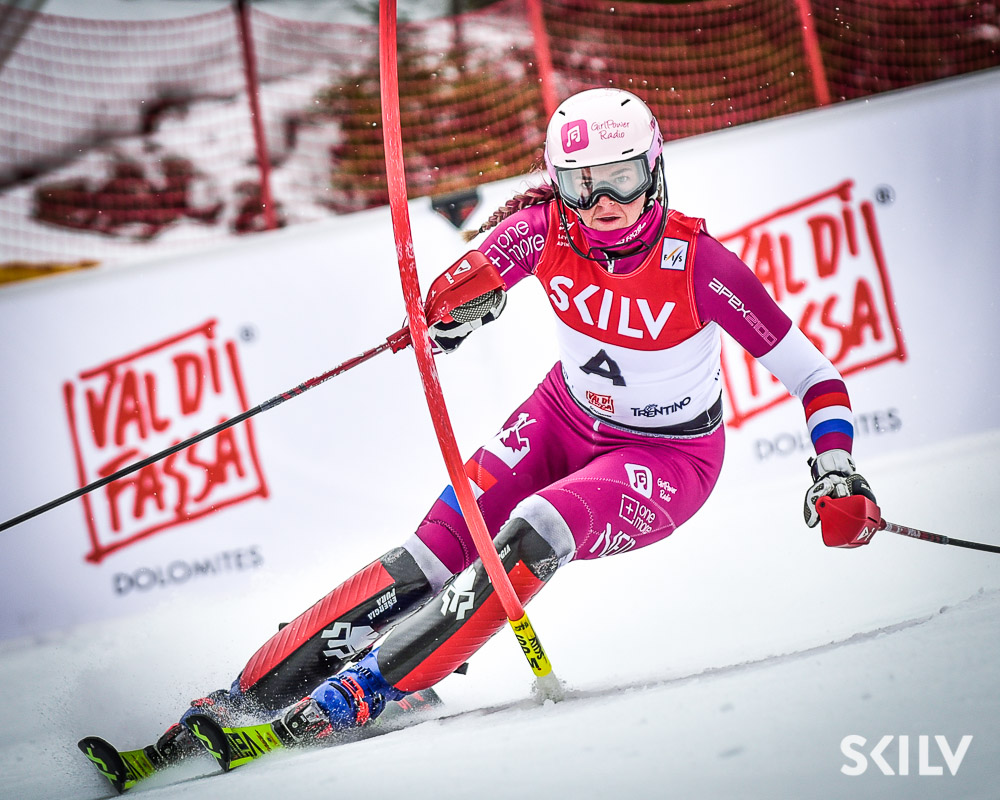
In 2023, that passion carried Derks to her World Cup debut in Flachau, Austria.
For years, the World Cup had been something she watched on television and worked toward. Suddenly, she was standing in the start gate herself.
“It wasn’t just something I watched on TV anymore,” she said. “It wasn’t impossible, because I was going to be there myself.”
Her World Championship debut reinforced the same belief. She was racing alongside athletes she had once watched from afar and proving that a Dutch skier could reach that level.
“What surprised me most was probably realizing that all these athletes are just people,” Derks said. “Me included.”
But as she moved closer to the level she had dreamed about, she also began to feel the weight of pursuing it.
Finding the Fun Again
For five years, Derks traveled with a private coach. The arrangement allowed her to pursue an international career, but over time it became lonely. She missed having teammates around her, particularly away from the mountain.
Eventually, she joined Apex, where training alongside a group of female athletes changed her experience.
“We could train incredibly hard together on the mountain and be very serious about our sport,” she said. “But as soon as we came off the mountain, we were just friends again.”
It made Derks realize she had lost some of the enjoyment that had drawn her to skiing in the first place.
“I strongly believe that without enjoyment, you won’t get the results either,” she said. “I’ve found my happiness, my passion and really a big part of myself in the sport again.”
That realization became even more important as she chased the 2026 Olympic Winter Games.
Missing the 2026 Olympics
To meet the Netherlands’ Olympic qualification criteria, Derks needed a top-30 World Cup result. As the qualification period continued, she became increasingly focused on achieving it.
Instead of helping her ski faster, the pressure began working against her.
“I noticed that I became afraid of making mistakes during races,” she said. “And because of that, I wasn’t skiing the way I was capable of skiing.”
Derks ultimately missed the Olympics, one of the biggest disappointments of her career.
She went home for two weeks afterward to reset and figure out how she wanted to finish the season. Eventually, she found herself thinking about the little girl who had chosen ski school all those years ago.
“As a child, you don’t necessarily ski to win,” she said. “You ski because you enjoy it. Because it gives you freedom. Because it gives you adrenaline. Because that’s where your passion is. That’s where your heart is.”
Derks decided to stop skiing purely for results.
That didn’t mean the results stopped mattering. She still wants to break into the World Cup top 30 and believes she can. But she stopped allowing that goal to dictate how she felt every time she entered the start gate.
“I mainly want to ski well, enjoy myself and trust what I can do,” she said.
Then the results started coming.
Breaking Through in the European Cup
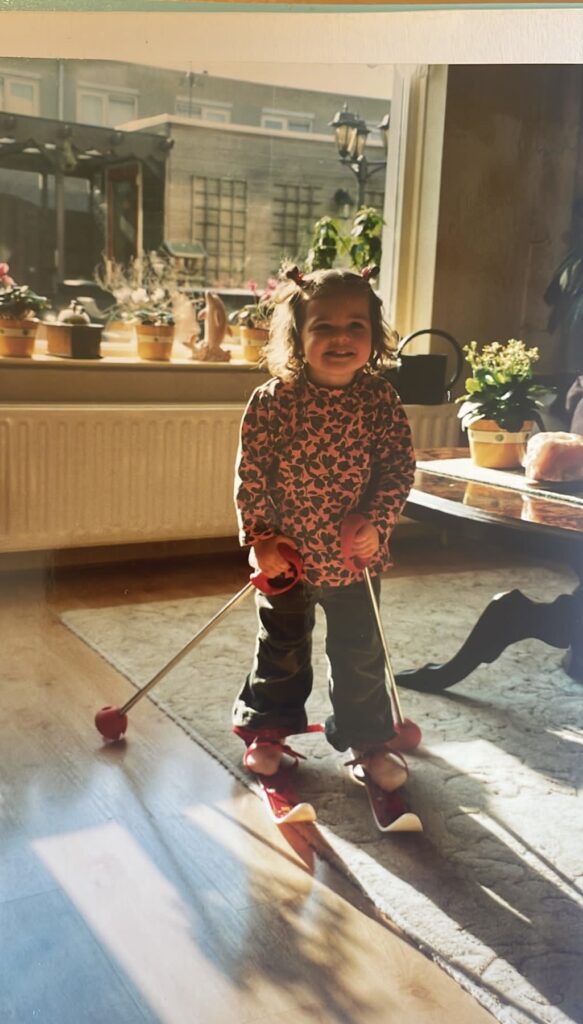
Derks returned to competition at a FIS race and won. She carried that confidence into the final European Cups of the season, where she had struggled for years to believe she belonged near the front.
Starting with bib numbers in the 60s, 70s and sometimes 80s had made the top 30 seem far away.
“If you don’t believe it yourself, who will?” she said.
At a European Cup in Sweden, something finally clicked. Derks realized she had trained with many of the athletes around her and raced against them in FIS events. The competition had a different name, but her job hadn’t changed.
“It might have a different name and you might have a different start number, but ultimately you just have to ski the way you can ski,” she said.
She stopped comparing herself to the athletes at the top of the results sheet and focused instead on skiing the way she knew she could.
By the end of the season, Derks had broken into the European Cup top 30 and earned her first top-10 finish.
“I never expected that I would still make the top 30, and even the top 10, in the European Cup that season,” she said. “Sometimes things happen when you least expect them.”
For Derks, however, the biggest breakthrough wasn’t a number on the results sheet.
“I now stand at the start with a smile instead of with fear of failure,” she said. “And I think that’s where I’ve grown the most.”
The Road to the 2030 Olympics
Derks’ next big goal is already written in her social media bio: “Road to French Alps 2030.”
Reaching another Olympic cycle as a Dutch alpine racer comes with challenges beyond skiing. Derks doesn’t receive structural financial support from the Netherlands and doesn’t have a Dutch national alpine team behind her. In addition to training, racing and recovering, she is involved in finding funding and sponsorships, building partnerships and managing her social media.
“Basically, everything comes down to me,” she said.
It’s demanding, but Derks also sees something meaningful in proving that an athlete from a country without mountains can compete alongside the world’s traditional alpine nations.
“I think it’s special to prove that the Netherlands can stand among all those Alpine countries,” she said.
Her journey has already taken her from an indoor ski hall to European Cup and World Cup start gates. Now she believes it can take her to the 2030 Olympic Winter Games in France.
“If I really want something, I go for it,” Derks said. “Eventually, I find a way to make it happen, no matter how difficult the road is.”
Her advice for young athletes chasing their own unlikely goals reflects many of the lessons she has had to learn herself: surround yourself with people you trust, work on your recovery and mindset as seriously as your training, learn from setbacks and don’t lose sight of why you started.
“Enjoy the process and enjoy the adventure,” Derks said. “There will always be setbacks, but try to take something positive from every difficult challenge.”
And above everything else?
“Have fun. Laugh. Laughing is really good for you. And who knows, maybe I’ll see you in the World Cup.”

About the Author: Katie Twible