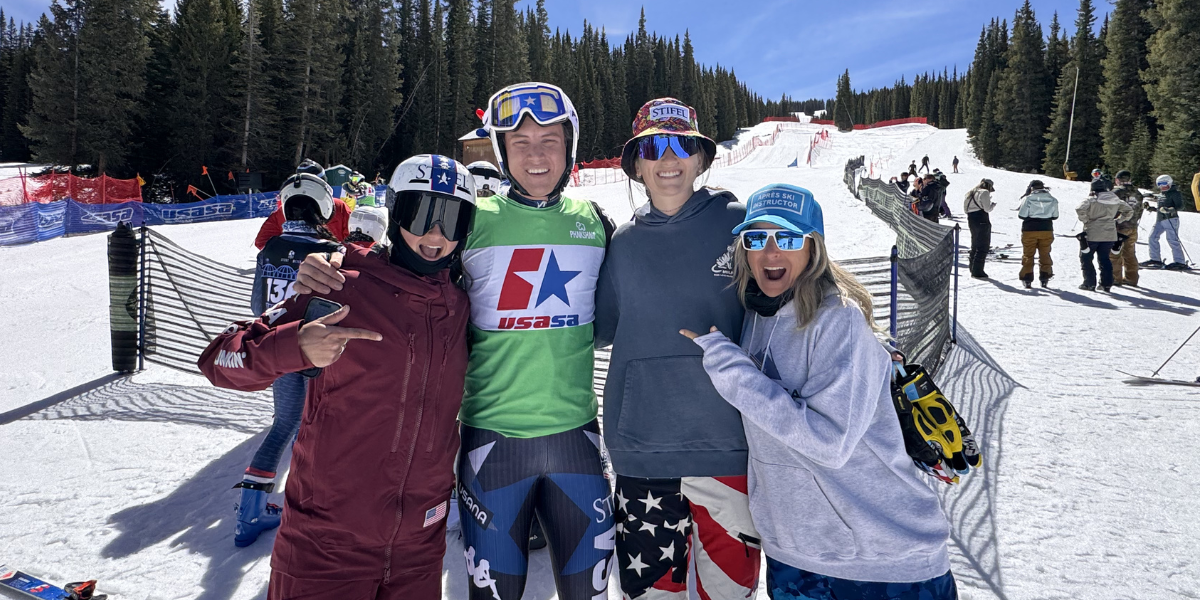
Alli, Daniel, Lauren, Amy Macuga
Lauren Macuga spent part of the winter building book nooks, reading novels, raising shrimp and cheering for teammates from home.
She would have preferred racing in the Olympics.
Instead, one of the fastest-rising stars in alpine skiing spent the 2025-26 season recovering from the ACL tear that ended her Olympic dream before it ever began.
The Stifel U.S. Ski Team racer entered the season with as much momentum as anyone in the sport. At 22, Macuga had just earned her first World Cup podiums in downhill and super-G, including her first World Cup victory in the St. Anton super-G in Austria. She also captured World Championship bronze in super-G at Saalbach, Austria, finished fourth in the World Cup downhill standings and sixth in super-G, then scored giant slalom points in her first World Cup GS start at the Sun Valley Finals.
Momentum surrounded her entering the biggest season of her career.
Then everything stopped.
Months later, Macuga still remembers the moment she knew something was wrong.
Not the crash itself.
Not even the pain.
The feeling came after she clicked back into her skis and felt the bones in her knee shift.
“That was disgusting,” Macuga said. “I was like, ‘Okay, that’s not right.’”
The realization that followed proved even harder.
“I think for weeks after, every night when I would go to bed, I pictured that,” she said. “Not even the crash, just the future. You’re like, ‘What happened?’
“You think about everything — the whole season coming up that you worked so hard for, actually worked your whole life for. That is brutal.”

A setback that became two
The injury alone would have been difficult.
Recovery became even more complicated.
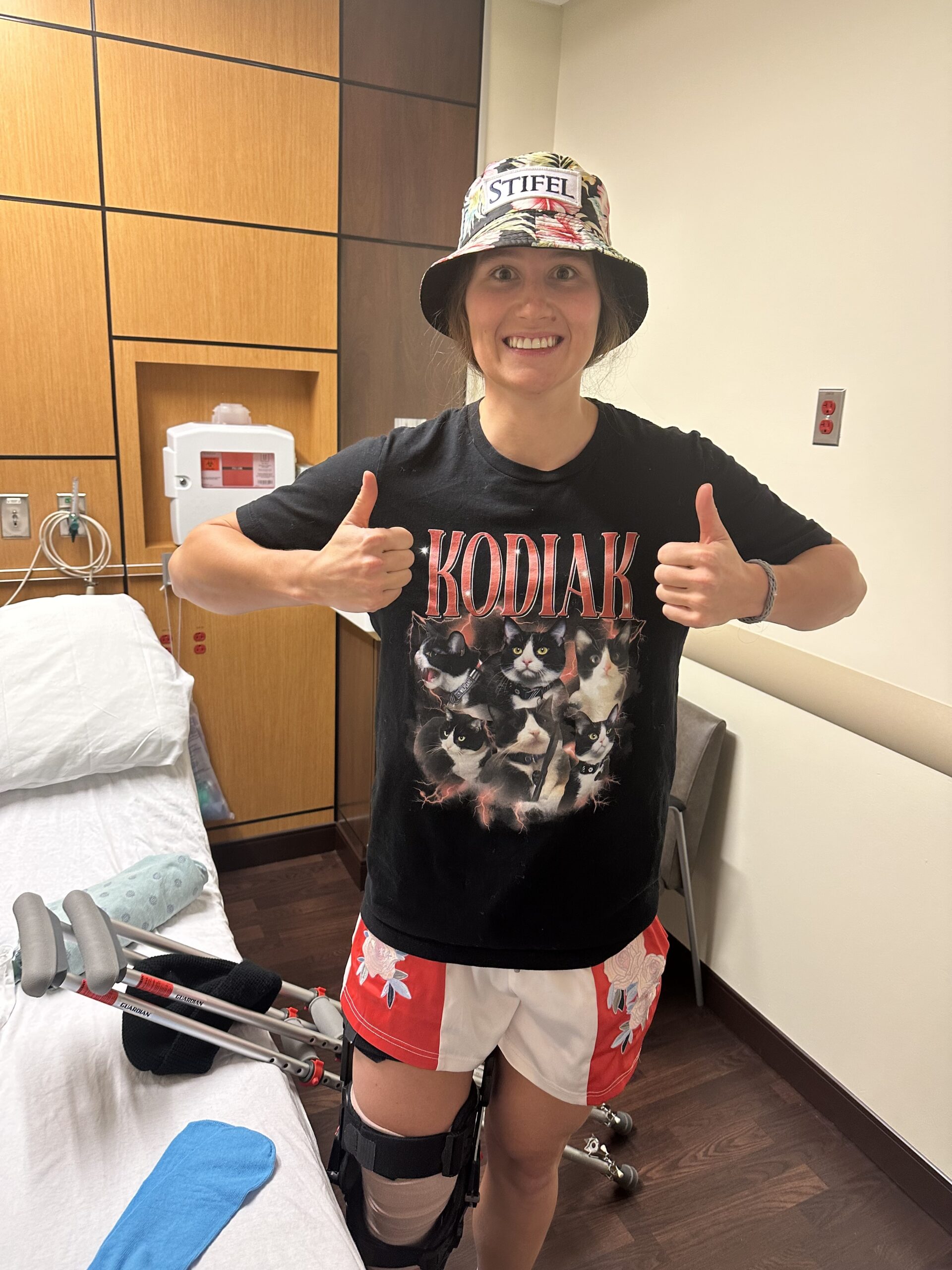
For nearly three months after surgery, Macuga attended physical therapy twice a day during the week and once on weekends while trying to regain full extension in her knee.
Nothing seemed to work.
Eventually, an MRI revealed the problem.
“There was a Cyclops — at least it has a cool name,” Macuga said with a laugh.
The Cyclops lesion, a buildup of scar tissue inside the knee, prevented her leg from fully straightening. Doctors performed a second surgery in March to remove it.
“It was actually like the magic fix,” Macuga said. “It was the coolest thing waking up from that. Immediately I could feel my knee go straight.”
The procedure changed everything.
Since then, progress has accelerated. Macuga recently began more advanced jumping progressions and strength work while focusing on fully reactivating her quadriceps after months of compensation around the injury.
“I can feel the quad turning on now,” she said.
For the first time in months, the conversation has shifted from recovery to skiing.
Macuga hopes to return to snow in Chile later this summer as part of the Stifel U.S. Ski Team’s South American training camps.
“I want to go to Chile and do my return to snow,” she said. “Then hopefully get some gate training in maybe at the end of that camp when the speed team goes down.
“That’s just my ideal situation.”
Click on the image to enlarge
Watching from home
The hardest moments of recovery were not always physical.
At times, the emotional challenge felt greater.
One of the lowest points came shortly before the second surgery.
“PT hurt,” Macuga said. “It hurt a lot every day.
“There was this one Friday where I was sitting at the smoothie bar and I was a few minutes late to PT because I just didn’t want to go.”
Days later, doctors discovered the scar tissue issue that had been preventing progress.
“That was probably the worst point for me,” she admitted.
The emotional struggle began much earlier.
Missing the sport she loves
Shortly after surgery, Macuga watched races in Copper Mountain. She later traveled to Beaver Creek, where her brother Daniel was forerunning the men’s speed races.
“I woke up from my surgery, and I actually had a dream that I was racing those events at home,” she said. “It was so hard for me mentally, so I had to step away from it.”
For most of the winter, she intentionally avoided watching alpine skiing.
“Watching your friends and teammates where you were supposed to be doing the thing you love every weekend is really, really hard,” she said.
There was one exception.
The Olympics.
“That was the only race I watched,” Macuga said.
The Games were difficult to watch, but they also provided motivation.
The Stifel U.S. Ski Team women enjoyed one of the strongest seasons in program history. Breezy Johnson won Olympic downhill gold. Jacqueline Wiles continued one of the sport’s most inspiring comeback stories with another podium and an Olympic medal. Lindsey Vonn added World Cup victories during her remarkable return to the top level of the sport.
“It was cool to see both of them podium after hearing all these stories,” Macuga said of Johnson and Wiles.
“That was huge to see and realize that. Kind of another motivation to be like, ‘Yeah, 2030 — that’s my goal.’”
What she missed most
Recovery can be lonely.
Macuga said support from teammates helped make the process easier.
Lindsey Vonn was among the first people to reach out after the injury, offering advice and sharing her own experiences recovering from serious setbacks.
Macuga also leaned on Johnson and Wiles, both of whom understand the long road back from major knee injuries.
“Around the time of the surgery, I talked to them both before and after it,” Macuga said.
Still, what the injury taught her most had little to do with skiing technique or physical preparation.
It taught her how much she loves the sport.
“The biggest thing I’ve learned is just how much I love the sport,” she said.
“When you get hurt, you lose all of it. You lose every bit of it. Your team is gone. They reach out, but you don’t see them every day. You miss the coaching. You miss the video sessions. You have none of it.
“Your whole life is flipped around.”
That absence deepened her appreciation for everything surrounding ski racing.
“You really do learn to appreciate it once you don’t have it.”
Positivity is her superpower
Few athletes on the World Cup circuit are known for bringing more energy than Macuga.
The dancing celebrations.
The finish-area bucket hats.
The constant smile.
Even through one of the most difficult years of her life, that mindset never disappeared.
“It is my superpower, I guess,” she said.
Macuga described intentionally reframing difficult situations during rehab the same way she approaches difficult conditions on snow.
“You have to teach it to yourself every day,” she said.
“Instead of, ‘Oh shoot, you have to go skiing in the rain,’ it becomes, ‘Oh my gosh, I have an opportunity to learn how to ski faster in the rain.’”
That perspective helped carry her through the darkest stretches of recovery.
“You get so much more done when you bring a smile into that PT room,” she said.
The optimism is genuine.
But so is the confidence.
Before the injury, Macuga believed she was skiing the best giant slalom of her career.
“There was a day in Corralco where it kind of clicked,” she said. “Then in Copper, something changed. I was very excited to race the Copper World Cup because I thought I could do pretty well.”
That belief has not changed.
“I know I can do that again,” Macuga said of returning to the World Cup podium.
“It was never like, ‘Oh, I can’t do that anymore.’ It was more like, ‘Oh, I think I could do that better.’”
Looking ahead
Away from rehabilitation, Macuga found unusual ways to stay busy.
Reading became a favorite escape.
So did building elaborate book nooks.
Then there is the shrimp farm.
“It’s super random, but I started a little shrimp farm,” she said.
The project joined a growing list of hobbies that helped fill the downtime normally occupied by travel and racing.
The bucket hats remain.
They have become part of Macuga’s identity on the World Cup circuit, especially in finish areas after races. During this interview, she again wore one featuring a Stifel logo.
Until last season, Macuga did not even have a headgear sponsor. Her partnership with Stifel, the Stifel U.S. Ski Team’s largest partner, is another reminder of how quickly her profile has risen since her breakthrough campaign.
Still, none of those hobbies replace skiing.
“I miss all of it,” Macuga said. “I love traveling. I love everything that comes with ski racing.
“Even the pre-race workouts where everyone’s exhausted and complaining — I miss that feeling.”
Now, for the first time in months, the excitement has returned.
She recently completed single-leg squat progressions pain-free, regained nearly all of her preinjury physical testing numbers and finally began feeling her leg respond normally again.
“It feels like that gap is closing,” she said.
Macuga spent the winter watching teammates chase Olympic medals, rebuilding her knee and learning just how much ski racing means to her.
Now she can finally see the next chapter coming.
“The next time winter comes, I’ll be skiing,” she said. “I get all jittery thinking about it.”
For someone who spent the season discovering how much she missed the sport, that thought is enough.
“The season’s going to be so much fun,” she said. “I’m just excited to do everything again.”
About the Author: Matt Garcka