Even though it’s gone on for a couple decades, the October launch to the World Cup always catches me off guard. I try to be ready. I even threw grass seed down a couple weeks ago to beat the first rocky mountain snow. It will be ready to pop with the spring thaw. This morning there was a green fuzz showing through the bare earth, reminding me one should not base the growing season on the World Cup calendar.
Even for the seasoned veterans, Soelden is early. “It can be a bit of a crap shoot,” says retired giant slalom star Ted Ligety. “It depends so much on the quality of the training you’ve had quite close to the race.” Everyone knows the season doesn’t really hit full cry for another month, and the next men’s giant slalom isn’t for nearly two months. In October, most racers are still only half baked. Either due to Covid or choice, many teams don’t begin ramping up their ski days until mid-to-late August. New equipment is getting rolled out and refined, and the winter conditions that provide the most telling feedback are hard to come by. In the end, you wind up with various levels of preparedness.
“On the other hand,” Ligety counters, “The hill is tactically pretty straight forward, and the conditions on race day are usually better and more consistent than the training leading in.” Which, I guess, is his way of saying, even if you don’t have all your ducks in a row, you can lean on your body of work to carry you to victory there, something Ligety did a record four times in the space of five years. Indeed, when you look down the list of past winners, it reads like a list of legends with few exceptions. Look closer still and you see that the first of these wins each on the glacier didn’t come until these greats were in their mid-20s, or later. The most recent outlier was last year’s winner Lucas Braathen, then age 20, who became the youngest – by four years – to win Soelden.
But in the interest of prognosticating, I think we’ve moved into the era of the outlier as we exit the era of generational phenoms. Together, Marcel Hirscher, Hermann Maier, Bode Miller, Ted Ligety and Alexi Pinturault won most of the giant slalom races over the last two decades. Among them, only the Frenchman Pinturault remains active. He is healthy, and according to those who have crossed paths with Pinturault and his private team, he remains consistent and fast. No doubt, he’s the favorite, but he is surely aware, there were five different winners last year in a season of 10 World Cup GS races.
On the men’s side
SWITZERLAND
They have stars, such as the 2021 runner up for the overall, super G and GS title, Marco Odermatt. They are deep with four skiers ranked in the GS top 12. They have arguably the best summer and fall glacier training in Europe, and they have the kind of training pace that can give them that extra bit of confidence others might lack on opening day. By the numbers, they’re the top-ranked GS team having scored almost 25 percent of the World Cup points available in 2021.
Most ominously, they sound confident, which, as my friend and Swiss commentator Stefan Hoefmaener explains, needs to be weighed against the Swiss sensibility to NEVER oversell yourself. “The U.S. is full of big thinking. If you say one day you will win the Olympics, Americans love that,” he ribs me. “We are people of the mountains, not talking too much, very realistic. So, if you say when you’re young that you will win the Olympics, people will think you’re a fool. And if you say you will win and you go there and don’t, you’re dead.”
Anything smelling of arrogance is sacrilege, but, he says, Odermatt rides that razor’s edge with Swiss precision. He’s simple exudes the idea that he’s got as good a shot as anyone — the Swiss equivalent of Babe Ruth calling his homer. Based on all accounts of his training pace, look for him to knock one out of the park. The same is being said of Loic Meillard, the fully-healthy Gino Caviezel and the revived Justin Murisier. They are the team to beat in 2022.
FRANCE
Not as deep, but just as deadly at the top ranks, the French could be Switzerland’s biggest threat. Mathieu Faivre’s first World Cup win came in 2010. He did not win again until last year. In the last few years, he went nearly dormant. Then, midseason, he was handed the latest GS model of HEAD skis and rose like a phoenix, winning the world championship GS (and parallel) along with another World Cup GS. Coaches say he remains blistering fast as does his unheralded teammate, Thibaut Favrot, who has added much-needed consistency to his well-known top end.
NORWAY
The pressing question is if Soelden will be too soon for this ailing powerhouse. At peak health, they can go toe-to-toe with France and Switzerland. But they remain on the mend. Braathen, last year’s winner, has surely turned some heads in recent training, but hasn’t raced since injuring his knee on Jan. 8, 2021, in Adelboden run two. His equally-talented teammate Atle McGrath has had a couple more hours to heal. He injured his knee on the first run that same day. A week later, their teammate, Alexander Aamodt Kilde, the 2020 overall champion, injured his knee. Kilde will sit out the opening race. The outright slalom and GS star of the team remains the independent skier Henrik Kristoffersen with 23 World Cup wins, four in GS. However, he is also suffering the lingering pain from the talus bone he fractured on his dirt bike in April. He’ll race, but if it’s rough, it will be tough says his coach and father, Lars Kristoffersen.
AUSTRIA
Imagine if the Yankees or the Patriots hadn’t won an opening game at home in seven years? If you’re and Austrian skier, you don’t have to. You’re living it. Neither the men nor the women have won this race since 2014. It’s difficult to overstate the expectations they feel in the post-Hirscher era. Their top-ranked GS skier, Stefan Brennsteiner, got a full dose last year in Soelden when the team suffered one of the worst results in its history.
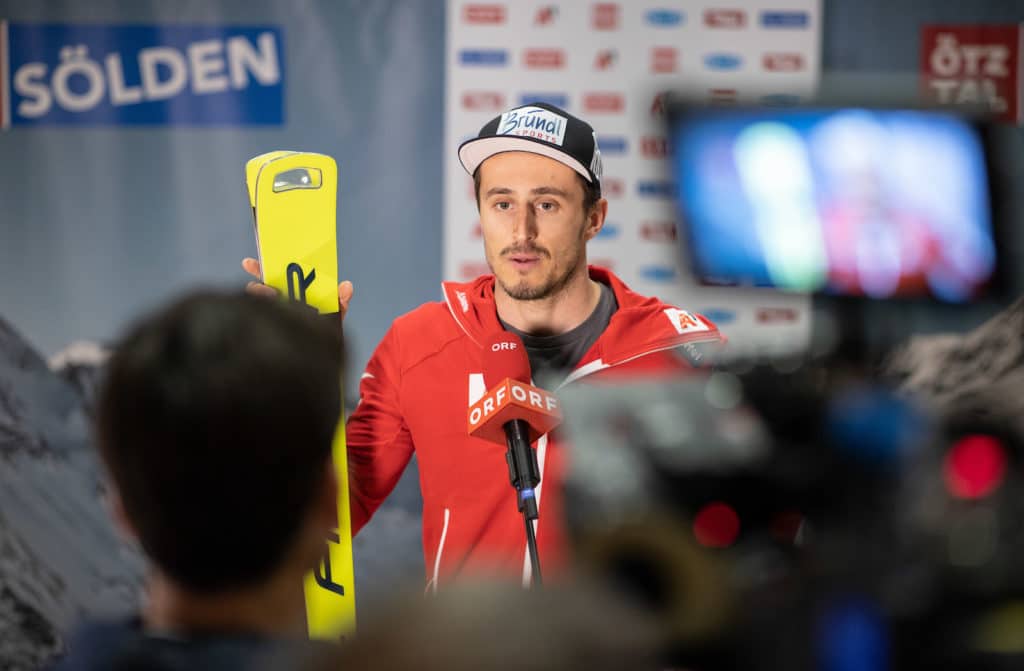
“Last year, I was 17th coming back from injury and got buried in the media for being the best Austrian in 17th place,” he said. “It went on for a week until the criticism died down. A 17th place for me was a great result, but I was slammed for it.” A dozen Austrians scored World Cup GS points last year, by far the most of any country. But, short of a win or a podium, that won’t quell the critics. Brennsteiner has long been one of the world’s fastest skiers in training. He just started harnessing that speed on race day to wind up sixth in the 2021 GS standings. He is worthy of podium expectations but handling that billing will be a test unto itself.
CROATIA
Filip Zubcic has delivered Croatia its first, second, and third men’s GS wins, all since February of 2020, and all in abnormally challenging conditions. The easier or more standard the conditions get the more difficult it seems for him to win. Soelden is shaping up to be excellent conditions and he’s never been better than 12th there. A victory or even a podium, could set him up as a very serious threat to the GS globe race, in which he finished in third last year.
UNITED STATES
This marks the American’s entry into the post-Ligety era. Ted remains in close contact with coaches and his former teammates, but as head technical coach Ian Garner told me, his physical absence “feels a little weird.” Speed, wisdom and knowhow surely remain with World Cup winners Tommy Ford and Ryan Cochran Siegle. Ford, fifth in the 2020 GS standings, will not race because he is still not recovered from his heavy crash in Adelboden last January.
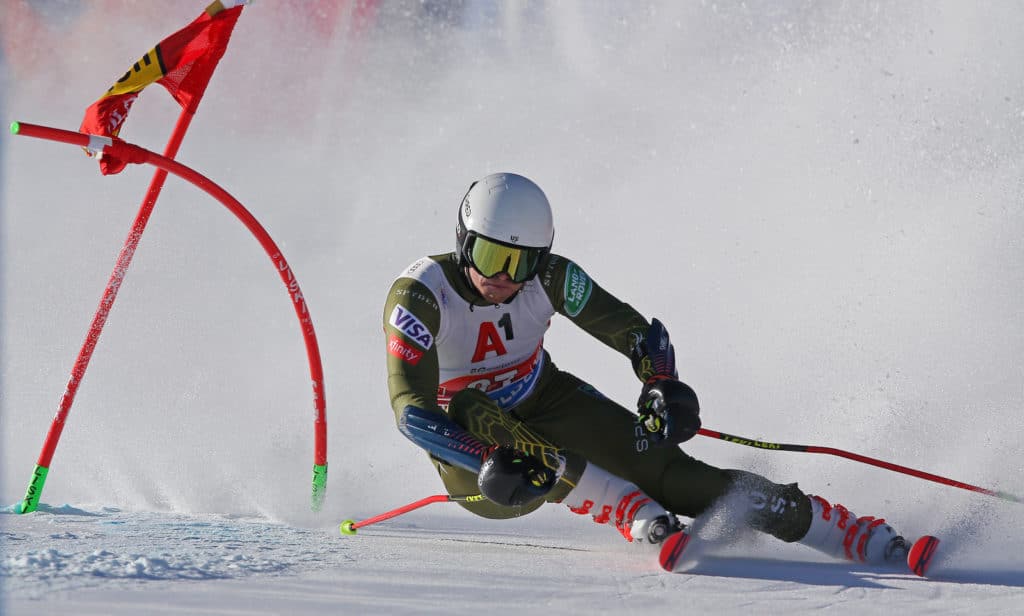
RCS will be an interesting watch as there is a lot to unpack there. We haven’t seen him race since his January crash in the Kitzbuehel downhill where he fractured his neck. At the time, he was the toast of men’s speed skiing in both downhill and super G. He is fully healthy but also on all-new equipment. Garner says he has seen marked improvement in his speed on steep terrain on the new HEAD GS ski, and that the early GS races favor the three-event skier.
“It’s one of the only times in the year where he gets a solid block of GS training before a race,” he said. “It’s much harder to find that same training between all the speed races and travel midseason. So, he tends to be better early in the year.” That will also depend on his comfort with the setup he chooses on race day. He’s been a Rossignol skier his entire career; adaptation can take time.
River Radamus broke through last year. Before that, the super-talented youth who won all manner of world junior and youth olympic medals, languished for a couple years at the World Cup level. Then, last year, a big, strong and hungry Coloradan showed up looking very much like he belonged, scoring in half of the 10 World Cup GS races punctuated by an 11th at the world championship.
Garner says he’s built on that strength and is showing further stability and speed. Radamus opened last year with a 27th-place finish starting outside the top 30, not an easy task in Soelden. This year, he’s got a head start with a bib inside the coveted top 30.
NorAm champion Bridger Gile will also be in the start. Visually, Gile is a site to behold. Quick, dynamic, exciting. “Like every time he skis by, some coach is asking me, ‘Who was that,’” says Garner. He’s got the speed to qualify, but the top-to-bottom consistency remains unproven at the highest level.
Women kick things off Saturday
“If she takes any of the runs I saw today and does that for two runs in the race, I think she will win.” That was the opinion of Mauro Pini after watching Mikaela Shiffrin train this week in Soelden. As for Shiffrin’s coach, Mike Day, he quietly passes off the praise with, “Her form is coming along nicely.” That borders on braggadocio for Day who would have said as much in the 2019 season when Shiffrin won 17 races, smashing the previous record of 14 held by Vreni Scheider and Ingemar Stenmark.
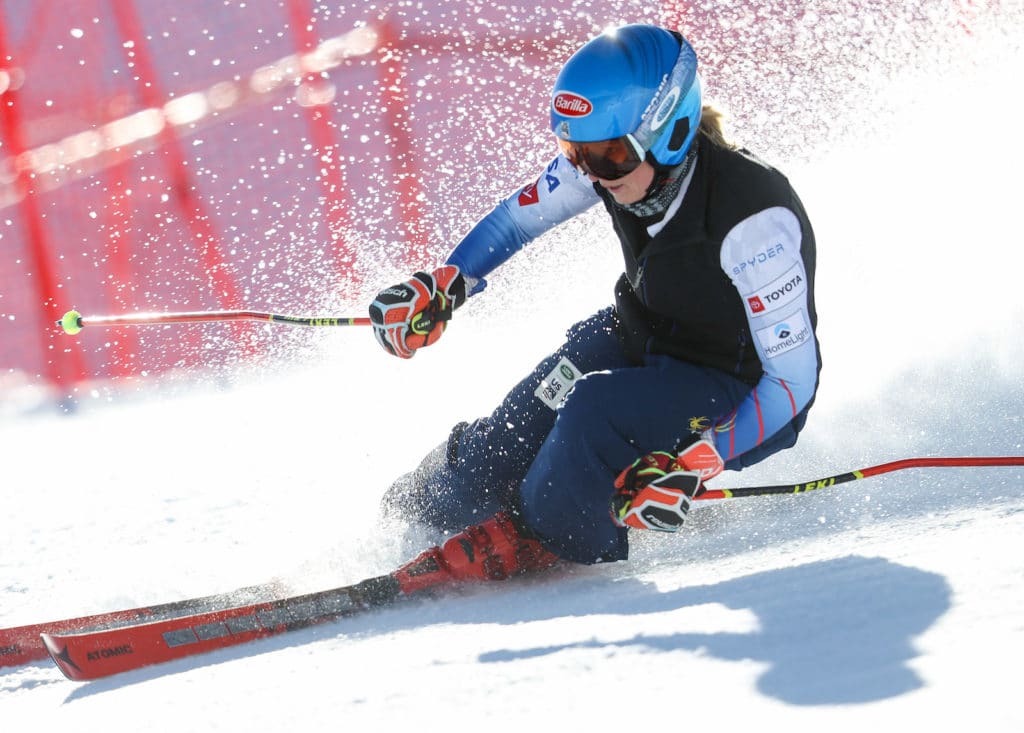
Though admittedly just an opinion, Pini’s is one worth heeding. He has taken the helm of the team that won the 2021 overall with Petra Vlhova, carrying forward the work of coach Livio Magoni. He has one of the sharpest eyes in the game. In recent years, he’s shared his insights as an analyst for Swiss-Italian Television. He’s also served as the Head Swiss men’s coach and was the long-time private coach of Lara Gut-Behrami, the only active skier to have won Soelden more than once. He coached Slovenia’s Tina Maze who holds the record in Soelden with three wins. He has a tremendous breadth of experience, but none of it prepared him for the unparalleled popularity Vlhova enjoys in her home country of Slovakia. “It is unbelievable. There is the prime minister, and then it’s her,” he said. “They are so proud of her.”
That comes with pressure as well, which might help to explain some of the difficulty she’s had with nerves in the opening race of the season. In seven starts, she’s finished only once on the podium. Otherwise, it has been either a DNF or finish somewhere north of eighth. He’s tried to find more sparring partners leading into the race to build her comfort and confidence. There is also a bit more technical work she needs in GS, but at this stage in her career he says it’s more about building her confidence and managing her energy and motivation. “Her pace is not so far off Mikaela right now,” he adds.
ITALY
As Mike Day is very quick to remind, women’s giant slalom carries the longest list of contenders of all the disciplines. That starts with the 2021 GS title winner Marta Bassino, who dominated the discipline for the four months of the 2021 season like no skier has in more than a decade. She leads the top-ranked giant slalom team in the world, Italy. It includes the irrepressible speed skier Sofia Goggia, who has drilled down on her giant slalom in the off season and doubled down on her already impressive fitness. If she can regularly contend in giant slalom, Goggia could give Italy a second outside shot at the overall title. Also vying is Federica Brignone, who won the 2020 title on the strength of her GS. However, Brignone’s level remains somewhat unknown as she is now training independently of the national team and somewhat at odds with her federation. Italy will go without the 2017 world junior GS champion, Laura Pirovano, who injured her knee and is out for the season.
UNITED STATES
Italy remains the team to beat, but for the first time since the 1980s, the fourth-ranked Americans could take a run at the very best teams. The U.S. women scored 576 points in the 2021 GS season to the Italians 1,202. It’s a large delta, but there are two significant factors to consider: In 2021, Shiffrin was still very much in the throes of her father’s passing. In 2019, she alone scored 615 points.
Second, the U.S. team is young. When you take the four racers that scored last season, Shiffrin, Paula Moltzan, Nina O’brien and AJ Hurt, they combined for the youngest average age on the tour at 24 years and four months. They are on an upward trajectory. O’Brian showed winning speed at the world championship in Cortina, Italy, in one of the most demanding and exciting women’s giant slalom races I can recall. Austrian television poured over her compact, high edge angle and power-driven skiing, calling it the future of the discipline. Her consistency is a work in progress, but her coach Magnus Andersen says it’s improved over the summer and fall.
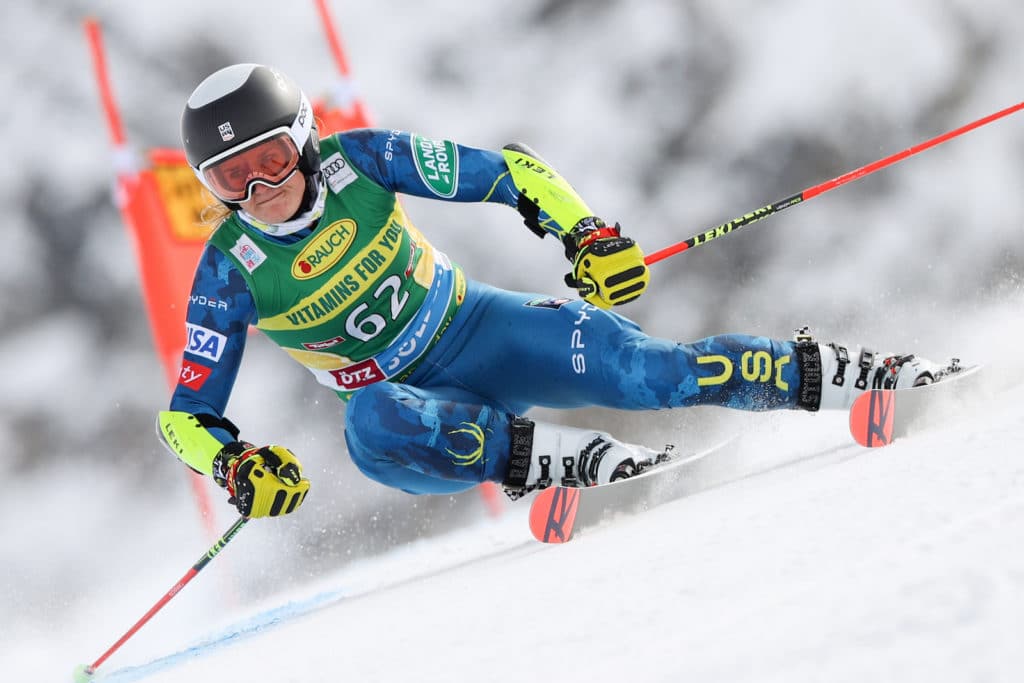
Paula Moltzan, pigeon-holed as a slalom specialist most of her career, emerged last year as one of the fastest GS skiers in the world when the conditions suited. However, for much of the season, she battled tough conditions with a high start number. She will start this year inside the top 30 combined with a good deal of training emphasis on managing softer and choppier conditions.
The U.S. women even had a few sessions with the master of junk conditions, Filip Zubcic of Croatia. “That was really worthwhile,” said Andersen. They also had a good deal training with Shiffrin, more than years past, “who is the best at with tactics and transitions,” he said. AJ Hurt also joined their training group. Last year the Californian was one of just a select few World Cup skiers to score in four disciplines: slalom, GS, super G, and parallel. There is little question that she has the ability to score in downhill, but for now, Andersen has her drilling down on her slalom and giant slalom and will build from there. “She has really improved her stability,” he said.
AUSTRIA
It’s the same story as with the men. They have depth, 10 skiers in total who scored World Cup points in GS last year. None landed on the podium. That is likely to change this year. Stephanie Brunner’s name comes up in every pre-season discussion. She’s the fastest of the Austrians and typically the fastest when they train with other nations. Brunner seemed poised for victory several years ago but suffered back-to-back knee injuries that disrupted both her 2019 and 2020 seasons and led to a timid return to action last year. Her teammate, the 2021 slalom title winner Katharina Liensberger, is also showing strides in giant slalom. She won the bronze medal at the World Championships after nearly sliding out on her side. Coaches say she’s continuing to progress.
SWITZERLAND
The No. 2 GS team will likely get off to a slow start. Wendy Hoeldener injured both wrists in a dryland training incident and will sit out. Switzerland’s top ranked GS skier, Michelle Gisin, is still suffering the effects of mononucleosis. She’s had no more than seven days of giant slalom training since last year and will make her decision about whether to start the morning of the race. She says she’ll reserve the option to pull out even after run one should fatigue set in.
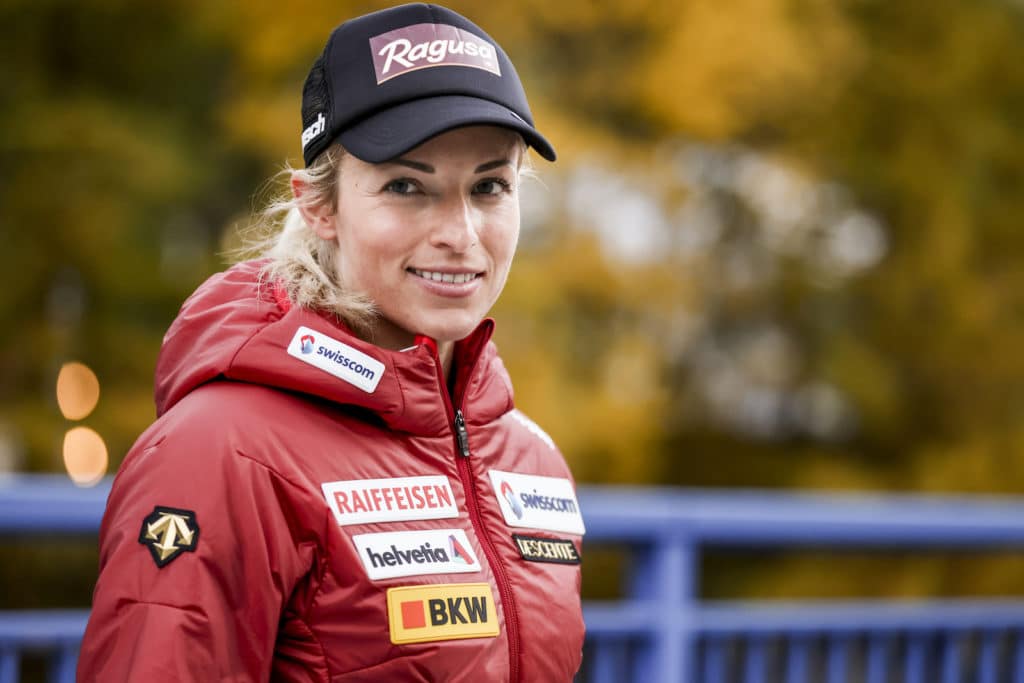
That leaves Lara Gut-Behrami to shoulder the team expectations. They are worthy shoulders. Gut was on a tear last year getting better as the season moved on. Had it continued on another few weeks or even a few races, she might have won the overall title. Though her strength is in speed, the high pace of Soelden speaks to her skills, and she is the only skier in the field to have won Soelden twice.
FRANCE
French hopes land squarely in the hands of one skier, Tessa Worley. She has more GS wins than any active skier and is in a four-way tie for third place on the all-time giant slalom wins behind Anne Marie Moser Proell and Vreni Schneider. She’s one of the best there’s ever been and rather than slowing at the age of 32, last year she seemed to regain her strength and confidence impacted by some nagging injuries in previous years.
NEW ZEALAND
At her best, Alice Robinson can take your breath away. She skis with the kind of pure aggression and power that can leave you wide-eyed or maybe covering them altogether. It’s scary. She holds the record as the youngest skier to have won the Soelden GS when she was just 17. Last year, Covid and the New Zealand lockdown wrought a bit of havoc on her fitness and preparedness. This year, the 19-year-old skier is said to be back on track. She might just be the fastest teen to ever have strapped on a pair of GS skis, and with a bit more consistency across conditions, there’s no doubt she can vie for a giant slalom title.
SWEDEN
2021 was the worst season the Swedish ski team endured in 47 years. Don’t tell Sara Hector, who had her best season in her career after spending years coming back from a devastating knee injury. She is the only Swede staring inside the top 30, but one with an outside shot at the podium.
SLOVENIA
Slovenia brings to the season a team of teams. Andreja Slokar has her own coach and crew, Ana Bucik and Tina Robnik, a team unto themselves. And the star of Slovenia, Meta Hrovat, is now teamed up with the hyper-successful Livio Magoni, who parted ways last spring with Petra Vlhova. Hrovat finished eighth in the giant slalom standings last year even sitting out three races that were the result of a hard hit to her head on the eve of the December races in Courchevel. As her health issues resolved, she finished on the podium twice at the tail end of the season. She is an outstanding technician on steep terrain, one of the very best, but struggles in flatter, simpler scenarios. Soelden has both, so we’ll have a good look at the progress she’s made under the discerning and demanding coaching style of Livio Magoni.
About the Author: Steve Porino