/ GEPA pictures
A frightening start on Mont Lachaux
Under overcast skies in Crans-Montana, Switzerland, the women’s downhill on the Mont Lachaux course began with immediate tension and quickly unraveled into one of the most unsettling race days of the season.
Ortlieb crashes hard as racing gets underway
First out of the gate was Nina Ortlieb (AUT), but her run ended abruptly in the second sector. Thrown into the back seat, Ortlieb lost control and crashed dramatically, sliding through multiple layers of safety netting before coming to a stop. Fortunately, she was able to get back to her feet and ski down to the finish under her own power, drawing loud cheers from an appreciative Swiss crowd.
Delays and a shortened start set the tone
With the only completed training run held from the lower start—and the second training canceled—FIS rules required the race to begin from that same lower start. After a lengthy delay to repair the damaged netting, competition resumed. Romane Miradoli (FRA) became the first athlete to complete the shortened course, setting the early benchmark at 1:15.60, making it immediately clear the downhill would be decided in a high-speed sprint.
Speed and conditions catch out the early starters
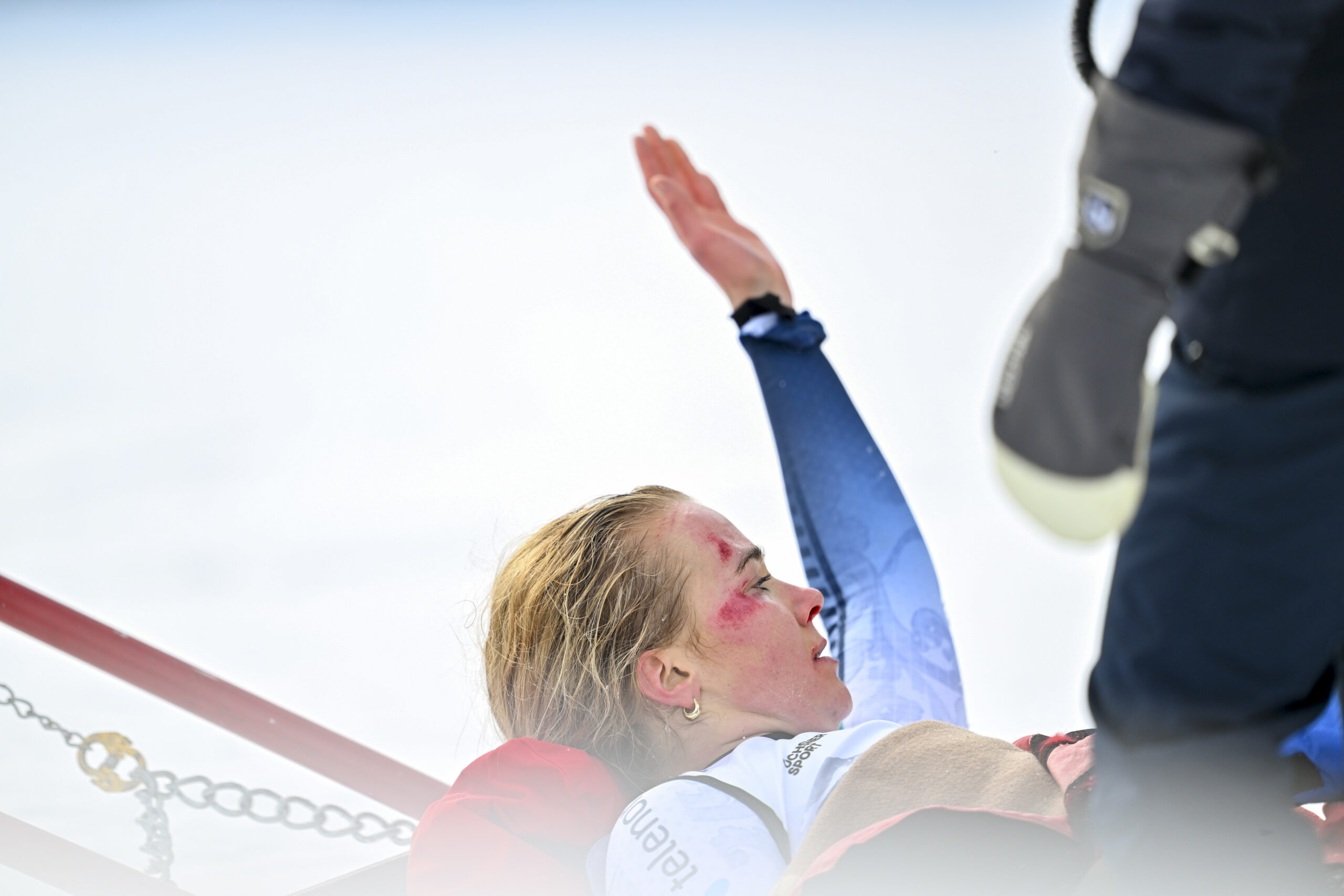
The danger, however, remained very real. Third on course, Marte Monsen (NOR) crashed hard near the finish, slamming into the fencing. Monsen was evacuated from the slope by rescue sled as medical personnel attended to her. Overnight colder temperatures had made the Mont Lachaux track faster than during training, and several athletes appeared not yet fully adjusted to the increased speed.
Wiles charges into the lead amid mounting concern
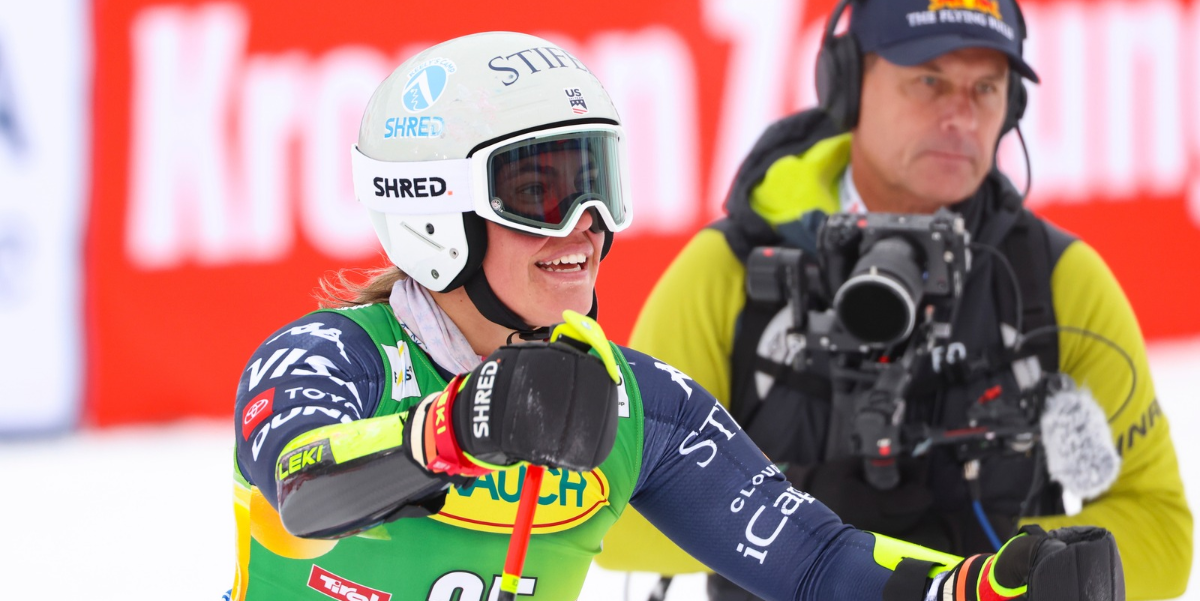
Next out of the gate was Stifel U.S. Ski Team veteran Jacqueline Wiles, third earlier this season in Zauchensee and a key member of the U.S. women’s Olympic squad. Wiles attacked aggressively, skiing on the edge from top to bottom. She crossed the line 0.65 seconds faster than Miradoli, igniting a roar from the Crans-Montana crowd and briefly restoring momentum to the race.
Vonn crashes as safety concerns intensify
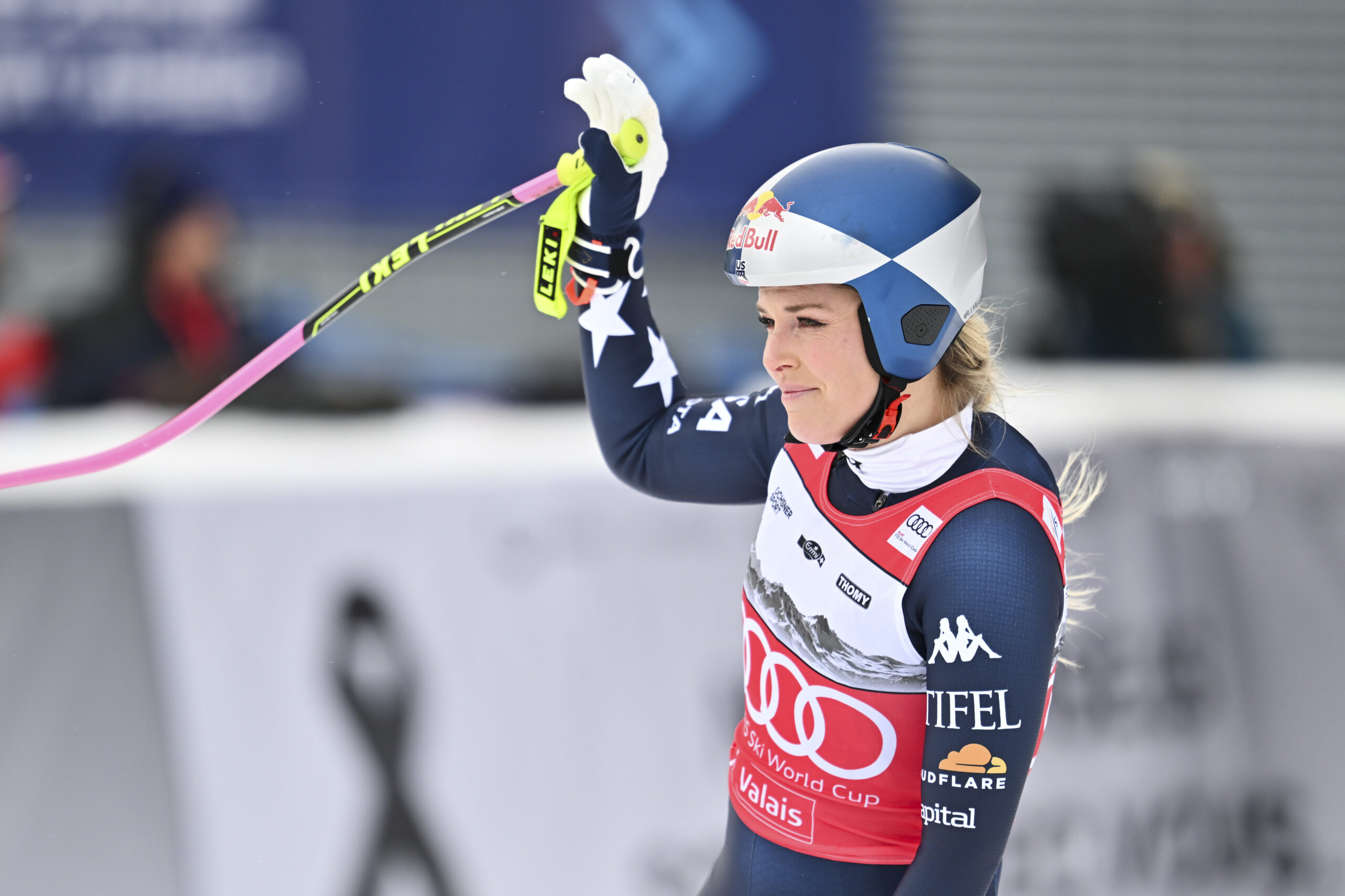
That momentum was short-lived. Bib 6 brought the arrival of downhill tour leader and pre-race favorite Lindsey Vonn (USA). Like Ortlieb before her, Vonn was caught out in the second sector, crashing violently into the safety netting.
Vonn eventually rose tentatively to her feet and limped out of the fencing before stepping back into her skis. With a visible grimace and obvious discomfort in her left leg, she cautiously attempted to ski to the finish. Barely able to put weight on it, she stopped lower on the slope to assess her condition before slowly making her way to the stadium under her own power. At the line, teammate Jacqueline Wiles met her with a long, emotional hug as concern replaced competition.
Now, the hope is that the 41-year-old Olympic favorite will be able to recover quickly and continue her pursuit of even more history in what has already been a remarkable season.
Only three finishers after 52 minutes
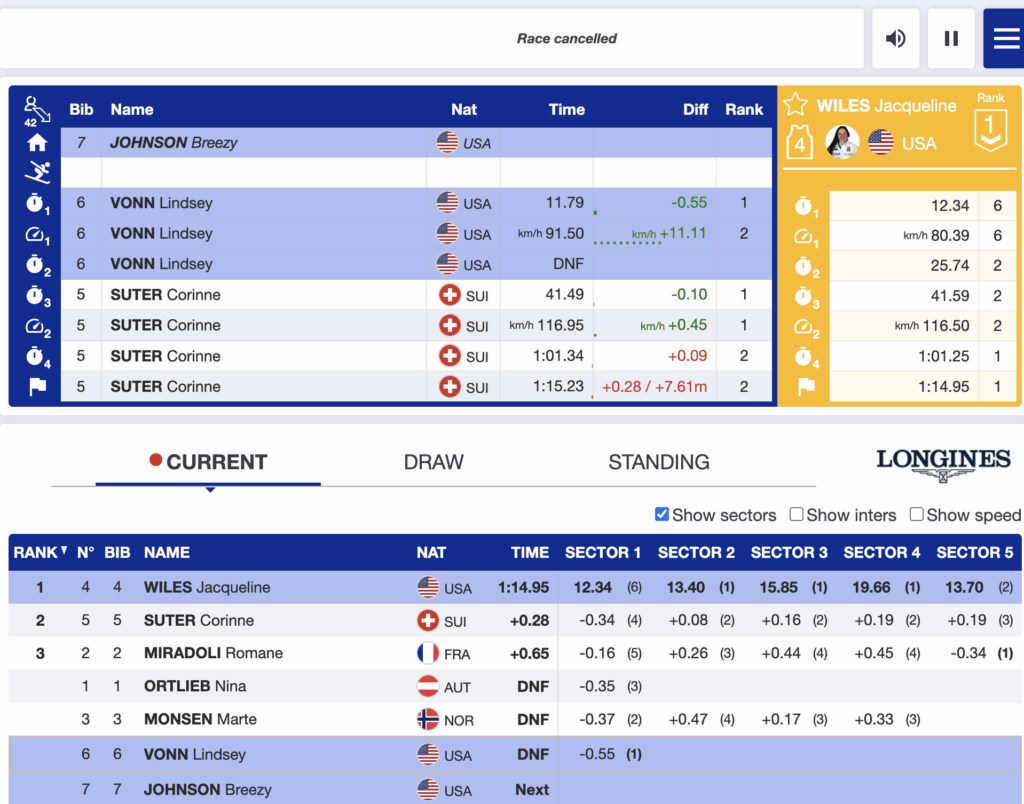
The timing screen underscored the severity of the situation. After Vonn’s crash, only three of the first six starters had reached the finish, while Ortlieb, Monsen, and Vonn were all listed as DNFs. Shortened or not, Mont Lachaux was proving unforgiving.
After 52 minutes, just three athletes had completed the course. With deteriorating visibility and mounting safety concerns, the race jury began serious discussions about halting the competition.
Race canceled as visibility deteriorates
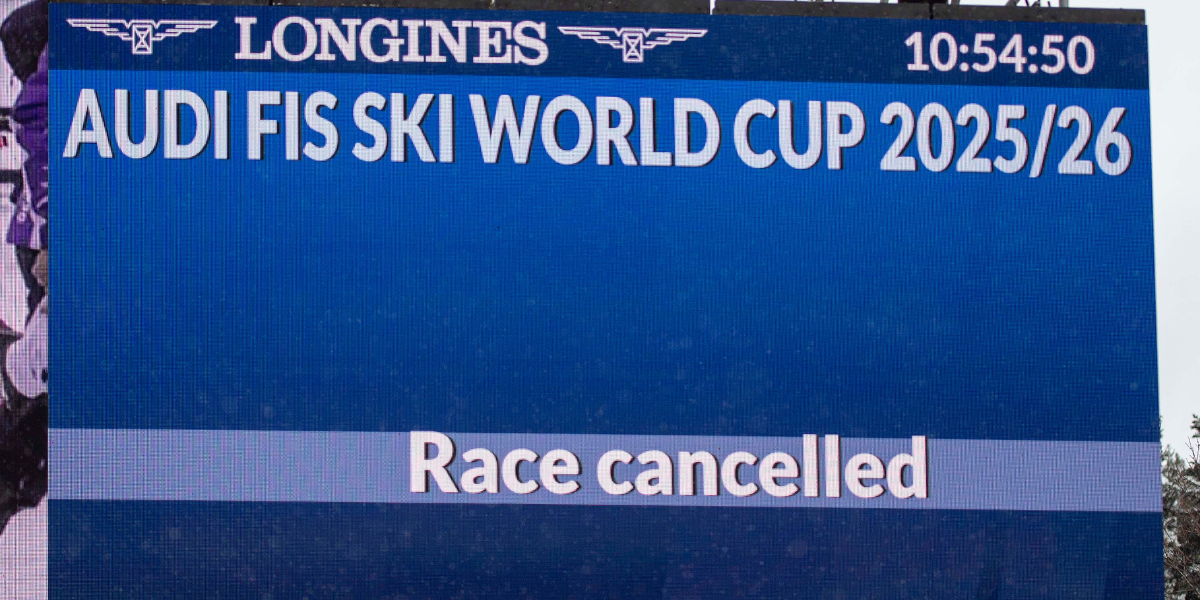
World Champion Breezy Johnson (USA) was slated to be next out of the gate, but before she could start, the decision was made to cancel the race. Johnson was visibly upset that the competition would not continue, while others in the field were undoubtedly relieved. The disappointment extended to the spectators as well, including large groups of schoolchildren who had come to Crans-Montana to watch the world’s best compete.
Race jury cites safety and visibility concerns
Women’s World Cup Race Director Peter Gerdol explained that the decision to cancel the race was driven squarely by athlete safety as conditions continued to deteriorate on Mont Lachaux.
“The main reason is the safety of the athletes,” Gerdol said. “The visibility was getting worse and worse. They couldn’t see the race line properly, and it caused mistakes. We saw six athletes starting and all six had some mistakes. This was a sign that it was a high-risk situation.”
While acknowledging the inherent danger of alpine racing, Gerdol emphasized that the conditions had crossed an unacceptable threshold.
“We know that our sport is a risky sport,” he continued, “but the feeling was too much risk. That’s why the Jury decided to stop the race.”
Gerdol also noted that the course itself had changed compared to the morning inspection, further complicating the situation.
“The flat light was getting more and more challenging, and safety could no longer be guaranteed,” he said. “This is mainly the reason we decided to stop this race—for the safety of the athletes.”
Wiles reflects on the decision to cancel
Speaking after the cancellation, early leader Jacqueline Wiles acknowledged the disappointment of the moment while emphasizing the importance of athlete safety.
“It’s sad that we had to cancel it,” Wiles said. “But with too many crashes, you want to make sure everyone stays safe. It’s really unfortunate, because I think everyone was excited to be out there.”
Asked whether the cancellation was the right call, Wiles noted that conditions were demanding but not entirely unexpected for race day.
“The speeds felt a little bit higher, some of the jumps felt bigger, and there were a few rattling spots,” she explained. “But that’s also normal race-day intensity. If the weather is getting worse and it’s going to become unsafe, then of course it’s the right call.”
Wiles admitted the decision was not an easy one to assess from the athlete’s perspective.
“It definitely felt a little bit wild, but that’s racing too,” she said. “At the end of the day, safety is more important.”
Athlete safety overshadows results
In the end, the defining story of the day was the cancellation of the women’s downhill, prompted by three early crashes, deteriorating visibility, and serious concern for athlete safety. With Lindsey Vonn and Marte Monsen both clearly injured, the focus now shifts entirely to their recovery after a frightening and sobering day on Mont Lachaux.

Situation when race was canceled
Click Images to enlarge
About the Author: Peter Lange