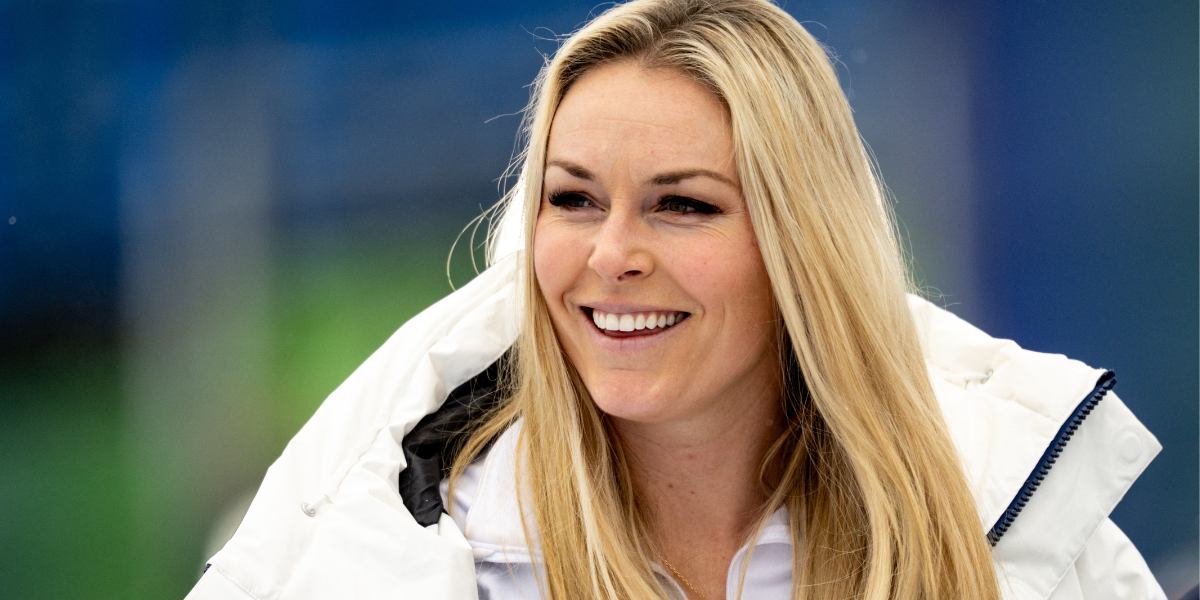
Lindsey Vonn, Cortina Olympics, GEPA pictures
Lindsey Vonn spoke about summer with the kind of energy that suggests forward momentum. A beach vacation. Scuba diving. Kite surfing. “I’m going on vacation… the plane ticket is booked, anyway,” she said recently, sounding ready to move again after months defined by injury.
However, the reality of her recovery tells a more complicated story.
According to a report from EssentiallySports by Lazar Siddhant, the American icon was recently seen at Los Angeles International Airport in her first public appearance since crashing at the Milan-Cortina Olympics. Vonn was assisted through the airport in a wheelchair, with crutches in hand — a clear indication that while progress is real, the recovery is far from complete.

What does Vonn’s current condition reveal about her recovery?
The contrast between optimism and reality is not unusual for an injury of this magnitude.
Vonn suffered a complex tibia fracture along with compartment syndrome — a combination that typically requires six to nine months of recovery. Despite that, she recently suggested that within six weeks she hopes to “live much more normally.”
That timeline reflects her mindset as much as her physical condition.
“It’s definitely been up and down,” Vonn said. “I’d say in the last month, it’s definitely gotten better, but of course, there were really low moments.”
Those lows came early. Her Olympic race ended just seconds after leaving the start, and the aftermath escalated quickly. Multiple surgeries followed in Italy before she was transported back to the United States. At one stage, the severity of the injury raised the possibility of amputation — a scenario ultimately avoided through urgent medical care.
The physical trauma was only part of the challenge.
Extended time immobilized in the hospital, including weeks with external fixators, pushed Vonn mentally. “It took everything I had for it to not drive me insane,” she said of that period.
Where is the progress coming from?
Even so, the trajectory is moving forward.
Within two weeks of returning home, Vonn was already back on a stationary bike. Days later, she shared clips of strength training — controlled, deliberate work focused on rebuilding capacity. Since then, her updates have shown steady gains: upper-body strength, mobility work, and gradual reintroduction of movement.
She has also been seen outside again, riding her scooter and regaining independence step by step.
That progression matters. In alpine skiing, returning to the limit requires not just healing, but strength, balance, and the ability to absorb force at speed. Every phase of rehab builds toward that, even when the gains appear small.
Is a return to racing still possible?
The unanswered question remains the one Vonn has not fully closed.
Her Olympic crash did more than end a race — it interrupted what could have been a final chapter. “I never got a final run, I never got to say goodbye,” she said.
That unfinished ending continues to shape her thinking.
“I think it leaves a door slightly open to… maybe I would do one more race to say goodbye or maybe I’ll race again,” Vonn said. “It might be fun to do one more run. We’ll see.”
She has even acknowledged the possibility of the 2030 Olympics, though cautiously. “If I were to do it, I would only do it if I could be fast,” she said. “I would be 45… that might be a little bit too much, but we’ll see.”

What matters most right now?
For now, the focus is clear: recovery.
The images from Los Angeles provide a grounded snapshot of where things stand. Progress is happening, but it is measured. Controlled. Earned over time.
Vonn has spent her career pushing the limit — physically and mentally — separating herself through strength, timing, and the ability to manage risk where others cannot. That same approach now defines her recovery.
The summer plans remain. So does the possibility of one more run.
But first, there is work to be done — and plenty of it.
About the Author: SR Staff Report