Lucas Pinheiro Braathen / GEPA pictures
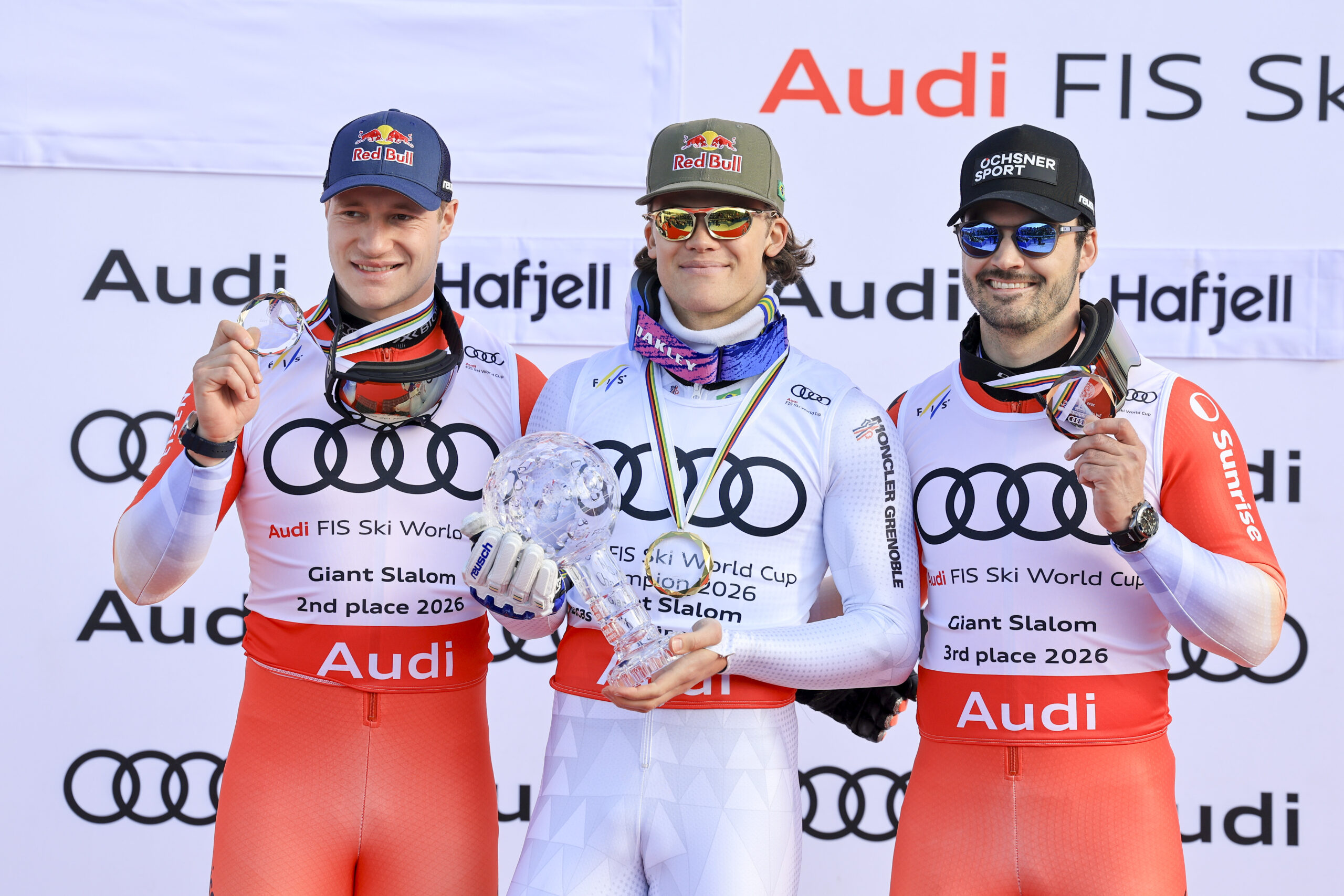
The final giant slalom of the men’s World Cup season came down to one skier.
Lucas Pinheiro Braathen stood in the start gate in Hafjell as the last racer in the final GS of the year. Marco Odermatt — the discipline leader — was already out.
The globe was there.
He knew exactly what he needed.
He did more than that.
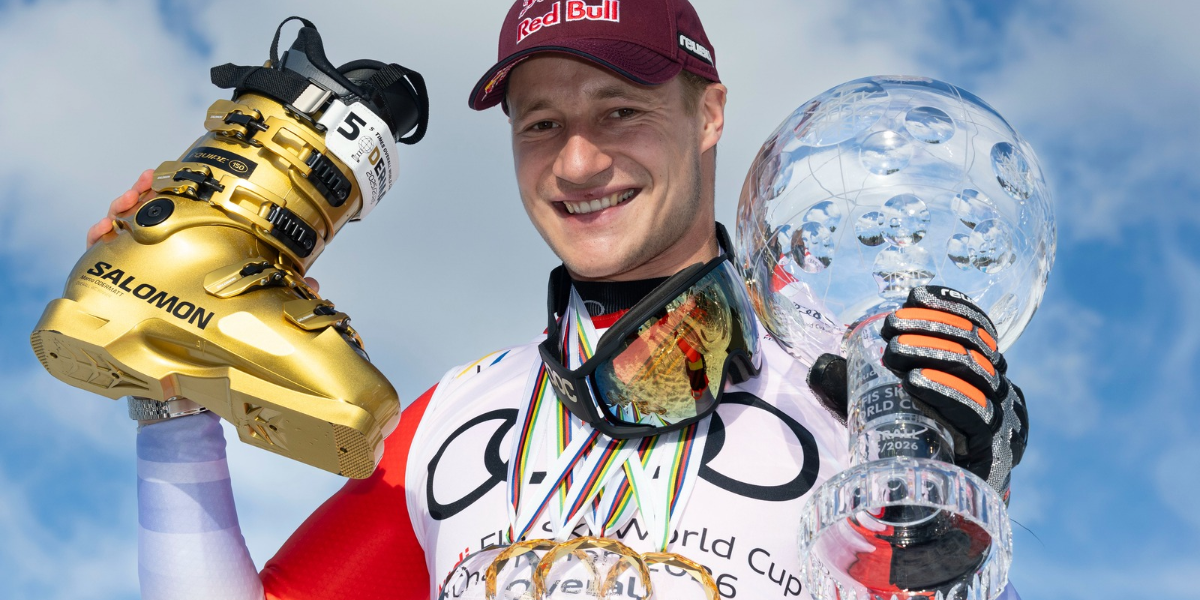
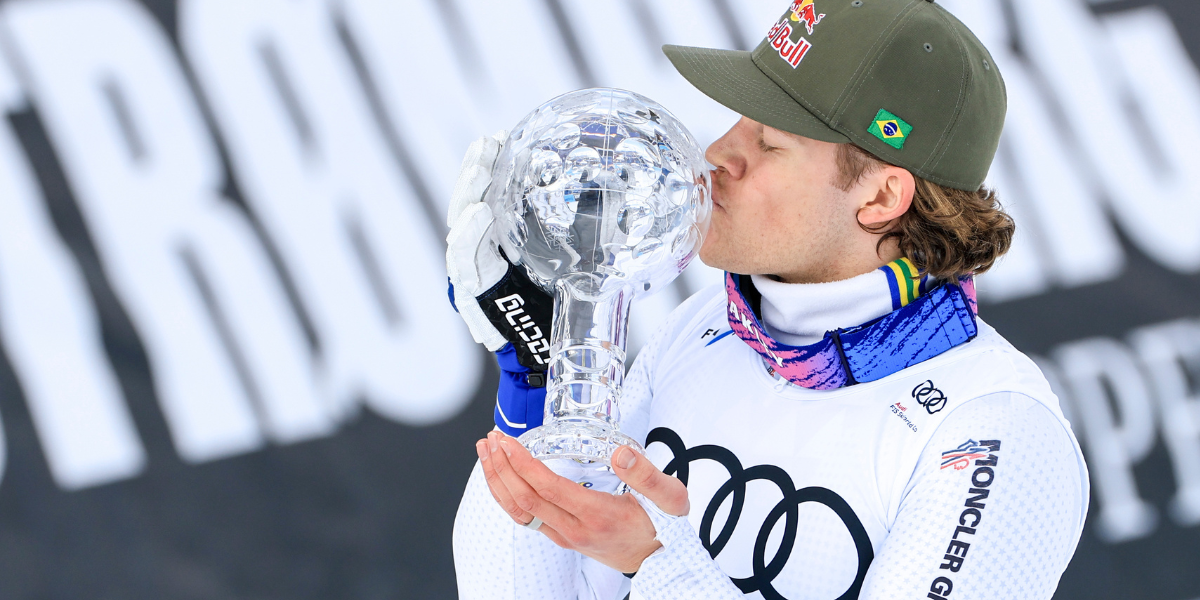
Pinheiro Braathen attacked from the start, carried speed through the course, and crossed the line to win the race — and with it, the giant slalom globe.
Already the Olympic champion, he now adds his first World Cup giant slalom title. It is his second GS victory of the season representing Brazil — and he also now has World Cup GS wins both as a Norwegian and as a Brazilian.
And he did it in Norway — where his career was built.
“It’s so many emotions,” Pinheiro Braathen said. “It feels like a flashback of everything it’s taken to get here — all the beautiful moments, all the tough moments, all the drastic decisions.”
“A globe represents decisions, work, and effort over a long time,” he said. “That’s what makes me so proud.”
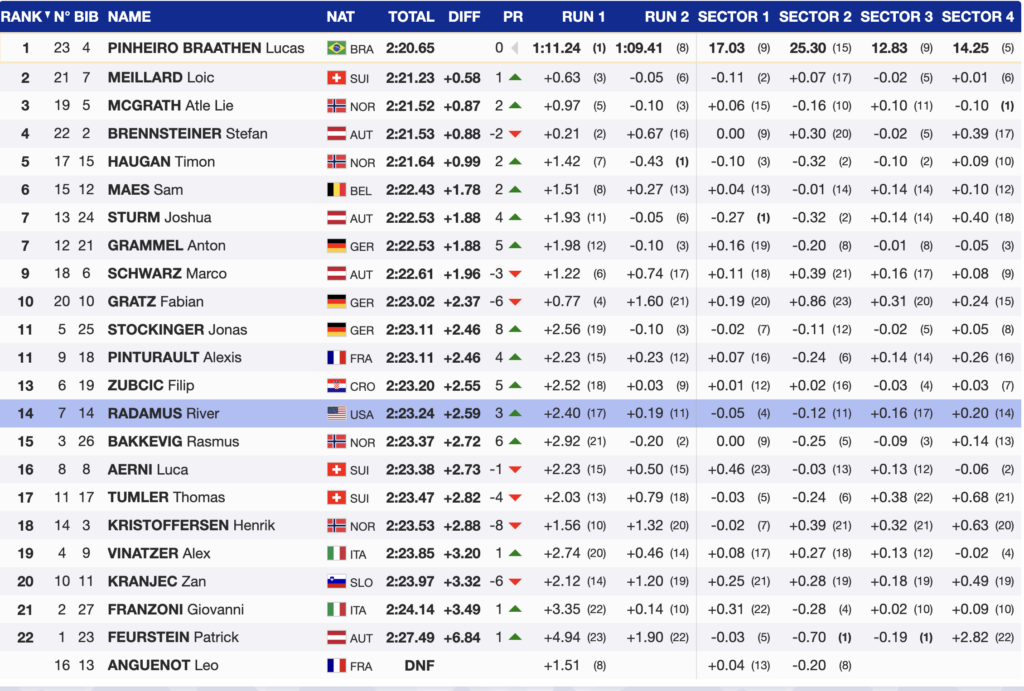
Top 5 – Hafjell GS Results
1st 🇧🇷 Lucas Pinheiro Braathen (BRA), Bib 4, 2000 — 2:20.65 (Atomic, Oakley)
2nd 🇨🇭 Loïc Meillard (SUI), Bib 7, 1996 — +0.58
3rd 🇳🇴 Atle Lie McGrath (NOR), Bib 5, 2000 — +0.87 (Head)
4th 🇦🇹 Stefan Brennsteiner (AUT), Bib 2, 1991 — +0.88
5th 🇳🇴 Timon Haugan (NOR), Bib 15, 1996 — +0.99
What Does This Globe Represent for Pinheiro Braathen?
Behind the result is a plan years in the making.
Pinheiro Braathen and his father built a long-term vision early in his career.
“We made a 10-year plan when I was 11 years old,” he said. “Working year by year, month by month, and day by day to reach that goal.”
That structure — and the support behind it — carried him through the sport’s highest level.
“My dad has been with me from start to finish, still here, still believing,” he said. “I could never have done this without my family.”
The title also reflects something larger than results.
“To be able to look at this crystal globe with the Brazilian flag on my chest is something I’m immensely proud of,” he said.
And the message goes beyond himself.
“I just hope we can inspire some kids out there to really believe in who they are — no matter if they feel a bit different at times.”
Final GS Season Standings
1st 🇧🇷 Lucas Pinheiro Braathen (BRA), 2000 — 547 pts
2nd 🇨🇭 Marco Odermatt (SUI), 1997 — −52
3rd 🇨🇭 Loïc Meillard (SUI), 1996 — −61
4th 🇦🇹 Stefan Brennsteiner (AUT), 1991 — −116
5th 🇦🇹 Marco Schwarz (AUT), 1995 — −208
How Was the GS Globe Decided in the Final Run?
At World Cup Finals, only the top 15 score points.
Pinheiro Braathen did not need to win. He needed fourth.
He won anyway.
The moment was defined by clarity.
“Well, in my mind there was nothing,” he said. “I skied with my heart and followed my intuition.”
The conditions, the pressure, the stakes — none of it changed the approach.
“I don’t ski for trophies or globes,” he said. “They are simply results of how well I dare to be who I am.”
The season came down to the final run — and the final skier finished the job.
How Did Odermatt’s DNF Change the GS Title Race?
Marco Odermatt’s race ended early — and everything changed.
The Swiss star and discipline leader set the fastest time in the opening sector of the first run, showing immediate intent. But in the second sector, after a spectacular recovery, he was forced off line, launched into the air, and unable to make the next gate.
Just like that, the dominant force in giant slalom was out.
With Odermatt gone, the stakes became clear.
Pinheiro Braathen needed to finish fourth or better to secure the globe.
Could Meillard Still Win the Globe in Hafjell?
Loïc Meillard had a narrow path to the season title.
He needed to win — and he delivered everything required on his side. The Olympic bronze medalist attacked the second run, built time early, and moved into the lead with two skiers remaining.
The result secured his fifth giant slalom podium of the season.
“I gave it everything and tried to go for the win,” Meillard said. “But there was one mistake too many in the first run to be fighting for the victory.”
But the deficit from the first run proved too large to overcome.
His approach was clear from the start.
“I knew I had to win anyway to have a chance at the globe,” he said. “So it was all in — just try to push and gain as much time as possible.”
What Does This Globe Mean to Pinheiro Braathen?
For Pinheiro Braathen, the title represents far more than a result.
“To be able to look at this crystal globe with the Brazilian flag on my chest is something I’m immensely proud of,” he said.
The journey has not been simple — switching nations, building a new path, and embracing a different identity in the sport.
“I just hope we can inspire some kids out there to really believe in who they are — no matter if they feel a bit different at times,” he said.
Even in the moment of victory, his focus turned outward.
And inward.
“My dad has been with me from start to finish, still here, still believing,” he said. “I could never have done this without my family.”
Was This Brennsteiner’s Career-Best Season?
Stefan Brennsteiner pushed for a victory — and came close.
He carried his advantage deep into the run and remained in contention through the third sector. But on the final pitch, he lost time and crossed the line 0.30 seconds back, finishing fourth.
Even without a podium, the result confirms the strongest season of his career.
How Did Norway Perform on Home Snow?
Atle Lie McGrath delivered for the home crowd.
“It was incredible,” Lie McGrath said. “I’m so happy I was able to show this in front of the home crowd. It was a lot of fun.”
He attacked the second run with confidence and held his advantage to secure third place.
“I’ve been skiing better and better the past month,” he said. “I’m building, and mostly I’m just able to trust my skiing and ski clean.”
Pinheiro Braathen, who grew up racing in Norway, also leaned on his experience on the hill.
“I’ve skied this hill more than anyone else,” he said. “What a day to have that advantage.”
Timon Haugan followed in fifth, giving Norway two skiers inside the top five in the final race of the season.
Why Was Germany One of the Strongest Teams in Hafjell?
Germany delivered one of the deepest team performances of the day.
Anton Grammel and Jonas Stockinger both held the lead during the second run, while Fabian Gratz finished inside the top 10. Three German skiers placed inside the top 11, highlighting the strength across the team.
How Did River Radamus Finish the Season for the Stifel U.S. Ski Team?
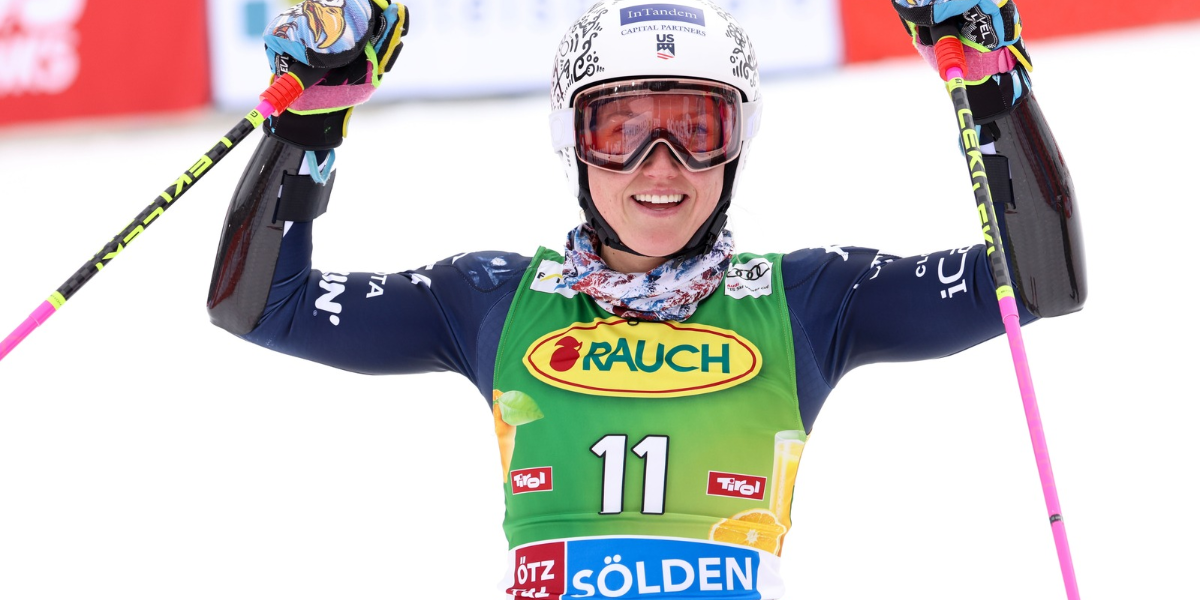
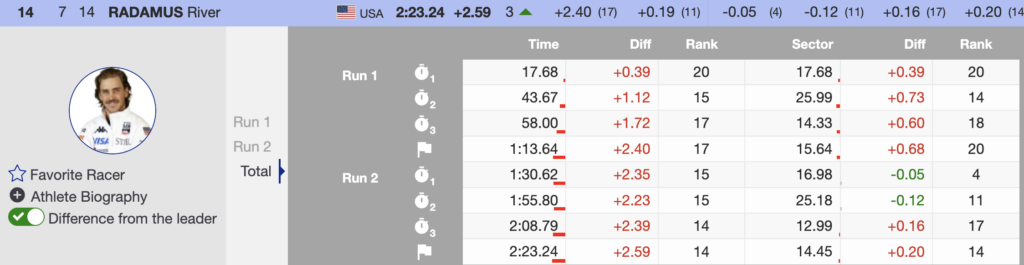
The Stifel U.S. Ski Team’s River Radamus finished 14th, securing points in the final race of the season.
“It didn’t come together today,” Radamus said. “I’ve been trying to find my speed in the last half of the season. I had some good moments, but it didn’t all come together.”
Radamus delivered a strong second run and held his position as the field tightened, ensuring a top-15 finish against one of the deepest lineups of the year.
His performance also reflected a broader season of development.
“Fundamentally, my skiing is in a much better place than it was this time last year,” he said. “I’m trusting the process and taking the steps as they come.”
Conditions also played a role.
“My style — high edge angle, building power — doesn’t work as well on soft snow,” he said. “I have to be a bit more subtle. It’s something I’m still working on.”
Radamus finishes the season 10th in the giant slalom standings — a career-best season rank.
What Does This Result Mean for Paul Epstein and Global Racing?
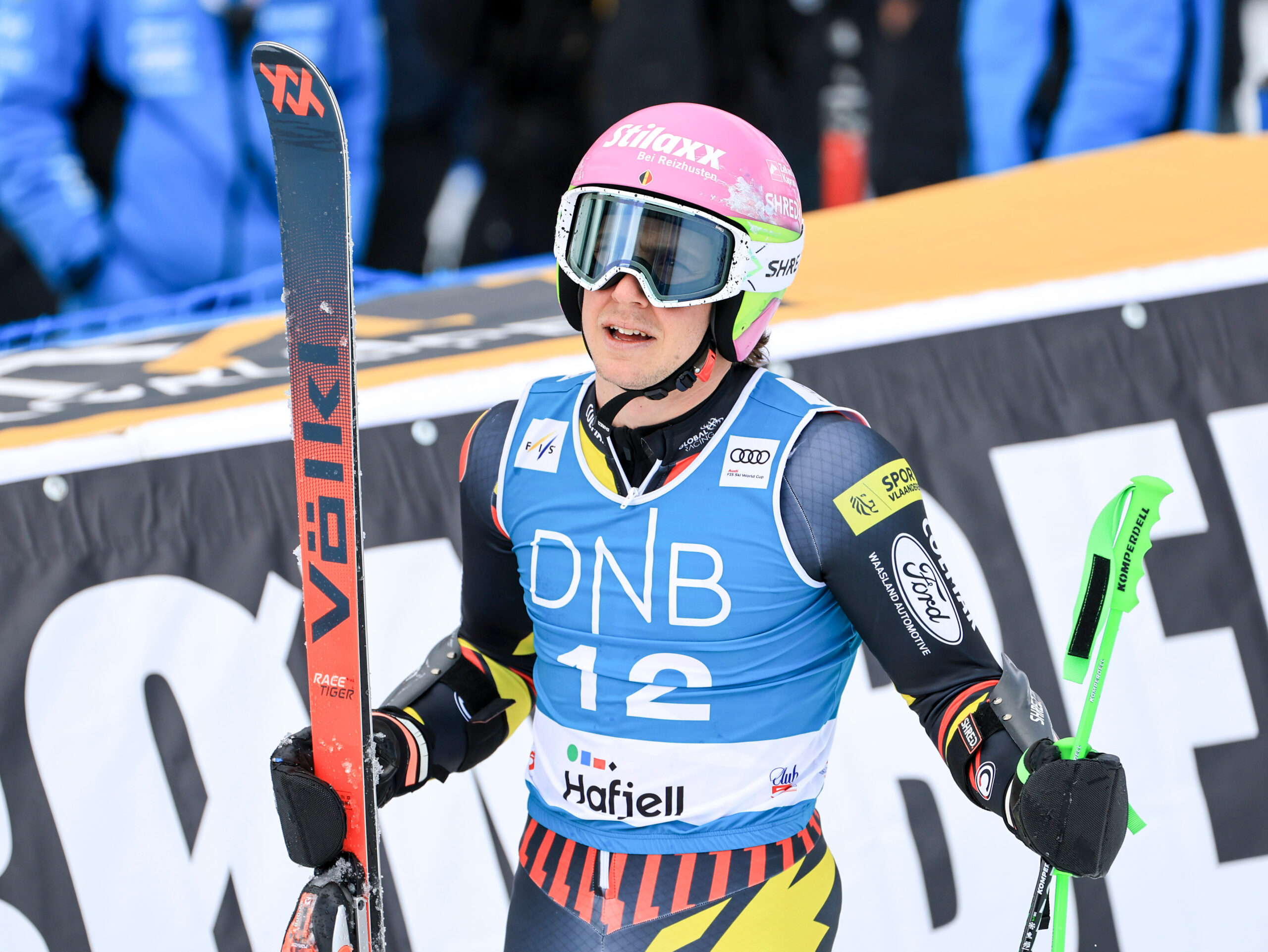
Beyond the race and the globe, Hafjell marked the end of an era.
After 13 years, Paul Epstein is closing the chapter on his Global Racing Team — a program that has shaped athletes at the World Cup level, including Belgium’s Sam Maes.
Maes delivered in that moment.
After tying for eighth in the first run, he followed it with a strong second run, briefly taking the lead and ultimately finishing sixth — matching his career-best World Cup result.
For Maes, it marked the end of the only World Cup environment he has known.
For Epstein, it was a final day on the World Cup stage before returning to the United States to take on a new role as head coach of the men’s slalom and giant slalom team for the Stifel U.S. Ski Team.
The result was fitting.
A career-level performance to close a long-standing partnership.
Where Was the Hafjell GS Race Won and Lost?
The race was decided in the first run.
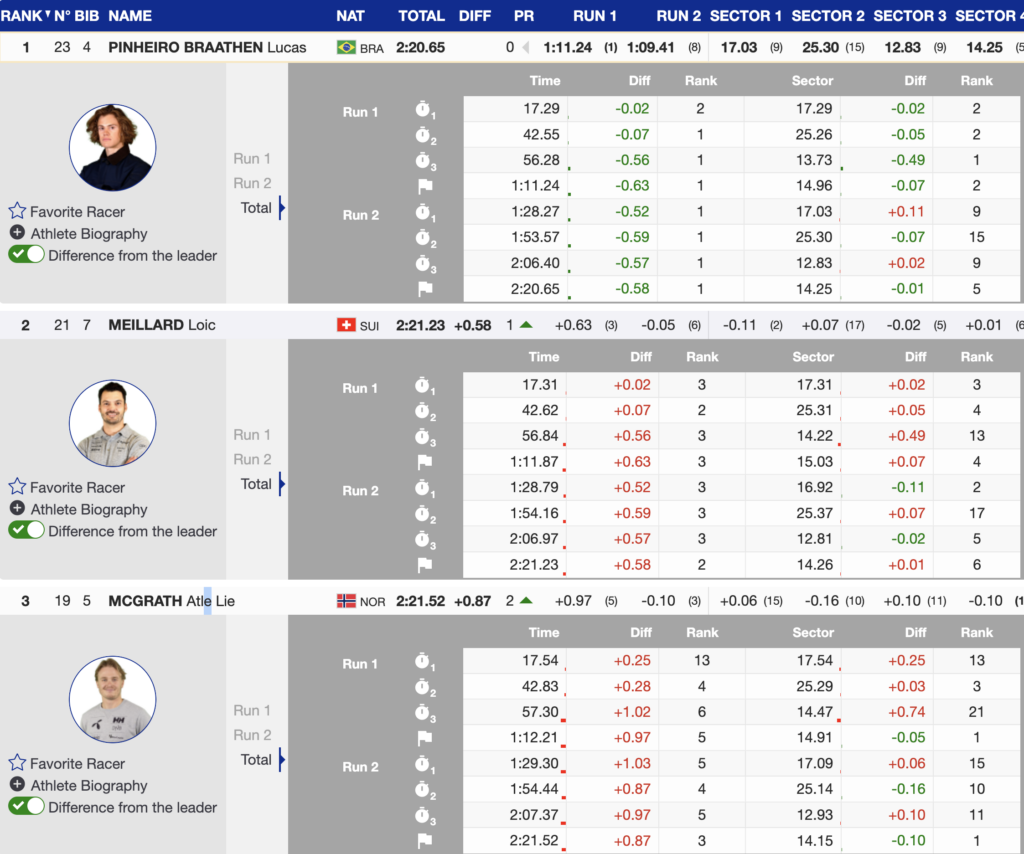
Pinheiro Braathen built a 0.63-second advantage over Meillard — a margin that proved decisive. Even with the eighth-fastest second run, he controlled the race from the front.
Meillard gained time in the second run, but not enough.
How Was the GS Globe Decided in the Final Run?
At World Cup Finals, only the top 15 score points.
Pinheiro Braathen did not need to win. He needed fourth.
He won anyway.
The season came down to the final run — and the final skier finished the job.

Race Results
click on images to enlarge
Race Analysis Podium and River Radamus (USA)
About the Author: Peter Lange