All photos provided by Marc Girardelli
Marc Girardelli, born on July 18, 1963, in Lustenau, Austria, defied the odds to become one of the greatest alpine ski racers of all time. Although he grew up in a relatively flat town, Lustenau lies within sight of the Vorarlberg Alps. Girardelli’s passion and determination fueled his rise to the pinnacle of the sport. His career is a unique story marked by resilience, innovation, and an unwavering commitment to excellence.
Girardelli’s early skiing adventures often involved long drives to ski areas like Alberschwende and Lech, 30 minutes to an hour from his home in Lustenau. Because Lustenau lacked a local alpine ski area, these trips were essential for Girardelli to get the necessary training. Despite these challenges, the Girardelli family’s commitment never wavered. They embraced the travel and logistical hurdles, understanding that these sacrifices were part of his path to greatness.
Click on images to enlarge


World Cup Success and Major Achievements
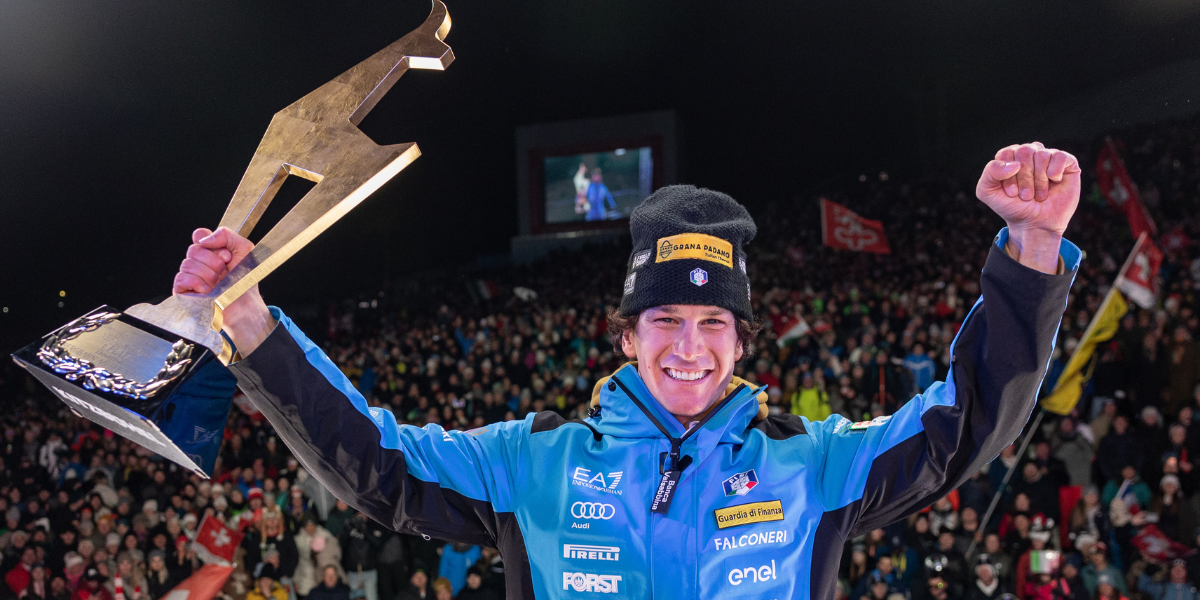
Marc Girardelli’s World Cup career is legendary. He won his first World Cup victory in Sweden in February 1983. Shortly after, he tore all his ligaments, cartilage, and a tendon in his left knee during a crash at Lake Louise. This injury would have ended many careers, but with Marc’s determination he returned stronger than ever. The following season, he won five slalom races and finished third in the overall standings.
Over his illustrious career, Girardelli secured five overall World Cup titles (Globes) (1984/’85, 1985/’86, 1988/’89, 1990/’91, and 1992/’93), the second most all-time, and six discipline titles spread over three events, showcasing his versatility and dominance across all alpine skiing disciplines. He is one of the five male skiers to have won World Cup races in all five disciplines: slalom, giant slalom, super-G, downhill, and combined. He claimed 46 World Cup victories and stood on the podium 101 times.


World Championships and Olympic Glory
Girardelli’s prowess extended beyond the World Cup circuit. He won 11 World Championship medals, including four golds. Remarkably, he earned World Championship medals in all five disciplines, a feat achieved by very few. His Olympic journey was also noteworthy. After missing the 1980 and 1984 Olympics due to eligibility issues, he made his mark in the 1992 Albertville Olympics, winning silver medals in the giant slalom and super-G.
Early Years and Unique Beginnings
Marc began skiing at age five and was introduced to ski racing at seven. As a young skier, he would ski only two days a week. Initially, he embraced skiing with unstructured enthusiasm, driven by his sheer love for speed and the sport. His father, Helmut Girardelli, notably filled the coaching role throughout his career. Girardelli remembers his father encouraging him to make turns on every run. However, when he forgot to mention turning, Girardelli would go straight down the slope. This introduction to the sport blended free skiing with fundamental training. Uniquely, he sometimes skied on the side of a dam by the Rhein River, which was just five meters high. Despite these humble beginnings, his experiences laid the groundwork for a storied future.
He advises parents entering the sport to encourage diverse experiences on the slopes. First, avoid focusing solely on gates and carving. Instead, explore off-piste skiing and navigating through moguls. Also, skiing in forests helps children develop balance and coordination. Moreover, skiing on one ski or with open buckles builds confidence in challenging conditions.
In addition to skiing, Girardelli actively participated in track and field until age 21. His involvement included sprinting, jumping, javelin, and showcasing his versatility and athleticism across multiple disciplines. His diverse sports background enhanced his



Alpine Ski Racing Beginnings
Marc Girardelli began his alpine ski racing journey at the age of seven. Unlike many young athletes, he did not attend an Austrian Schi Gymnasium (Ski Academy) like Stams. Instead, he primarily trained alone, without the support of a team. Reflecting on his experience, Girardelli admits, “I mostly trained alone, without a team around me, which, in my opinion, is not ideal.” He believes that being part of a team would have facilitated quicker development. Despite these challenges, Girardelli’s early solo training laid the foundation for future ski racing success.
Federation Shift and Family Influence
Marc Girardelli’s transition from being a member of the (Austrian Ski Federation) ÖSV to representing Luxembourg stemmed from early challenges. Girardelli explains, “As my father trained me from the beginning, it was problematic for coaches in the ÖSV when I won the kids’ races in front of the other ÖSV kids.” This situation led to skepticism and resistance from the trainers and other kids’ parents. Consequently, by age 12, Girardelli’s family decided to change federations due to these ongoing issues.

Financial Challenges of Skiing Independently
Girardelli faced significant financial challenges in his ski racing journey. His family paid for everything until he secured his first contract at 15. This crucial support from his parents allowed him to pursue his passion without the immediate burden of financial constraints. However, from 15 onwards, his contracts began to cover some expenses, and, by 18, Girardelli financed everything himself through these agreements. However, he recalls, “In my time, the income was not as high as now. So, if I had a year with few successes, I spent more money than I earned.” Despite these financial hurdles, his determination and early family support were critical in sustaining his ski racing career.
Working Independently
Working privately with his father as a coach offered unique benefits and challenges. One significant advantage was choosing training resorts according to their preferences, allowing for a tailored training experience. This flexibility helped optimize his development as a ski racer. He recalls, “We could choose the resorts for our training as we liked, which was a positive aspect.”
However, the challenges were substantial. Financial strain was a constant issue, as they had to fund every trip themselves. This included covering costs for hotels, cars, and helpers. Unlike team training, where resources are shared, they had to organize everything independently, adding to the workload. “The challenges were definitely money,” he explains. “We had to pay for every trip by ourselves.”
Also, from a young age, he took charge of his physical training, organizing and executing it himself from the age of 10. This self-discipline and initiative were crucial in building his athleticism, strength, and endurance, further enhancing his success as a ski racer.
Despite the intense effort and financial burden, he views private training with his father as less than essential to his success. “It was not instrumental,” he states. It was strictly the only chance to become a ski racer under the circumstances.” During his World Cup career, he began each season with a deficit of about €300,000, reflecting on the substantial investment required for preparation. Nevertheless, his perseverance and hard work laid the foundation for his success.
Career Reflections and Future Pathways
Looking back, Girardelli believes his success with his private program opened the door for others to use and improve upon the private team model. He reflects on his approach: “I was a pioneer. After I had so much success alone, other racers separated from the team with personal trainers but were financed by the federations.” This led to a trend where athletes combined individual training with team training, or formed smaller, more efficient training groups. Girardelli notes, “This still happens now.” He believes achieving success would have been much easier for him with such a system. Considering the evolving landscape of ski racing and increased family involvement in sports, Girardelli would likely follow a similar trajectory if he were to start his career today, acknowledging the lasting impact of his innovative approach to training.
Legacy and Current Endeavors
Marc Girardelli’s legacy in alpine skiing endures. He pioneered individual training programs within a traditionally team-oriented sport. His focus on versatility, rigorous summer training, and innovative equipment choices set new standards.
Today, Marc continues to influence the world of skiing and winter sports. He is an honorary citizen of the Bulgarian ski resort Bansko and an advisor on winter tourism to Bulgaria’s Minister of Tourism. Additionally, he organizes skiing events across Europe and Chile and manages a kids’ sports fashion line, Marc Girardelli Skiwear. His company designs and manufactures uniforms and custom ski clothing for organizations.
Reflections and Advice
Reflecting on his career, Marc credits his success to his relentless focus on maximum performance every day. He states, “The training of all disciplines was very important. Also my physical training in summer, which was very intense.” He advises young athletes and their coaches to embrace a holistic approach to skiing, emphasizing the importance of balance, coordination, and versatility. Marc’s journey from a small Austrian Swiss border town to the heights of alpine skiing inspires, demonstrating that greatness is achievable for the talented with passion, innovation, and perseverance.
Marc Girardelli’s story is a testament to the power of determination and the impact of a supportive and visionary family. His contributions to alpine skiing continue to resonate, inspiring future generations of skiers to dream big and push the limits of what is possible.
About the Author: Peter Lange